
Do these 3 things before closing this tab:
1Scan for outdated or missing drivers - takes under a minute2Clear out junk files and repair common Windows errors3Fix the driver behind crashes, sound loss and screen glitchesiTechGuides is reader-supported. When you buy through links on our site, we may earn an affiliate commission. As an Amazon Associate I earn from qualifying purchases. Learn more
Antimony is used mainly in two places: as a metal that hardens lead in lead-acid storage batteries, and as antimony trioxide in flame-retardant formulations. Smaller but established uses include solders and other alloys. The U.S. Geological Survey (USGS) places antimony on its 2025 Critical Minerals List because the material supports important economic or national-security functions while its supply chain is considered vulnerable to disruption—not simply because antimony is rare.
The classification is specific to the United States and to the 2025 assessment. It can be revised as supply chains, technology, demand and policy change.
What antimony is
Antimony is a chemical element identified by the symbol Sb. In nature, its principal ore mineral is stibnite, with the formula Sb2S3. Industrial products may contain antimony as elemental metal, as an alloying ingredient, or as a chemical compound. Those forms have different jobs, so “antimony use” is not one single application.
For a general reader, the most useful distinction is between antimony metal and antimony trioxide. Antimony metal is added to lead and other metals to change their physical properties. Antimony trioxide is a compound used primarily as part of flame-retardant formulations. USGS’s 2026 Mineral Commodity Summaries reduces the principal applications to “Flame retardants and lead-acid batteries,” while its broader antimony information also identifies solders and other alloys.
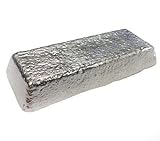
#1 Best Overall
- Ingots are approximately 8-3/4" x 1" x 2" and weigh 5 pounds (+/- .25).
- Classic alloy for DIY casters
- 2% Tin, 6% Antimony and 92% Lead
- Made in the USA
What is antimony used for?
Hardening lead in lead-acid batteries
Antimony metal is used as a hardener in the lead used for storage batteries. This is an alloying role: antimony modifies the lead components so they have the required mechanical characteristics for battery construction. It is not the battery’s main active material and should not be described as if an entire lead-acid battery were made from antimony.
Lead-acid batteries are used wherever rechargeable lead-based storage is needed. The evidence establishes antimony’s role in the lead components, but it does not establish a universal formulation for every battery design. Battery chemistry, component design and manufacturing practice can vary, so the presence or amount of antimony should not be inferred for a particular product without a product specification.
Supporting flame-retardant formulations
Antimony trioxide is the most important antimony compound identified by USGS. It is used primarily in flame-retardant formulations, where it functions as an ingredient in a formulation rather than as a standalone finished product. USGS lists children’s clothing, toys, and aircraft and automobile seat covers as examples of application areas.
Free tools Windows power users keep installed
One-click scans. No signup required.
Those examples identify markets in which formulations may be used; they do not prove that every item in any of those categories contains antimony. Whether antimony trioxide is present depends on the material, the required performance, the formulation selected by the manufacturer and the applicable rules or specifications.
Rank #2
- 30% Antimony, 70% Lead, Raise Hardness on soft lead Alloy
- Ingots are approximately 8-3/4" x 1" x 2" and weigh 5 pounds (+/- .25).
- MADE IN USA
Solders and other alloys
USGS also identifies antimony metal in solders and other alloys. In these uses, the element is selected because a small addition can alter an alloy’s properties. The available evidence does not establish one universal solder recipe or a single set of performance values, so the safe conclusion is that antimony is an alloying option used in certain metalworking applications.
Applications summarized by USGS
| Form or role | Primary function | Application examples identified by USGS | What the evidence does not establish |
|---|---|---|---|
| Antimony metal in lead | Hardens lead used in storage-battery components | Lead-acid batteries | That antimony is the battery’s principal active material or that every battery uses it |
| Antimony trioxide | Ingredient in flame-retardant formulations | Children’s clothing, toys, aircraft seat covers and automobile seat covers | That every product in these categories contains antimony trioxide |
| Antimony metal in alloys | Changes the properties of a metal mixture | Solders and other alloys | A single standard composition or performance specification for all solders and alloys |
The concise 2026 USGS labels—flame retardants and lead-acid batteries—are a summary, not an exhaustive inventory of every niche use. The longer USGS description adds solders and other alloys to explain where antimony metal appears in metalworking.
Why is antimony considered a critical mineral?
In the U.S. policy context, “critical mineral” is a classification about consequences and supply risk. It is not a synonym for “rare,” “valuable” or “dangerous.” USGS describes a critical mineral as one that is important to economic or national security, performs an essential manufacturing function whose absence could have significant consequences, and has a supply chain vulnerable to disruption.
Recommended Free Tools
The two questions behind the designation
- Would losing the material matter? Antimony contributes to products and manufacturing functions such as lead-acid battery components and flame-retardant formulations. The policy analysis asks whether losing access could cause significant economic or national-security consequences.
- Could access be disrupted? The assessment considers vulnerability in the supply chain. USGS lists potential risks including foreign political risk, abrupt demand growth, conflict, unrest, protectionist behavior and other disruptions.
Both dimensions matter. A material can be geologically uncommon yet not be classified as critical if substitutes and dependable supply make disruption consequences low. Conversely, a material does not have to be the rarest element in the Earth’s crust to be critical if important manufacturing depends on it and supply could be interrupted.
How the 2025 USGS assessment worked
USGS says its 2025 methodology used an economic model to estimate possible effects of foreign-trade disruptions on the U.S. economy. The agency grouped 84 mineral commodities into supply chains, examined more than 400 industries and evaluated more than 1,200 trade-disruption scenarios before assigning risk categories.
Those “more than 400” and “more than 1,200” figures describe the scope of the overall assessment. They are not antimony-specific production totals, demand forecasts or a count of antimony disruptions. Applying the numbers to antimony alone would overstate what the methodology establishes.
What the 2025 list means—and what it does not
USGS says the final 2025 U.S. List of Critical Minerals contains 60 minerals. The list is a U.S. government classification, not a universal global ranking. Another country can use different legal criteria, economic assumptions or supply-chain data and reach a different result.
USGS states that the list is to be reviewed at least every three years. Antimony’s appearance therefore describes the status of the U.S. assessment released for 2025, not a permanent property of the element. A future review could change the list or the reasons attached to a particular mineral if manufacturing needs, trade patterns, substitutes or disruption risks change.
Rank #4
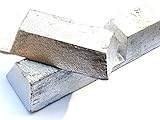
- Bullet Casting Alloy consists of 2% tin, 6% antimony and 92% lead. This metal is sometimes referred to as hardball bullet casting alloy. This modern version of the old Lyman #2 is an excellent all-around alloy.
- This bullet casting alloy and is very good to use for casting. This item is one of our most popular items because of its versatility and ease of use.
- Each piece of alloy is approximately 10.25 inches long by 2 inches wide by 1.25 inches high
- Melting Point (F) = 621 | Atomic Mass= 207.2 | Boiling Point (F) = 3180 | Density (g/cm3) = 7.29 | Weight (lbs/in3) = 11.34 | Analysis: 2% Tin, 6% Antimony, 92% Lead.
- This 10lbs of alloy will arrive sealed inside a heavy duty plastic bag to prevent any corrosion or oxidation.
USGS Director Ned Mamula described the release as “the most comprehensive, science-based assessment yet of the minerals our nation relies on.” The quotation refers to the U.S. assessment as a whole; it is not an antimony-specific forecast.
How to interpret antimony’s importance in real products
Look for the function, not just the element name
When a technical document mentions antimony, identify whether it means metal, an alloying addition or antimony trioxide. “Antimony in a battery” usually describes an alloying role in lead components. “Antimony in a flame retardant” generally points to antimony trioxide in a formulation. Treating both statements as the same application obscures why manufacturers use the material.
Do not infer content from a product category
A reference to toys, clothing or vehicle seating indicates an end-use area cited by USGS for flame-retardant formulations. It is not a bill of materials for every toy, garment or seat. Product composition must be established by the manufacturer’s specification, a safety data sheet where applicable, or an appropriate test—not by the category name alone.
Crashes, No Sound, or Screen Glitches?
Random freezes, missing sound and display glitches usually trace back to one bad driver. Find and replace yours safely.Free scan · under a minuteWindows Errors? Fix Them Before They Spread
Repair common Windows errors and clear accumulated junk for a smoother, more stable PC - no reinstall needed.Free scan · no reinstallSeparate policy importance from consumer visibility
Critical-mineral status does not mean consumers will see antimony listed as a principal ingredient on ordinary product packaging. The material may be present in an alloy, a component or an industrial formulation. The designation is intended to help the government evaluate supply-chain resilience and economic or national-security exposure, not to provide a consumer hazard label or a retail quality grade.
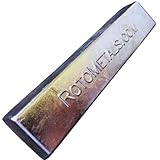
Best Value

- This pewter is very good to use for casting. It melts easily and retains its shine. This item is very popular because of its versatility and ease of use.
- Each 1lb pewter bar is approximately 12 inches long by .75 inches wide by .50 inches high and triangular in profile.
- Melting Point (F) = 563. Pouring Temp (F) = 650. Density (g/cm3) = 7.28. Analysis: tin 91.9708%, antimony 7.4992%, copper 0.5001%.
- This 1lb pewter bar will arrive vacuum sealed in a plastic bag.
- 92% Tin, 7.5% Antimony, and 0.5% Copper.
What is known—and not currently established—about U.S. antimony statistics
The reviewed USGS material establishes the uses, the ore mineral and the policy rationale for the 2025 designation. It does not establish a current antimony-specific figure for U.S. production, import reliance, reserves or price. Adding an unsupported percentage or annual tonnage would make the explanation appear more precise than the evidence allows.
USGS’s antimony statistics page also notes that its Minerals Yearbook tables are temporarily paused during a transition to a new data platform. Older annual tables should therefore not be presented as current values without checking the specific edition and year. This limitation affects the availability of certain statistics; it does not change the documented applications or the 2025 policy classification.
Why the designation matters to manufacturers and policymakers
Manufacturing continuity
If a supply disruption affects antimony metal or antimony compounds, manufacturers that rely on particular battery-lead alloys, flame-retardant formulations, solders or other alloys may need to qualify substitutes, redesign components or adjust specifications. The critical-mineral framework brings those possible knock-on effects into a broader economic analysis rather than treating each product as an isolated purchase.
Supply-chain planning
Companies can use the designation as a prompt to map where antimony enters their products, which chemical form is required, what specifications are non-negotiable and how quickly an alternative could be approved. The label itself does not identify a supplier, guarantee availability or prove that a shortage is occurring. It signals that disruption risk is important enough to be evaluated in national economic and security planning.
Public policy and periodic review
Because the list is reviewed at least every three years, policy decisions should be tied to the edition and methodology being used. A statement such as “antimony is critical” should be understood as shorthand for “antimony is included on the U.S. 2025 Critical Minerals List under the criteria and analysis used for that assessment.”
Common misunderstandings
- “Critical” means rare. Not necessarily. The USGS framework combines importance with supply-chain vulnerability.
- Antimony is the main material in lead-acid batteries. No. Its documented role is to harden lead used in battery components.
- Every toy, garment or vehicle seat contains antimony. No. USGS lists these as application examples for flame-retardant formulations, not universal content claims.
- The 2025 assessment numbers describe antimony alone. No. More than 400 industries and more than 1,200 scenarios are totals for the methodology-wide assessment.
- The 2025 list is permanent and global. No. It is a U.S. list scheduled for review at least every three years.
- A current price or import percentage can be safely copied from any old table. No. The relevant year and edition matter, and USGS notes a temporary pause in Minerals Yearbook table posting during a data-platform transition.
Bottom line
Antimony’s principal documented uses are functional and specific: antimony metal hardens lead in lead-acid storage batteries, antimony trioxide supports flame-retardant formulations, and antimony metal also appears in solders and other alloys. The United States calls it a critical mineral on its 2025 list because those manufacturing functions can matter to economic or national security and because the supply chain is judged vulnerable to disruption. That status is a time- and jurisdiction-specific policy assessment, not a claim that antimony is simply rare or that every product in a cited category contains it.
Quick Recap
Product prices and availability are accurate as of the date/time indicated and are subject to change. Any price and availability information displayed on Amazon at the time of purchase will apply.

