
iTechGuides is reader-supported. When you buy through links on our site, we may earn an affiliate commission. As an Amazon Associate I earn from qualifying purchases. Learn more
An immersive sim is a kind of game design built around a reactive world: its systems follow rules that players can learn, and those rules let players approach problems in different ways. The label is debated, so it is more useful to recognize a family of design traits than to look for a strict checklist.
In plain language, an immersive sim asks you to understand a place and its possibilities rather than simply wait for the game to tell you the next correct move. You may still follow a story, complete objectives, and encounter carefully authored levels, but the route through those objectives can be shaped by your priorities, tools, caution, curiosity, or willingness to experiment.
What makes a game an immersive sim?
The short answer is the combination of a world that behaves according to interacting systems and meaningful freedom in how you deal with it. A game may let you explore, sneak, fight, use tools, or improvise, but no one approach has to be the intended solution. Which options are available depends on the particular game.
Recommended Free Tools
That makes an immersive sim more than a first-person shooter with role-playing features. Ricardo Bare, lead designer on Prey, described the design philosophy as relying heavily on simulation. The important difference is not simply that a game has statistics, dialogue choices, or several weapons. It is that the world’s rules can interact, giving players room to respond in ways the game does not reduce to one prescribed sequence.
#1 Best Overall

- System Shock 2: 25th Anniversary Remaster Key Features: Cross-Play Co-Op multiplayer. Choose from 3 branches of the Military; O.S.A, Marines or Navy and experiment with different play styles. Up to 120 FPS performance with ultra-widescreen support. 50 Trophies to unlock. Enhanced Characters, Weapon Models and Animations. Optimized Controller support. Quality of Life Improvements.
There is no universally accepted definition of the term. Academic discussion treats immersive sim as a contested classification: it may be called a genre, style, school, or mode. Some games are central examples; others borrow a few of the ideas. Lists of qualifying games can therefore differ without one list necessarily settling the question.
Think of the label as a family resemblance. A game does not need every characteristic associated with the tradition, and a feature that appears in one famous example is not automatically a requirement. The most useful description says what a game lets its systems and players do, then uses the label as a convenient summary.
How the design works in practice
Systems create possibilities
Think of a game world as a collection of rules and elements that can affect one another: spaces, objects, characters, tools, and player abilities. In a strongly systems-oriented design, the player can learn how parts of that world behave and combine them to deal with a challenge. The result may be an outcome that feels coherent even if it was not the only route the designers expected.
For example, imagine a hypothetical guarded passage. One player might try to avoid attention, another might confront the guard, and a third might investigate the surrounding space for another way through. The point of the example is not that every immersive sim offers those exact options. It is that a situation can support different player intentions rather than requiring everyone to follow the same beat in the same way.
The important word is interact. A single tool with one obvious purpose offers choice, but a set of tools whose effects overlap creates a larger possibility space. Level geometry can change the value of a tool; an enemy’s position can change the safest route; information discovered during exploration can alter the plan. When those relationships are legible, experimentation feels like reasoning about a world rather than guessing a password.
This does not require a game to simulate every physical detail. Designers still decide which rules matter and where the boundaries are. A compact set of consistent interactions can support more agency than a huge list of disconnected features. What matters is that the rules do useful design work and that players can apply what they learn.
Arkane developers have described simulation as central to their approach. That does not mean every object in the world needs a complex simulation, or that every possible action must work. It means the game’s underlying rules give the player tools for thinking through a situation, not just instructions for completing it.
Do these 3 things before closing this tab:
1Fix the driver behind crashes, sound loss and screen glitches2Clear out junk files and repair common Windows errors3Scan for outdated or missing drivers - takes under a minuteAgency means more than a choice menu
Player agency is the ability to act on your own goals and have those decisions shape how you proceed. It can come from choosing a route, taking a cautious or direct approach, experimenting with tools, or deciding what risks to accept. Agency is not limited to dialogue choices, branching endings, or a morality meter.
Arkane Lyon lead level designer Yoann Saquet has said that Thief and Deus Ex helped show the importance of respecting players’ different intentions and play styles instead of imposing one pace, path, or morality. That idea captures why freedom in an immersive sim is about the design of the whole situation—not just a menu that pauses the action so you can select an answer.
A useful test is to ask whether your intention matters. If you want to move carefully, investigate every room, avoid a confrontation, or accept a dangerous shortcut, does the game give that intention some support? It may still punish a decision or eventually bring you back to a shared story beat. Agency does not promise success; it means the decision was meaningfully yours and the world gave you a way to pursue it.
Rank #2

- System Shock 2: 25th Anniversary Remaster on a region-free physical cartridge
- Cross-Play Co-Op multiplayer.
- 50 Trophies to unlock
- Enhanced Characters, Weapon Models and Animations
- Optimized Controller support
Several approaches do not mean unlimited freedom
Every game has boundaries. A level may close off some routes, a tool may not work in every situation, and a player’s choices may not change the overall story. The relevant question is whether the game leaves room for meaningful ways to engage with its challenges, not whether it allows every imaginable action.
The Tool Desk
Outbyte Driver Updater FREEScan for outdated or missing drivers - takes under a minuteDriver Scan →Outbyte PC Repair FREERepair Windows errors before they cause bigger problemsFix Now →Likewise, the genre does not require every game to support stealth, combat, exploration, crafting, or any other particular set of approaches. A title can express the design tradition through its own mix of systems and player options. Treat lists of expected features as clues, not a pass/fail test.
Freedom can also exist at different scales. One game might offer several routes through a single room; another might let exploration, equipment, and level knowledge shape an entire mission. Neither is automatically more authentic. The useful question is how much the systems matter to the challenges the game actually presents.
Immersive sim compared with neighboring labels
Many games share individual traits with immersive sims, which is why comparisons can be helpful but never definitive. Conventional genre labels describe a game’s surface or market category; “immersive sim” describes a design emphasis that can cross those categories.
Immersive sim versus first-person shooter
A first-person shooter is usually identified by its core action: aiming and firing weapons from a first-person perspective. An immersive sim can include shooting, but the camera and weapons do not establish the label. The distinction is whether the surrounding world, tools, and situations support multiple player-directed solutions and coherent consequences. A game can be a shooter and an immersive sim at the same time, but one does not automatically imply the other.
Immersive sim versus role-playing game
Role-playing games often emphasize character statistics, equipment, dialogue, or progression. Those elements can appear in an immersive sim, as they do in the role-playing and action mix associated with Deus Ex. Yet numerical progression alone does not create systemic agency. A game is closer to the immersive sim tradition when its rules and spaces let your chosen capabilities affect how you handle situations, rather than merely making one damage number larger.
Immersive sim versus stealth game
Thief is a major reference point and is associated with stealth, but stealth is not a mandatory ingredient. Some immersive sims let players avoid detection; others give equal weight to direct action, exploration, or different tools. Conversely, a stealth game can present a fixed sequence of solutions without offering the broader systemic interaction associated with the tradition.
Immersive sim versus open-world game
A large map is not the same thing as a reactive simulation. An immersive sim can take place in a contained, carefully structured space, while an open-world game may offer freedom of movement without many interacting systems. Size and nonlinearity can help a design, but they do not settle the classification.
Where the immersive sim tradition came from
A useful starting point is a group of influential games associated with LookingGlass Studios: Ultima Underworld, System Shock, and Thief. Arkane developers have identified these games as pivotal influences. Their importance is not that they all look or play alike; it is that they helped establish a design lineage focused on simulated worlds and player-driven approaches.
What’s actually slowing this PC down?
Pick the symptom - the matching free tool is one click away.
The original System Shock, released in 1994, is often placed near the beginning of that lineage. A feature about Nightdive Studios’ remake describes the original as part of the nascent immersive sim genre and points to its non-linear design and player-driven story as influences on later games. That description is a useful historical framing, not proof that everyone agrees on one definitive starting date.
Rank #3

- Cross-Play Co-Op multiplayer.
- Choose from 3 branches of the Military; O.S.A, Marines or Navy and experiment with different play styles.
- Up to 120 FPS performance with ultra-widescreen support.
- 50 Trophies to unlock.
- Enhanced Characters, Weapon Models and Animations. Optimized Controller support. Quality of Life improvements.
Nonlinear design matters here because it changes the player’s role. Instead of treating a level as a corridor between fixed scenes, the game can make the space itself a source of information, routes, risks, and solutions. The story still has authorship, but the order and manner in which a player discovers it can vary.
Deus Ex, developed by Ion Storm, is another widely recognized landmark. A Game Developer oral history discusses it alongside LookingGlass’s System Shock and Thief as a foundational example. Its association with role-playing and action also shows why immersive sims do not fit neatly into a single surface genre.
Arkane carried ideas from this lineage into later work. Bare described Prey as combining the systems and simulation of Dishonored, the structure and crafting of Arx Fatalis, and the role-playing qualities and mood of System Shock. Bethesda’s feature on Arkane’s design heritage also discusses Dishonored, Prey, and Deathloop as varied expressions of that legacy. These are related games, not interchangeable templates.
Windows Errors? Fix Them Before They Spread
Repair common Windows errors and clear accumulated junk for a smoother, more stable PC - no reinstall needed.Free scan · no reinstallOutdated Drivers Are Slowing You Down
One free scan finds every outdated or missing driver and matches the right update for your exact hardware.Free scan · exact hardware matchThis history is best understood as influence rather than a single official handoff. Designers borrow, adapt, and recombine ideas. A later game can belong to the same conversation without copying the setting, viewpoint, pacing, or mechanics of an earlier one.
Representative games and what they show
The examples below are often associated with the tradition. Their conventional genre labels differ; that variety is part of the point. Their inclusion here does not imply that every player or critic uses the immersive sim label for every title.
| Game | Conventional association | Why it helps explain the tradition |
|---|---|---|
| Ultima Underworld | Not stated in the cited material | Arkane developers identify it as a pivotal influence in the lineage. |
| System Shock | First-person science fiction is not stated as a formal category in the cited material | The 1994 original is described as part of the nascent genre, with non-linear design and a player-driven story influencing later games. |
| Thief | Stealth | A landmark example associated with respecting different player intentions and play styles. |
| Deus Ex | A mix of role-playing and action | A widely recognized landmark discussed alongside System Shock and Thief. |
| Dishonored | Not stated in the cited material | Its systems and simulation are among the influences Bare cited when describing Prey. |
| Prey | First-person science fiction | Its design combines influences from several games and illustrates how the tradition can draw on more than one lineage. |
| Deathloop | Not stated in the cited material | Bethesda discusses it as one varied expression of Arkane’s immersive sim legacy. |
The table uses broad associations rather than claiming that a conventional label explains a game’s design. A stealth game, an action role-playing game, and a science-fiction game can share design ideas without belonging to the same surface genre.
How to tell whether a game might fit
Instead of checking whether a game has a particular camera angle, setting, or feature, look at how it handles situations. These questions are useful when deciding whether a game is a close fit or simply borrows some immersive sim ideas:
Quick wins for a faster PC:
Scan for outdated or missing drivers - takes under a minuteDriver Scan →Repair Windows errors before they cause bigger problemsFix Now →- Do its systems interact? Can tools, characters, environments, and level layouts combine in ways that help you solve a problem?
- Is there room for different approaches? Can you decide how to engage with a challenge, rather than being pushed through one required route or pace?
- Do actions have coherent consequences? Does the world respond in ways that make sense under the rules it has taught you?
- Does experimentation matter? Can you learn from the space and try a plan of your own, rather than only following explicit instructions?
- Is it a close lineage fit or a partial influence? A game may share selected traits without being an uncontested example.
No single answer determines the label. These are practical clues for understanding the design, not a universal certification test. A game may offer several routes but little interaction between systems; another may make its world highly reactive while limiting how many paths a player can take. The family resemblance matters more than ticking every box.
When comparing two candidates, consider the balance among these qualities. One title may prioritize systemic interaction while keeping missions compact. Another may offer broad routes but fewer combinations among tools. A third may use a strongly authored story while allowing considerable freedom inside each scenario. Asking which design priority is strongest is more informative than arguing over a binary label.
Common misconceptions and pitfalls
It is not a promise of realism
“Simulation” in this context does not mean that a game reproduces real life in every detail. It refers to a design philosophy in which rules model enough of a situation to make the world responsive and understandable. A stylized or science-fiction setting can express that philosophy just as readily as a realistic one.
Rank #4

- DEEP SILVER
- 2 Years
It is not synonymous with unlimited choice
Every authored game selects boundaries, and those boundaries can make a system readable and a level meaningful. The presence of a few blocked doors or fixed story moments does not disqualify a game. Look for whether the available choices affect your way through the challenge.
It is not defined by one perspective
Many well-known examples use a first-person viewpoint, but the label is about interaction, agency, and simulation rather than a camera rule. Treating perspective as a requirement would confuse a recurring presentation choice with the underlying design tradition.
It does not guarantee a morality system or branching ending
Saquet’s point about not imposing a morality concerns respect for player intentions, not a requirement for a visible moral meter. A game can support agency through routes, tools, pacing, and risk even if its final story remains largely shared.
Independent reader supportYour contribution helps us test, update, and keep practical guides available for everyone.Which immersive sim should you play first?
Choose by the kind of experience you want, not by an assumed ranking of the genre’s examples. The recommendations below establish their associations and design lineage, not current platform availability, editions, prices, or retail stock.
- For a stealth-oriented example: consider Thief, which is associated with stealth and is often used to explain the importance of accommodating different play styles.
- For role-playing and action together: consider Deus Ex, a landmark commonly associated with that mix.
- For first-person science fiction: consider Prey. Its development history makes it a useful example of several strands of the lineage coming together.
- For an early historical reference: look at the original System Shock or its remake. The original is the 1994 game discussed in accounts of the genre’s early development; the remake is a separate release.
These are starting points, not a definitive must-play list. If the broad label feels vague, pick the conventional experience that sounds most appealing and pay attention to how the game handles spaces, tools, and player decisions.
Free tools Windows power users keep installed
One-click scans. No signup required.
A newcomer who likes careful observation may find the stealth association of Thief an intuitive entry. Someone interested in character choices alongside action may prefer Deus Ex. A player drawn to science fiction can use Prey as a modern expression of several earlier influences. Looking at the original System Shock or its remake offers a way to consider the early lineage, while remembering that the two are separate releases.
Check the specific platform, edition, physical format, and current price before buying. Those details change over time, and the historical importance of a game does not establish what is currently in stock or which version best suits your hardware.
What the label does—and does not—tell you
“Immersive sim” is useful shorthand for a design emphasis, but it does not guarantee a specific perspective, setting, difficulty, level of realism, or set of mechanics. It does not mean a game simulates real life in every detail. In this context, simulation refers to a design philosophy in which rules and systems help make the world responsive and support player improvisation.
Nor does the label settle how much freedom a particular game provides. Two games can share the tradition while differing substantially in their pace, structure, genre, and available options. When a game is called an immersive sim, the most useful follow-up is to ask what its systems let the player do—and how much of the experience depends on those interactions.
That follow-up also helps when a marketing description uses the term loosely. Read a game’s feature list as a starting point, then look for evidence of interacting systems, coherent consequences, and supported player intentions. A title can be worth playing even if it is only partly connected to the tradition; the label is a guide to the kind of design relationship you may encounter, not a quality score.
Best Value
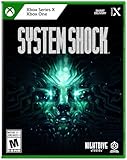
- Face off against the forces of a rogue AI gone mad
- Improve your skills and adapt to take on your foes
- Discover a non-linear story unfolding at your own pace
- Jack into cyberspace to hack the system and open alternative routes
- Innovative art style combines retro future design with modern technology
Frequently Asked Questions
What is an immersive sim in simple terms?
It is a game built around a reactive world whose interacting rules support more than one way to approach a problem. You learn how the space, tools, characters, and abilities behave, then use that knowledge to pursue your own plan.
Is every immersive sim a first-person shooter?
No. First-person presentation and shooting appear in several famous examples, but neither is a universal requirement. The defining ideas are systemic interaction, player agency, and meaningful approaches to challenges.
Do immersive sims need stealth, crafting, or role-playing statistics?
No. Those features can support the design, but none is mandatory. Different games express the tradition through different combinations of exploration, tools, combat, stealth, progression, or improvisation.
What’s actually slowing this PC down?
Pick the symptom - the matching free tool is one click away.
Why do people disagree about which games qualify?
The term has no universally accepted boundary. Academic discussion treats it as a contested genre, style, school, or mode, so one list may emphasize close historical examples while another includes games that borrow selected ideas.
What is a good immersive sim for a beginner?
Choose according to your interests: Thief for a stealth-oriented example, Deus Ex for role-playing and action, Prey for first-person science fiction, or System Shock for an early historical reference. Verify the current platform and edition before buying.
Does an immersive sim have to let choices change the ending?
No. Agency can operate within a mission or level through routes, tools, pacing, and risk even when the overall story remains shared. Branching endings are possible, but they are not a definition of the tradition.
What should I look for while playing one?
Notice whether systems interact, whether your intentions affect your approach, whether the world responds coherently, and whether experimentation teaches you something useful. These are clues rather than a pass-or-fail checklist.
The Tool Desk
Outbyte Driver Updater FREEFix the driver behind crashes, sound loss and screen glitchesFind Drivers →Outbyte PC Repair FREEClear out junk files and repair common Windows errorsFree Scan →Does ‘simulation’ mean the game is realistic?
Not necessarily. It means the game uses understandable rules to make its world responsive and to support improvisation. A stylized or science-fiction setting can rely on simulation without trying to reproduce real life.
The Bottom Line
An immersive sim is best understood as a design tradition, not a rigid technical category. Its hallmark is a reactive, rule-driven world that respects different player intentions and lets interacting systems support multiple approaches. Ultima Underworld, System Shock, Thief, Deus Ex, Dishonored, Prey, and Deathloop are often discussed in that lineage, although no list is universally binding. When in doubt, focus less on the label and more on what the game’s systems let you try.
Quick Recap
Product prices and availability are accurate as of the date/time indicated and are subject to change. Any price and availability information displayed on Amazon at the time of purchase will apply.

