
PC Slower Than It Used to Be?
A free scan shows the junk files, broken settings and background clutter dragging Windows down - then fixes them in one click.Free scan · Windows 10 & 11Outdated Drivers Are Slowing You Down
One free scan finds every outdated or missing driver and matches the right update for your exact hardware.Free scan · exact hardware matchiTechGuides is reader-supported. When you buy through links on our site, we may earn an affiliate commission. As an Amazon Associate I earn from qualifying purchases. Learn more
Fill power measures how much space a given weight of down occupies; fill weight tells you how much down is actually inside the jacket. The first describes the down’s loft per unit of weight, while the second describes the garment’s insulation quantity. Neither number alone tells you how warm a jacket will feel, so compare both when available—and also consider construction, fit, materials, and the conditions you expect to face.
What the two numbers tell you
Down-jacket specifications often include a fill-power rating, such as 650 or 800, and sometimes a fill weight stated in grams or ounces. The similar names can make them sound like two ways of measuring the same thing. They are not: fill power describes a property of the down, while fill weight describes the amount of down used in the jacket.
| Specification | What it measures | Common expression | What it helps you understand |
|---|---|---|---|
| Fill power | The volume occupied by a specified weight of down under a test method | Cubic inches per ounce | How much loft a given mass of down can provide |
| Fill weight | The actual mass of down used in the garment | Grams or ounces | How much down insulation the jacket contains |
Patagonia’s consumer guide explains the distinction as the down’s volume and fluffiness versus the actual quantity or weight of filling in the garment. In practical terms, fill power helps you think about loft and potential warmth-to-weight and packability; fill weight helps you assess insulation quantity. Read together, they are more informative than either one on its own.
Do these 3 things before closing this tab:
1Clear out junk files and repair common Windows errors2Fix the driver behind crashes, sound loss and screen glitches3Repair Windows errors before they cause bigger problemsWhat down fill power means
Volume for a given weight
Fill power is a volume-per-weight measure. In common consumer descriptions, the result is expressed as cubic inches per ounce. An 800-fill-power rating means that the tested down occupies about 800 cubic inches per ounce under the applicable test convention. It does not mean the jacket contains 800 units of insulation, nor does it state a temperature at which the jacket will keep you comfortable.
#1 Best Overall

- OMNI-HEAT: For versatile lightweight warmth in mild to severe cold. Our patented Heat Reflective garments are the ultimate body heat management system for outdoor performance. Reflects and retains body heat with breathable comfort, and enhanced warmth.
- OMNI-SHIELD: For light precipitation and everyday protection against stains, this garment repels rain, resists stains, and dries quickly.
- THERMARATOR INSULATION: For cold conditions requiring lightweight warmth. Performance synthetic that looks and feels like down with a high warmth-to-weight ratio that’s made from ultra-fine fibers that trap warmth even when wet.
- HANDY FEATURES: Includes zippered hand pockets, stretchy elastic cuffs, soft chin guard, and a drawcord adjustable hem that helps lock out the chill.
- ACTIVE FIT: A modern cut for active men, this insulated jacket is built for ultimate comfort on any adventure.
The volume occupied by fluffed-up down is its loft. Loft creates spaces that help insulation retain warmth. A higher fill-power rating means that a given mass of down occupies more volume under the test conditions. That can be useful when a maker wants a particular amount of loft with less down mass, which may support a lighter or more packable garment. It is a potential advantage, not a guarantee about a finished jacket’s warmth or packed size.
What the rating does not measure
Fill power is not the jacket’s total down volume, total insulation mass, warmth rating, or promise of performance at a particular temperature. Those properties depend on more than the down’s loft per unit of mass. For example, two jackets using down with the same fill power can contain different amounts of it, distribute it differently, and cover different areas of the body.
What fill weight means
Fill weight is the actual weight of down used in a garment, commonly reported in grams or ounces. It is a jacket-level quantity: it tells you how much down went into that piece, rather than how lofty a given amount of down is. A jacket with more down may provide more insulation than one with less, even if the latter uses higher-fill-power down.
Fill weight is often not published. REI notes that few jacket makers report it, which makes direct comparisons harder. If a product page gives a fill-power rating but no fill weight, do not infer the missing quantity from the rating. A high fill-power number does not disclose how many grams of down the garment contains.
Rank #2

- Material: Puffer jacket is filled with 90% duck down, lightweight and warm, soft and comfortable fabric
- Design: Down jacket hood design, shrink cuffs and hem to prevent the cold wind from entering; inner color clash design, simple and stylish
- 4 Pockets: 2 zipper pockets and 2 inside pockets, easy to carry your belongings
- Easy to Pack: Packable men's insulated bubble jacket, comes with a storage bag, easy to carry on the go
- Occasion: Our jackets is suitable for casual wear, outdoor work, traveling, biking, hiking, fishing, camping. It is a must-have choice for spring, fall and winter
Why higher fill power does not automatically mean more warmth
A higher fill-power number describes greater volume for a given weight of down; it does not tell you how much down the jacket contains. A jacket can use a smaller quantity of high-fill-power down, while another uses a larger quantity of lower-fill-power down. The total insulation and the garment’s construction affect how those jackets perform.
REI uses an illustrative comparison of 30 g of 900-fill-power down and 100 g of 450-fill-power down to show why a high rating alone is not enough to establish warmth. Treat this as a teaching example, not as a universal equation for predicting jacket performance. Patagonia likewise cautions that fill power is not an exact measure of warmth: loft matters, but insulation quantity and how it is used in the garment matter too.
There is no sound universal jacket-warmth score you can calculate by multiplying fill power by fill weight. Those two figures do not account for baffle geometry, coverage, fit, shell performance, layering, weather, activity, or individual differences. They are useful specifications, not a complete model of how warm a person will feel.
Quick wins for a faster PC:
Fix the driver behind crashes, sound loss and screen glitchesFind Drivers →Repair Windows errors before they cause bigger problemsFix Now →Scan for outdated or missing drivers - takes under a minuteDriver Scan →How fill power is measured—and why methods matter
In REI’s common consumer explanation, a sample of down is placed in a cylinder, compressed by a lightly weighted disk, and measured for volume after a set period. The basic idea is to measure the space occupied by a known weight of down after applying a defined amount of compression.
Rank #3
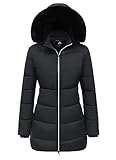
- This winter coat is filled with a lot of insulation and the density of polyester is 65% higher than what is usually found in the market. It ensures that you stay warm in the cold weather.
- With windproof ribbed cuffs and high density fabric, it has good windproof in winter windy weather. Don't let the winter wind make you shiver, it will make you more comfortable in winter.
- The simple, stylish and generous design with golden ratio stitching makes this women's winter coat full of this modern aesthetic and fashion. So even in winter, you still look stunning!
- The simple, stylish and generous design with golden ratio stitching makes this women's winter coat full of this modern aesthetic and fashion. So even in winter, you still look stunning!
- Please note: The warm down jacket will be folded and compacted inside the package upon delivery, so you may find it thin and flat; if so, gently pat the jacket with your hand and let it hang up.
That short description should not be mistaken for a guarantee that all ratings are directly interchangeable. IDFL’s technical summary describes fill power as a volumetric measurement under a specified amount of compression and lists standards including IDFB Part 10B and EN 12130. It also identifies different sample-conditioning approaches, including tumble-dry conditioning, steam conditioning, water rinse, and oven bake. Differences in test procedures and conditioning can matter when comparing ratings.
IDFL’s summary gives a common range of 300 to 900 cubic inches per 30 g. The unit and context matter: consumer labels commonly express the rating as cubic inches per ounce, while that technical summary describes a range per 30 g. Do not silently treat different units or testing conventions as identical. If the product documentation does not state the method, you may not know whether two brands used the same convention.
For a basic shopping comparison, the label still provides useful information about loft per unit of down weight. For a close technical comparison, check whether the manufacturer identifies a test standard or method. Avoid assuming that every company’s number was obtained in precisely the same way unless its documentation confirms that.
What’s actually slowing this PC down?
Pick the symptom - the matching free tool is one click away.
How to compare two down jackets
Use a sequence rather than looking for one decisive number. Start with the specifications the maker actually publishes, then assess the garment’s construction and whether it suits your intended use.
Rank #4

- [More Comfortable] Outdoor Ventures women's puffer jacket with hood features high-tech insulation to insulate cold air and retain warmth; The elasticized cuffs and hem of this winter coat can more effectively prevent wind from entering and make you warmer; Impeccable fit built to keep you protected in milder weather; Center-front zipper has zipper garage at chin for next-to-skin comfort.
- [Humanized Design] Outdoor Ventures women's hooded puffer jacket includes 2 outside zipper pockets and 1 zipper chest pocket. It is great for storing money, keys, phone, wallet, passport etc, providing great privacy and convenience for you.
- [Packable Design] This jacket easily folds into its own left side pocket, transforming into a compact zippered bag as shown in the main image. The fold-in-pocket version also comes with a separate drawstring pouch, giving you a second storage option. Whichever method you choose, you'll never stress over losing the bag or needing a replacement.
- [Warm Lightweight Winter Jacket] Outdoor Ventures women's lightweight insulated jacket features water-resistant fabric which will keep you dry in light rainy day; this full zip jacket for women is versatile as a 3-season jacket in fall, spring and winter.
- [Multipurpose] Our outdoor apparel suitable for casual wear, outdoor work, traveling, cycling, hiking, fishing, camping. A must for your wardrobe in spring, autumn and winter.
- Compare fill power as a loft indicator. Treat it as volume per unit of down weight, not as a temperature rating or a direct measure of total insulation.
- Look for fill weight. If both makers publish the amount of down in grams or ounces, compare those quantities alongside fill power. If one does not, mark that part of the comparison as unavailable rather than estimating it.
- Inspect distribution and construction. Look at where insulation sits, the baffle layout, and whether the design has areas where down may be compressed or absent. The shell and lining materials also contribute to how the finished garment functions.
- Consider weight and packability. Higher-fill-power down can provide a given loft with less down mass, a potential benefit for weight-sensitive or packable uses. The complete garment’s materials and construction still affect its weight and packed form.
- Match the jacket to conditions and activity. Consider expected wetness, exertion, layering, and fit. Down is less suited to wet conditions than synthetic insulation, according to REI’s guidance; a water-resistant-down or hybrid design may be worth considering where appropriate to the product and use.
- Check the testing convention when the distinction matters. If you are comparing technical ratings closely, see whether the maker states the test method. Without that information, treat small differences cautiously.
This process keeps the figures in their proper roles: fill power describes a quality of the down, fill weight describes how much is used, and construction and use determine how those materials work as a jacket.
Independent reader supportYour contribution helps us test, update, and keep practical guides available for everyone.What to do when a product page omits fill weight
An omitted fill weight is a limit on what you can conclude, not a hidden value that can be recovered from fill power. You can still compare the published fill-power figures as ratings of loft per unit weight, but you cannot determine the total amount of down from those ratings alone.
- Check the manufacturer’s full product specifications and technical description for a mass in grams or ounces.
- If no amount is stated, record fill weight as unavailable; do not substitute a higher fill-power rating as proof of greater total insulation.
- Use observable garment information—such as coverage, baffle layout, shell and lining materials, and intended conditions—to make the remaining comparison.
- If the maker does not explain a test convention, avoid claiming that its rating is directly equivalent to another brand’s result under an identical procedure.
Because relatively few makers disclose fill weight, you may not be able to make a fully quantitative comparison. In that case, the honest conclusion is that the public specifications do not establish which jacket contains more down. You can still judge whether each product’s stated design and intended use fit your needs, but should not present that judgment as a numerical warmth comparison.
Quick Recap
Common mistakes to avoid
- Reading fill power as a warmth score. It measures volume for a given weight under a test method, not a comfort temperature.
- Confusing a rating with an amount. An 800 rating does not mean there are 800 units or a particular mass of down in the jacket.
- Comparing only the highest number. The amount and placement of down can change the overall insulation picture.
- Assuming a formula can rank finished jackets. Fill power and fill weight do not capture design, coverage, fit, weather, layering, or activity.
- Treating all test results as identical by default. Conditioning and measurement methods can vary; check stated conventions for close comparisons.
- Filling in a missing specification by guesswork. If fill weight is not published, it is unknown from that product information.
Product prices and availability are accurate as of the date/time indicated and are subject to change. Any price and availability information displayed on Amazon at the time of purchase will apply.

