
Quick wins for a faster PC:
Scan for outdated or missing drivers - takes under a minuteDriver Scan →Clear out junk files and repair common Windows errorsFree Scan →Fix the driver behind crashes, sound loss and screen glitchesFind Drivers →iTechGuides is reader-supported. When you buy through links on our site, we may earn an affiliate commission. As an Amazon Associate I earn from qualifying purchases. Learn more
“Nike Air” on the heel of an Air Jordan 3 is primarily a branding mark. It refers to the Nike-era identity associated with the model’s original design, rather than naming a separate Air Jordan 3 model or signaling a special performance version. Nike explicitly describes the Air Jordan III “Free Throw Line” as carrying “the original Nike Air branding on the back.”
The mark is release-specific. Some Air Jordan 3 editions use Nike Air on the heel, while others use different branding, so the heel text alone cannot identify every version, establish a release date, or prove that a pair is authentic.
What the heel marking means
On an Air Jordan 3, the words Nike Air identify the branding used on the heel of that particular release. Nike’s own product wording calls it “the original Nike Air branding on the back,” which is the clearest explanation of the mark’s role.
That wording matters because shoppers and collectors sometimes treat the heel text as if it were a technical specification. It is not presented by Nike as a model name, a special edition category, or a separate cushioning system. The letters tell you how the shoe is branded; they do not, by themselves, tell you that the shoe performs differently from another Air Jordan 3 with a different heel logo.
#1 Best Overall

- Encapsulated Air-Sole unit provides lightweight cushioning.
- Genuine leather in the upper offers durability and a premium look.
- Solid rubber outsole enhances traction on a variety of surfaces.
- The Air-Sole unit in the midsole gives your feet the cushioning they demand, while the flex grooves move in stride with you.
The safest reading is therefore narrow: if your pair has Nike Air on its heel, that pair uses the Nike Air branding associated with the release. To learn more, you still need the exact colorway, edition and release documentation.
Why Nike Air is associated with the Air Jordan 3
The Air Jordan 3 originally released in 1988. Nike’s Air Jordan 3 history describes the model as Tinker Hatfield’s first design in his collaboration with the Jordan legacy. The same history account says the Jumpman icon was born after Michael Jordan’s dunk-contest victory while he was wearing Air Jordan 3s.
That background explains why Nike Air on a heel can feel significant: it recalls the branding language of the model’s early Nike period. It does not mean that every modern or retro Air Jordan 3 reproduces the heel treatment of the first release. The historical connection is real, but the logo applied to a shoe remains a decision made for a specific edition.
Free tools Windows power users keep installed
One-click scans. No signup required.
Why one Air Jordan 3 may say Nike Air and another may not
Heel branding varies by release. The available official evidence identifies Nike Air on the Air Jordan III “Free Throw Line,” a release described as using the colors of the model’s 1988 debut. Nike’s SNKRS description states: “It includes the original Nike Air branding on the back.”
Rank #2

- Max Air unit adds optimal cushioning and is visible through three windows for a truly modern look.
- Elongated design lines honor the Air Max 90 while modernizing these kicks in a fresh way.
- Stitched overlays add heritage styling and durability.
- Padded, low-cut collar looks sleek and feels comfortable.
- FN7304-001
That is evidence about that named edition, not a complete timeline for every Air Jordan 3 ever made. Without release-specific documentation, it is too broad to say that all Air Jordan 3s have Nike Air, that all pairs from one broad era use the same mark, or that a different heel logo automatically indicates a fake.
Several legitimate explanations can exist when two shoes that both appear to be Air Jordan 3s show different heel marks:
- They may be different colorways or editions.
- They may have been released in different years.
- One may be a special retro that deliberately references an earlier design.
- The photographs or product descriptions may not show enough detail to identify the release.
The correct comparison is between the exact releases, not between the Air Jordan 3 name alone.
What you can and cannot infer from the heel
| What you see | What it supports | What it does not prove |
|---|---|---|
| Nike Air on the heel | The pair uses Nike Air heel branding associated with its specific release. | It does not prove that the pair is from 1988, that it is an original rather than a retro, or that it is authentic. |
| A different heel logo | The pair may belong to another Air Jordan 3 release with different branding. | It does not by itself prove that the shoe is counterfeit or inferior. |
| The same heel logo as an online photograph | The branding appears consistent with the photographed reference. | It does not establish authenticity without checking other identifying details. |
| A heel logo that is hidden, blurred or absent from a listing | There is not enough visual evidence to identify the branding. | It does not justify guessing which release the pair is. |
This distinction prevents a common mistake: treating one visible logo as a complete identity card for the shoe. Branding is one clue. Release name, colorway, date and reliable product imagery are needed to interpret that clue.
Rank #3

- Nike Air Jordan 3 Retro
- Men to Women Size Conversion
- Men Size 7 = Women 8.5
- Color: Black/Fire Red-Cement Grey
How to identify the release you are looking at
If you are comparing two pairs or checking a listing, use the heel mark as the start of the investigation rather than the conclusion. Follow this sequence:
- Record the exact name. Look for the full release or colorway name, not just “Air Jordan 3.” “Free Throw Line,” for example, identifies a particular edition in Nike’s product description.
- Check the stated release year. A year narrows the comparison, but it still does not tell you the heel treatment unless the release documentation shows it.
- Match the colorway. Compare the colors and materials in the pair with official product imagery or a contemporaneous release description. Similar-looking Air Jordan 3s can belong to different editions.
- Inspect both heels. Confirm whether the mark is Nike Air, a different logo, or simply not visible in the available images. Note its position, size and surrounding details without assuming that one variation is universal.
- Read the release description. An official page that explicitly mentions the heel branding is stronger evidence than an undated resale caption. Nike’s description of the “Free Throw Line” edition is an example of the level of specificity to look for.
- Compare the complete set of evidence. Use the heel together with the product name, colorway, release date and images. If those pieces conflict, treat the identification as unresolved instead of forcing a verdict.
Does Nike Air on the heel prove a pair is authentic?
No. The official material available for this question does not say that the heel mark alone authenticates an Air Jordan 3. A counterfeit can copy a recognizable logo, and a genuine release can use a heel treatment that differs from the one you expected because it belongs to another edition.
For an authenticity check, require more than the two words on the back. Compare the exact release against reliable product references, inspect the whole pair and verify that the seller’s claimed colorway and date make sense together. If a listing uses only a heel photograph and does not identify the release, the evidence is incomplete.
Conversely, do not reject a pair solely because it lacks Nike Air. The available sources do not provide a release-by-release logo timeline, so a different heel mark cannot be judged in isolation.
Rank #4
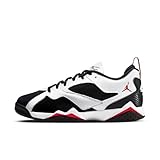
- Real and synthetic leather adds durability and structure to the upper.
- Nike Air technology absorbs impact for cushioning with every step.
- Foam midsole adds lightweight cushioning.
- Rubber outsole gives you durable traction.
Is Nike Air a performance claim?
The heel text should not be read as a separate performance designation. Nike’s wording identifies it as branding. In practical terms, the mark communicates a visual and historical association; it does not tell you that the shoe has a different level of cushioning or that it belongs to a special technical category.
That distinction is useful when two listings use language such as “Nike Air version” and “Jumpman version.” Those labels can describe visible branding, but they should not be treated as an automatic ranking of comfort, durability or athletic performance. The sources for this topic do not establish such a ranking.
Independent reader supportYour contribution helps us test, update, and keep practical guides available for everyone.What the original price tells you—and what it does not
Nike’s Danish Air Jordan 3 history page, last updated 17 January 2023, lists an original price of $100 for its White/Cement Grey history entry. That is a historical launch-price figure recorded by Nike, not a current retail price, resale valuation or price attached to every Air Jordan 3.
Crashes, No Sound, or Screen Glitches?
Random freezes, missing sound and display glitches usually trace back to one bad driver. Find and replace yours safely.Free scan · under a minuteWindows Errors? Fix Them Before They Spread
Repair common Windows errors and clear accumulated junk for a smoother, more stable PC - no reinstall needed.Free scan · no reinstallUse the number only in that context. It can help explain the period being referenced when discussing the model’s early history, but it cannot date a pair by itself and should not be used to estimate what a used or collectible pair is worth now.
Best Value

- Real and synthetic leather adds durability and structure to the upper.
- Nike Air technology absorbs impact for cushioning with every step.
- Foam midsole adds lightweight cushioning.
- Rubber outsole gives you durable traction.
Common interpretation mistakes
Assuming every Air Jordan 3 has Nike Air
The cited Nike product description confirms the mark for the “Free Throw Line” edition. It does not establish a universal rule for all releases.
Calling the shoe an original 1988 pair because of the logo
The branding can reference the original design without making the physical shoe an original from the debut year. A release description and the pair’s own identifying information are required.
Using the heel as an authenticity test
A logo is easy to photograph and reproduce. It is useful evidence only when it agrees with the exact release documentation and the rest of the shoe.
Recommended Free Tools
Inventing a reason for a branding change
The official pages reviewed identify the branding used on specific releases but do not explain why Nike or Jordan Brand changed the heel treatment. Any claimed motive would go beyond the documented evidence.
The practical answer for a pair in front of you
If your Air Jordan 3 says Nike Air on the heel, read that as a release-specific reference to the model’s original Nike branding. Then identify the exact edition before drawing any further conclusion. If another pair has different branding, compare the two named releases rather than assuming one is automatically older, newer, genuine or better.
The most defensible conclusion is modest but useful: Nike Air on the heel tells you about the shoe’s branding history. It does not, by itself, tell you the shoe’s exact age, technical performance, market value or authenticity.
Quick Recap
Product prices and availability are accurate as of the date/time indicated and are subject to change. Any price and availability information displayed on Amazon at the time of purchase will apply.
The Tool Desk
Outbyte PC Repair FREERepair Windows errors before they cause bigger problemsFix Now →Outbyte Driver Updater FREEScan for outdated or missing drivers - takes under a minuteDriver Scan →
