
iTechGuides is reader-supported. When you buy through links on our site, we may earn an affiliate commission. As an Amazon Associate I earn from qualifying purchases. Learn more
Antivirus protects primarily against malware: it looks for malicious files, apps and suspicious behavior, then blocks or quarantines what it recognizes. It does not replace security updates, phishing awareness, encryption or backups. You may not need to buy a separate antivirus package if your supported operating system already has effective protection enabled, but you should verify that protection is active and current and add software only for a specific gap or requirement.
What antivirus protection is designed to cover
Malicious files and applications
Antivirus software is an endpoint defense against malware: software intentionally built to damage systems, steal information, spy on activity, extort money or give an attacker control. A scanner can inspect files arriving through downloads, email attachments, removable media and installed applications. Depending on the platform and configuration, it may block a file before it runs, quarantine it after detection or alert you so that you can remove it.
Detection is not limited to a single list of file names. Traditional signature matching recognizes code associated with known malware. Newer detection can examine how a program behaves, including attempts to change protected settings, launch unexpected processes or access data in an unusual way. CISA’s mobile-device capability guidance describes both signature and behavioral analysis, along with blocking known malware and looking for anomalous application behavior.
What’s actually slowing this PC down?
Pick the symptom - the matching free tool is one click away.
Spyware and unwanted activity
Many antivirus products also include spyware detection. Spyware can monitor activity, collect credentials or transmit personal information without clear consent. CISA’s general safety guidance notes that many antivirus products incorporate spyware detection and advises users to scan for spyware as well as viruses. That does not mean every product detects every unwanted program, so check the stated coverage and scan settings for the software you use.
#1 Best Overall

- THREAT DETECTION – Stay one step ahead. Suspicious links, risky sites, viruses, and scams, caught automatically before they reach you.
- PERSONAL INFO PROTECTION – Keep your personal info safer. Identity monitoring watches for your exposed info and tells you what to do about it.
- SECURE CONNECTIONS – Just a few easy clicks, and we'll automatically protect your info on public Wi‑Fi, every time you connect.
- GUIDED ACTION – Know what matters and what to do next. Clear alerts and simple guidance make it easy to take action.
- MORE THAN ANTIVIRUS – Scam protection, identity monitoring, VPN, web protection, and antivirus work together to protect you, all in one place.
Continuous monitoring and manual scans
When you compare antivirus options, distinguish between real-time monitoring and on-demand scanning. Real-time protection watches files or processes as they are opened or executed. An on-demand scan is started manually or scheduled for a particular folder, drive or the whole device. A product can offer both, but the exact behavior, exclusions and performance impact vary by platform and edition.
Antivirus is a risk-reduction layer, not a guarantee that every malicious action will be stopped. A threat that is new, disguised as a legitimate action or delivered through a compromised account can evade one control. Keeping the software and its detection data current is therefore part of what “having antivirus” means.
How built-in protection differs by platform
An operating system may already include substantial security controls. The protection you need depends on the device, its software version, whether it is still supported and how you use it. The following distinctions come from CISA guidance and should not be read as a promise that every device has identical settings.
Do these 3 things before closing this tab:
1Fix the driver behind crashes, sound loss and screen glitches2Clear out junk files and repair common Windows errors3Scan for outdated or missing drivers - takes under a minute| Platform | Protection identified by CISA | What to verify |
|---|---|---|
| Windows 10 and Windows 11 | Microsoft Defender Antivirus is built into the operating system and is described as protecting against endpoint threats, including file-based and fileless malware. | Confirm that Defender or another intended security product is enabled, receiving protection updates and not disabled by a conflicting configuration. |
| ChromeOS | CISA describes safe-browsing practices, executable blocking and automatic data and file backups as built-in protections. | Keep the Chromebook on a supported, updated release and understand which files are backed up and where recovery copies are stored. |
| Mobile devices | CISA’s technical mobile-threat-defense guidance describes signature and behavioral detection, blocking known malware and identifying anomalous app behavior. | Do not treat that agency capability document as a review of consumer phone apps. Check the security features supplied by your device and operating-system vendor. |
| macOS | The material considered here does not establish detailed, current macOS product coverage or a consumer comparison. | Use the operating system’s current security controls and updates, then assess any additional requirement rather than assuming a universal need or universal immunity. |
Windows users can open the Windows Security app and inspect Virus & threat protection and Protection updates; wording can vary by Windows build. A warning, a disabled service or an old update time deserves attention before you install another product. Installing two products that both provide real-time protection can create conflicts, so follow the operating system’s guidance when changing providers.
Rank #2

- THREAT DETECTION – Stay one step ahead. Suspicious links, risky sites, viruses, and scams, caught automatically before they reach you.
- PERSONAL INFO PROTECTION – Keep your personal info safer. Identity monitoring watches for your exposed info and tells you what to do about it.
- SECURE CONNECTIONS – Just a few clicks, and your info stays protected on public Wi-Fi every time you connect.
- PERSONAL DATA SCANS – Take your info off the market. We’ll find your personal information on sites selling it, then guide you on how to remove it.
- SOCIAL PRIVACY MANAGER – Decide what you share. McAfee finds the privacy settings buried in your social accounts and fixes them.
Do you still need a separate antivirus product?
There is no evidence-based rule that every person must buy additional antivirus software. Start with the protection already present, then identify a concrete gap. A separate product is most defensible when it supplies a capability your current setup lacks, covers several devices under one administration model, or satisfies a stated work, school or regulatory requirement.
When built-in protection may be a reasonable choice
- Your computer or Chromebook runs a supported operating-system version and installs security updates.
- The built-in security service is enabled, its detection data is current and scans can complete without errors.
- You do not have a special requirement for centralized reporting, additional device coverage or a control absent from the built-in tools.
- You are willing to maintain safe browsing, patching, encryption and backup habits alongside malware protection.
These conditions do not certify a device as safe. They indicate that buying another product is not automatically necessary merely because the device is connected to the internet.
Reasons to evaluate an additional product
- Your current platform lacks a security feature required by your employer, school or an internal policy.
- You manage multiple operating systems or many household devices and need one administration view.
- A device is exposed to higher-risk activities and you need capabilities not present in the existing controls.
- Your current protection is repeatedly disabled, cannot update or reports a compatibility limitation that you cannot resolve.
Those are decision factors, not a universal purchasing threshold. The available evidence does not establish a single “risk score” at which everyone should pay for another antivirus package, nor does it identify a best product or current independent test winner.
What antivirus cannot replace
Operating-system and application updates
Security flaws in an operating system, browser, office application or device driver can be exploited even when antivirus is installed. CISA advises keeping software patched. Turn on automatic updates where practical, restart when an update requires it and remove applications that no longer receive fixes. Antivirus may detect an exploit or its payload; it cannot repair an unpatched vulnerability.
Rank #3
![Norton 360 Premium 2027 Antivirus, 10 Devices, Auto-Renews [Download]](https://m.media-amazon.com/images/I/41JNWru8mYL._SL160_.jpg)
- ONGOING PROTECTION Download instantly & install protection for 10 PCs, Macs, iOS or Android devices in minutes!
- TOP-PERFORMING VPN Faster speeds, more server locations, and greater connection control to protect your privacy across all your devices, including Smart TVs.
- ADVANCED SCAM PROTECTION Help spot hidden scams online. With the built-in Genie AI assistant, you’ll never wonder if a message or email is suspicious again.
- REAL-TIME PROTECTION Advanced security protects against existing and emerging malware threats, including ransomware and viruses, and it won’t slow down your device performance.
- DARK WEB MONITORING Identity thieves can buy or sell your information on websites and forums. We search the dark web and notify you should your information be found.
Phishing awareness and account protection
Phishing attempts to persuade you to reveal a password, approve a fraudulent sign-in or open a malicious link. A message can be dangerous because of the action it induces, not because an obviously malicious file is attached. Inspect the sender and destination, avoid entering credentials from an unsolicited link and use multi-factor authentication where available. Antivirus does not make a deceptive request trustworthy.
Encryption
Encryption protects data if a laptop, phone, removable drive or backup is lost or stolen. CISA recommends encrypting devices and removable media. Antivirus generally focuses on malicious code; it is not a substitute for full-device or file-level encryption and it does not make an exposed, unencrypted backup private.
Backups and recovery
Malware can encrypt, delete or corrupt files before it is detected. Maintain backups of important data on an external drive or a vetted cloud service, and understand how to restore them. A backup that is always connected and writable from the computer can be damaged by the same incident, so use a backup arrangement that provides a separate recovery point. Antivirus can reduce the chance of infection; only a usable backup can restore data that has already been lost.
The Tool Desk
Outbyte PC Repair FREEClear out junk files and repair common Windows errorsFree Scan →Outbyte Driver Updater FREEScan for outdated or missing drivers - takes under a minuteDriver Scan →Firewalls and network controls
CISA’s baseline advice is to “Use and maintain anti-virus software and a firewall.” A firewall controls network connections; antivirus examines files, applications or behavior. They address different parts of the attack path, so one should not be presented as a replacement for the other.
Rank #4

- MCAFEE TOTAL PROTECTION IS ALL-IN-ONE PROTECTION — delivering award-winning antivirus for 3 devices, with identity monitoring and VPN
- ID MONITORING — we'll monitor everything from email addresses to IDs and phone numbers for signs of breaches. If your info is found, we'll notify you so you can take action
- BANK, SHOP, AND BROWSE ANYWHERE SECURELY WITH UNLIMITED VPN — protect your online privacy automatically when connecting to public Wi-Fi
- SECURE YOUR ACCOUNTS — generate and store complex passwords with a password manager
- AWARD-WINNING ANTIVIRUS — rest easy knowing McAfee will notify you of risky websites and protect you from the latest threats
How to keep antivirus protection effective
- Check the security status. Open the operating system’s security dashboard and confirm that real-time protection, malware scanning and any firewall you rely on are enabled.
- Update the protection engine and definitions. CISA advises keeping virus definitions up to date. If updates fail, check connectivity, available storage, system time and whether another security program is interfering.
- Keep the operating system and applications patched. Protection data cannot compensate for a browser or operating system that has a known, unpatched weakness.
- Run a targeted scan after a warning or suspicious event. Scan a downloaded file, removable drive or affected folder, then follow the product’s quarantine and removal instructions. Do not restore a quarantined item simply because an application stops working.
- Review exclusions. An exclusion tells the scanner to ignore a path or process. Keep exclusions as narrow as possible and remove old exceptions; an unnecessarily broad exclusion can hide malware.
- Test your recovery plan. Confirm that backups contain the files you expect and that you know the restore process before an incident occurs.
On a managed computer, settings may be controlled by an administrator. Do not disable protection to bypass a warning without checking the policy or support channel that manages the device.
What to compare if you are evaluating options
Because current product tests, prices and rankings are not established here, compare capabilities rather than marketing labels. Ask these questions before installing or paying for anything:
| Comparison point | Questions to ask |
|---|---|
| Platform and version | Does it explicitly support your operating-system edition, processor architecture and device age? |
| Threat coverage | Does the stated scope include malware and spyware, and does it describe behavior-based detection as well as signatures? |
| Real-time and on-demand controls | Is continuous monitoring available, can you schedule or start scans, and can you scan removable media? |
| Updates | Are the engine and detection definitions updated automatically, and what happens when an update fails? |
| Performance and compatibility | What is the effect on startup, battery life and normal applications, and how does it coexist with built-in protection? |
| Privacy and data handling | What diagnostic or threat data leaves the device, why is it collected and how long is it retained? |
| Administration | Can you manage several devices, see alerts and enforce settings if your situation requires that? |
| Cost and licensing | Is the price recurring, what devices or users are included and what happens when a trial or license ends? A current price is not established by the available evidence. |
A product that adds pop-ups, overlapping real-time drivers or broad data collection may create new inconvenience without solving a defined security problem. Conversely, a specific administrative or compliance need can justify an additional layer even when basic malware blocking is already built in.
PC Slower Than It Used to Be?
A free scan shows the junk files, broken settings and background clutter dragging Windows down - then fixes them in one click.Free scan · Windows 10 & 11Outdated Drivers Are Slowing You Down
One free scan finds every outdated or missing driver and matches the right update for your exact hardware.Free scan · exact hardware matchHome devices versus managed organizations
For a household, the practical job is to keep each supported device updated, make sure its security controls are on, recognize phishing and maintain recoverable backups. A centrally managed antivirus system can be useful when many devices must follow the same policy, but that is an administration choice rather than a requirement for every home user.
Best Value
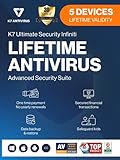
- Lifetime Protection : Safeguards your laptop, PC’s, Macs, tablets, and smartphones Lifetime against Viruses, Malware, ransomware, Spyware, Phishing and ensures secure browsing for a lifetime
- Digital Freedom for Lifetime: Work, surf, bank, and shop in complete confidence, Ultimate Security Antivirus provides Zero-day protection using our ultra-fast, incredibly intelligent Cerebro Scanning Engine.
- Webcam Protection & Parental Control[Windows]: Prevents unauthorized applications and hackers from spying on you by blocking access to your webcam. K7 Ultimate Security Antivirus ensures kids’ privacy & safety on online by applying parental & privacy Measures.
- Backup & Restore: Ultimate Security’s complete protection prevents loss of important data by enabling you to back up all data and restoring whenever you want [Windows]; backup and restore Contacts [Android, iOS].'For more details about product, please visit our official website.
- EMAIL DELIVERY:Activation Key will be sent through email along with installation and activation instructions to your registered email ID within 24 hours
In ransomware-focused guidance for organizations, CISA recommends automatic antivirus and antimalware updates and describes centrally managed antivirus. Organizations should also define who receives alerts, how incidents are isolated and how backups are restored. Those operational controls do not imply that a consumer must buy enterprise software.
Common mistakes and how to correct them
Assuming installation equals protection
A dormant, expired or disabled scanner offers little practical defense. Check status and update history instead of relying on an icon in the notification area.
Using antivirus as permission to ignore updates
Malware scanning cannot close a vulnerable browser or operating system. Patch the platform and applications on their normal schedule.
Recommended Free Tools
Trusting every warning or pop-up
Scareware imitates security alerts to push a user into calling a number, installing an unknown program or paying a fee. Close a suspicious page and inspect alerts in the operating system’s own security interface rather than following an unsolicited instruction.
Keeping only one copy of important files
Detection may arrive after files have been encrypted or deleted. Maintain a separate backup and periodically verify that restoration works.
Installing overlapping security tools without a plan
Two real-time engines can conflict, consume resources or produce confusing alerts. Decide which product is the active provider and use the platform’s recommended compatibility mode for any secondary scanner.
A practical security checklist
- Identify the operating system and confirm that it is still supported.
- Open its security dashboard and verify malware protection, firewall status and update freshness.
- Install operating-system, browser and application patches.
- Use unique passwords and multi-factor authentication for important accounts.
- Treat unexpected links, attachments and login requests as untrusted until verified.
- Encrypt the device and removable media that contain sensitive information.
- Keep important files in a backup stored on an external drive or vetted cloud service, and test a restore.
- Only buy additional antivirus when it fills a documented capability, coverage or management gap.
Antivirus remains useful because malware is still a distinct threat category, but its job is narrower than “securing the device.” The strongest approach combines current malware defenses with patched software, cautious decisions about messages and links, encryption and a recovery plan.
Quick Recap
Product prices and availability are accurate as of the date/time indicated and are subject to change. Any price and availability information displayed on Amazon at the time of purchase will apply.

