
Windows Errors? Fix Them Before They Spread
Repair common Windows errors and clear accumulated junk for a smoother, more stable PC - no reinstall needed.Free scan · no reinstallOutdated Drivers Are Slowing You Down
One free scan finds every outdated or missing driver and matches the right update for your exact hardware.Free scan · exact hardware matchiTechGuides is reader-supported. When you buy through links on our site, we may earn an affiliate commission. As an Amazon Associate I earn from qualifying purchases. Learn more
Endgame content is the part of an RPG designed to keep your character, skills, social group, or goals developing after—or alongside—the main progression. It may unlock at the level cap or after the story, but it can also be distributed throughout the journey. In an open-world RPG, endgame usually combines repeatable challenges, stronger enemies, new rewards, exploration, events, competition, or cooperative activities rather than one mandatory final stage.
Why “endgame” has no universal unlock point
“Endgame” describes a design role, not a standardized level or quest flag. Developers use the word for content that sustains play after a major milestone, but that milestone differs by game. It might be the maximum character level, the final main mission, a particular quest chain, an expansion, or no single gate at all.
The distinction matters because two games can use the same label for very different experiences. In one, endgame starts when the credits roll. In another, high-level activities are available from the middle of the campaign and become more demanding as your build improves. Calling every late-game side quest “endgame” hides that difference.
A useful definition is: endgame is content positioned to provide continuing challenge, progression, mastery, narrative, exploration, competition, or social goals after a major stage of an RPG’s ordinary progression. The activity can be post-campaign, level-gated, or deliberately woven into the entire game.
#1 Best Overall

- 192-page full color hardcover packed with tools and guidance to help gamemasters run immersive campaigns.
- Includes expert advice for new and experienced GMs tailored to the Warhammer The Old World roleplaying system.
- Features campaign-building tools like Grim Portents, Contacts, and Dark Threads to create dynamic narratives.
- Expanded setting details for Talagaad with guidance for adapting adventures to other regions and stories.
- Contains bestiary, magic items, downtime events, and corruption paths to enrich gameplay and surprise players.
Endgame as a design role versus a progression point
Endgame as a progression point
In the traditional model, the game has a visible transition. You finish the main story or reach the level cap, then a new set of systems opens. The Division 2’s March 14, 2019 guide describes this explicitly: after the last main mission, “endgame will truly start.” Its post-campaign structure adds a faction to the map, specializations, invaded missions, world tiers, and more demanding challenges. That is a clear post-campaign use of the term. Ubisoft’s guide explains that transition.
Endgame as a design role
Other games treat endgame as a set of experiences rather than a finish line. ArenaNet said of Guild Wars 2: “We didn’t want the endgame to be something you could only experience after a hundred hours of gameplay or after you reached some arbitrary number.” Its approach places activities normally associated with endgame across the world and across player levels, including large-scale boss encounters. ArenaNet’s explanation of the Guild Wars 2 model is strong evidence that endgame-style play can begin before the campaign ends.
This model is especially relevant to open-world RPGs. A world event, public boss, map mastery system, or build-crafting objective can be a continuing endgame goal even when you have not completed every story chapter.
Six tests for deciding whether an activity is endgame
When a game does not state a precise definition, evaluate the activity against these tests. No single test is mandatory; the more that apply, the stronger the case that the activity is endgame.
Rank #2

- Explore the grim and thrilling World of Legend with this 192-page full-color hardback RPG book for Warhammer: the Old World, ideal for players and collectors alike.
- Create iconic characters using six Origins and 30 Careers, from cunning Rat Catchers to noble Knight-Exiles, with full rules for advancement, Skills, Talents, and Lores.
- Fast-paced, easy-to-learn d10 dice pool system delivers high-lethality gameplay true to the Old World, offering combat, adventure, and peril for every session.
- Customize your hero with trappings, Assets, Endeavours, magical spells, and improvised spellcasting, plus divine Favours, prayers, and miracles from ten gods.
- Perfect for players seeking epic adventures, survival, and glory; this book contains everything needed to explore the Old World, complementing the Gamemaster’s Guide.
- What unlocks it? Identify whether access requires the maximum level, campaign completion, a quest, an expansion, a difficulty setting, or nothing specific. A level-50 gate is meaningful, but the absence of a gate does not disqualify an activity.
- What purpose does it serve? Look for ongoing gear or character progression, tougher mastery challenges, additional story, exploration, ranking, competition, social play, or a combination of these.
- Does it support continued play? Repeatable encounters, escalating tiers, rotating events, seasons, procedural variations, or an enduring progression track indicate a sustained loop. A one-time optional mission can be excellent late-game content without being an endgame system.
- Where does it happen? Endgame can be in the shared open world, in an instanced dungeon, or in both. Open-world content and endgame content overlap, but neither term is a synonym for the other.
- What does it demand? Consider enemy difficulty, build preparation, group size, communication, role requirements, and scheduling. These demands often distinguish an endgame activity from an ordinary quest.
- What goal or reward keeps it relevant? New equipment, alternate builds, rank, achievements, map completion, story revelations, cosmetic status, or mastery can all sustain an endgame loop. The reward need not be a higher item level.
Common forms of open-world RPG endgame
Most games combine several forms. The table describes the role each form commonly plays, not a universal checklist every title must include.
| Form | What the player does | Why it can count as endgame |
|---|---|---|
| Post-campaign missions | Complete new quests or a continuation after the main finale | Extends narrative and provides goals after the original arc |
| Higher-difficulty encounters | Replay missions, bosses, or zones with stronger enemies or special rules | Creates a mastery and preparation loop |
| Raids and dungeons | Clear structured encounters alone or with a coordinated group | Offers demanding, repeatable challenges with specialized rewards |
| Open-world bosses and events | Join public fights, timed events, invasions, or territory activities | Keeps the shared world active and rewards participation |
| Build and gear progression | Earn equipment, optimize statistics, unlock skills, or test alternative builds | Provides a continuing character-development objective |
| Exploration and completion | Finish maps, collections, secrets, achievements, or mastery tracks | Supports long-term goals outside the main plot |
| Competitive and social modes | Compete in rankings, defend territory, trade, or organize groups | Creates goals that do not end when the story does |
What official game examples reveal
Guild Wars 2: endgame distributed through the world
Guild Wars 2 demonstrates the “design role” interpretation. ArenaNet describes placing endgame elements throughout the game instead of requiring a long grind or an arbitrary level. Large-scale boss encounters are an example. A player can therefore encounter an endgame-style challenge while still advancing through other content. The lesson is not that every event is endgame; it is that access timing alone cannot define the category.
The Division 2: a post-story transition
The Division 2 illustrates the traditional handoff. Once the final main mission is complete, the game changes the strategic context of the map and introduces systems such as specializations, invaded missions, world tiers, and harder challenges. Here, “endgame” is useful precisely because it identifies a distinct phase after the campaign.
The Tool Desk
Outbyte Driver Updater FREEFix the driver behind crashes, sound loss and screen glitchesFind Drivers →Outbyte PC Repair FREEClear out junk files and repair common Windows errorsFree Scan →Diablo IV: escalating dungeon loops
Blizzard’s feature overview describes endgame dungeons as upgraded versions of existing dungeons. They raise difficulty, improve rewards, and add affixes that alter how a run plays. The important point is structural: endgame does not require an entirely new map or story. A repeatable activity becomes endgame when escalating rules, strategic choices, and rewards create a continuing challenge loop. Blizzard’s feature overview details that dungeon model.
Rank #3

- ENTER THE WORLD OF SKYRIM: Experience the legendary open-world RPG as a tabletop adventure, exploring Tamriel through branching quests, iconic factions, and rich Elder Scrolls lore.
- COOPERATIVE OR SOLO PLAY: Designed for 1–4 players, allowing you to adventure solo or team up to face dragons, uncover conspiracies, and shape the fate of Skyrim together.
- OPEN-ENDED QUEST SYSTEM: Choose how you approach each mission—diplomacy, stealth, or combat—as your decisions permanently impact the story and the world around you.
- DEEP CHARACTER PROGRESSION: Build unique heroes with evolving skills, gear, and abilities inspired by the video game’s iconic progression systems.
- HIGH REPLAYABILITY: Modular scenarios, multiple quest paths, and varied character builds ensure every campaign feels fresh and every journey through Skyrim is different.
Destiny 2: different levels of group coordination
Bungie’s September 25, 2024 developer insight calls raids and dungeons part of an “endgame activity ecosystem.” It presents raids as demanding group activities and dungeons as a more accessible raid-like format that requires less social coordination and scheduling. This gives you a practical comparison axis: endgame is not one difficulty or one party size. Activities can serve players who want a scheduled team challenge and players who prefer a smaller, more flexible group. Read Bungie’s discussion of raids and dungeons.
Throne and Liberty: level-gated shared-world goals
The official endgame introduction for Throne and Liberty points level-50 players toward highly rewarding activities such as Castle Siege and open-world bosses. This example combines a firm progression gate with shared-world content. Endgame therefore does not have to be an instance: a large public objective can be the centerpiece of a level-capped phase. The game’s endgame introduction describes those activities.
Genre differences
A Chalmers University of Technology thesis notes that MMORPG endgame commonly follows the level cap, while JRPGs may place extra challenging content after the story is complete. That distinction explains why “endgame” can sound natural in an online role-playing game but less precise in a single-player open-world RPG. The underlying idea—sustained, higher-goal content—still transfers, but the trigger and social structure may not. The thesis discusses these genre-specific uses.
Open-world content is not automatically endgame
An open world describes how the game’s spaces and activities are arranged. Endgame describes what a piece of content does in the overall progression. A map may contain introductory quests, low-level errands, collectible hunts, story missions, public events, and endgame bosses at the same time.
Rank #4
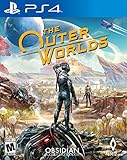
- The outer worlds is a new single-player first-person sci-fi rpg from obsidian entertainment and private division
- In the outer worlds, you awake from hibernation on a colonist ship that was lost in transit to halcyon, the furthest colony from earth located at the edge of the galaxy, only to find yourself in the midst of a deep conspiracy threatening to destroy it. As you explore the furthest reaches of space and encounter various factions, all-vying for power, the character you decide to become will determine how this player-driven story unfolds. In the corporate equation for the colony, you are the unplanned variable
- Open-world does not mean endgame: a level-one patrol in a shared map is open-world content, but it is not necessarily a continuing late-stage goal.
- Optional does not mean endgame: an optional quest can be available early and never create a repeatable progression loop.
- Hard does not mean endgame: a difficult puzzle or superboss may be postgame content, but difficulty alone does not establish an ongoing endgame role.
- Postgame and endgame are not identical: postgame means after the main story; endgame can begin before the finale or include systems that continue indefinitely.
How to map an individual game’s endgame
Use this process when you are trying to understand a new open-world RPG or explain it to someone else.
- Mark the gate. Record the exact requirement: campaign mission, level, quest, expansion, reputation, or no fixed requirement.
- List the activities. Separate open-world events, bosses, missions, dungeons, raids, competitive modes, exploration, and crafting or collection systems.
- Describe the loop. Explain what a player repeats or escalates: higher tiers, rotating modifiers, timed events, seasonal objectives, equipment upgrades, or mastery ranks.
- Identify the rewards. State whether the reward is power, build flexibility, cosmetics, achievements, narrative, territory, rank, or social recognition.
- Measure coordination. Note whether the activity is solo, public, matchmaking-based, fixed-group, or dependent on scheduled communication.
- Check longevity. Ask whether the activity has variation and a reason to return, rather than merely being a final one-time challenge.
A precise description might read: “After the final campaign mission, the game opens world tiers and invaded missions; level-50 players can also join public bosses; raids require scheduled groups, while dungeons support smaller teams.” That tells a reader far more than saying “the game has a lot of endgame.”
Independent reader supportYour contribution helps us test, update, and keep practical guides available for everyone.Coordination is a useful way to compare endgame activities
| Coordination level | Typical structure | What to explain |
|---|---|---|
| Solo | Personal challenges, build tests, exploration, or soloable instances | Whether difficulty scales and whether rewards remain useful |
| Flexible public | Open-world bosses and events with other players joining spontaneously | Spawn or schedule, participation rules, and contribution rewards |
| Matchmade group | Small dungeons or missions assembled by an in-game queue | Role expectations, failure recovery, and time commitment |
| Organized group | Raids, sieges, or progression encounters requiring a prepared team | Group size, communication, fixed schedules, and learning curve |
Bungie’s raid-and-dungeon comparison is a concrete example of why this axis matters: two activities can both be endgame while asking for very different amounts of planning and social commitment.
Free tools Windows power users keep installed
One-click scans. No signup required.
How progression keeps an endgame loop alive
A sustainable endgame gives players a reason to return after the first clear. The reason may be vertical power—stronger gear or higher tiers—or horizontal growth, such as a new build, mastery option, collection, achievement, story branch, or social objective. Diablo IV’s affixes show how changing rules can add strategic depth without requiring a separate location for every run. A public boss or siege can use a different retention mechanism: scheduled participation, territory control, or status within a community.
Best Value
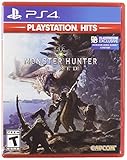
- Welcome to the new world: taking on the role of a Hunter, players are tasked with going on a research expedition to a newly discovered continent known only as “new world”.
- Living and breathing ecosystem: utilize the surrounding environment and wildlife to your advantage;Subgenre:Action role-playing game (RPG)
- Online drop-in multiplayer: when the battle is too daunting to take on single-handedly, hail up to three other hunters to assist during quests by sending up a sos flare to a worldwide server.
- Hunt to craft new Gear: defeat monsters and collect loot from fallen foes to craft equipment and weapons styled after the monsters that have been slain.
- SEAMLESS gameplay: players and monsters can move from One map area to another freely and without loading screens whilst gameplay also dynamically transitions between night and day.
Do not assume that a gear treadmill is required. If a game’s stated goal is mastery, completion, or competition, an endgame can remain meaningful even when equipment power stops increasing. Conversely, a high level cap alone does not create endgame if there is no activity, reward, or challenge that follows it.
Common classification mistakes
Calling every level-cap activity endgame
The level cap is a useful marker, especially in MMORPGs, but it is only evidence of a progression point. Check whether the activity actually supplies continuing goals, rewards, or challenges.
Calling every post-credit scene endgame
An epilogue, bonus chapter, or single superboss may be postgame without forming an endgame loop. Describe it as postgame content unless it also supports sustained progression or replay.
Do these 3 things before closing this tab:
1Repair Windows errors before they cause bigger problems2Scan for outdated or missing drivers - takes under a minute3Clear out junk files and repair common Windows errorsEquating raids with the whole endgame
Raids are one form. Open-world events, dungeons, buildcrafting, exploration, competitive modes, and narrative extensions can all fill the same design role, often for players who do not want a large scheduled group.
Using player slang as a technical definition
Players commonly ask for “endgame/postgame content” or a loop that keeps them playing after the story. Discussions such as this MMORPG thread and this RPG discussion show natural usage, but they are examples of community language, not measurements or a genre-wide standard.
A concise definition you can apply
When you need a one-sentence test, ask: Does this activity provide an ongoing challenge, progression path, goal, or social mode that the developers intend players to pursue after a major milestone or throughout the later stages of the game? If yes, it can reasonably be called endgame. Explain the unlock condition, activity type, repeatability, rewards, and coordination demand so readers understand exactly what that label means in that game.
Quick Recap
Product prices and availability are accurate as of the date/time indicated and are subject to change. Any price and availability information displayed on Amazon at the time of purchase will apply.
Quick wins for a faster PC:
Scan for outdated or missing drivers - takes under a minuteDriver Scan →Clear out junk files and repair common Windows errorsFree Scan →
