
iTechGuides is reader-supported. When you buy through links on our site, we may earn an affiliate commission. As an Amazon Associate I earn from qualifying purchases. Learn more
Claude watermarks can indicate that Claude likely processed text or that a supported file carries Claude provenance metadata. They cannot prove who authored the underlying ideas, identify the user, or establish that the content is true. That distinction is why AI companies have a basic responsibility to make system involvement recognizable—and why labels should be treated as context, not a verdict.
How Claude marks text and files
Anthropic describes two different signals, with coverage varying by model, feature, and platform. A mark is not guaranteed on every Claude response or file.
| # | Preview | Product | Price | |
|---|---|---|---|---|
| 1 |

|
Upgraded Hidden Camera Detector - AI-Powered Anti-Spy Device, GPS Tracker & Bug Detector, Portable... | $29.99 | Buy on Amazon |
| 2 |
|
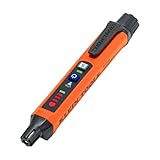
Klein Tools ET190 Compact Gas Leak Detector | $26.00 | Buy on Amazon |
- Text watermark: Supported Claude models embed an imperceptible signal in generated text at the model level. Anthropic says it is designed to travel through copying and pasting and may persist through some editing.
- File Content Credentials: Supported file outputs, such as PNG and JPEG images, can carry signed provenance metadata using the C2PA standard. This metadata is attached to the file rather than woven into its visible pixels.
Anthropic’s model-support table identifies which models support text watermarks and which support file credentials; some support file credentials without text-watermark support. Platform availability can also differ. Check the current table before assuming a particular output is marked: Anthropic’s Claude Content Credentials explanation.
Recommended Free Tools
How to check a supported file
Anthropic provides a free public file checker for determining whether a supported file contains a Claude Content Credential. It checks files, not text. According to the checker documentation, the file stays on the user’s device and is not stored or used for another purpose: Using the Claude Content Credentials checker.
#1 Best Overall
- Upgraded AI-Powered Detection: Military-grade technology detects hidden cameras, listening devices, and GPS trackers with precision. Enjoy peace of mind in hotels, offices, and even your own home. Stay one step ahead of hidden threats!
- Simple, Fast & Effective: Just turn it on, sweep the area, and let the audible alarm + LED alerts notify you of threats. No technical skills needed - Press, Search, Relax! Skip expensive private investigators - protect yourself in seconds.
- Compact & Travel-Ready: Lightweight, rechargeable, and pocket-sized for discreet, on-the-go security. Toss it in your bag, purse, or pocket - perfect for travel, work, and public spaces.
- Total Privacy Protection: Don’t gamble with your security. Safeguard against spying in hotel rooms, changing rooms, offices, cars, dorms, and more. Know for sure if you’re being watched, recorded, or tracked.
- Trusted by Experts & Customers: Designed with cybersecurity and counter-surveillance professionals. Join 300,000+ satisfied users who rely on our detectors for ultimate privacy & safety.
How to check text
Text watermark detection is in private preview for eligible organizations, including certain public-interest organizations and enterprises with relevant compliance needs. It is not a public text-checking service available to everyone. Anthropic explains the distinction and current availability in its Claude Content Credentials announcement.
What a positive or negative result means
Anthropic’s own boundary is clear: “A watermark can only determine that Claude was likely involved with the content at some point.” A positive result does not tell you what that involvement was. Claude may have written material, or it may have proofread, translated, summarized, or otherwise transformed text that began elsewhere. A translation can be marked because Claude selected the words in the translated version. The signal does not identify the person or organization who used Claude, establish who originated an idea, confirm accuracy, or decide ownership. See Anthropic’s explanation of Claude text watermarking.
A negative result is not proof that a human wrote the material. The model or feature may not support marking; a short passage, heavy editing, paraphrasing, translation, or mixed human-and-AI text may evade detection. Rewriting or transformation can weaken a signal, while lighter editing may leave one detectable. Anthropic describes intended behavior and caveats, but the cited material does not establish independent accuracy or robustness measurements for these cases.
The Tool Desk
Outbyte PC Repair FREEClear out junk files and repair common Windows errorsFree Scan →Outbyte Driver Updater FREEFix the driver behind crashes, sound loss and screen glitchesFind Drivers →These signals should not be conflated with generic AI-writing detector judgments. Provenance credentials and embedded watermarks are specific technical signals; a detector’s classification is a different kind of claim. Neither should substitute for evaluating a text’s sources, evidence, and context.
Why AI companies have a responsibility to label
When a system generates or materially transforms content, audiences benefit from knowing that it was involved. Without a recognizable signal, readers, viewers, and downstream platforms may have no practical way to distinguish generated material from content created without that system. Labels are therefore a basic accountability measure: they provide context while preserving the distinction between assistance and authorship.
That responsibility does not mean a label can answer every question. It should identify system involvement as narrowly as the signal supports, avoid implying that the system originated every idea, and make limitations understandable. Companies also need to explain which models, content types, and export routes are covered, and provide ways to inspect signals where practical. A mark that readers cannot find or interpret offers less useful context.
Rank #2
- COMPACT AND POCKET CLIP READY: Combustible gas leak detector designed to be slim, lightweight, and pocket-sized, complete with a sturdy pen clip
- VISUAL AND AUDIO ALERTS: Stay safe with bright LED indicators and escalating audible tones designed to grab your attention in loud, dim, or busy job sites
- DUAL SENSITIVITY MODES: Toggle between High and Low sensitivity settings to make pinpointing leak locations easier and more accurate
- AUTO-ZEROING FOR ACCURATE READINGS: Starts up with 30-Second automatic zeroing, ensuring fast setup and trustworthy readings without manual adjustments
- ENGINEERED FOR EVERYDAY USE: Built for professionals who demand accuracy and portability, this gas detector delivers dependable performance in a rugged, compact size
What the EU AI Act requires from August 2026
The European Commission says the AI Act’s Article 50 transparency obligations apply from 2 August 2026. The rules distinguish the duties of providers—the organizations supplying covered AI systems—from those of deployers using them. The exact obligation depends on the role and use case; it is not a blanket requirement that every AI-assisted sentence be visibly labeled by every user.
- Providers: Covered providers must ensure that AI-generated or manipulated content is marked in a machine-readable format and that systems can detect such content, subject to the Act’s scope and conditions.
- Deployers: Disclosure duties apply in defined cases, including deepfakes and certain AI-generated or manipulated text published to inform the public on matters of public interest.
The Commission says qualifying systems placed on the market before 2 August 2026 have a transition period until 2 December 2026. Consult the Commission’s guidance on marking and labelling AI-generated content and the Code of Practice page for the applicable scope and details.
The Code of Practice is voluntary; the duties are not
The Code of Practice offers a practical framework for meeting the transparency obligations. Signing or following the Code is voluntary, while applicable Article 50 obligations are legal requirements. The Commission describes adherence as a recognized way to demonstrate compliance, not conclusive proof of it. About 190 organizations had signed by the end of July 2026, according to the Commission; that figure records participation, not the quality of compliance or technical performance. See the European Commission’s Code of Practice information.
How to assess an AI label system
A provider’s claim that it labels content is not enough to judge how useful the system is. Compare the practical coverage and meaning of its signals:
- Content types: Does it cover text, images, audio, and video, or only selected formats?
- Signal design: Is the signal embedded in the content, attached as metadata, or both? Embedded marks and metadata can fail in different ways.
- Coverage: Which models, products, regions, and export paths support marking? Is support consistent when content is copied or downloaded?
- Verification and explanation: Can a recipient check a signal independently, and does the provider explain what positive and negative results do—and do not—mean?
OpenAI describes a layered approach that includes C2PA provenance metadata, SynthID watermarks for supported images and audio, textGrain watermarks for ChatGPT-generated text in the EU, and verification tools for supported content. It cautions that ordinary file handling can remove metadata and extensive changes can weaken watermarks; a positive signal does not establish accuracy, ownership, or context, and a missing signal is inconclusive. These are the company’s descriptions, not an independent comparative evaluation: OpenAI’s approach to labeling AI-generated content.
Quick wins for a faster PC:
Repair Windows errors before they cause bigger problemsFix Now →Scan for outdated or missing drivers - takes under a minuteDriver Scan →No single signal can carry the whole burden. Metadata can be lost, and content can be transformed; an embedded mark may persist in some circumstances but is not a universal authorship record. Layering signals with accessible verification and plain-language limits can make provenance more useful, without turning it into proof of truth or authorship.
Quick Recap
Product prices and availability are accurate as of the date/time indicated and are subject to change. Any price and availability information displayed on Amazon at the time of purchase will apply.

