
The Tool Desk
Outbyte Driver Updater FREEFix the driver behind crashes, sound loss and screen glitchesFind Drivers →Outbyte PC Repair FREEClear out junk files and repair common Windows errorsFree Scan →iTechGuides is reader-supported. When you buy through links on our site, we may earn an affiliate commission. As an Amazon Associate I earn from qualifying purchases. Learn more
Co-packaged optics (CPO) is not the only way to increase optical bandwidth in a data center. Options include familiar front-panel pluggable transceivers, linear pluggable optics (LPO), linear receive optics (LRO), on-board optics (OBO), and near-packaged optics (NPO). They place optical conversion and signal processing at different points relative to the switch ASIC, trading power, latency, bandwidth density, compatibility, serviceability, and design complexity in different ways.
Optical circuit switching (OCS) is another option, but at a different layer: it changes how optical paths are switched across a network fabric rather than simply replacing a transceiver. The right alternative depends on the network design and the switch platform—not on a single claim that one technology is universally faster or more efficient.
What can you use instead of co-packaged optics?
The main alternatives are pluggable optics, LPO, LRO, OBO, and NPO. They differ in how much signal processing happens in the optical module and how close the optical engine sits to the switch ASIC. Broadly, conventional pluggables keep the optical interface at the front panel; OBO moves it onto the host board; NPO places it inside the switch close to, but separate from, the ASIC; and CPO integrates optics at the ASIC package. LPO and LRO are pluggable approaches distinguished by how much retiming and processing they perform.
These are not interchangeable module choices. A pluggable module may preserve a familiar replaceable interface, while a lower-processing module can depend more heavily on the host switch’s electrical interface and signal correction. More integrated designs can shorten the electrical path, but require closer coordination among the optical, electrical, thermal, and packaging elements. A fabric can also use OCS alongside these link technologies.
#1 Best Overall
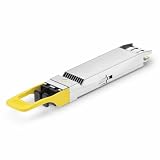
- 800Gbps High-Bandwidth Connectivity Provides 800Gbps optical networking capability for next-generation Ethernet infrastructure, AI clusters, GPU computing, cloud data centers and high-performance computing applications.
- OSFP DR8 Gen2 Architecture Features an OSFP package with DR8 Gen2 optical architecture, providing 8-channel parallel optical connectivity for high-density 800G network deployments.
- Up to 500m Transmission Distance Designed for up to 500m transmission over single-mode fiber, making it suitable for longer-reach data center connections between racks, rows and network switching infrastructure.
- 1310nm Single-Mode Fiber Uses a 1310nm optical wavelength and single-mode fiber (SMF) architecture for high-speed parallel optical transmission over longer distances. Typical DR8 implementations use MPO-based parallel fiber connectivity.
- Silicon Photonics for AI & Data Center Applications Based on Silicon Photonics (SiPh) technology, the Gen2 design is positioned for high-density optical interconnects in AI computing, GPU clusters, HPC systems, cloud data centers and 800G Ethernet networks.
| Approach | Where optics sit | Signal-processing approach | What it can offer | Main consideration |
|---|---|---|---|---|
| Fully retimed optics (FRO) | Pluggable module at the faceplate | Transmit and receive retiming and processing | Mature, broadly supported modular deployment | Retiming and processing add module power and latency relative to lower-processing options, according to Nokia |
| Linear receive optics (LRO), or half-retimed optics (HRO) | Pluggable module at the faceplate | Retiming is limited to the transmit direction | Nokia characterizes it as reducing power and latency versus fully retimed optics | Still a distinct processing arrangement; confirm host and module compatibility |
| Linear pluggable optics (LPO) | Pluggable module at the faceplate | Removes module signal processing and relies on host ASIC signal correction | Can reduce module power and latency | Requires a compatible switch and demanding signal-integrity design |
| On-board optics (OBO) | Optical engines on the host board | Optical conversion is closer to the ASIC than in front-panel pluggables | Shortens the electrical path without direct co-packaging | Board-level integration changes design and service considerations |
| Near-packaged optics (NPO) | Inside the switch, close to but separate from the ASIC | Optics are tightly integrated with the switch design | Moves optical interfaces close to switching silicon | Usually calls for close co-design; serviceability depends on the implementation |
| Optical circuit switching (OCS) | At the network-fabric switching layer | Changes optical paths across the fabric rather than defining a transceiver’s processing | Can complement link-level optical technologies in large, dynamic AI networks | Not a direct substitute for a transceiver on every link |
The table describes architectural distinctions, not a neutral performance ranking. The cited sources do not supply a cross-vendor benchmark measuring every option under the same system conditions.
How the alternatives trade off power, latency, and reach
Retiming and host-side signal correction
A fully retimed pluggable performs transmit and receive retiming and processing in the module. Nokia describes FRO as robust, easy to deploy, and broadly supported. Its faceplate location also preserves a modular form factor in which the module can be replaced at the front of the system.
LRO, also called HRO, reduces the retiming performed in the module by retaining it only in the transmit direction. Nokia characterizes this design as reducing power and latency relative to FRO. LPO goes further: the module omits signal processing and relies on the host ASIC to correct the signal. Nokia and a 2025 technical review describe potential power and latency reductions, but both identify host compatibility as a condition. LPO is therefore not a drop-in replacement for every fully retimed module.
Removing work from a module does not make that work disappear from the system. LPO relies on compatible host SerDes and host-side signal handling, so a prospective deployment must be evaluated as a switch-and-module combination. Nor does lower module power automatically establish lower total system power: the relevant comparison depends on the complete system, and the cited material does not provide a neutral, like-for-like measurement across these architectures.
Moving optical conversion closer to the ASIC
OBO places optical engines on the host board. A 2025 technical review describes it as a middle ground between faceplate pluggables and direct co-packaging: the electrical path to the switch ASIC is shorter than with front-panel optics, but the optics are not co-packaged with the ASIC. The review reports demonstrated use in high-performance computing and an OBO multi-source agreement defining 400Gb/s and 800Gb/s modules. Those are specific reported examples, not evidence that OBO has broad deployment or that every OBO implementation uses those module rates.
NPO puts optical interfaces inside the switch, near but separate from the switch ASIC. Nokia says NPO and CPO usually require close co-design. Both may use pluggable external light sources (ELS), which Nokia identifies as a way to help with thermal management, reliability, and serviceability. The presence of an external light source does not by itself establish that other integrated components are field-replaceable; that depends on the specific system design.
As integration moves closer to the ASIC, the shorter electrical path can ease board-level signal-integrity and routing constraints. The system also becomes more dependent on the optical, electrical, thermal, and packaging elements working together. Higher integration is thus an architectural trade-off, not a guarantee of simpler installation or repair.
Recommended Free Tools
What the evidence does—and does not—say about latency
Nokia describes LRO and LPO as reducing latency compared with fully retimed optics, and a 2025 review describes LPO as a potential near-term upgrade path relative to CPO. These are directional descriptions, not a complete set of measured end-to-end latency results. Actual system performance should not be inferred from module architecture alone, and the available material does not establish a numerical latency advantage for each option.
Are pluggable optics good enough for AI data centers?
They can be a suitable architecture where a switch platform supports the required optical modules and where modular deployment is valuable. Conventional fully retimed pluggables are described by Nokia as mature and broadly supported; their faceplate placement retains a familiar replacement model. That makes them a meaningful alternative to CPO, rather than a technology that has become unusable simply because bandwidth demands are rising.
Pluggables also span more than one design. LRO and LPO reduce the amount of processing in the module, but have different host-side requirements. In particular, LPO’s reliance on host signal correction means a team must verify support for the specific switch and electrical interface. It should not assume that a lower-power linear module will work in a platform designed for conventional retimed optics.
More integrated arrangements address a different set of constraints. OBO and NPO bring optical conversion closer to the ASIC, potentially reducing the board-level electrical path and allowing higher integration. In exchange, they require more coordination in system design, and their repair model is implementation-specific. A claim about bandwidth density, module power, or availability should be checked against the exact product and platform, not generalized to all pluggables or all integrated optics.
Which architecture should a data-center team evaluate?
Keep pluggables when modular service and platform fit matter
FRO is the straightforward category to evaluate when broad support and a replaceable faceplate module are priorities. It includes signal processing in both directions, which is the reason to compare it with lower-processing designs rather than assuming every pluggable has the same power or latency characteristics. Before selecting a specific module, confirm the switch’s supported form factor, optical interface, speed, and compatibility information with the system supplier.
Rank #2

- 800Gbps High-Speed Transmission Supports 800Gbps Ethernet connectivity with an 8-channel parallel optical architecture, designed for high-bandwidth AI clusters, cloud computing and next-generation data center networks.
- OSFP VR8 Form Factor Features the OSFP package and VR8 optical configuration, providing a high-density 800G optical solution for compatible Ethernet switches, routers and data center networking equipment.
- 30m / 50m Short-Reach Performance Designed for short-distance multimode fiber links, supporting up to 30m over OM3 and 50m over OM4/OM5, making it suitable for rack-to-rack and in-row data center connections.
- 850nm Multimode Optical Interface Uses an 850nm optical wavelength with multimode fiber (MMF) for high-speed short-reach optical transmission. The MPO interface supports high-density parallel fiber connectivity.
- Designed for AI & Data Center Networks Ideal for AI computing clusters, GPU networks, HPC systems, cloud data centers and 800G Ethernet infrastructure, providing high-bandwidth optical connectivity for demanding computing environments.
Consider LRO or LPO when the host platform supports the trade-off
LRO reduces retiming in the receive direction while retaining it in transmit; Nokia characterizes it as a power- and latency-reducing step relative to FRO. LPO removes module signal processing, with the host ASIC handling signal correction. That can further reduce module power and latency, but adds a firm compatibility requirement and more demanding signal-integrity design. The appropriate choice is therefore determined by the supported switch configuration and link design, not by a module-only specification.
Product announcements illustrate why claims need their comparison basis attached. Ciena announced its Vesta 200 6.4T CPX pluggable optical engine on February 25, 2026, describing retimer-free linear-drive operation and claiming up to 70% power savings versus traditional retimed options. That is Ciena’s stated comparison for that product; it is not a general savings figure for LPO or pluggables as a category. Ciena also describes an IEEE 802.3dj-compliant optical interface and a standards-based ecosystem.
Nokia lists an ICE-D 1600G DR8 LPO transceiver as a product example and describes intra-data-center optical links above 1.6 Tb/s. The listing establishes an example, not pricing, broad deployment, availability from any particular retailer, or compatibility with a reader’s switch.
What’s actually slowing this PC down?
Pick the symptom - the matching free tool is one click away.
Consider OBO or NPO when system-level integration is the objective
OBO is relevant when a design seeks a shorter electrical path than front-panel pluggables without placing the optics directly in the ASIC package. NPO moves optics inside the switch and closer to the ASIC. These choices are not merely different module form factors: they affect host-board or switch design and call for system-level evaluation. The cited material does not establish a universal service procedure or field-replacement capability for either architecture.
Evaluate OCS as a fabric decision
TrendForce describes OCS as replacing electrical switching with optical switching for large, dynamic AI networks and presents it as complementary to CPO. Treat OCS as a network-topology or switching-plane decision: it may change how paths are switched across a fabric, but it does not on its own answer which transceiver or optical-engine placement to use on each link.
Independent reader supportYour contribution helps us test, update, and keep practical guides available for everyone.What current product announcements show
Vendor announcements can indicate where products and ecosystems are headed, but a shipping plan, specification announcement, and shipping product are different kinds of evidence. The examples below should not be read as a neutral comparison or proof of broad deployment.
| Example | What the vendor or source states | How to interpret it |
|---|---|---|
| Cisco Silicon One G302 and USFP plans | In an October 12, 2026 announcement, Cisco described the G302 as a 51.2T top-of-rack switch planned to begin shipping before the end of 2026. Cisco and NVIDIA announced plans to develop an Ultra-Dense Small Form Factor Pluggable (USFP) capable of 400Gb/s per lane. | The switch shipping date was a plan as of the announcement. USFP was also a planned design, not a claim of an already widely available product. |
| USFP density and efficiency claims | Cisco says the planned USFP is expected to provide 4x the bandwidth density and 1.3x the power efficiency of 200Gb/s-per-lane optics. | These are Cisco’s expected comparisons for a planned design, not independently verified head-to-head results. Cisco said an open industry specification was expected. |
| Ciena Vesta 200 6.4T CPX | Ciena announced the pluggable optical engine on February 25, 2026, describing retimer-free linear-drive operation and up to 70% power savings versus traditional retimed options. | The “up to” figure belongs to Ciena’s named product and stated comparison. It should not be applied to every LPO or pluggable module. |
| NVIDIA Spectrum-X Ethernet Photonics | NVIDIA’s product page states up to 409.6 Tb/s and lists availability in the second half of 2026. | This is a CPO example, useful as context for the technology being compared, not an alternative architecture or independent benchmark. |
| NVIDIA’s March 2025 announcement | NVIDIA cited 100 Tb/s and 400 Tb/s configurations and claimed 3.5x power efficiency and 10x network resiliency versus traditional methods. | These are NVIDIA’s earlier claims. The announcement does not supply metric definitions or test conditions, and its figures should not be conflated with the later product-page capacity. |
NVIDIA founder and CEO Jensen Huang said in the March 18, 2025 announcement: “AI factories are a new class of data centers with extreme scale, and networking infrastructure must be reinvented to keep pace.” It expresses the vendor’s position on scaling needs; it is not independent performance evidence.
Quick wins for a faster PC:
Clear out junk files and repair common Windows errorsFree Scan →Scan for outdated or missing drivers - takes under a minuteDriver Scan →Repair Windows errors before they cause bigger problemsFix Now →Ciena’s February 25, 2026 announcement quotes LightCounting CEO Vladimir Kozlov: “Adoption of CPO has started. The next priority for operators is development of a competitive CPO ecosystem.” This is an industry opinion about ecosystem development, not a measurement of adoption share or proof that a particular alternative is preferable.
How to compare options for a real deployment
A useful comparison starts with the system constraints and evidence needed to validate them. Module power figures or lane-rate claims do not alone establish total switch power, end-to-end latency, or a fit for a specific network.
- Start with the switch platform. Identify the supported optical placements, module types, host SerDes capabilities, and any stated signal-correction requirements. Treat LPO compatibility as a switch-and-module question.
- Define the link and bandwidth requirement. Compare the actual interface, lane rate, and intended link arrangement for the target deployment. Do not infer that an announced maximum for one product applies to a different architecture.
- Set service and design constraints. Decide whether faceplate replacement is important, whether board or switch integration is feasible, and what level of thermal and packaging co-design the system can support. For NPO or CPO, verify which components can actually be serviced or replaced.
- Ask for comparable system measurements. Request power and latency figures measured on the relevant system configuration, with the comparison basis and test conditions stated. The vendor claims cited here do not provide a common cross-architecture test.
- Check product status and specification status. Distinguish products listed or announced from those shipping, and distinguish a planned open specification from a completed, published standard. Confirm availability and platform support at procurement time.
This process avoids a common comparison error: treating module power, bandwidth density, or a vendor’s “up to” figure as though it were a neutral whole-system result. The reviewed sources do not establish a single ranking across FRO, LRO, LPO, OBO, NPO, CPO, and OCS.
Common pitfalls when evaluating alternatives
- Assuming LPO is universally plug-compatible. LPO relies on compatible host-side SerDes and signal correction. Verify the exact switch and module pairing rather than relying only on connector or form-factor similarity.
- Equating a shorter electrical path with a guaranteed system win. OBO, NPO, and CPO place optics closer to the ASIC, but the overall outcome depends on the integrated electrical, optical, thermal, and packaging design.
- Calling integrated components field-replaceable by default. An external light source can help serviceability in NPO/CPO designs, according to Nokia; it does not prove that the optical engine or other integrated parts are user-replaceable.
- Comparing vendor figures as if they came from one test. Cisco’s expected USFP comparison, Ciena’s product-specific power claim, and NVIDIA’s claims use different designs and stated bases. None establishes an independent, same-conditions comparison of all options.
- Confusing topology with transceiver architecture. OCS changes switching across the fabric and can complement optical links. It does not occupy the same decision slot as choosing FRO, LPO, OBO, or NPO for a link.
- Treating roadmaps as current availability. A shipping target or expected availability window is time-sensitive. Check the specific product’s status and the switch platform’s support before committing to a design.
What is established—and what remains uncertain
The architecture distinctions are clear: pluggables preserve a faceplate module, LRO and LPO reduce module processing to different degrees, OBO puts optics on the host board, NPO places them inside the switch near the ASIC, and OCS operates at the fabric level. The sources also identify real examples and stated product roadmaps. However, they do not establish neutral cross-vendor performance rankings, adoption shares, consistent system-level power or latency measurements, or compatibility with a particular deployment absent its platform details.
Accordingly, choose by the constraints that can be verified for the target system: host compatibility, link requirements, signal integrity, service model, and measured system behavior. Product availability and standards status can change quickly; confirm those details against current vendor documentation before making a deployment decision.
Quick Recap
Product prices and availability are accurate as of the date/time indicated and are subject to change. Any price and availability information displayed on Amazon at the time of purchase will apply.

