
iTechGuides is reader-supported. When you buy through links on our site, we may earn an affiliate commission. As an Amazon Associate I earn from qualifying purchases. Learn more
An analog video format represents picture information as continuously varying electrical signals. The signal carries timing and synchronization as well as picture information. “Analog video format” can describe either the way a signal is organized at a connection—such as composite, S-Video, or component—or the television encoding system, such as NTSC, PAL, or SECAM. These are different layers, so knowing one does not automatically identify the other.
What makes a video signal analog?
In an analog video system, picture information is represented by electrical waveforms that vary continuously rather than by discrete digital values. The waveform includes information needed to display the image, including synchronization and timing. Composite video is one example: it combines brightness, color, and synchronization information into a single signal path. The NIST-hosted OSAC Lexicon defines composite video as “a single analog video signal that combines a base-band luminance signal with color information by modulating a subcarrier with chroma signals, typically using one of the National Television System Committee (NTSC), Phase Alternating Line (PAL), or Sequential Color with Memory (SECAM) systems.” The entry, added January 15, 2025, reprints terminology credited to an ASTM International standard. NIST-hosted OSAC Lexicon
| # | Preview | Product | Price | |
|---|---|---|---|---|
| 1 |
|
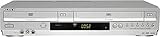
Sony VHS/DVD Combo Player (Renewed) | $249.00 | Buy on Amazon |
| 2 |

|
Panasonic PV-9450 4-Head Hi-Fi VCR | $150.00 | Buy on Amazon |
| 3 |

|
MAGNAVOX DV220MW9 DVD Player VCR Combo (Renewed) | $249.94 | Buy on Amazon |
| 4 |

|
Philips DVD/VCR Combo (Renewed) | $249.00 | Buy on Amazon |
| 5 |

|
Portta VHS to Digital Converter, Video to Digital Recorder with Remote, Compatible with VHS, VCR,... | $119.99 | Buy on Amazon |
Analog video is not one particular cable, connector, or regional standard. The phrase may refer to the signal connection or to the system used to encode and display television pictures.
Do these 3 things before closing this tab:
1Scan for outdated or missing drivers - takes under a minute2Repair Windows errors before they cause bigger problems3Fix the driver behind crashes, sound loss and screen glitchesHow do composite, S-Video, and component differ?
These terms describe analog video interfaces and how picture information is carried. They are not interchangeable merely because they all carry video.
#1 Best Overall
| Interface | Signal organization | Practical distinction |
|---|---|---|
| Composite / CVBS | Luma (brightness), chroma (color), and synchronization combined in one signal. | Uses one video signal path, commonly through an RCA-style video connection. The connector does not identify the television encoding system. |
| Y/C / S-Video | Luma and chroma carried separately. | Uses a different connection and signal arrangement from composite. |
| Component | Picture information carried in separate components, commonly RGB or luma plus color-difference signals. | Provides more separation than composite. Check that “component” refers to analog video in the particular equipment documentation. |
Separating picture information generally reduces the combination that can contribute to signal artifacts, but it does not guarantee a better result from every source or device. Analog Devices’ overview describes a typical progression from composite to Y/C to component in increasing signal separation and typical quality; actual output also depends on the equipment and source. Analog Devices: Video Basics
What do NTSC, PAL, and SECAM mean?
NTSC, PAL, and SECAM are television color and encoding systems, not connector types. They describe conventions for scanning, timing, and color encoding. A source using one of these systems can still use an interface such as composite or component; the interface name alone does not tell you which system the source uses.
Rank #2
- VHS hi-fi stereo
- MTS/SAP broadcast reception
- Multibrand universal remote
- Auto clock set with backup, trilingual on-screen programming and setup
- Limit 2 per customer
For common systems, an Analog Devices comparison gives approximate values of 480 visible lines out of 525 total for NTSC and 575 visible lines out of 625 total for PAL. Its table also lists vertical frame rates of 29.97 Hz for NTSC and 25 Hz for PAL, and horizontal rates of 15.734 kHz and 15.625 kHz respectively. These are overview figures from a 2001 technical article, not digital video resolutions or a universal test for identifying every regional variant or recording. Analog Devices: Video Basics
Windows Errors? Fix Them Before They Spread
Repair common Windows errors and clear accumulated junk for a smoother, more stable PC - no reinstall needed.Free scan · no reinstallCrashes, No Sound, or Screen Glitches?
Random freezes, missing sound and display glitches usually trace back to one bad driver. Find and replace yours safely.Free scan · under a minuteWhy does the distinction matter for playback and transfer?
Compatibility depends on more than whether a cable fits. A tape or other analog source has a recording system, and the playback device must support it. The player’s output interface must also match the display or capture device’s input. The National Archives and Records Administration explains that major regional video systems are not universally compatible; a suitable matching or multi-system player may be needed, and the output may also require standards conversion. NARA: Video Guidance: Identifying Video Formats
Rank #3
- DVD, DVD-R,-RW and CD-R,-RW playback
- 4-head design with monophonic sound
- S-video output,Title and subtitle display
- Program play or random play
- Identify the recording system. Check the tape, recording equipment, or reliable documentation for its NTSC, PAL, SECAM, or other system designation.
- Check player support. Confirm that the playback deck supports that recording system. A matching or multi-system deck may be necessary.
- Match the signal connection. Identify whether the player outputs composite, S-Video, or component, then confirm that the receiving display or capture device accepts that interface.
- Determine whether conversion is needed. If the playback chain does not support the source’s system or the intended destination, use compatible multi-system equipment, a standards converter, or a transfer service.
Digitizing analog video is a conversion workflow, not simply a matter of plugging in any capture device. The capture hardware must accept the source’s actual output interface and signal standard. The Library of Congress describes image data from analog composite sources being converted to digital component format during video-file production. Library of Congress: Video Streams as Sources for Files
Independent reader supportYour contribution helps us test, update, and keep practical guides available for everyone.How to choose a cable or capture input
Start with the ports and supported signals on both ends of the connection. An RCA-style composite video port, an S-Video port, and component video connections carry different signal arrangements; a cable that physically fits or an adapter that changes the connector shape does not necessarily perform the required format or standards conversion. For a computer transfer, verify both that the capture device accepts the player’s interface and that it supports the source’s television system.
Rank #4
- Hi Fi VCR, DVD/VCR combi
- Plays, DVD, CD, MP3, Pic CD
- Progressive Scan
Analog Devices explains the signal relationships among common analog interfaces and television encoding systems in Understanding Analog Video Signals. NARA’s video identification guidance covers identifying formats and compatibility considerations for preservation playback.
The Tool Desk
Outbyte Driver Updater FREEScan for outdated or missing drivers - takes under a minuteDriver Scan →Outbyte PC Repair FREEClear out junk files and repair common Windows errorsFree Scan →Quick Recap
Best Value
- 【Video to Digital Converter】Effortlessly convert and store analog video and audio signals into digital formats, Recording resolution up to 1080P 30Hz. Supports AV/RCA (CVBS+R/L), S-Video, and AUX inputs. Plug and play, No PC, Software, Driver Needed. NOTE: This is a Converter/Recorder/Capture box only, can NOT play with any tapes and DVDs independently.
- 【USB/SD Card for Storage】Equipped with a 3.0" preview LCD and built-in speaker. No capacity limitation for the USB drive or TF card (not included). Enables direct playback of recorded videos and audios, as well as preview snapshots on the capture box. For high-capacity USB storage devices, please ensure using its own power supply.
- 【Video & Audio Format】Store video in MP4 format or audio in MP3 format. Supports NTSC-M/J 3.58, NTSC 4.43, PAL B/G/H/I/D (PAL/N) standard TV formats input. Audio sampling rate up to 48KHz with uncompressed 2-channel LPCM digital audio output. Setup Reminders: Ensure either CVBS R/L (AV input) or AUX-IN (3.5mm) is properly connected. In settings (HOME -> Settings), verify Video-IN-Volume and AUX-IN-Volume are unmuted for the selected input.
- 【Broad Compatibility】Supports recording and digitizing video for VHS, VCR, DVR, DVD, Hi8, camcorders, Mini DV, Cassette Tape Player, and retro gaming consoles.
- 【What You Get】Video Recorder x1(Players Not included, Such as VHS, VCR, Camcorder, VHS, VCR, DVR, DVD, Cassette, Hi8, Mini DV Players, Camcorder, Gaming Consoles ), Power Adapter with USB type A to C Cable x1, Remote Control (2*AAA Batteries Not Included) x1, AV Cable x1, 3.5mm Audio Cable x1, User Manual x1 with a hassle-free 2-year warranty and lifetime technical support. Reach out to our friendly customer service for any questions.
Product prices and availability are accurate as of the date/time indicated and are subject to change. Any price and availability information displayed on Amazon at the time of purchase will apply.

