
iTechGuides is reader-supported. When you buy through links on our site, we may earn an affiliate commission. As an Amazon Associate I earn from qualifying purchases. Learn more
Climate change is projected to make tropical cyclones near Hawaiʻi stronger by late this century, but scientists cannot yet say whether the islands will see more storms overall. A University of Hawaiʻi at Mānoa study using thousands of synthetic storms and seven global climate models also finds that the historical difference between El Niño and La Niña could narrow as the climate warms, especially for wind hazard.
The result is a change in risk, not a simple forecast of more landfalls. A storm passing within 300 nautical miles can bring destructive wind, extreme rain, flooding, landslides and high surf even when its center never crosses an island.
What the Hawaiʻi study examined
Researchers used the Columbia Tropical Cyclone Hazard model to generate thousands of physically plausible tropical cyclones from atmospheric and oceanic conditions produced by seven global climate models. They compared historical conditions with mid-century and late-century climates under a high-emissions scenario.
Quick wins for a faster PC:
Fix the driver behind crashes, sound loss and screen glitchesFind Drivers →Repair Windows errors before they cause bigger problemsFix Now →Scan for outdated or missing drivers - takes under a minuteDriver Scan →The analysis counted and characterized storms passing within 300 nautical miles of Hawaiʻi. It assessed frequency, intensity, track, duration, forward speed and landfall, rather than looking only at storms that crossed the coastline. The late-century experiment therefore represents a substantially warmer world under high emissions; it is not an inevitable prediction of one emissions pathway.
#1 Best Overall
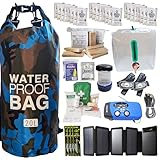
- Comprehensive Hurricane Kit: This pre-packed hurricane kit includes all the essential hurricane preparedness items for home safety, such as a hurricane lantern, hurricane food, and a hurricane radio weather radio, ensuring you are fully prepared for any emergency.
- Waterproof and Durable Bag: Conveniently packed in a waterproof bag, this hurricane emergency kit is designed to protect your hurricane supplies for home from water damage, ensuring that all your essential hurricane preparedness items remain dry and functional.
- Designed for Two People: Our hurricane kit emergency for home is thoughtfully designed to cater to the needs of two people, including enough hurricane preparedness items food, water and hurricane lights for indoor use, providing peace of mind for you and your loved ones.
- Essential Hurricane Gear: This kit includes a variety of essential hurricane items such as a led hurricane camping lantern, hurricane phone charger, and emergency hurricane supplies to ensure that you have all the necessary tools for effective hurricane preparedness.
- Emergency Communication Tools: Stay informed with the included hurricane radio weather radio, an indispensable part of your hurricane supplies. This radio ensures that you receive critical updates and alerts, making it a vital component of your hurricane emergency kit.
What changes most clearly
The strongest signal is intensity. Late-century simulations shift toward stronger tropical cyclones near Hawaiʻi. The direction of change in the total number of storms remains uncertain, so the study does not support saying that warming will definitely produce more Hawaiian hurricanes.
El Niño-related differences also change. Historically, El Niño tends to bring stronger and more frequent tropical cyclones near Hawaiʻi than La Niña. In the late-century simulations, the El Niño–La Niña contrast becomes less pronounced, particularly for tropical-cyclone wind hazard. During El Niño, storm tracks sit southwest of the islands relative to La Niña tracks.
Historical, mid-century and late-century risk compared
| Risk dimension | Historical climate | Mid-century simulation | Late-century simulation |
|---|---|---|---|
| Storm intensity | Observed storms provide the baseline. | The study does not establish a single clear direction in the supplied results. | Projects a shift toward stronger tropical cyclones near Hawaiʻi. |
| Total storm frequency | Varies substantially from year to year. | Direction of change remains unresolved. | Direction of change remains uncertain; stronger storms do not automatically mean more storms. |
| Track location | Tracks vary with circulation patterns, including ENSO. | Model-dependent transition; no single shift is established in the reported findings. | El Niño tracks remain southwest of La Niña tracks, while the ENSO contrast changes. |
| Wind hazard | El Niño historically favors higher wind risk than La Niña. | Not stated as a definitive result. | Wind-hazard differences between El Niño and La Niña become less pronounced, alongside the overall intensity shift. |
| Rainfall and flooding | Near-island storms can cause heavy rain and flooding. | No specific rainfall change is established in the reported results. | Rainfall, flooding and landslide consequences remain important hazards, but no single percentage change is given. |
| Landfall versus passage | Landfall is only one impact pathway. | The model tracks both near-island storms and landfalls. | Risk assessment includes storms within 300 nautical miles, whether or not they make landfall. |
| Confidence and uncertainty | Direct observations of Hawaiian impacts are limited. | Results vary by modeled climate and storm realization. | Intensity signal is clearer than the storm-count signal; rare-event probabilities remain difficult to estimate. |
How El Niño changes the starting conditions
El Niño is part of the El Niño–Southern Oscillation (ENSO), a coupled ocean–atmosphere pattern. NOAA defines El Niño conditions using Niño-3.4 sea-surface temperatures at least 0.5°C above normal for five consecutive overlapping three-month periods, together with evidence that the atmosphere is responding to the warmer ocean.
PC Slower Than It Used to Be?
A free scan shows the junk files, broken settings and background clutter dragging Windows down - then fixes them in one click.Free scan · Windows 10 & 11Outdated Drivers Are Slowing You Down
One free scan finds every outdated or missing driver and matches the right update for your exact hardware.Free scan · exact hardware matchRank #2

- [Preparedness for the Unknown]: While no one can predict when or how severe a disaster or unexpected event will be, our 262pcs survival kit helps your family stay prepared during the critical first 72 hours. Designed for family use, it was developed in collaboration with survival experts, outdoor professionals, special forces operators, and mountain guides. Whether you're preparing for earthquakes, tornadoes, wildfires, or hurricanes, our survival kit provides peace of mind.
- [Comprehensive Emergency Supply Kit]: The included emergency supplies are stored in a bright red pouch, containing tweezers, scissors and pins, non-woven pad, triangular cotton cloth, cotton swabs, cotton balls, a generous supply of adhesive strips etc., meeting your general emergency and outdoor needs. It also includes an emergency information card to record your basic information, helping others quickly access important information when needed.
- [Safety Companion for Journey]: Our emergency kit includes many survival gear and supplies to ensure access to food, water, warmth, and light in a crisis. The fishing kit and multi-usage spoon help you catch and prepare food, while the collapsible water container bag helps store water. Fire starter and stick make it easy to build a fire. A flashlight, camping lamp, and glow sticks provide up to 72 hours of lighting, crucial for signaling for help and safe navigation.
- [Essential Survival Gear]: Additionally, this survival kit includes a detachable multifunctional axe with hammer and a 2-in-1 shovel with pick, made of sturdy carbon steel. Combined with wire saw, emergency tent and blanket, rope, and compass, you can quickly set up an emergency shelter while helping retain warmth. Unlike other mini axes, our axe and shovel are 17 inches long, providing effective protection in the wild against animals or in other emergencies.
- [Convenient Packaging]: The survival gear and supplies are packed in a crossbody bag, making it easy to carry and access in emergencies. The bag features multiple compartments and molle compatible straps and D-rings, allowing you to attach extra pouches or survival tools. The crossbody strap is also detachable, making it easy to connect to a tactical survival backpack using carabiners or the molle system.
- El Niño occurs, on average, every two to seven years.
- An event typically lasts nine to 12 months.
- Historical Hawaiian storm statistics show a tendency toward stronger and more frequent nearby tropical cyclones during El Niño than during La Niña.
- Relative to La Niña, El Niño tracks are displaced southwest of the islands.
Those relationships are tendencies, not guarantees for an individual season. The climate-model experiment indicates that substantial warming could weaken the historical El Niño–La Niña separation, with the clearest convergence in modeled wind hazard. It does not remove ENSO from the risk picture or establish that every El Niño will produce the same track or intensity.
Why a storm does not need to make landfall to cause damage
Hawaiʻi’s exposure is determined by the storm’s wind field, rainbands, ocean response and interaction with steep terrain—not only by whether the eye crosses land. A nearby cyclone can produce:
- Damaging winds: broad outer bands can affect islands well away from the center.
- Extreme rainfall: slow or moisture-rich systems can overwhelm drainage and trigger flash flooding.
- Landslides: saturated slopes can fail after prolonged rain, blocking roads and damaging utilities.
- High surf and coastal flooding: storm-driven waves and water levels can threaten shorelines without a direct strike.
- Cascading infrastructure impacts: power, communications, airports, roads, water systems and supply chains can be disrupted in combination.
That broader definition is why the study used a 300-nautical-mile analysis radius. As lead author Nicole Murray put it, “This research addresses a hazard that is rare in Hawai‘i but can have enormous consequences when it occurs.” She also noted that storms “do not need to make a conventional landfall to disrupt communities, damage infrastructure and create dangerous flooding and wind impacts.”
Rank #3

- 72 HOUR EMERGENCY KIT FOR 2 PEOPLE WITH FOOD AND WATER: Includes 2 emergency food bars totaling 4800 calories and 12 sealed drinking water pouches to support hydration and energy during disasters. Designed for emergency preparedness, survival kits, earthquake kits, and evacuation planning.
- COMPLETE DISASTER SURVIVAL KIT WITH SHELTER AND WARMTH: Equipped with 2 emergency ponchos and 2 survival blankets to help protect against rain, wind, and cold conditions. Critical gear for outdoor emergencies, power outages, and shelter in place situations.
- FIRST AID KIT AND SAFETY PROTECTION SUPPLIES: Features a 33 piece first aid kit, dust masks, and nitrile gloves to support basic medical care and protection from debris and airborne particles. Essential for emergency response, injury care, and disaster safety.
- EMERGENCY LIGHTING AND SIGNALING TOOLS INCLUDED: Comes with 2 long lasting 12 hour lightsticks and a safety whistle for visibility and communication in low light or rescue situations. Ideal for blackout emergencies, nighttime evacuation, and search scenarios.
- COMPACT BACKPACK FOR GRAB AND GO EVACUATION: Lightweight emergency backpack keeps all survival supplies organized and ready for fast response. Perfect for home emergency kits, car emergency kits, office preparedness, and bug out bags.
What the 2014 season showed
A NOAA Institutional Repository summary of a 2015 study recorded three hurricanes approaching the Hawaiian Islands in 2014, the third-largest number since 1949. That work identified both warming-related changes in storm tracks and ENSO variability as relevant influences.
Recommended Free Tools
The 2014 count is historical context, not evidence that climate change has established a permanent upward trend in Hawaiian storm numbers. The newer modeling result likewise separates a clearer late-century intensity signal from an unresolved change in total frequency.
What remains uncertain
- How many storms will occur: the modeled direction of change in total counts is not settled.
- Exact local impacts: Hawaiʻi has relatively few direct-impact observations, making probabilities for rare events difficult to estimate.
- Timing of changes: the study compares historical, mid-century and late-century climates but does not provide a single calendar year when a threshold will be crossed.
- Emissions pathway: the late-century results come from a high-emissions experiment and should be read as a substantial-warming scenario, not a guaranteed future.
- Season-by-season outcomes: ENSO affects the background environment, but individual storms can depart from the average pattern.
What this means for preparedness
Emergency planning should use proximity and hazards—not landfall labels—as the trigger for action. Residents, businesses and public agencies should monitor official forecasts for wind, rainfall, surf and flooding; check whether evacuation routes, drainage systems and communications plans remain usable; and account for secondary disruptions such as power loss, blocked roads and supply delays.
Rank #4
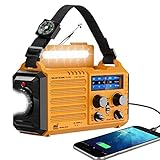
- 【NOAA Weather Alert Radio Keeps You Prepared Ahead】Our NOAA Weather Radio is certified by National Weather Service. Choose WB band and one of the 7 preset weather band to tune into your local weather station. When the National Weather Service issues a severe weather alert, the radio will make a loud SOS alarm that lasts for 9 secs, meanwhile, the red light flashes.You will never miss it even at sleep. Great 𝗲𝗺𝗲𝗿𝗴𝗲𝗻𝗰𝘆 𝗸𝗶𝘁 for tornadoes, tsunamis, Wildfire, hurricane & snowstorm.
- 【AM FM Shortwave Radio with Earphone Jack-Best Listening Experience】Easy to tune into your favorite broadcast, AM Radio(520-1710 Khz); FM Band(88-108MHz); SW Radio(7-19.00 MHZ). The crank radio has a comprehensive coverage of entertainment, sports, news or overseas broadcast like The BBC/Moscow/Beijing. The telescopic antenna makes it a portable radio with best reception. Big volume knob is designed for easy volume adjustment and the 3.5mm headphone jack for your enjoying radio shows privately.
- 【5 Power Sources-Long Runtime】This 𝘀𝗼𝗹𝗮𝗿 𝗰𝗿𝗮𝗻𝗸 𝗿𝗮𝗱𝗶𝗼 is ready and save your life in emergency. Built-in 5000 rechargeable battery, the 𝗘𝗺𝗲𝗿𝗴𝗲𝗻𝗰𝘆 𝗥𝗮𝗱𝗶𝗼 is easily recharged by solar/hand crank/power plug( 5V/2A, not included)and USB cord(included). Besides, it is also equipped with backup battery compartment(3pcs*AAA batteries, not included). No more power failure concerns in any situation. The full charged solar radio will last up to 13 hours only playing FM radio.
- 【All-in-One Portable Radio with LED Flashlight/Reading Lamp】Our 𝗵𝗮𝗻𝗱 𝗰𝗿𝗮𝗻𝗸 𝗿𝗮𝗱𝗶𝗼 is also designed for outdoor survival- provides 2 light sources.The side 3W LED flashlight provides strong and straight light to light up 80 meters away. A very vital survival gear and equipment if you are lost at night. 2.5W Reading Lamp with 2 adjustable brightness- Flipping up the solar panel makes the emergency crank radio a reading lamp with 6 built-in LED bulbs to illuminate 20㎡ room or campsite.
- 【Versatile for Emergency】Built in USB output port, this 𝗯𝗮𝘁𝘁𝗲𝗿𝘆 𝗼𝗽𝗲𝗿𝗮𝘁𝗲𝗱 𝗿𝗮𝗱𝗶𝗼 can charge more than one cellphone for important calls or texts. Besides, the compact light weight noaa emergency weather radio comes with a compass, hand strap, perfect for outdoor camping, field survival, hiking, trekking and night biking. We care you and provide one-year warranty, just email us with any question.
For infrastructure planning, the study points to a need to test systems against stronger nearby cyclones even if the eventual number of storms is unchanged. For seasonal outlooks, ENSO remains useful background information, but a forecast of El Niño or La Niña cannot by itself determine whether a particular Hawaiian community will be struck.
Christina Karamperidou, a study co-author and atmospheric sciences professor at the University of Hawaiʻi at Mānoa’s SOEST, said, “The 2026 hurricane season has provided a powerful reminder of this.” The practical lesson is consistent with the modeling: prepare for the full range of effects from a nearby tropical cyclone, not only for a direct landfall.
Do these 3 things before closing this tab:
1Clear out junk files and repair common Windows errors2Scan for outdated or missing drivers - takes under a minute3Repair Windows errors before they cause bigger problemsQuick Recap
Product prices and availability are accurate as of the date/time indicated and are subject to change. Any price and availability information displayed on Amazon at the time of purchase will apply.

