
The Tool Desk
Outbyte Driver Updater FREEScan for outdated or missing drivers - takes under a minuteDriver Scan →Outbyte PC Repair FREEClear out junk files and repair common Windows errorsFree Scan →iTechGuides is reader-supported. When you buy through links on our site, we may earn an affiliate commission. As an Amazon Associate I earn from qualifying purchases. Learn more
For most people, the safest way to meet vitamin D needs is to use food and, when appropriate, a measured supplement rather than intentionally seeking unprotected ultraviolet exposure. Sunlight can help your skin make vitamin D, but there is no dependable universal “sun timer.” In the United States, reference intakes are 600 IU (15 mcg) daily for ages 1–70 and 800 IU (20 mcg) after age 70, based on minimal sun exposure. These are population reference values, not automatic prescriptions.
What is the safest way to get enough vitamin D?
Vitamin D comes from three routes: foods and fortified products, dietary supplements, and ultraviolet B (UVB) exposure to skin. Food labels and supplement labels let you estimate intake. Sunlight does not: the amount your skin produces changes with season, latitude, time of day, cloud cover, smog, skin melanin, age, clothing, sunscreen and individual biology.
The National Institutes of Health Office of Dietary Supplements (NIH ODS) says those variables make it difficult to provide a universal amount of sun exposure needed for adequate vitamin D. Treat sunlight as incidental exposure, not a dosage schedule. Protect your skin whenever you are outdoors, and use food or a clinician-appropriate supplement to fill a known gap.
Recommended Free Tools
Sunlight itself does not cause vitamin D toxicity. Nearly all toxicity cases involve excessive supplemental intake. However, ultraviolet radiation is a carcinogen and avoidable UV exposure raises skin-cancer risk.
#1 Best Overall

- Immune Health and Bone Support Supplement: One 300 count bottle of Nature Made Vitamin D3 1000 IU (25 mcg) Softgels—a 300-day supply of immune support supplements
- Daily Immune Support: These Vitamin D wellness vitamins for adult men and women support bone health, teeth health, immune health, and muscle health
- Vitamin D Softgels: Nature Made Vitamin D 1000 IU softgels help improve Calcium absorption and contain 25mcg of Vitamin D3, the body's preferred form of Vitamin D
- How to Take: Adults, take one Vitamin D3 softgel daily with water and a meal for immune system support; ideally with a meal that contains dietary fats
- Gluten Free Vitamins: Sourced from high-quality ingredients, this gluten free Nature Made Vitamin D3 supplement has no color added and no artificial flavors
How much vitamin D do you need?
U.S. Food and Nutrition Board reference values reported by NIH ODS assume minimal sun exposure. One microgram (mcg) equals 40 international units (IU).
| Age | Reference intake | How to interpret it |
|---|---|---|
| Birth–12 months | 10 mcg (400 IU) adequate intake | Infant reference value; feeding method and medical circumstances matter. |
| 1–70 years | 15 mcg (600 IU) per day | Population reference amount, not an individualized prescription. |
| Older than 70 | 20 mcg (800 IU) per day | Higher reference amount because vitamin D production from skin tends to decline with age. |
These values are intended for generally healthy people and are not treatment doses. Pregnancy, breastfeeding, malabsorption, kidney or liver disease, osteoporosis, a prior low blood level, or medicines that affect vitamin D can change what is appropriate. A clinician should interpret symptoms, laboratory testing and treatment dosing.
Sunlight: useful, but impossible to dose with a universal timer
Why exposure varies so much
UVB reaching your skin depends on season, latitude, time of day, day length, cloud cover and air pollution. Skin melanin, age, clothing, sunscreen, time spent outdoors and the amount of skin exposed also change production. Older adults and people with dark skin generally make less vitamin D from the same sunlight exposure. People who are homebound, work indoors or wear clothing that covers most skin may receive little UVB.
Free tools Windows power users keep installed
One-click scans. No signup required.
Because these variables interact, a “10 minutes of sun” rule can be too little for one person and excessive for another. NIH ODS does not provide a universal exposure duration. UVB does not pass through ordinary window glass, so sitting indoors in sunshine is not equivalent to exposing skin outdoors.
Use sun protection without trying to optimize vitamin D
Do not skip sunscreen or deliberately develop a tan to increase vitamin D. Federal health agencies and national organizations recommend photoprotection; NIH ODS states, “UV radiation is a carcinogen, and UV exposure is the most preventable cause of skin cancer.” Seek shade, wear protective clothing and use broad-spectrum sunscreen (SPF 15 or higher is the secondary product category cited by NIH ODS) according to its label. These steps reduce UV harm; they are not a vitamin D dosing method.
When sunlight may not cover needs
Limited outdoor exposure, high-latitude winters, extensive clothing, darker skin, older age and indoor living can all reduce skin production. None of these facts diagnoses deficiency. If you have a risk factor or concern, ask a qualified clinician whether dietary changes, a supplement or a blood test is appropriate instead of increasing unprotected UV exposure.
Food: measurable, but often insufficient by itself
Vitamin D occurs naturally in only a few foods and is added to some foods and beverages. Amounts vary by product, serving size and fortification policy. Check the Nutrition Facts label for vitamin D rather than assuming a food supplies a meaningful amount.
Rank #2

- IMMUNE, MOOD, BONE & MUSCLE SUPPORT*: Vitamin D supports healthy bones, muscle function, and a strong immune system.*
- NATURALLY-SOURCED: These Vitamin D3 immune support and bone health supplements* are formulated with a naturally-sourced vitamin D3 ingredient, and are gluten-free. Packaging may vary due to high demand, same great product and ingredients.
- IN ORGANIC COLD-PRESSED OLIVE OIL: NatureWise Vitamin D3 is formulated with organic, cold-pressed olive oil that doesn't use heat or hexanes, to enhance the absorption of vitamin D3.*
- CONTENTS CERTIFIED NSF: This supplement is NSF-contents certified, which means its contents are thoroughly tested for accuracy and purity. Ingredients are also analyzed for this certification to confirm they match label contents.
- USA MANUFACTURED & 3RD PARTY TESTED: This NatureWise supplement is manufactured in the USA in a facility that follows cGMP and undergoes independent 3rd party audits.
How to count food vitamin D
- Check the serving size on the package.
- Find vitamin D in the Nutrition Facts panel and note the amount in micrograms or IU.
- Multiply by the number of servings you actually eat or drink.
- Add vitamin D from other labeled foods and any supplement to estimate your daily total.
Food is generally the least complicated route for people who can meet needs through a varied diet, but labels matter. A fortified product in one country or brand may contain a different amount—or none at all—in another. The NIH ODS consumer guidance is to check food and beverage labels.
Population data illustrate why individual calculation matters: NIH ODS reports a mean intake of 4.8 mcg (192 IU) per day from foods and beverages among people age 2 and older. When dietary supplements were included, the mean rose to 19.9 mcg (796 IU). Those are population statistics, not a target or an estimate of what any one reader consumes.
Supplements: the most controllable intake, with dose and interaction risks
D2 and D3
Vitamin D supplements contain either vitamin D2 (ergocalciferol) or D3 (cholecalciferol). Both raise vitamin D status. NIH ODS reports that D3 generally raises blood levels more and keeps them elevated longer than D2. That is a form comparison, not a reason for everyone to take a supplement.
D3 is commonly sourced from lanolin. Animal-free, lichen-sourced D3 products are also available. Read the Supplement Facts panel for the form, amount per serving and serving instructions, and account for vitamin D in multivitamins or other combined products.
Quick wins for a faster PC:
Scan for outdated or missing drivers - takes under a minuteDriver Scan →Repair Windows errors before they cause bigger problemsFix Now →Fix the driver behind crashes, sound loss and screen glitchesFind Drivers →Do not turn the upper limit into a goal
For adults and children age 9 and older, the tolerable upper intake level (UL) is 4,000 IU (100 mcg) per day from food, beverages and supplements combined. The UL is the highest daily intake unlikely to cause harm for most people; it is not a recommended dose and not a target to reach.
| Age | UL per day from all sources |
|---|---|
| Birth–6 months | 1,000 IU (25 mcg) |
| 7–12 months | 1,500 IU (37.5 mcg) |
| 1–3 years | 2,500 IU (62.5 mcg) |
| 4–8 years | 3,000 IU (75 mcg) |
| 9 years and older, including adults | 4,000 IU (100 mcg) |
These limits include food, drinks and supplements. Do not give a child an adult product or adult dose. A clinician may prescribe more than the UL for a limited period to treat confirmed deficiency; that is supervised treatment, not self-care.
Interactions and toxicity
Excess vitamin D can raise blood calcium (hypercalcemia), causing symptoms such as nausea, vomiting, constipation, weakness, excessive thirst or frequent urination; severe cases can damage the kidneys or other organs. Excessive supplemental intake—not sunlight—is the usual cause.
Rank #3
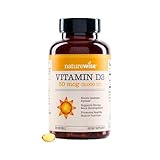
- IMMUNE, MOOD, BONE & MUSCLE SUPPORT*: Vitamin D supports healthy bones, muscle function, and a strong immune system.*
- NATURALLY-SOURCED, NON-GMO: These Vitamin D3 immune support and bone health supplements* are formulated with a naturally-sourced vitamin D3 ingredient, and are gluten-free and non-GMO. Packaging may vary due to high demand, same great product and ingredients.
- IN ORGANIC COLD-PRESSED OLIVE OIL: NatureWise Vitamin D3 is formulated with organic, cold-pressed olive oil that doesn't use heat or hexanes, to enhance the absorption of vitamin D3.*
- CONTENTS CERTIFIED NSF: This supplement is NSF-contents certified, which means its contents are thoroughly tested for accuracy and purity. Ingredients are also analyzed for this certification to confirm they match label contents.
- USA MANUFACTURED & 3RD PARTY TESTED: This NatureWise supplement is manufactured in the USA in a facility that follows cGMP and undergoes independent 3rd party audits.
Ask a clinician or pharmacist before supplementing if you take orlistat, certain statins, corticosteroids or thiazide diuretics. These medicines can affect vitamin D absorption, metabolism or calcium balance. Bring every supplement label to a medication review, including multivitamins and combination bone-health products.
How the three sources differ in day-to-day use
Sunlight is the least predictable source. You cannot read a label to determine how much UVB reached your skin, and the same outdoor routine can produce different amounts in winter, summer, at different latitudes or under different air conditions. Sunlight also has a direct skin-health trade-off: seeking more UVB means accepting more ultraviolet exposure.
Food is more trackable, but only when you verify the label and serving size. Fortification is not universal, and a product can change formulation. A food-based approach may be practical for someone who routinely consumes labeled fortified products, while a restrictive diet or intestinal absorption problem can make adequacy harder.
Supplements provide the clearest arithmetic because the serving is stated in IU or mcg. That control creates the main risk: accidentally stacking a single-nutrient product with a multivitamin or calcium product, or choosing a high-strength serving without realizing that the UL counts every source. Reliability does not mean a supplement is necessary; it means the amount is easier to quantify.
Reading a supplement label safely
- Identify whether the product contains D2 or D3 and note the amount per serving in mcg, IU or both.
- Confirm how many capsules, drops or other units make one serving; concentrated liquid products may not use the same serving size as another brand.
- List every other product that contains vitamin D, including multivitamins and combination bone-health products.
- Convert units consistently: multiply mcg by 40 to get IU, or divide IU by 40 to get mcg.
- Compare the combined daily amount with the age-appropriate reference value and UL, without treating the UL as a target.
If the label is unclear, pause and ask a pharmacist rather than guessing. Children need products and measuring devices designed for their age, because adult-strength products can exceed pediatric limits quickly.
Windows Errors? Fix Them Before They Spread
Repair common Windows errors and clear accumulated junk for a smoother, more stable PC - no reinstall needed.Free scan · no reinstallOutdated Drivers Are Slowing You Down
One free scan finds every outdated or missing driver and matches the right update for your exact hardware.Free scan · exact hardware matchSunlight, food and supplements compared
| Source | How reliably can you estimate intake? | Main safety trade-off | When professional guidance matters |
|---|---|---|---|
| Sunlight | Low. UVB and skin production vary widely; no universal timer exists. | Unprotected UV exposure increases skin-cancer and photoaging risk. | When exposure is limited, deficiency is suspected, or you are considering intentional UV exposure. |
| Food and fortified products | Moderate to high when labels state vitamin D and servings are tracked. | Fortification and serving amounts differ; diet may not meet needs alone. | When dietary restrictions, malabsorption or a very limited diet make adequacy difficult. |
| Supplements | High for the labeled serving, provided all products are counted. | Excess dosing, hypercalcemia and medicine interactions. | For children, pregnancy, chronic disease, abnormal tests, high-dose treatment or interacting medicines. |
A practical decision process
Step 1: Estimate what you already get
Record a typical day or week of vitamin D-containing foods and beverages using package labels. List every supplement and convert units consistently: 1 mcg equals 40 IU. Include combination products so you do not accidentally double-count.
Step 2: Compare with the age-based reference value
Use 400 IU for infants, 600 IU through age 70, or 800 IU after age 70 as the U.S. reference amount, remembering that these values assume minimal sun exposure. Do not diagnose deficiency from a short food diary or from symptoms alone.
Rank #4

- Immune Health and Bone Support Supplement: One 250 count bottle of Nature Made Vitamin D3 2000 IU (50 mcg) Softgels—a 250-day supply of immune support supplements
- Multiple Benefits: These Vitamin D wellness vitamins for adult men and women support bone health, teeth health, and muscle health, and provide immune system support
- Vitamin D3 Softgels: These Vitamin D 2000 IU softgels help improve Calcium absorption and contain 50mcg of Vitamin D3, the body's preferred form of Vitamin D
- Helps slow biological aging of cells; In a clinical study, taking 2000 IU vitamin D3 supplements for 4 years helped prevent leukocyte telomere shortening, preventing the equivalent of approx 3 years of cellular aging compared with placebo in older adults
- How to Take: Adults, take one Vitamin D3 softgel daily with water and a meal for immune system support; ideally with a meal that contains dietary fats
Step 3: Decide whether a supplement is appropriate
If food intake is regularly below the reference value, a clinician or pharmacist can help select a product and serving amount. Choose a clearly labeled product, check whether it is D2 or D3, and add its IU or mcg to all other sources. More is not automatically better.
Step 4: Review medicines and health conditions
Before starting, ask about interactions and whether testing is warranted, particularly if you take orlistat, some statins, steroids or thiazide diuretics, or have kidney, liver, intestinal or calcium disorders.
Step 5: Use testing and treatment plans correctly
A clinician may order a blood test when risk factors, symptoms or a medical condition justify it. Do not use an over-the-counter test or a single result to create a high-dose regimen without medical interpretation. Follow the prescribed duration and repeat-testing plan if treatment is ordered.
Special situations that need extra care
Infants and children
Infant and child ULs are lower than adult limits. Products vary greatly in concentration, so read the label carefully and use the measuring device supplied. A pediatric clinician should advise on supplementation, especially for premature infants, feeding difficulties or medical conditions.
Older adults and people with dark skin
Both groups may produce less vitamin D from sunlight, but that does not mean everyone needs a high-dose supplement. Use dietary assessment and individualized medical advice rather than intentional unprotected exposure.
Pregnancy, breastfeeding and chronic illness
Pregnancy and breastfeeding, osteoporosis, malabsorption, kidney or liver disease and medicines that alter calcium or vitamin D metabolism all warrant professional advice. The general reference values in this article do not replace condition-specific guidance.
What the evidence says about possible harms
Vitamin D is often combined with calcium in bone-health products. NIH ODS reports a Women’s Health Initiative trial in which postmenopausal women assigned calcium plus vitamin D had a 17% higher kidney-stone risk over seven years than the placebo group. Because the intervention combined calcium and vitamin D, the result should not be interpreted as a vitamin-D-alone effect. It is a reason to review total calcium and supplement intake with a clinician rather than to stop prescribed treatment on your own.
Best Value
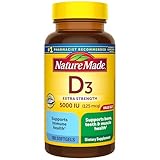
- Immune Health and Bone Support Supplement: One 180 count bottle of Nature Made Extra Strength Vitamin D3 5000 IU (125 mcg) Softgels—a 180-day supply
- Multiple Benefits: These adult Vitamin D softgels help improve Calcium absorption, support bone health, teeth health, muscle health, and provide immune system support
- Vitamin D Softgels: This Vitamin D 5000 IU softgel is for those with higher Vitamin D needs and/or vitamin D deficiency, as determined by a healthcare professional(1)
- How to Take: Adults, take one Vitamin D3 softgel daily with water and a meal for immune system support; ideally with a meal that contains dietary fats
- Gluten Free Vitamins: Sourced from high-quality ingredients, this adult Vitamin D supplement is gluten free and has no color added and no artificial flavors
Common mistakes to avoid
- Using a fixed sun timer: conditions differ too much for a universal exposure prescription.
- Skipping sunscreen to “make vitamin D”: UV radiation is a preventable skin-cancer risk.
- Assuming food is fortified: read the label for the actual serving amount.
- Treating 4,000 IU as a goal: the adult UL is a safety ceiling, not a target.
- Forgetting combined products: add multivitamins, calcium products and single-nutrient supplements together.
- Giving adults’ products to children: pediatric ULs are lower and concentrations differ.
- Self-treating a laboratory result: treatment doses and duration require clinical interpretation.
When to contact a clinician promptly
Seek medical advice before supplementing if you have a condition affecting calcium, kidneys, liver or intestinal absorption; take interacting medicines; are pregnant or breastfeeding; are choosing a dose for a child; or suspect deficiency. Contact a clinician promptly for persistent nausea, vomiting, marked weakness, unusual thirst or frequent urination after taking high-dose vitamin D, because these can signal high calcium.
Frequently Asked Questions
How much vitamin D should I take each day?
For generally healthy people in the United States, the reference amount is 600 IU (15 mcg) daily from ages 1 through 70 and 800 IU (20 mcg) after age 70. Infants have an adequate intake of 400 IU (10 mcg). These values assume minimal sun exposure and are not personalized treatment prescriptions.
Can I get enough vitamin D from sunlight?
Sunlight can contribute, but there is no universal safe exposure timer. Season, latitude, time of day, clouds, smog, skin melanin, age, clothing and sunscreen all change UVB production. Use sun protection and rely on labeled foods or clinician-guided supplements when intake needs to be more predictable.
What’s actually slowing this PC down?
Pick the symptom - the matching free tool is one click away.
Can food provide enough vitamin D?
It can for some people, but vitamin D occurs naturally in only a few foods and fortification varies. Check the Nutrition Facts label, serving size and number of servings, then add the amounts from all labeled foods and beverages you consume.
Is vitamin D3 better than D2?
Both forms raise vitamin D status. NIH ODS reports that D3 generally raises blood levels more and keeps them elevated longer than D2. That comparison does not mean every person needs a supplement. D3 is commonly sourced from lanolin, while lichen-sourced animal-free products are available.
Is 4,000 IU a good daily vitamin D dose?
No. For adults and children age 9 and older, 4,000 IU (100 mcg) is the tolerable upper intake level from food, drinks and supplements combined. It is a safety ceiling, not a target. A clinician may temporarily prescribe more for confirmed deficiency with monitoring.
Can vitamin D supplements interact with medicines?
Yes. Ask a clinician or pharmacist about orlistat, some statins, corticosteroids and thiazide diuretics. These medicines can affect absorption, metabolism or calcium balance. Bring all supplement labels, including multivitamins and combination products, to a medication review.
Do these 3 things before closing this tab:
1Fix the driver behind crashes, sound loss and screen glitches2Clear out junk files and repair common Windows errors3Scan for outdated or missing drivers - takes under a minuteCan children use an adult vitamin D supplement?
Do not assume they can. Upper limits are lower for infants and young children: 1,000 IU through 6 months, 1,500 IU at 7–12 months, 2,500 IU at ages 1–3 and 3,000 IU at ages 4–8. Product concentrations vary, so ask a pediatric clinician and use the supplied measuring device.
Can too much vitamin D make me sick?
Excessive supplemental intake can cause hypercalcemia, with nausea, vomiting, constipation, weakness, unusual thirst or frequent urination; severe cases can harm the kidneys or other organs. Toxicity is usually linked to supplements, not sunlight. Seek medical advice if these symptoms follow high-dose use.
The Bottom Line
Use food labels and, when appropriate, a measured supplement to meet vitamin D needs; do not use intentional unprotected UV exposure as a dosing plan. Remember the U.S. reference amounts—600 IU through age 70 and 800 IU after 70—are population values based on minimal sun exposure. Count every source, stay below the age-appropriate upper limit unless treatment is supervised, protect your skin and ask a clinician or pharmacist about testing, children, pregnancy, chronic illness or medicine interactions.
Quick Recap
Product prices and availability are accurate as of the date/time indicated and are subject to change. Any price and availability information displayed on Amazon at the time of purchase will apply.

