
The Tool Desk
Outbyte Driver Updater FREEFix the driver behind crashes, sound loss and screen glitchesFind Drivers →Outbyte PC Repair FREEClear out junk files and repair common Windows errorsFree Scan →iTechGuides is reader-supported. When you buy through links on our site, we may earn an affiliate commission. As an Amazon Associate I earn from qualifying purchases. Learn more
Neither vitamin C nor caffeine eye patches has been shown to beat the other for under-eye puffiness. No direct, head-to-head clinical trial of the two ingredients in patches was identified. Caffeine is commonly used for a temporarily less puffy appearance, while vitamin C is usually positioned as an antioxidant and brightening ingredient. The practical choice depends on the complete formula, the concern you want to address, the directions and warnings, and how much evidence supports a product’s claim.
Under-eye puffiness, dark circles, dull tone and dehydration can look similar in a mirror but are different cosmetic concerns. A patch that combines caffeine, vitamin C, niacinamide, hyaluronic acid or vitamin A derivatives cannot attribute a visible change to one ingredient. Treat numerical marketing claims as product-specific observations, not proof that every vitamin C or caffeine patch works the same way.
The short answer: what the evidence actually shows
There is no reliable ingredient winner for puffiness. The available evidence does not compare vitamin C patches directly with caffeine patches, and it does not establish that either ingredient treats the underlying cause of persistent under-eye bags. A 2024 review of popular eye-cream ingredients called for larger clinical trials focused on periorbital formulations, which underscores how limited the evidence remains.
Quick wins for a faster PC:
Repair Windows errors before they cause bigger problemsFix Now →Fix the driver behind crashes, sound loss and screen glitchesFind Drivers →Caffeine is the more obvious match for a product marketed around a temporarily less swollen appearance. Vitamin C is more often used for antioxidant and brightening positioning. That distinction describes how the ingredients are generally framed; it is not a clinical ranking. A formula may contain both, and the patch material, cooling sensation, humectants, peptides, niacinamide and other ingredients can all influence how the area looks immediately after use.
#1 Best Overall
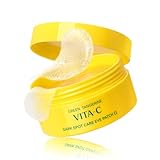
- [CONCENTRATED VITAMIN C TONE-UP CARE] Formulated with concentrated Vitamin C Serum and Green Tangerine Exosomes to help improve the look of dull, shadowed under-eye areas. Made from a gel solidified with key components of Green Tangerine Serum and built with Tangerine Matrix Sheets for close adhesion and effective delivery.
- [25% THICKER EMBOSSED HYDROGEL – ALPHA VERSION] The upgraded ALPHA (Advanced) version features a 25% thicker embossed hydrogel than the previous formula. Designed to adhere better and support deeper moisture care for a more refreshed, tone-up look in minutes.
- [MULTI-TARGETED RADIANCE & FIRM-LOOK CARE] Designed for more than just under-eyes, these patches can be applied to areas of concern such as dark-looking under-eyes, cheek areas, and smile-line zones, helping support a smoother, more even-looking complexion and a firmer-looking finish.
- [BOUNCY, HIGH-ADHESION HYDROGEL TEXTURE] Bouncy, flexible hydrogel adheres securely without slipping. Helps hold moisture and essence in place during skincare or self-care routines.
- [BETTER TOGETHER: SERUM + EYE PATCH COMBO] Use with GOODAL Green Tangerine Vita C Serum for enhanced results. The serum supports overall tone care, while the patch provides targeted Vitamin C care for under-eye areas.
Therefore, choose by the finished product rather than the front-label ingredient. Read the full ingredient list, check the wear time and warnings, and judge any before-and-after claim by its method and sample size.
The word “patch” also describes a delivery format, not a standardized treatment. Two hydrogel patches can differ in gel composition, thickness, adhesion, moisture level, active concentration, package size and storage instructions. A product that feels cold and leaves a smooth film may create a noticeable short-term cosmetic effect even when the named active has not been tested separately. That is why a fair comparison starts with the entire product and its instructions.
Why puffiness is a difficult claim to test
“Puffy eyes” is an appearance description, not one single measurable condition. Temporary morning swelling, fluid-related fullness, an anatomical fat pad, loose skin, irritation and shadows from facial structure can all be described that way. A hydrogel patch can cool and hydrate the surface, making the area look smoother for a short period, without changing the reason the eye area appears full.
Dark circles and dullness are separate targets. A brightening formula may make uneven tone look less noticeable while leaving physical fullness unchanged. Likewise, a caffeine-containing patch may be marketed for puffiness but include moisturizing ingredients that create the most noticeable immediate effect. A useful comparison asks which concern the product claims to address and what the formula can reasonably support, rather than assuming every under-eye improvement is “de-puffing.”
Timing matters too. Someone comparing a patch immediately after removal is observing a short-term appearance snapshot. Someone evaluating a 12-week cream study is assessing a repeated-use outcome. Those observations cannot be placed on one scale. Lighting, facial expression, sleep, allergies and the amount of product residue can also change how the under-eye area looks from one day to the next, which is another reason to be cautious with dramatic single-use photos.
What clinical and consumer evidence says
The 2024 eye-cream study
Rajabi-Estarabadi and colleagues reported a 12-week, open-label study in the Journal of Cosmetic Dermatology. Forty women enrolled and 37 completed the study. The product was an eye cream containing tetrahexyldecyl ascorbate (a vitamin C derivative), caffeine, peptides and other active ingredients. Because participants used a combination cream, the study cannot isolate vitamin C from caffeine or any other component. It was not a patch study and was not a head-to-head comparison. Its results should not be presented as proof that vitamin C or caffeine patches reduce puffiness.
“Open-label” means participants and investigators knew which product was being used. Without a separate comparison group, changes may reflect the product, normal variation, expectations or the routine itself. The 37 completers also represent a small group, so even a favorable finding would not establish how every skin type responds. The study is relevant as an example of a multi-ingredient periorbital product being evaluated over time, but it does not answer the specific question of which patch ingredient is better.
Free tools Windows power users keep installed
One-click scans. No signup required.
The 93% product claim
DERMA E states that 93% of participants saw reduced-looking under-eye puffiness after one use of its Vitamin C Bright Eyes Hydro Gel Patches. The figure comes from a company-reported, single-use consumer questionnaire involving 15 participants. The finished formula lists ascorbic acid, caffeine, niacinamide and sodium hyaluronate. Because the test evaluated the complete product, the result cannot establish that vitamin C caused the reported appearance change, nor can it be generalized to caffeine-only or vitamin C-only patches. The small sample and single-use design also provide much less information than a controlled, longer clinical trial.
Rank #2

- Pure Vitamin C + Citrus Fruit Power - Where Brightening Begins: Infused with Pure Ascorbic Acid, Citrus Junos, and Lemon Fruit Extract, these under eye patches help visibly improve dullness and uneven skin tone. A natural brightening boost for tired eyes.
- Tranexamic Acid - Dark Circle & Discoloration Support: This dermatologist-loved ingredient targets the appearance of stubborn dark circles and uneven tone—perfect for under eye dark circles and fine shadows.
- 9-Layer Hyaluronic Surge - Deep Hydration & Plumping: Features a multi-molecular Hyaluronic Acid Complex (including Sodium Hyaluronate, Hydrolyzed HA, and Potassium Hyaluronate) to deliver intense hydration, reduce puffiness, and smooth fine lines under eyes.
- Clean Korean Skincare, Tested for Sensitive Skin: Made in Korea with clean, high-quality ingredients and tested for sensitive skin. Enhanced with plant-based antioxidants like Sea Buckthorn, Irish Moss, and Squalene.
- Smart Fit for Every Expression Zone - Multi-Area Use: Includes large patches for under eyes, forehead, and chin, plus small patches for smile lines and around the mouth & nose. Custom-shaped for a snug, non-slip fit during wear.
A questionnaire can capture whether people thought their eyes looked less puffy; it does not necessarily use an instrument, standardized photographs or blinded grading. The claim is therefore best read as a description of how 15 people rated one use of one finished formula. It is not a 93% probability that a new user will see the same result, and it is not a comparison with a caffeine-only product.
What is missing
No direct patch comparison was found, and no evidence establishes a dependable percentage improvement for one ingredient across brands. Manufacturer pages describe intended cosmetic benefits and short-term appearance effects; those descriptions are not equivalent to independent comparative clinical evidence. Formulas, applicator materials and instructions vary, so one product’s result cannot be transferred automatically to another.
A useful evidence hierarchy is simple: a blinded, controlled trial that compares otherwise similar patches would provide stronger comparative information than an uncontrolled consumer questionnaire, while a product page’s general benefit statement provides the least comparative information. None of the cited examples reaches the standard needed to declare a winner between vitamin C and caffeine patches.
What’s actually slowing this PC down?
Pick the symptom - the matching free tool is one click away.
Vitamin C patches: what they can and cannot tell you
Vitamin C appears in several forms. Product labels may use ascorbic acid or derivatives such as 3-O-ethyl ascorbic acid and tetrahexyldecyl ascorbate. The form, concentration, packaging, pH and stability affect how a formula behaves, but the cited evidence does not provide a puffiness ranking among these forms in patches.
Vitamin C products are commonly positioned around antioxidant support and a brighter-looking eye area. That makes them a more logical fit when dull tone is your primary concern. A brighter appearance is not the same as less swelling, however. If your main issue is a pronounced or persistent bag, a vitamin C label alone does not establish that the patch will flatten it.
Some vitamin C-branded patches also contain caffeine and other ingredients. For example, DERMA E’s listed formula includes caffeine, niacinamide and sodium hyaluronate alongside ascorbic acid. SESderma’s C-VIT Eye Contour Patches list 3-O-ethyl ascorbic acid and caffeine and also include retinyl compounds. In these products, any user-perceived result belongs to the combination, not vitamin C in isolation.
Do not assume that the word “vitamin C” identifies a particular strength. The cited product information does not establish concentrations, and a longer ingredient list does not prove a more potent patch. If brightening is your goal, track that outcome separately from puffiness and give the product the exact routine specified on its current package.
Outdated Drivers Are Slowing You Down
One free scan finds every outdated or missing driver and matches the right update for your exact hardware.Free scan · exact hardware matchPC Slower Than It Used to Be?
A free scan shows the junk files, broken settings and background clutter dragging Windows down - then fixes them in one click.Free scan · Windows 10 & 11Caffeine patches: what they can and cannot tell you
Caffeine is frequently selected for products aimed at a temporarily less puffy look. That positioning does not prove that a caffeine patch will remove structural under-eye bags or produce a lasting change. The cited 2024 study included caffeine in a multi-ingredient cream, so it cannot provide caffeine-only evidence.
Rank #3

- Cooling Under Eye Patches for Puffy Eyes: DERMA E's Cooling Eye Gel Pads deliver a revitalizing experience for the under-eye area. These undereye mask patches formulated with natural and hydrating ingredients that support a radiant, more youthful appearance
- Super-Moisturizing Formula: Infused with allantoin, these hydrating eye patches for puffy eyes and dark circles help enhance skin smoothness and support moisture absorption, visibly reducing the appearance of fine lines and wrinkles for a tight, and lifted under-eye area
- Nourishing Hydrogel Eye Patch: Infused with Vitamin C and B3 to target dullness, caffeine to minimize puffiness, Allantoin to smooth, and sodium hyaluronate for hydration, these dark circle eye patches are suitable as an under eye brightener for delicate skin
- Daily Skin Care: Place these depuffing under eye patches on clean, dry under-eye skin and leave for 10+ minutes. Use in the morning, evening, or as needed. After removing the puffy eye patches, gently tap the remaining serum into the skin. For external use only
- Derma E: Clean beauty skincare, dermatologist-recommended, clinically tested facial skincare products. Vegan, never tested on animals, and formulated without parabens, sulfates, mineral oil, petrolatum, lanolin, gluten, soy or GMOs. Packaged in sustainable material
Caffeine may also appear with vitamin C. COSRX 5 PDRN Collagen Vitalizing Hydrogel Eye Patch, for example, lists caffeine and ascorbic acid among a broader formula. Such a product can be useful as an example of why ingredient-versus-ingredient comparisons are difficult: the patch base and the rest of the ingredient list are part of the user experience and the claim.
If caffeine is the only listed active you are seeking, verify that it is actually present and read the complete label. “Caffeine patch” is a shopping description, not a standardized concentration or performance category. The absence of a separate caffeine-only clinical result means you should expect a cosmetic, potentially temporary effect rather than a guaranteed correction of bags.
Side-by-side comparison for a real shopping decision
| Question | Vitamin C-focused patch | Caffeine-focused patch | What the evidence supports |
|---|---|---|---|
| Most common stated concern | Brightening, antioxidant support and a fresher-looking eye area | Temporarily less puffy-looking under-eyes | These are positioning claims, not proof of superior puffiness reduction |
| May the other ingredient be present? | Yes; DERMA E and SESderma examples also list caffeine | Yes; COSRX example lists caffeine and ascorbic acid with other ingredients | Check the finished formula before assigning credit to one ingredient |
| Direct patch comparison | Not established | Not established | No head-to-head clinical trial was found |
| Clinical evidence cited here | Included as a derivative in a 12-week combination eye-cream study | Included in the same combination eye-cream study | Forty enrolled, 37 completed; open-label and not a patch comparison |
| Single-use numerical claim | 93% in a 15-person questionnaire for a finished vitamin C-and-caffeine patch formula | No separate caffeine-only figure established | The 93% result cannot be assigned to vitamin C or generalized to all patches |
| Best way to compare products | Target concern, full formula, wear time, sensitivities and warnings | Target concern, full formula, wear time, sensitivities and warnings | Product-level details matter more than the front-label ingredient |
How to choose a patch without overreading the label
1. Name the appearance change you want
Choose “puffiness” only if fullness is the main issue. If shadows or uneven tone bother you more, a brightening-oriented formula may be a better match. If tightness or fine dehydration lines dominate, look for the moisturizing ingredients and patch directions rather than relying on either caffeine or vitamin C as a shortcut.
Write down one primary goal before shopping: less temporarily swollen-looking skin, brighter tone, or more hydrated-looking fine lines. A single patch can be marketed for all three, but the evidence and ingredients may not support them equally. This simple step prevents a brightening result from being mistaken for a de-puffing result.
2. Read every listed active
Record whether the patch contains caffeine, vitamin C or a derivative, niacinamide, hyaluronic acid, peptides, retinyl compounds, fragrance and other potential irritants. A mixed formula may be perfectly reasonable, but it prevents a clean ingredient comparison. The concentration of each ingredient is not established in the cited product information, so do not infer that a longer list means a stronger product.
Check both the front and back of the package. Marketing language may highlight one ingredient while the ingredient list reveals several actives that matter more to your personal tolerance. If you already use products containing vitamin A derivatives or other potentially irritating ingredients near the eyes, consider the total routine rather than evaluating the patch in isolation.
3. Check wear time and handling
Follow the package rather than copying another brand’s routine. DERMA E instructs users to apply its patches under the eyes for 10 minutes or longer and discard them after use. SESderma lists 10–15 minutes. COSRX’s official page says to avoid direct contact with the eyes. Wear times are product-specific; leaving a patch on longer is not evidence of a better result.
Do these 3 things before closing this tab:
1Clear out junk files and repair common Windows errors2Scan for outdated or missing drivers - takes under a minute3Repair Windows errors before they cause bigger problems“Longer” is not automatically “more effective.” As a patch dries, it may become less comfortable or pull at the skin when removed. Use a clean, dry area and place the patch where the package shows; do not move it onto the eyelid or directly against the eye unless the manufacturer explicitly instructs that placement.
Rank #4

- GOODBYE FATIGUE, HELLO RADIANCE: Add Vitamin C eye patches to your daily routine and trade in puffiness and dullness for a vibrant, refreshed look! There are 30 pairs (60 pieces) inside & each container includes a inner protective seal to keep the eye masks fresh and hygienic.
- DEEP HYDRATION: Infused with Vitamin C & Caffeine, these under eye masks help reduce the appearance of dark circles, and fine lines for a hydrated look. The blend assists with circulation and collagen production, leaving your under-eyes visibly brighter, firmer, and revitalized! They make for a great dark circles under eye treatment.
- FAST & EFFORTLESS SKINCARE: These under eye patches absorb quickly and seamlessly fit into any routine. Simply apply for a refreshing boost—perfect for mornings, travel, or whenever your skin needs a pick-me-up!
- PERFECT FOR GIFTING: These eye masks for dark circles and puffiness make thoughtful self-care gifts for women, bachelorette party gifts, bridesmaid proposal gifts, gifts for teens and bridal party treats. Give the gift of relaxation and rejuvenation for any special occasion!
- GENTLE & SKIN-FRIENDLY: Our eye gel patches are designed for even the most sensitive skin. Experience effective results with a formula that cares for your delicate under-eye area.
4. Read current warnings
SESderma warns that its C-VIT Eye Contour Patches contain vitamin A and advises checking the package ingredient list because it may change. A product containing a retinyl compound deserves particular attention if you already use vitamin A products around the eyes or have a history of sensitivity. COSRX says to avoid direct eye contact. These instructions are not interchangeable, so inspect the current packaging before each purchase.
Patch packaging can be updated, and online descriptions may lag behind the product in hand. Confirm the current ingredients, expiration information, storage directions and any warning about contact with eyes. If you have reacted to an ingredient before, do not rely on the product name to determine whether it is present.
5. Evaluate the claim’s design
Look for the number of participants, whether the test was single use or repeated over weeks, whether it was controlled or open-label, and whether the result measured the finished formula or one isolated ingredient. A small consumer questionnaire can describe how participants felt about one product; it cannot establish comparative efficacy across the category.
Also ask what outcome was measured. “Looked less puffy” may be a self-rating, an evaluator score or an instrument reading, and those are not interchangeable. A credible claim should identify the product tested and the conditions of use. If those details are missing, treat the statement as general product marketing rather than a quantified comparison.
Safe application routine
- Inspect the package. Confirm the ingredient list, expiration information, wear time and warnings. Formulas can change, so use the current label rather than an old product description.
- Clean and dry the area. Apply the patches to the placement shown in the instructions, keeping the gel away from the eye itself.
- Use the stated time. For the examples above, that means at least 10 minutes for DERMA E or 10–15 minutes for SESderma; follow your own product if it differs.
- Remove gently. Do not drag the delicate skin. Discard single-use patches as directed; do not store and reuse them unless the manufacturer explicitly says they are reusable.
- Stop if irritation occurs. Burning, marked redness, swelling or eye discomfort is a reason to remove the patch and rinse as appropriate. Persistent or severe symptoms require medical advice.
- Judge the result at the right interval. A cool, hydrated appearance immediately after removal is a short-term cosmetic observation. It does not demonstrate a lasting change in puffiness.
Common mistakes and how to avoid them
- Treating a mixed formula as a single-ingredient test: If caffeine, vitamin C, humectants and peptides are all present, no visible change can be credited to one component from the package claim alone.
- Turning 93% into a universal success rate: The cited figure describes 15 people, one use and one finished DERMA E formula. It is not a general vitamin C statistic.
- Using an eye-cream study as patch proof: The 2024 study involved a combination cream, 40 enrolled women and 37 completers over 12 weeks. Its design does not answer which patch ingredient works better.
- Ignoring the target concern: Brightening a shadow is not the same as reducing fullness. Decide whether tone, hydration or puffiness is your priority before comparing labels.
- Assuming more wear time means more efficacy: Products specify different times, and there is no cited evidence that extending a session improves results.
- Relying on an old ingredient list: SESderma specifically advises checking the package because ingredients may change. The same precaution is sensible for any eye-area product.
- Comparing photographs taken under different conditions: Lighting, camera angle, facial expression and time of day can make a normal under-eye variation look like a product effect. If you track your own response, use similar conditions and avoid treating one photograph as proof.
When a patch is the wrong tool
Patches are cosmetic, surface-applied products. The evidence cited here does not show that they correct permanent anatomical bags or establish a treatment for an underlying medical cause of swelling. If puffiness is persistent, markedly one-sided, painful, associated with vision changes or accompanied by other concerning symptoms, an eye-care professional or clinician is a more appropriate next step than switching between patches.
For ordinary short-term grooming, a patch may provide a temporary smoother or more hydrated appearance. Keep that expectation separate from a claim that the product changes tissue structure or produces a durable reduction in bags. A lack of dramatic change is not evidence that you chose the “wrong” ingredient; it may mean the concern is structural or unrelated to the surface skin.
Practical verdict
If your only question is which ingredient is proven better for puffiness, the answer is neither. Caffeine is the more directly puffiness-oriented marketing choice, while vitamin C is the more directly brightening-oriented choice, but neither has a direct patch comparison establishing superiority. The most defensible purchase is the patch whose complete formula matches your concern, whose directions you can follow, and whose warnings fit your skin and eye-area tolerance.
Use the product examples as illustrations of formula complexity, not rankings: DERMA E combines ascorbic acid and caffeine with niacinamide and sodium hyaluronate; SESderma combines a vitamin C derivative and caffeine with retinyl compounds and gives a 10–15-minute direction; COSRX lists caffeine and ascorbic acid among a wider formula and cautions against direct eye contact. None of these examples demonstrates clinical superiority.
Best Value

- Make Mornings Brighter: 93% agree eyes appeared brighter and revived.* Powered by vitamin C & hyaluronic acid, these brightening under eye patches for dark circles help improve the look of tired-looking skin, so you can be bright-eyed & out the door.
- Boost Glow & Hydration: Think of these under eye patches for puffiness as your morning pick-me-up. They help revive the look of fatigued under-eyes while hyaluronic acid keeps skin hydrated, refreshed and ready to take on the day.
- Your 15-Minute Refresh: Whatever the morning throws at you, these vitamin C undereye patches fit into any routine. Pop them on while walking the dog, doing the school run, on the way to pilates - you name it.
- Loved by Millions: The eye masks everyone's obsessed with just got brighter. They’re loved by beauty editors, celebrities and skincare fans worldwide. Now in bright orange eye gel patches to wake up tired eyes with a juicy pop of glow.
- Perfect Self-Care Gifts for Women: Our vitamin C eye patches make an awesome gift for birthdays, Mother’s day, bachelorette parties, and any occasion - because everyone loves a little under-eye magic. Available in 6, 24 and 48 pairs. *Independent user trial survey of 25 participants after one 15-minute application
Frequently Asked Questions
Do caffeine eye patches help with puffy eyes?
They are commonly marketed for a temporarily less puffy appearance, but the cited evidence does not establish a caffeine-only effect or a lasting reduction in under-eye bags. Check the complete formula and judge the result as a cosmetic, short-term change.
Are vitamin C eye patches good for under-eye puffiness?
Vitamin C patches are more often positioned for antioxidant support and brighter-looking tone. Some also contain caffeine and moisturizing ingredients, so any visible change belongs to the finished formula rather than vitamin C alone. No direct trial shows vitamin C patches outperform caffeine patches for puffiness.
What does the 93% DERMA E claim mean?
DERMA E reports that 93% of participants saw reduced-looking puffiness after one use. The figure came from a company-reported questionnaire with 15 participants evaluating the complete Vitamin C Bright Eyes Hydro Gel Patches formula. It is not a universal success rate or proof that vitamin C caused the result.
Can I use a vitamin C patch and a caffeine patch together?
There is no cited evidence that layering two patches improves puffiness, and the products may duplicate ingredients or increase irritation. Follow each package’s directions, avoid direct eye contact and stop if burning, redness or swelling occurs.
How long should under-eye patches stay on?
Use the time stated on the package. DERMA E lists 10 minutes or longer, while SESderma lists 10–15 minutes. Longer wear is not proven to work better and may be less comfortable as a patch dries.
When should persistent eye puffiness be checked by a clinician?
Seek professional advice when swelling is persistent, markedly one-sided, painful, associated with vision changes or accompanied by other concerning symptoms. Cosmetic patches are not established treatments for medical causes or permanent anatomical bags.
The Bottom Line
Bottom line: No head-to-head evidence shows that vitamin C or caffeine eye patches work better for puffiness. Choose based on the concern you want to address, the complete ingredient list, stated wear time and current warnings—not a single front-label ingredient or isolated percentage claim.
Recommended Free Tools
Quick Recap
Product prices and availability are accurate as of the date/time indicated and are subject to change. Any price and availability information displayed on Amazon at the time of purchase will apply.

