
What’s actually slowing this PC down?
Pick the symptom - the matching free tool is one click away.
iTechGuides is reader-supported. When you buy through links on our site, we may earn an affiliate commission. As an Amazon Associate I earn from qualifying purchases. Learn more
If a USB-C SD card reader is not showing up, isolate the four possible failure points in order: the card, reader, USB-C port or cable, and the computer’s software or power. Disconnect hubs, connect the reader directly to a known data-capable port, test a known-good card, and then check Windows Device Manager or macOS System Information. On Apple-silicon Mac laptops, approve the accessory when macOS asks. These tests identify the faulty part without risking unnecessary formatting or data loss.
What “not recognized” actually means
A USB-C plug describes the connector shape, not every capability of the port, cable or device path. One USB-C port may support data, while another may be intended mainly for charging or display output. A hub or dock can also limit USB data, power, or card-reader compatibility. Microsoft’s guidance is to use a supported port, a compatible cable and a direct connection when a USB device is not detected.
The symptom can originate in several places:
- SD card: The card is damaged, not seated fully, locked by a physical write-protect tab, or incompatible with the reader’s slot.
- Reader: The reader’s electronics or connector have failed, or its detachable cable or adapter is defective.
- Port, cable or hub: The USB-C connection carries power but not usable data, is underpowered, or is being interrupted by a hub, dock or chained device.
- Operating system: Windows reports a device or driver problem, or macOS is waiting for accessory approval or has not mounted the card.
Charging alone does not prove that data is working. A Mac can continue supplying power to an accessory after you select “Don’t Allow,” while blocking recognition or data access.
Free tools Windows power users keep installed
One-click scans. No signup required.
Start with a controlled isolation test
Change one variable at a time. If you replace the card, port, hub and reader simultaneously, you cannot tell which part fixed the problem. Do not format or initialize a card that contains needed files merely because it does not appear; first establish whether the reader and card are being detected.
#1 Best Overall

- 【Ultra-Fast Data Transfer】Experience blazing-fast 5Gbps data transfer with this USB 3.0 SD Card Reader, ensuring quick and efficient file transfers for photos, videos, and other media. Backward-compatible with USB 2.0 for added flexibility. Easily review and transfer data from security cameras, wildlife monitors, or car cameras, gopro without hassle(📌Note:only reads and transfers data from the SD and TF card, not directly connect to the camera)
- 【Simultaneous Dual-Card】Save time and boost productivity with dual card slots that allow simultaneous reading and writing on both microSD and SD cards. USB-A and USB-C dual header design makes the micro SD Card Reader perfect for photographers, video editors who need quick and efficient file management(📌Note:Thick cases may prevent full insertion)
- 【Compact & Travel-Friendly】Designed for convenience, the slim and lightweight card reader for camera memory card fits perfectly in your camera bag or laptop sleeve. Protective covers at both ends shield the ports from dust and liquid, while the attached cord keeps everything secure and easily accessible. A reliable companion for on-the-go professionals and creatives(📌Note: "SD"card and "Micro SD" card not included.)
- 【Plug-and-Play】The SD Card Reader for PC does not require driver or software installation, just connect to your device and start transferring files instantly. Compatible with Windows 11/10/8/7, macOS, and most Android devices. Crafted from heat-resistant aluminum materials, this SD Card Reader for PC delivers reliable performance and enhanced durability, even during long working(📌Note: SD Slot does not support CF express Type A/B/C Cards; SIM, XQD, MS Cards and Memory Stick)
- 【Wide Device Compatibility】The USB C SD Card Reader works seamlessly with PCs, computers, laptops, cameras, smartphones and tablets featuring USB-C or USB-A ports, including MacBook Air/Pro, XPS, iPhone 15/16, iPad Pro, Samsung Galaxy S23, Microsoft Surface, Acer Aspire, and Predator series. Perfect for quickly accessing files directly on your device without additional apps or internet connections(📌Note:Not compatible with “Lightning” port devices)
- Remove the card and disconnect the reader. Unplug any hub, dock, monitor, extension cable or other device in the path.
- Connect the reader directly to a USB-C port on the computer that is known to transfer data. If the reader has a detachable cable, use the cable supplied with it or another known-good data cable.
- Insert the SD card fully. The contacts should be inside the slot and the card should sit flush. For a full-size SD card, check that the side write-protect tab is not in the locked position if you need to write files.
- Try a second known-good card. A card that works in a camera or another reader is a useful control. Do not use a card containing irreplaceable data as the first test if you can avoid it.
- Try another USB-C port. A different port may have different data support or may be connected to a separate controller.
- Test the same reader and card on another computer. This separates a computer-specific problem from a reader or card failure.
Record what changes with each test. If the problem follows one card, suspect that card. If it follows the reader across multiple known-good cards and computers, suspect the reader. If the reader works elsewhere but not on one computer, investigate that computer’s port, power, updates or operating-system settings.
Fix a USB-C SD card reader in Windows
1. Remove hubs and reconnect to a data port
Shut down the test path by unplugging the reader, card and any hub or dock. Reconnect the reader directly to the computer. If the computer has several USB-C ports, try a port documented by the computer maker as supporting USB data. Microsoft notes that a different port may be required when a USB device’s functionality is limited.
If the reader has a separate USB-C cable, test another cable that is explicitly intended for data, not a charge-only lead. A cable can fit mechanically and provide power while failing to carry data.
2. Reseat the card and test another card
With the reader disconnected, remove and reinsert the card so it is fully seated. Test a second card that is known to work. A reader that appears with one card but not another points toward the original card, its file system or its physical contacts rather than the USB-C connection.
If the card contains important photographs or documents, stop repeated insertion attempts when it becomes intermittently visible. Copy the files while it is available, using a stable direct connection, before attempting any repair or reformat operation.
Rank #2

- DUAL SLOT DESIGN: Supports both SD and MicroSD cards simultaneously, letting you transfer files from two cards at once.
- WIDE COMPATIBILITY: Works seamlessly with iPhone 17/16/15, iPad, MacBook, laptops, and any USB-C enabled device for versatile use.
- TRAIL CAMERA VIEWER: Instantly view and transfer photos and videos from trail camera memory cards directly on your device.
- PLUG AND PLAY: No drivers or software installation required — simply plug in and start transferring files right away.
- FAST & RELIABLE TRANSFER: Quickly moves photos, videos, and files from your memory cards to your device with a stable USB-C connection.
3. Check Device Manager and record the status
Open Device Manager from the Windows search box or by right-clicking the Start button. Expand Disk drives and Universal Serial Bus controllers. The reader may appear under either section; a warning icon or an entry named as an unknown USB device is also significant.
Right-click the relevant entry, choose Properties, and read the Device status message on the General tab. Record the exact error code and wording before changing anything. Microsoft specifically directs users to Device Manager for this diagnosis. The code tells you that Windows has detected a device or driver problem, but the appropriate remedy depends on the reader, computer model and Windows version.
The Tool Desk
Outbyte Driver Updater FREEFix the driver behind crashes, sound loss and screen glitchesFind Drivers →Outbyte PC Repair FREEClear out junk files and repair common Windows errorsFree Scan →If Device Manager refreshes when you plug and unplug the reader but no usable disk appears, Windows is seeing a USB event even if the card is not mounting. If nothing changes at all, concentrate on the port, cable, power and reader hardware first.
4. Resolve power-related failures
Some USB devices fail intermittently when the computer cannot provide enough power, especially through an unpowered hub or while several devices are attached. Connect the computer to its mains charger, disconnect unused USB devices and test the reader again. If the reader supports an external power input, use the power supply specified for that reader.
Power symptoms include a reader that repeatedly connects and disconnects, works only after other devices are unplugged, or appears on one computer but not another. Do not assume that a USB-C port’s ability to charge a device means it can provide the same data or power behavior under every load.
Rank #3

- 【2-in-1 SD Card Reader】This sd card reader adopts dual card slot design, compatible with SD/SDHC/SDXC/MicroSD/MicroSDXC/MicroSDHC memory cards. You can easily save the photos inside the SD card to your iPhone/iPad/Mac/Camera, view the photos and videos in the memory card anytime and anywhere, and upload them to social platforms, it is a good partner for your travelling and playing.
- 【Bi-directional Transfer】This memory sd card reader supports batch uploading photos and videos to transfer to your iPhone/iPad/Mac/Camera, reducing waiting time , and also supports you to save the data from your mobile phone or computer to the SD card through the sd card reader.
- 【Compatible with USB C】This USB C SD Card Reader for iPhone 15/15 Plus/15 Pro/15 Pro Max, 16,iPad Air 11 inch 4th /5th generation, iPad Pro 12.9 inch 6th /5th /4th /3rd generation, iPad Pro 11 inch 4th /3rd /2nd /1st generation, iPad Mini 6th generation, iPad 10th generation, MacBook Pro 13 inch 2020/2019/2018/2017/2016, MacBook 2017/2016/2015, MacBook Air 13 inch 2020/2019/2018, and other devices with USB C port and support OTG function.
- 【Plug and play】This TypeC SD card reader compatible with MacOS, Windows, Linux, Chrome. No driver, does not require additional third -party software, plug-and-play, very convenient and portable. For iPad, you only need to use the iPadOS built-in "Files" app for import and export.
- 【Compact Ports Friendly】The SD card adapter is the assistant of the photographer, allowing you to immediately view the best moment of the lens. Friendly and compact port design. With the built-in expansion USB-C cable of this SD card reader, you can save space and use ports side by side.
5. Update the computer’s platform and USB components
If the reader works on another computer but not this Windows system, install current system, chipset and USB-controller updates from the computer manufacturer for the exact model. Also install pending Windows updates. Do not substitute a driver package intended for a different model or Windows edition.
After installing updates, restart Windows, connect the reader directly and repeat the known-good-card test. If Device Manager still reports an error, retain the recorded status code for the computer manufacturer’s support process.
6. Distinguish detection from drive-letter problems
A reader can be detected by Windows while the card does not appear in File Explorer. In that situation, check whether the card is visible in Windows’ disk-management tools before concluding that the USB-C reader is dead. A card that is visible there but lacks a usable drive letter is a different problem from a reader that never appears in Device Manager. Do not initialize, erase or format a disk until you have confirmed that it does not contain data you need.
Fix a USB-C SD card reader on a Mac
1. Approve the accessory on Apple-silicon laptops
On an Apple-silicon Mac laptop, macOS may ask you to approve a new or unknown USB accessory or SD card. Unlock the Mac and choose Allow in the alert. Apple states that choosing Don’t Allow prevents the Mac from recognizing the accessory or giving it access to data, although the accessory may still charge.
If you previously denied the request, disconnect the reader, unlock the Mac and reconnect it so the approval prompt can appear again. The exact prompt and available controls can vary with the macOS release and security settings.
Do these 3 things before closing this tab:
1Fix the driver behind crashes, sound loss and screen glitches2Repair Windows errors before they cause bigger problems3Scan for outdated or missing drivers - takes under a minuteRank #4
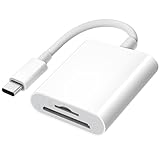
- 【2-in-1 SD Card Reader】This sd card reader adopts dual card slot design, compatible with SD/SDHC/SDXC/MicroSD/MicroSDXC/MicroSDHC memory cards. You can easily save the photos inside the SD card to your iPhone/iPad/Mac/Camera, view the photos and videos in the memory card anytime and anywhere, and upload them to social platforms, it is a good partner for your travelling and playing.
- 【Bi-directional Transfer】This memory sd card reader supports batch uploading photos and videos to transfer to your iPhone/iPad/Mac/Camera, reducing waiting time , and also supports you to save the data from your mobile phone or computer to the SD card through the sd card reader.
- 【User Friendly Design】This SD card reader is made of ABS material, equipped with an upgraded chip inside for great stability and durability.The smooth design of the USB C socket allows stable data transfer even outdoors. And this card reader has only one USB-C port, it won't block the other ports of your computer when you use it.
- 【Compatible with USB C】This USB C SD Card Reader for iPhone 16/16 Plus/16 Pro/16 Pro Max / 15/15 Plus/15 Pro/15 Pro Max, iPad Air 11 inch 4th /5th generation, iPad Pro 12.9 inch 6th /5th /4th /3rd generation, iPad Pro 11 inch 4th /3rd /2nd /1st generation, iPad Mini 6th generation, iPad 10th generation, MacBook Pro 13 inch 2020/2019/2018/2017/2016, MacBook 2017/2016/2015, MacBook Air 13 inch 2020/2019/2018, and other devices with USB C port and support OTG function.
- 【Anti-breakage Design】The cable body of this sd card reader is made of high tenacity TPE material and thickened to 3.2mm, after thousands of bending tests, it is not easy to break and durable.
2. Connect directly and verify the cable
Remove hubs, docks, monitor pass-through ports and device chains. Connect the reader directly to the Mac, and check any required power connection. Test another USB-C port and, where the cable is detachable, another known-good data cable. Apple recommends a direct connection and checking the cable when an external device fails.
3. Check System Information
- Hold the Option key.
- Open the Apple menu.
- Choose System Information.
- In the Hardware section, inspect the USB information for the reader.
If the reader appears in System Information but the card is absent in Finder or an import application, the USB connection is at least being detected. Quit and reopen the affected app, follow that app’s device-import instructions and restart the Mac. Apple’s external-device guidance includes checking System Information, reopening apps and restarting when hardware is not working.
If the reader does not appear in System Information, return to the direct-connection, port, cable and power tests. A missing entry at this level is not normally fixed by changing a photo-import setting.
4. Reseat the reader and card
Fully disconnect both the reader and the SD card, then reconnect them. Apple’s USB-C reader guidance specifically recommends this sequence when photos do not import. Test the reader with a second known-good card and, if possible, on another computer.
Crashes, No Sound, or Screen Glitches?
Random freezes, missing sound and display glitches usually trace back to one bad driver. Find and replace yours safely.Free scan · under a minuteWindows Errors? Fix Them Before They Spread
Repair common Windows errors and clear accumulated junk for a smoother, more stable PC - no reinstall needed.Free scan · no reinstallCheck SD-card format and adapter compatibility
Confirm that the card matches the reader’s slot and documented capabilities. Apple’s USB-C to SD Card Reader supports SD, SDHC, SDXC and UHS-II cards. MiniSD and microSD cards require a separate physical adapter; they do not fit a full-size SD slot by themselves.
Best Value

- 【Ultra High-Speed Transfer】Enjoy fast, stable transfers up to 5Gbps with our USB C 3.0 SD Card Reader. Compatible with USB 2.0/1.1, easily view and transfer files from security cams, wildlife monitors, car cams, or GoPro. (📌Note:Not compatible with “Lightning” and "USB-A" port devices)
- 【Read & Write 2 Cards Simultaneously】This Micro SD Card Reader USB C lets you transfer, sync, and copy files between two cards at the same time—no need to keep plugging and unplugging. Supports up to 2TB, so you won’t run out of space. (📌Note: Thick cases may block full insertion.)
- 【Thoughtful Design】The USBC to SD Card Reader cable is 15cm long, so you won't block the other ports of your computers. Ultra-lightweight and space-saving — ideal for travel, remote shoots, or mobile workstations. Slip it in your pocket and you’re good to go.(📌Note: "SD"card and "Micro SD" card not included)
- 【Reliable Aluminum Cooling】Crafted with a high-grade aluminum alloy exterior, this SD Card to USB C Adapter offers excellent heat dissipation to keep internal components cool during long transfers. Enjoy consistent speed and enhanced device protection with every use.(📌Note: Not compatible with CF, SIM, V90, mini SD, MS, SDUC, UFS, XQD, credit Card, Type A/B/C Cards and SSD Cards)
- 【Plug & Play Convenience】No drivers, no fuss. Just plug the reader into your USB-C port and you’re ready to transfer. The SD Card Reader for Laptop compatible with Windows, macOS, Linux, and Chrome OS.(📌Note: The phones and tablets must support "OTG" functionality)
| Card or connection | What to verify | What a failure suggests |
|---|---|---|
| Full-size SD | Insert it in the reader’s SD slot and ensure it is fully seated. | Improper seating, dirty contacts or a damaged card can prevent mounting. |
| SDHC or SDXC | Confirm that the reader documents support for the card family and capacity. | An older or limited reader may not support every capacity or file system. |
| UHS-II | Check whether the reader explicitly supports UHS-II if you need its higher interface mode. | The card may still work at a lower mode, or may fail if the reader is not compatible. |
| microSD or miniSD | Use a correctly sized, reliable adapter designed for the card. | A missing, damaged or poorly fitting adapter can look like a reader failure. |
Support for a card type does not guarantee that every camera-created file system, capacity or damaged card will mount. Use a known-good card to test the reader before troubleshooting the contents of a questionable card.
Independent reader supportYour contribution helps us test, update, and keep practical guides available for everyone.Use the results to identify the bad part
| Test result | Most likely area | Next action |
|---|---|---|
| Only one SD card fails; other cards work in the same reader and computer. | That card, its adapter or its contacts. | Secure any readable files, then investigate the card separately. |
| The reader fails with several known-good cards on one computer but works on another. | Computer port, cable, power, operating system or USB controller. | Use a direct port, remove hubs, connect external power and install model-specific updates. |
| The reader fails with several known-good cards on multiple computers. | Reader hardware or its detachable cable. | Replace the cable if detachable; otherwise replace the reader. |
| The reader appears in Device Manager or System Information, but no card appears in the file browser. | Card seating, card format, adapter or mounting/import software. | Reseat the card, test another card and avoid formatting until data is safe. |
| The device repeatedly connects and disconnects, especially through a hub. | Insufficient power, hub limitation, cable fault or unstable port. | Connect the computer to external power and test the reader directly. |
Run the tests in this order: known-good card, another USB-C port, direct connection without a hub, another cable where possible, and another computer. This sequence changes only one major variable at a time and gives you evidence for a replacement decision.
When replacing the reader makes sense
Replacement is reasonable when the same reader fails with multiple known-good cards on multiple computers after direct-connection and cable tests. Replace a detachable cable first if the reader works with another cable. If the reader works reliably elsewhere, replacing it will not correct a computer-specific port, power or driver problem.
Before buying a replacement, compare the features that affect your actual cards and workflow:
| Selection point | Why it matters |
|---|---|
| USB-C host compatibility | Confirm that the connector and the computer’s USB-C port support data, not only charging or display. |
| Slot coverage | Choose a full-size SD slot, microSD slot or both. A microSD card still needs an adapter in a full-size SD-only reader. |
| UHS support | Verify UHS-II support if your cards use that interface; otherwise the card may operate more slowly or not as expected. |
| Direct-connect design | A short integrated connector can remove one cable failure point, while a detachable cable is easier to replace. |
| Power behavior | Check whether the reader is bus-powered or accepts external power, particularly if you use a hub or several USB devices. |
| Warranty and returns | A clear return period helps if the reader is incompatible with your computer, card capacity or operating system. |
Use the product’s compatibility list rather than assuming every USB-C reader supports every SD capacity, UHS mode or operating system. Keep the receipt and test the new reader with your known-good card immediately, before relying on it for a transfer.
Protect your data while troubleshooting
- Copy first, repair later: If a card appears intermittently, copy important files while it is readable.
- Do not format on a prompt alone: Formatting or initializing can destroy the file system and make recovery harder.
- Avoid repeated forced removals: Eject the card or reader through the operating system when it is visible.
- Keep a second copy: A reader problem can expose an underlying card problem, so maintain another backup of important photographs and documents.
- Inspect physical contacts: Look for bent connectors, cracked adapters or contamination, but do not scrape contacts with metal objects or apply liquid inside the slot.
Quick decision checklist
- Disconnect the reader and remove every hub or dock.
- Connect directly to a USB-C data port with a known-good data cable.
- Insert the card fully and test a second known-good card.
- Try another USB-C port and, if possible, another computer.
- On Windows, inspect Device Manager and record the Device status error code.
- On an Apple-silicon Mac laptop, unlock the Mac and choose Allow if accessory approval appears.
- On a Mac, check Apple menu > System Information while holding Option and inspect the Hardware USB section.
- Connect the computer to external power and disconnect unused USB devices if the reader is unstable.
- Install current system, chipset and USB-controller updates from the computer maker when the reader works elsewhere.
- Replace the reader only after it fails across known-good cards and hosts; replace a detachable cable first when that is the variable that fails.
A USB-C SD card reader that is not recognized is usually diagnosable without guessing. Direct connection, one-variable testing, Windows Device Manager or Mac System Information, and the Mac accessory-approval check reveal whether the fault is the card, reader, cable, port, power path or operating system.
Quick Recap
Product prices and availability are accurate as of the date/time indicated and are subject to change. Any price and availability information displayed on Amazon at the time of purchase will apply.
Recommended Free Tools

