
Free tools Windows power users keep installed
One-click scans. No signup required.
iTechGuides is reader-supported. When you buy through links on our site, we may earn an affiliate commission. As an Amazon Associate I earn from qualifying purchases. Learn more
Short answer: USB-C wired headphones usually make the safer choice for gaming, instrument monitoring, and other timing-sensitive work because they remove Bluetooth’s radio, codec, and wireless buffering path. They do not guarantee zero delay: app buffers, operating-system routing, USB audio implementations, and signal processing still matter. Bluetooth can sound excellent, especially with newer LE Audio and the LC3 codec, while offering freedom from cables. Battery behavior is a two-part question: USB-C audio may draw power from the phone or computer, whereas Bluetooth headphones power their own wireless electronics and must be charged.
USB-C vs. Bluetooth at a glance
The connector or radio standard is only one part of the listening chain. A USB-C headset receives digital audio through USB Audio Class and converts it inside the accessory (or through an adapter). Bluetooth headphones receive a compressed wireless stream, buffer it, decode it, and then convert it to sound. That extra wireless path can add delay, but the actual result depends on the device, operating system, application, codec, headset firmware, and processing settings.
| Question | USB-C digital audio | Bluetooth audio |
|---|---|---|
| Typical timing advantage | Removes Bluetooth radio and codec transmission, so it is generally the safer default for interactive audio. USB, app, OS, and DSP latency remain. | Classic Bluetooth uses asynchronous transport and buffering that can delay sound. LE Audio is designed to reduce buffering and delay, but both source and headphones must support it. |
| Sound quality | Depends on the headset’s drivers, tuning, fit, source and digital processing. The USB connection itself does not guarantee better sound. | Depends on the same factors plus codec and wireless implementation. Compression does not automatically mean audible inferiority. |
| Phone or computer battery | A simple digital headset or adapter can draw power from the source device. | The source sends radio data, while the headset powers its own Bluetooth electronics and must be recharged. |
| Headphone battery | Some USB-C headsets are passive from the listener’s perspective; powered USB accessories may consume source power. Features vary. | Requires a charged internal battery for wireless use. Some models also accept USB-C audio or can charge while operating. |
| Mobility | Cable length, port position and cable reliability limit movement. | No audio cable between you and the source, but radio range, interference and pairing matter. |
| Compatibility | Requires a USB-C port that supports digital audio and an accessory compatible with that implementation. Calls and microphones are not guaranteed. | Requires compatible Bluetooth profiles; LE Audio and LC3 require support on both ends and may not be negotiated in every mode. |
How the two audio paths create latency
What happens with USB-C
With USB-C digital audio, the source sends digital samples over USB. The accessory’s USB Audio Class interface receives them, buffers them, converts them to analogue and drives the speakers. A game or video app may buffer audio before the operating system receives it; the operating system may route it through a mixer; and the headset may apply equalization, noise reduction or virtual-surround processing. Those stages can still produce a visible audio delay even though there is no Bluetooth link.
Android’s Android 13 Compatibility Definition requires a mean continuous round-trip audio latency of 25 milliseconds or less over USB Audio Class host mode for devices that omit a 3.5 mm jack and provide a USB host-mode port. That is a platform conformance requirement for a specified input/output path, not a promise that every USB-C headphone delivers 25 ms end-to-end playback latency. Android’s developer guidance notes that latency varies by device model and Android build, and that simply connecting a headset does not guarantee the lowest-latency route.
#1 Best Overall

- Hybrid Active Noise Cancelling: 2 internal and 2 external mics work in tandem to detect external noise and effectively reduce up to 90% of it, no matter in trains or offices.
- Immerse Yourself in Detailed Audio: The noise cancelling headphones have oversized 40mm dynamic drivers that produce detailed sound and thumping beats with BassUp technology for your every travel, commuting and gaming. Compatible with Hi-Res certified audio via the AUX cable for more detail.
- 40-Hour Long Battery Life and Fast Charging: With 40 hours of battery life with ANC on and 60 hours in normal mode, you can commute in peace with your Bluetooth headphones without thinking about recharging. Fast charge for 5 mins to get an extra 4 hours of music listening for daily users.
- Dual-Connections: Connect to two devices simultaneously with Bluetooth 5.0 and instantly switch between them. Whether you're working on your laptop, or need to take a phone call, audio from your Bluetooth headphones will automatically play from the device you need to hear from.
- App for EQ Customization: Download the soundcore app to tailor your sound using the customizable EQ, with 22 presets, or adjust it yourself. You can also switch between 3 modes: ANC, Normal, and Transparency, and relax with white noise.
What happens with Bluetooth Classic
Bluetooth Classic Audio generally encodes the source signal with a codec, sends it over an asynchronous connection, and buffers packets so the receiver can cope with radio timing and retransmissions. The Bluetooth Special Interest Group describes this buffering as a source of delay and characterizes Classic Audio as unsuitable for interactive uses such as video games in its technical discussion. That is a broad explanation of the transport, not a measured result for every current headset or every low-latency mode.
Actual delay varies with codec, firmware, operating-system audio stack, radio conditions, game engine and headset signal processing. A headset marketed with a “gaming” or “low-latency” mode may use a proprietary radio mode or a reduced buffer, but the claim must be checked for the exact phone, computer and application you use.
Why LE Audio can narrow the gap
Bluetooth LE Audio uses LE Isochronous Channels, introduced with Bluetooth Core 5.2, rather than the older Classic Audio transport. The design targets lower buffering and better suitability for movies and games. Android documentation identifies LC3 as the default LE Audio codec and describes it as more efficient and higher quality than SBC in that technical context.
Windows Errors? Fix Them Before They Spread
Repair common Windows errors and clear accumulated junk for a smoother, more stable PC - no reinstall needed.Free scan · no reinstallOutdated Drivers Are Slowing You Down
One free scan finds every outdated or missing driver and matches the right update for your exact hardware.Free scan · exact hardware matchLE Audio is not an automatic property of every Bluetooth 5.2-or-newer product. The source and headphones need compatible LE Audio implementations, and the operating system must select that mode. Android 13 includes built-in LE Audio support, but adoption varies by device and headset; many headsets are dual-mode while source-device support continues to expand. A Bluetooth settings page showing a recent version number does not prove that LC3 is active.
Rank #2

- 65 Hours Playtime: Low power consumption technology applied, BERIBES bluetooth headphones with built-in 500mAh battery can continually play more than 65 hours, standby more than 950 hours after one fully charge. By included 3.5mm audio cable, the wireless headphones over ear can be easily switched to wired mode when powers off. No power shortage problem anymore.
- Optional 6 Music Modes: Adopted most advanced dual 40mm dynamic sound unit and 6 EQ modes, BERIBES updated headphones wireless bluetooth black were born for audiophiles. Simply switch the headphone between balanced sound, extra powerful bass and mid treble enhancement modes. No matter you prefer rock, Jazz, Rhythm & Blues or classic music, BERIBES has always been committed to providing our customers with good sound quality as the focal point of our engineering.
- All Day Comfort: Made by premium materials, 0.38lb BERIBES over the ear headphones wireless bluetooth for work are the most lightweight headphones in the market. Adjustable headband makes it easy to fit all sizes heads without pains. Softer and more comfortable memory protein earmuffs protect your ears in long term using.
- Latest Bluetooth 6.0 and Microphone: Carrying latest Bluetooth 6.0 chip, after booting, 1-3 seconds to quickly pair bluetooth. Beribes bluetooth headphones with microphone has faster and more stable transmitter range up to 33ft. Two smart devices can be connected to Beribes over-ear headphones at the same time, makes you able to pick up a call from your phones when watching movie on your pad without switching.(There are updates for both the old and new Bluetooth versions, but this will not affect the quality of the product or its normal use.)
- Packaging Component: Package include a Foldable Deep Bass Headphone, 3.5MM Audio Cable, Type-c Charging Cable and User Manual.
Choosing for timing-sensitive work
- Competitive gaming: Start with USB-C wired audio when your device supports it. Test the actual game and headset, because USB routing and processing can still add delay.
- Rhythm games or instrument monitoring: Prefer a wired path unless your complete Bluetooth LE Audio setup is documented and tested for the required timing.
- Films and ordinary games: Bluetooth is often convenient; modern devices may keep lip-sync acceptable, but app-specific behavior differs.
- Calls and meetings: Check microphone routing and call-profile behavior, not just playback latency.
Does USB-C sound better than Bluetooth?
The hardware matters more than the label
Perceived sound is driven by the headphone drivers and acoustic design, seal and fit, frequency tuning, source material, equalization, volume and other digital processing. A well-tuned Bluetooth model can sound better to a particular listener than a poorly tuned USB-C model. Conversely, a high-quality USB-C headset can avoid codec losses and offer a clean digital path, but the connector alone does not establish superior fidelity.
What the Bluetooth codec changes
Bluetooth adds a codec and transport choice. Classic products may use SBC or another codec; LE Audio uses LC3 when the complete pairing supports it. The Bluetooth SIG reports listening-test findings in which LC3 produced higher quality than SBC at the same bitrate and power, or comparable to slightly better quality at less than half the bitrate. Those are codec-level findings, not a claim that any LC3 headset beats any USB-C headset.
The Bluetooth SIG’s technical description of LC3 cites independent expert-listener tests commissioned during development. The tests used high-quality wired headphones, listening booths, MUSHRA methodology and EBU test recordings, and covered sampling frequencies from 8 kHz through 48 kHz. The reported result was equivalent or better subjective performance than other codecs across that range, with a warning that controlled listening results may not translate directly to everyday listening.
When a wired connection can be audibly useful
- You want to avoid an additional lossy codec stage and have a clean, high-quality source.
- You are comparing the same transducer design in wired and wireless modes and prefer the wired mode’s processing or tuning.
- You need predictable behavior in a congested radio environment.
- You are monitoring a recording or instrument where consistent timing and repeatability matter more than mobility.
None of these points guarantees that every listener will hear a difference. Use familiar recordings, match loudness carefully and compare the actual models in their intended modes.
Rank #3
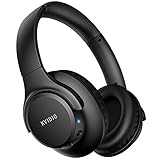
- Stereo sound headphones: KVIDIO bluetooth headphones with dual 40mm drivers, offers an almost concert hall-like feel to your favorite music as close as you're watching it live. Provide low latency high-quality reproduction of sound for listeners, audiophiles, and home audio enthusiasts
- Unmatched comfortable headphones: Over ear earmuff made by softest memory-protein foam gives you all day comfort. Adjustable headband and flexible earmuffs can easily fit any head shape without putting pressure on the ear. Foldable and ONLY 0.44lbs Lightweight design makes it the best choice for Travel, Workout and Every day use by College Students
- Wide compatibility: Simply press multi-function button 2s and the over ear headphones with mic will be in ready to pair. KVIDIO wireless headsets are compatible with all devices that support Bluetooth or 3.5 mm plug cables. With the built-in microphone, you can easily make hands-free calls or facetime meetings while working at home
- Seamless wireless connection: Bluetooth version V6.0 ensures an ultra fast and virtually unbreakable connection up to 33 feet (10 meters). Rechargeable 500mAh battery can be quick charged within 2.5 hours. After 65 hours of playtime, you can switch KVIDIO Cordless Headset from wireless to wired mode and enjoy your music NON-STOP. No worry for power shortage problem during long trip
- Package: Package include a Foldable Deep Bass Headphone, 3.5mm backup audio cable, USB charging cable and User Manual.
Battery use: separate source drain from headphone runtime
USB-C can draw power from the phone
A USB-C digital headset, DAC or adapter may receive operating power from the phone, tablet or computer while it plays audio. The amount depends on the accessory, volume, microphone activity, conversion hardware and device power management. This is source-device drain, not a rechargeable headphone-runtime figure. A powered USB accessory can draw more than a simple headset.
USB-C ports and cables are not automatically audio-capable. Some support charging only, while others support digital audio, and a device can require a setting or specific accessory behavior. Never infer power or audio support from the connector’s shape.
Bluetooth shifts some consumption to the headset
Bluetooth headphones run a radio, processor and codec decoder from their internal battery. The phone still spends energy transmitting Bluetooth packets, but the headset must be charged and its advertised runtime depends on volume, codec, noise cancellation, microphone use and other features. There is no universal total-energy winner established by the available evidence.
LE Audio power claims need qualification
The Bluetooth SIG says LC3 power reductions depend on implementation and product usage. Its FAQ describes possible manufacturer choices: a product might provide higher quality at similar battery life, or longer battery life at similar quality. “Up to double” battery life is presented as a possible design outcome, not a guaranteed runtime for buyers and not a universal result versus USB-C.
Rank #4

- SUPERIOR COMFORT — Unlike traditional circular ear buds, the design of EarPods is defined by the geometry of the ear. Which makes them more comfortable for more people than any other ear bud–style headphones.
- HIGH-QUALITY AUDIO — The speakers inside EarPods have been engineered to maximize sound output and minimize sound loss, which means you get high-quality audio.
- BUILT-IN REMOTE — EarPods with USB-C plug also include a built-in remote that lets you adjust the volume, control the playback of music and video, and answer or end calls with a pinch of the cord.
- COMPATIBILITY — Works with all devices that have a USB-C port.
- INTEGRATED MICROPHONE — A built-in microphone precisely captures your voice while you’re on the phone, taking a FaceTime call, or summoning Siri — so you’re always heard loud and clear.
Charging while using USB-C audio
Some headphones accept USB-C audio while charging, allowing continued listening from a computer or phone. Bose’s QuietComfort Ultra Headphones owner’s guide is one model-specific example: it documents USB-C audio and charging while powered on. Other headphones use their USB-C port only for charging, or disable audio while charging, so verify the manual for the exact model.
Compatibility checks before buying
For USB-C headphones or adapters
- Confirm digital audio output: Check the phone, tablet or computer specification for USB Audio Class or digital audio support. A USB-C-shaped port alone is insufficient.
- Check host mode and operating-system support: A device must act as the USB host for a digital headset or adapter. Android behavior can vary by model and build.
- Verify calls and microphone support: Google’s Pixel USB-C earbuds guidance notes that some devices require USB-C audio to be enabled and that some may not support calls through those earbuds.
- Check power expectations: Confirm whether the accessory is bus-powered, has its own battery or needs an adapter with power pass-through.
- Inspect connector and cable details: A charging-only cable, hub or port can prevent audio even when the phone itself supports it.
For Bluetooth headphones
- Check the profiles and codecs: Confirm ordinary Bluetooth audio support, and separately look for LE Audio and LC3 on both the source and headphones.
- Do not assume LE Audio is active: Android 13 includes LE Audio support, but a particular pairing may fall back to Classic Audio or another codec.
- Test microphone behavior: Headsets can change profile or quality when the microphone is active, especially in games and calls.
- Check multipoint and switching: Connections to two devices can alter codec selection, latency or stability.
- Review update requirements: Firmware and operating-system updates may be needed before LE Audio options appear.
Which connection fits your use case?
| Use case | Starting choice | What to verify |
|---|---|---|
| Competitive or rhythm gaming | USB-C wired | Actual in-game sync, USB routing, microphone support and whether processing modes can be disabled. |
| Single-player gaming | Either | Whether Bluetooth delay is noticeable in your games and whether cable freedom is worth the trade-off. |
| Watching films | Bluetooth is convenient | Automatic lip-sync behavior, LE Audio availability and the app’s audio delay controls. |
| Instrument monitoring or recording | USB-C wired | Round-trip latency, monitoring path, app buffer settings and any DSP bypass option. |
| Travel and commuting | Bluetooth | Battery runtime, charging access, noise-control power use and fallback wired operation. |
| Long desk sessions | Whichever fits your power plan | Whether the headset works while charging, source-device drain and cable durability. |
| Calls on an unfamiliar device | Check both options | Microphone routing, call support, mute controls and compatibility with the operating system. |
How to test latency and sound on your own devices
Published specifications rarely describe the complete end-to-end path, so a short practical test is more useful than relying on a connector label.
- Update the operating system, headset firmware and the test application.
- Disable optional equalizers, spatial audio and noise-processing modes for a baseline, then retest with them enabled.
- Play a video with a sharp visual event and a matching sound, such as a hand clap, and look for consistent lip-sync error.
- In a game, test repeated actions with both connections and note whether the delay is stable or changes with wireless interference.
- For music, match playback loudness before judging quality; louder usually sounds subjectively better.
- Measure phone battery percentage over the same time and brightness conditions for USB-C and Bluetooth. Record headphone runtime separately from phone drain.
- Test calls with the microphone active, because the audio path can change when a headset enters a two-way voice profile.
This procedure does not produce a universal millisecond or energy figure. It tells you how your specific device, app and headset behave together.
The Tool Desk
Outbyte PC Repair FREERepair Windows errors before they cause bigger problemsFix Now →Outbyte Driver Updater FREEFix the driver behind crashes, sound loss and screen glitchesFind Drivers →Common problems and fixes
USB-C headset is not detected
- Confirm the port supports digital audio rather than charging only.
- Reconnect after unlocking the device and check whether a USB-audio permission or “enable audio through USB-C” setting appears.
- Remove hubs and passive adapters, then test a known-compatible USB Audio Class accessory.
- Check whether the phone’s case prevents full connector insertion.
USB-C playback works but calls do not
- Verify that the headset exposes a microphone recognized by the operating system.
- Check the calling app’s input and output selections.
- Consult the device maker’s compatibility notes; some phones support USB-C playback but not calls through every accessory.
Bluetooth audio is behind video
- Try the headset’s low-latency or game mode if it has one.
- Check whether the source and headset support LE Audio and whether LC3 is actually selected.
- Disable unnecessary audio effects and test another app, since buffering can be application-specific.
- Keep the source nearby and reduce competing radio traffic.
Bluetooth sound quality changes during calls
Two-way voice operation can switch the headset to a different Bluetooth profile with different bandwidth and processing. Compare playback with the microphone idle and active, and check the computer or phone’s selected input device.
Best Value

- Powerful Bass Stereo Sound: Upgraded bluetooth earbuds with 11mm dynamic drivers and clear calls technology, our ear buds deliver superior sound quality, powerful bass, and crystal-clear phone calls. Enjoy your music and conversations with exceptional clarity.
- Up To 16 Hours Playtime: With an improved polymer lithium battery, Boean sports headphones offer up to 16 hours of playtime. Enjoy a superior audio experience with extended endurance, allowing you to immerse yourself in your favorite music or engage in important conversations without interruption. We recommend using the supplied USB-C cable for faster charging. Other cables are not recommended.
- Flexible ear hooks designed specifically for sports: The Boean lightweight, ergonomic headphones wireless bluetooth feature ear hooks, in-ear tips, and a headband for a secure fit, making them ideal for running, jogging, hiking, cycling, gym workouts, and use outdoors or at home.
- All‑in‑one Boean App: Pair your Bluetooth headphones with the Boean app to unlock AI‑powered music creation to produce your own original tracks. Unwind with built‑in soothing sleep audio whenever you need to relax. You can easily save all your creations and share them with others. Additionally, the app supports real-time translation in 91 languages and real-time transcription in 66 languages.
- One-Step Auto Pair: Equipped with the latest Bluetooth 5.3 technology, these running headphones are easy to connect to your iOS/Android/Windows devices and auto-pair in 1 second. (Note: Smartwatch connectivity is not supported.)
The headset battery dies during USB-C listening
Determine whether the model treats USB-C as a digital audio input, a charging port or both. If simultaneous charging and audio are supported, use the documented cable and power source; otherwise, a separate wired USB-C headset or an analogue path may be required.
The practical decision rule
Choose USB-C wired when predictable timing, no pairing and a potentially cleaner transport matter more than freedom from cables. Choose Bluetooth when mobility, comfort and multi-device convenience dominate, and accept that Classic Audio may add noticeable delay. If both devices support LE Audio, LC3 can reduce the traditional Bluetooth compromises, but verify the negotiated mode rather than assuming it from a specification-sheet version number.
For sound, compare the actual headphones at matched loudness; connection type is not a reliable proxy for tuning or fidelity. For battery, write down two separate answers: how much power the source device uses during playback, and how often the headphones themselves need charging. That distinction prevents the most common USB-C-versus-Bluetooth battery mistake.
Do these 3 things before closing this tab:
1Fix the driver behind crashes, sound loss and screen glitches2Repair Windows errors before they cause bigger problems3Scan for outdated or missing drivers - takes under a minuteQuick Recap
Product prices and availability are accurate as of the date/time indicated and are subject to change. Any price and availability information displayed on Amazon at the time of purchase will apply.

