
The Tool Desk
Outbyte Driver Updater FREEScan for outdated or missing drivers - takes under a minuteDriver Scan →Outbyte PC Repair FREEClear out junk files and repair common Windows errorsFree Scan →iTechGuides is reader-supported. When you buy through links on our site, we may earn an affiliate commission. As an Amazon Associate I earn from qualifying purchases. Learn more
For an Indian merchant, UPI QR and card acceptance are different acquiring arrangements, not simply two ways to display a payment option. UPI QR requires onboarding through an acquiring bank or provider, and NPCI says the merchant receives funds immediately after the customer confirms payment—into a merchant pool or bank account as specified in the agreement. Card charges and settlement terms depend on the merchant’s written acquiring offer; RBI requires card MDR to be disclosed separately by card category, but the reviewed official material does not establish one current rate for every merchant.
There is also a significant date distinction: as of October 13, 2026, the Department of Financial Services’ announced UPI MDR framework is scheduled to take effect on October 15, 2026. It should not be treated as already in force on October 13. A merchant choosing between QR, cards, or both should compare its classification, transaction sizes, card mix, settlement agreement, and equipment needs—not assume one method is always cheaper.
What changes when you accept UPI QR or cards?
UPI QR is a digital acceptance mode. A merchant obtains it through an acquiring relationship: NPCI says merchants partner with an acquiring bank, which provides the UPI infrastructure and handles onboarding, merchant identification, and configuration. A QR printed on a counter is the visible part of that arrangement, not a substitute for merchant onboarding.
Cards follow a separate acceptance path, commonly involving a physical point-of-sale terminal, including mobile POS equipment. RBI’s terminology distinguishes this physical POS infrastructure from digital QR acceptance. The two methods can therefore differ not only in processing charges but also in equipment, checkout workflow, and the terms under which proceeds reach the merchant.
#1 Best Overall

- Continuous Usage All Day: The EY-H2 USB barcode scanner is designed to always be ready for the next scan, which significantly reduces downtime and repair costs; it shortens checkout lines, improves customer service, and boosts business productivity
- Plug and Play: Eyoyo wired barcode scanner is connected via a USB cable, with no need to install any driver or software; It offers effortless connection and is compatible with Windows, Mac, Android, and Linux; Seamlessly works with Quickbook, Word, Excel, Novell, and all common software
- Supports Multiple 1D/2D Barcodes: Eyoyo QR code scanner scan with most 1D 2D barcodes with ease; 1D Barcodes: EAN, UPC, Code 39, Code 93, Code 128, UCC/EAN 128, Codabar, Interleaved 2 of 5, ITF-6, ITF-14, ISBN, ISSN, MSI-Plessey, GS1 Databar, Code 11, Industrial 25, Matrix 2 of 5, etc. 2D Barcodes: QR, DataMatrix, PDF417, and so on
- Supports Screen Scanning: The Eyoyo 2D scanner is capable of reading barcodes from smartphone screens, such as mobile coupons, digital wallets, and digital loyalty cards; Before scanning, simply turn your screen brightness to the maximum
- Sturdy Anti-Shock and Durable Design: The Eyoyo 2D barcode scanner features an ergonomic design made of high-quality ABS, enabling it to withstand repeated drops from 5 ft/1.5 m high onto the concrete ground; The durable plastic material ensures a long service life
NPCI lists QR, intent, application-based, and collect as UPI merchant modes. QR is the mode most directly suited to an in-person counter: the merchant displays a code for a customer to scan and confirm. Other modes may suit a different workflow, but a merchant should ask the acquiring provider which modes it will configure and how they fit the business.
This distinction matters when comparing “setup.” A merchant QR display stand can make an acquirer-issued code easier to show at the counter, but buying a stand does not open a merchant account, complete onboarding, or create a valid merchant QR. Ask the acquirer how the code is issued and linked to the merchant before displaying it. A card terminal is different: it is physical POS equipment, and the merchant should confirm what device or mobile POS arrangement the provider will supply and what the written offer says about it.
Merchant-side fees: what is known and what must be quoted
Merchant discount rate (MDR) is a merchant-side processing charge. It is distinct from any charge a customer might see or pay. The Ministry of Finance’s September 15, 2026 release says MDR is neither a tax nor a charge collected by the Government or NPCI, and says customers should not be charged the announced UPI MDR. Do not treat a merchant processing cost as a customer surcharge.
Announced UPI MDR framework scheduled for October 15, 2026
The Department of Financial Services FAQ dated September 15, 2026 describes the following terms for covered UPI person-to-merchant (P2M) transactions. These are announced rules with a scheduled effective date of October 15, 2026; on October 13, they are upcoming. The merchant’s classification and business category matter, so confirm applicability with the acquirer in writing.
| Covered transaction or merchant condition | Announced MDR treatment | Important qualification |
|---|---|---|
| P2M transaction up to ₹2,000 | Zero MDR | As described in the Department of Financial Services FAQ for the announced framework. |
| Covered P2M transaction above ₹2,000 | 0.4% MDR | For transactions of ₹75,000 and above, the announced MDR is capped at ₹300 per transaction. |
| Above ₹2,000 in listed essential and thin-margin categories | Flat ₹5 MDR | The FAQ lists categories including railways, telecommunications, insurance, fuel, and agricultural inputs. Confirm that the acquirer has assigned the business to an eligible category. |
| Listed capital-market transactions | 0.02% MDR, capped at ₹300 | Applies to the listed transaction category described in the FAQ, not automatically to other merchant activity. |
| Small merchant classified under P2PM, receiving up to ₹1 lakh per month through UPI QR | Zero MDR on all transactions | The Ministry of Finance describes this treatment for merchants meeting the P2PM classification and monthly QR receipt condition. |
The ₹300 cap is stated for covered transactions of ₹75,000 and above; it is not a blanket cap for every transaction or merchant. Likewise, the P2PM monthly condition is not simply a volume discount available to any business. Ask the acquiring bank to state the merchant’s classification, applicable category, and treatment of each relevant transaction type in the agreement or written schedule.
For a simple sense of the rate, 0.4% of a covered ₹10,000 transaction would be ₹40 before considering any applicable category treatment; at a covered transaction of ₹75,000 or more, the announced ₹300 cap applies. This is arithmetic to help read the announced schedule, not a prediction of a particular merchant’s bill. The transaction must fall under the covered terms, and the merchant’s classification and business category still need confirmation.
Rank #2

- 【Battery Level Indicator and 2200mAh Capacity】Larger battery enables longer continuous usage and twice the stand-by time of others. With the unique battery indicator light showing the remaining battery level, no more Low Battery Anxiety.
- 【Ergonomic Design】 The curved handle is extended and thickened, tailor-made for North America customers. Specially designed smooth and flat trigger for better grip. 【Package Includes】Barcode Scanner x1, USB Cable x1, Dongle x1, User Manual x1.
- 【Anti-Shock Silicone】 The orange anti-shock silicone protective cover can avoid scratches and friction while falling from the height of 6.56 feet. IP54 technology protects the wireless barcode scanner from dust.
- 【2.4 GHz Wireless plus USB 2.0 Wired Connection】 Plug and play with the USB receiver or the USB cable, no driver installation needed. Easy and quick to set up. Wireless transmission distance reaches up to 328 ft. in barrier free environment.
- 【Digital and Printed 1D 2D QR Bar Code Symbologies】1D: Codabar, Code 11, Code93, MSI, Code 128, UCC/EAN-128, Code 39, EAN-8, EAN-13, UPC-A, ISBN, Industrial 25, Interleaved 25, Standard25, Matrix 2D: QR, DataMatrix, Aztec, Hanxin, Micro PDF417. (Note: Not compatible with Square.)
The Ministry of Finance estimates that approximately 96% of P2M transactions will remain unaffected by the announced framework. That is the Ministry’s 2026 estimate, not a guarantee about an individual shop’s charges or transaction mix.
When checking a quote or statement after implementation, distinguish the transaction rule from the merchant-level eligibility rule. A transaction below or above a threshold, an eligible category, and P2PM classification are not interchangeable descriptions. Ask the acquirer to explain which basis it used and how the relevant MDR appears in the merchant’s schedule or statement. If the merchant’s assigned MCC or classification seems inconsistent with its business, raise that during onboarding rather than assuming the displayed QR alone determines the applicable treatment.
Card MDR: compare categories, not a headline rate
RBI’s September 1, 2016 direction requires acquiring banks to make MDR transparent and unbundled across debit, credit, and prepaid cards, with separate agreements or annexes for those card categories. RBI also says merchants should be educated about the applicable charges during acquisition. This supports asking for a written fee schedule broken out by card type and merchant category.
The reviewed RBI material does not establish a universal current credit-card MDR, nor a current rate that can be applied to every merchant. A quote may also specify other charges or terms, such as terminal or service charges; the materials here do not set a standard amount for those. Request the complete written offer rather than relying on a single advertised “card fee.” Historical debit-card rates or caps should not be substituted for a current merchant-specific quote.
In practice, ask the provider to identify each card category explicitly and to show any separate device, service, or settlement terms alongside the MDR. If an offer uses a single blended headline number, request the debit, credit, and prepaid breakdown and ask which agreement or annex applies to each. The point is not that every merchant will have the same pricing structure, but that RBI’s direction supports transparent category-level disclosure so the merchant can compare like with like.
PC Slower Than It Used to Be?
A free scan shows the junk files, broken settings and background clutter dragging Windows down - then fixes them in one click.Free scan · Windows 10 & 11Crashes, No Sound, or Screen Glitches?
Random freezes, missing sound and display glitches usually trace back to one bad driver. Find and replace yours safely.Free scan · under a minuteHow to read the UPI policy transition
Historical government material described a zero-MDR framework for BHIM-UPI and RuPay debit card transactions beginning in January 2020. A separate PMO incentive scheme covered FY 2024–25 and described a 0.15% incentive for eligible low-value small-merchant UPI P2M transactions up to ₹2,000. Those facts describe earlier policy periods; the incentive is not a merchant charge or proof of a present card rate. For the announced change relevant to this article, use the October 15, 2026 effective date and verify the acquirer’s implementation and the merchant’s classification.
Rank #3

- 【Battery Level Indicator and 2200mAh Capacity】Larger battery enables longer continuous usage and twice the stand-by time of others. With the unique battery indicator light showing the remaining battery level, no more Low Battery Anxiety.
- 【Ergonomic Design】 The curved handle is extended and thickened, tailor-made for North America customers. Specially designed smooth and flat trigger for better grip. 【Package Includes】Barcode Scanner x1, USB Cable x1, Dongle x1, User Manual x1
- 【Anti-Shock Silicone】 The orange anti-shock silicone protective cover can avoid scratches and friction while falling from the height of 6.56 feet. IP54 technology protects the wireless barcode scanner from dust.
- 【2.4 GHz Wireless + USB 2.0 Wired Connection】 Plug and play with the USB receiver or the USB cable, no driver installation needed. Easy and quick to set up. Wireless transmission distance reaches up to 328 ft. in barrier free environment.
- 【Digital and Printed 1D 2D QR Bar Code Symbologies】1D: Codabar, Code 11, Code93, MSI, Code 128, UCC/EAN-128, Code 39, EAN-8, EAN-13, UPC-A, ISBN, Industrial 25, Interleaved 25, Standard25, Matrix 2D: QR, DataMatrix, PDF417, Aztec, Hanxin, Micro PDF417. (Note: Not compatible with Square.)
For a decision made on or before October 14, use “announced” or “scheduled” when discussing the new framework. If making the decision on or after October 15, check whether implementation has occurred and what the provider is applying to that merchant. This date check prevents an older zero-MDR description from being mistaken for the entire current schedule, while also avoiding the opposite error of describing the scheduled rules as already effective before their date.
Settlement: when does the merchant get the money?
NPCI’s FAQ answers that a merchant receives money immediately after the customer confirms a UPI transaction, into the merchant pool or bank account according to the merchant agreement. The destination and arrangement are therefore agreement-dependent. Before accepting payments, establish which account or pool receives the funds and how the provider’s settlement and reconciliation process works.
The official material summarized here does not establish a single card settlement timetable. Do not assume card proceeds arrive on the same schedule as UPI simply because both methods are accepted by the same provider. Ask for the card settlement schedule, destination account, any conditions, and the reconciliation method in the written offer. Timing can only be compared accurately once both sides of the merchant’s actual agreements are known.
Quick wins for a faster PC:
Repair Windows errors before they cause bigger problemsFix Now →Scan for outdated or missing drivers - takes under a minuteDriver Scan →“Immediate” in NPCI’s answer describes receipt after customer confirmation into the agreed merchant pool or bank account; it does not remove the need to understand how the provider presents and reconciles those receipts. Confirm what destination is named in the agreement and what records the merchant can use to match payments to sales. For cards, get the corresponding schedule and records in writing rather than borrowing the UPI timing expectation. A shared provider does not, by itself, establish identical settlement terms across the two acceptance methods.
How to set up UPI QR and card acceptance
- Select an acquirer or provider and complete onboarding. For UPI, NPCI says a merchant partners with an acquiring bank that supplies the infrastructure. The bank handles merchant onboarding, identification, and configuration. Confirm whether a provider is acting through an acquiring bank and what accounts and services the arrangement covers.
- Confirm the merchant category and classification. NPCI identifies the merchant category code (MCC) as part of onboarding. Ask the acquirer to provide the assigned MCC and relevant merchant classification in writing, particularly because the announced UPI MDR framework distinguishes merchant and transaction categories.
- Choose the UPI integration mode. NPCI lists QR, intent, application-based, and collect. For a typical in-person counter, ask for the merchant QR mode and instructions for displaying the acquirer-issued code. A QR stand is optional display hardware, not an account or a source of a valid merchant QR.
- Request the card fee schedule by category. Ask for separate debit, credit, and prepaid charges, as well as any distinct terminal, service, or settlement terms. RBI’s direction calls for card MDR to be clearly unbundled and explained during merchant acquisition.
- Confirm settlement and reconciliation for each rail. For UPI, verify whether proceeds go to a merchant pool or bank account and how the agreement defines receipt and reconciliation. For cards, obtain the specific settlement timetable and conditions; do not infer it from UPI terms.
- Check equipment and workflow before committing. Determine whether card acceptance requires a POS or mobile POS device, what the quote says about its costs and compatibility, and whether the merchant’s checkout needs an integrated workflow. For QR, confirm how the code will be issued, displayed, and matched to the merchant account.
These steps put the merchant’s paperwork before the counter display. In particular, a merchant should know the receiving destination, assigned MCC and classification, fee schedule, and settlement terms before treating a code or terminal as ready for business. The reviewed material does not prescribe a universal device price, onboarding fee, or provider, so compare the actual written offers available to the business.
Compare options using your own sales mix
No method is universally less expensive or operationally better for every merchant. A useful comparison begins with the shop’s actual sales profile and written offers. Estimate the relevant UPI transaction bands and monthly QR receipts, identify whether the stated P2PM or category conditions could apply, and list the share of debit, credit, and prepaid card sales. Then compare charges and settlement requirements against the workflow and hardware the business needs.
Rank #4

- 【Unique Designed Screen Setting】It allows you to customize the screen display according to your preferences. With this innovative feature, you can easily set the language, adjust volume settings, select connection options, and view stored and total barcodes. Experience unparalleled convenience and flexibility as you personalize the settings of your Tera HW0009 to suit your specific needs. 【Package Includes: Barcode Scanner x1, Charging Cradle x1, Charging Cable x1, User Manual x1】
- 【Superior Global CMOS Imaging Scanning】This advanced scanner excels in fast and accurate reading of both ordinary and high-density barcodes, including challenging formats like PDF417 found on driver's licenses. Its exceptional performance effortlessly handles various scanning scenarios, including underwater scanning, reading barcodes on silver paper, reflective materials, and more.
- 【Charging Cradle & 2500mAh Large Battery】Designed with a convenient charging cradle, the HW0009 barcode scanner allows you to easily charge it whenever it's not in use. In addition, the scanner itself is equipped with a powerful 2500mAh battery, ensuring seamless all-day operation without the need for frequent charging.
- 【3-in-1 Connections & Widely Compatible】 Tera HW0009 wireless barcode scanner can work with bluetooth & 2.4G wireless & usb wired. The transmission distance can be 328ft in barrier free environment and 114ft in obstacles environment using 2.4G USB dongle. It can be connected with a variety of devices, such as smartphones, computers, POS, tablets. In addition, it is also compatible with various operating systems, such as windows 11/10/8/7/xp, Mac OS, iOS, android, linux.
- 【1D 2D QR code Programmable】2D: QR code, Data Matrix, PDF417(including PDF417 on driver’s license), Aztec, Maxicode, Micro QR, Micro PDF417; 1D: UPC/EAN, Code 128/EAN128, GS1-128, ISBT-128, Standard 2 of 5, Matrix 2 of 5, Code 39, Code 32, Code 93, Code 11, Codabar, PLESSEY, MSI, GSI Databar, ITF-14, GS1.
Use the same period and a realistic mix when reviewing offers. For UPI, separate the volume that falls at or below ₹2,000 from covered transactions above that amount, and note any large transactions that may meet the ₹75,000 cap condition. Record monthly QR receipts and whether P2PM classification might apply, then ask the acquirer to validate both the classification and the category. For cards, separate debit, credit, and prepaid volumes so a merchant can apply the provider’s actual disclosed terms rather than a blended headline rate.
Do these 3 things before closing this tab:
1Clear out junk files and repair common Windows errors2Fix the driver behind crashes, sound loss and screen glitches3Repair Windows errors before they cause bigger problemsDo not compare only the MDR percentages. A QR option has an onboarding and configuration relationship and a destination pool or account specified in an agreement; card acceptance may involve physical POS or mobile POS equipment and separate service or settlement terms. A merchant that needs terminal-based workflow should include that need in the decision, while a merchant considering QR should confirm how its code will be displayed and how receipts will be reconciled. The sources do not identify a universal cheapest provider or fixed equipment cost, so the useful comparison is the merchant’s own written offer against its needs.
| Decision factor | UPI QR | Cards |
|---|---|---|
| Merchant cost basis | Under the announced October 15, 2026 framework, depends on transaction amount, category, and merchant classification; verify implementation and treatment with the acquirer. | Compare the acquiring offer by debit, credit, and prepaid category, plus any other written charges. No universal current rate is established here. |
| Settlement | NPCI says receipt is immediate after customer confirmation into a merchant pool or bank account, according to the merchant agreement. | Use the provider’s written settlement timetable and conditions; the reviewed official material does not specify a universal schedule. |
| Acceptance setup | Acquirer onboarding and configuration; QR is one of NPCI’s listed merchant modes. | Typically involves physical POS infrastructure, including mobile POS; confirm the actual equipment and service terms in the offer. |
| Best questions for the acquirer | What are my MCC and classification? Which framework category applies? Where do funds settle, and how are receipts reconciled? | What are the separate debit, credit, and prepaid MDRs? What are device, service, and settlement terms? |
When QR may fit the counter
- The merchant wants a digital acceptance option displayed at the point of sale and is prepared to complete the acquiring setup behind the code.
- UPI payment sizes, monthly QR receipts, and business category make the applicable announced MDR terms worth confirming with the acquirer.
- The business can reconcile QR receipts against the destination pool or account specified in its agreement.
When a card terminal may be important
- The business needs physical POS acceptance or its existing checkout workflow depends on a terminal.
- Its customers use a mix of debit, credit, or prepaid cards, making a category-by-category fee schedule necessary.
- The merchant can evaluate the equipment, service, and settlement terms in a written offer rather than relying on a headline MDR.
These are decision prompts, not guarantees that a particular payment method will cost less. If customers use both UPI and cards, ask whether one acquiring relationship can support both and compare the complete written terms for each rail.
Independent reader supportYour contribution helps us test, update, and keep practical guides available for everyone.Questions to ask before signing
- Which acquiring bank is responsible for onboarding and configuration, and what merchant account or pool receives funds?
- What MCC and merchant classification are assigned to the business? How will the acquirer determine eligibility for any announced UPI category treatment?
- For UPI, what charges apply by transaction size and category under the terms effective from October 15, 2026, and how will any policy implementation be reflected in statements?
- For cards, what are the separate MDRs for debit, credit, and prepaid cards? Are any terminal, service, or other charges separate?
- What is the settlement timing for each payment method, what conditions can affect it, and what report or reference will support reconciliation?
- What equipment is required, who supplies it, what does it cost under the offer, and which checkout workflows does it support?
- How can the merchant correct an inaccurate category or settlement detail, and where will changes to fees or terms be documented?
Before comparing providers, make sure each has answered the same questions. A written offer is easier to evaluate when it specifies the acquirer, the merchant’s MCC and classification, each applicable fee category, destination account or pool, settlement timing, reconciliation records, and any equipment or service terms. If one provider has not supplied a detail, treat it as an open question rather than assuming the answer is the same as another provider’s.
Frequently Asked Questions
When will a merchant receive money after a UPI transaction?
NPCI says the merchant receives the funds immediately after the customer confirms the transaction, into the merchant pool or bank account according to the merchant agreement. Confirm the destination and reconciliation arrangement in that agreement.
What’s actually slowing this PC down?
Pick the symptom - the matching free tool is one click away.
Are the announced UPI MDR rules already in effect on October 13, 2026?
No. The Department of Financial Services FAQ dated September 15, 2026 schedules the framework to take effect on October 15, 2026. On October 13, it is announced but upcoming; check implementation and your acquirer’s treatment on or after the effective date.
Best Value
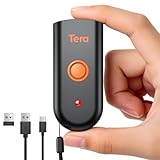
- 【IP66 Waterproof Dustproof Mini Pocket 2D Scanner】Just bring this scanner with you. Anytime you want to collect data, just connect it with your device via Bluetooth or use the storage mode. 【Package Includes】Barcode Scanner x1, USB Cable x1, Dongle x1, User Manual x1.
- 【Waterproof Dustproof Silicone Port Plug】Newly designed waterproof and dustproof silicone port plug on marketplace, it enables better performance of the scanner in every working conditions. The silicone button on the scanner body enables every soft and smooth scanning experience.
- 【3-in-1 Connection Ways】This scanner works with Bluetooth, 2.4GHz wireless and USB 2.0 wired mode. The transmission distance can be 656ft in barrier free environment and 98 ft in an environment with obstacles using a 2.4G USB dongle. In addition, it is also compatible with various operating systems, such as windows 11/10/8/7/xp, Mac OS, iOS, android, linux.(Note: Not Compatible with Square)
- 【Vibration Alert】: When you need a quiet working environment, just turn the volume off and the vibration function will let you know if a barcode is detected.
- 【1D 2D QR Scanner】:Supports Both Digital and Printed 1D 2D QR Bar Code Symbologies: 1D Decode Capability: Codabar, Code 11, Code93, MSI, Code 128, UCC/EAN-128, Code 39, EAN-8, EAN-13, UPC-A, ISBN, Industrial 25, Interleaved 25, Standard 25, 2/5 Matrix 2D Decode Capability: QR, PDF417, Data Matrix, Aztec code, Maxi Code.
Is UPI QR always free for merchants?
Not under the full announced schedule described in the Department of Financial Services FAQ. P2M transactions up to ₹2,000 remain free of MDR, while covered transactions above ₹2,000 generally have an announced 0.4% MDR, subject to stated caps and category treatments. Small merchants classified under P2PM and receiving up to ₹1 lakh per month through UPI QR are described as receiving zero MDR on all transactions. Ask your acquirer to confirm classification and eligibility.
Can I add the UPI MDR to the customer’s bill?
The Ministry of Finance’s announcement says the MDR is merchant-side and customers should not be charged it. It also says MDR is neither a tax nor a charge collected by the Government or NPCI.
What is the current card MDR for my business?
The reviewed sources do not provide one universal current rate. RBI requires acquiring banks to make MDR transparent and unbundled for debit, credit, and prepaid cards. Request your own written fee schedule by card category and merchant category.
Do I need to buy a QR stand or POS terminal to accept payments?
A QR stand is optional display hardware; it does not create a merchant account or supply a valid merchant QR. QR acceptance still requires the acquiring relationship and configuration. Card acceptance commonly uses physical POS or mobile POS infrastructure, so ask the provider what equipment is required and what terms apply.
Should a merchant choose UPI QR or cards?
It depends on the merchant’s category and classification, UPI transaction sizes and monthly QR receipts, card mix, settlement agreement, and equipment or checkout needs. Compare written offers for both methods; the reviewed sources do not establish that one is always cheaper or best.
The Bottom Line
UPI QR is an acquiring setup, not merely a code, and NPCI says funds arrive immediately after confirmation into the agreed merchant pool or bank account. The announced UPI MDR framework is scheduled for October 15, 2026, so check its effective status and your own classification; card MDR should be compared by debit, credit, and prepaid category in a written offer. Choose QR, cards, or both only after comparing your transaction mix, settlement terms, and equipment needs.
Quick Recap
Product prices and availability are accurate as of the date/time indicated and are subject to change. Any price and availability information displayed on Amazon at the time of purchase will apply.
Recommended Free Tools

