
iTechGuides is reader-supported. When you buy through links on our site, we may earn an affiliate commission. As an Amazon Associate I earn from qualifying purchases. Learn more
Play the ten numbered single-player Ultima games in release order for the clearest view of the story: Ultima I through Ultima IX. The first three form the Mondain–Minax–Exodus arc; Ultima IV through Ultima VI develop the Avatar’s story in Britannia; and Ultima VII through Ultima IX continue the Avatar’s conflict with the Guardian. Spin-offs connect to the wider setting in different ways, while Ultima Online follows an alternate continuity.
Numbered Ultima games in release order
The years below are original series-level release years, not exact first-release dates for every platform or region. The Codex of Ultima Wisdom gives this chronology and notes that editions and versions differ; a full collector’s guide is needed for exhaustive variant details. The Codex history page is a specialist reference, not an official EA chronology.


| Order | Game | Original release year | Story connection |
|---|---|---|---|
| 1 | Ultima I: The First Age of Darkness | 1981 | The Stranger arrives in Sosaria and defeats Mondain. |
| 2 | Ultima II: The Revenge of the Enchantress | 1982 | Minax seeks revenge for Mondain; the Stranger follows her through time. |
| 3 | Ultima III: Exodus | 1983 | Exodus, offspring of Mondain and Minax, becomes the next threat to Sosaria. |
| 4 | Ultima IV: Quest of the Avatar | 1985 | The story shifts to the Eight Virtues and the quest to become the Avatar. |
| 5 | Ultima V: Warriors of Destiny | 1988 | The Avatar returns to a Britannia corrupted under Lord Blackthorn and the Shadowlords. |
| 6 | Ultima VI: The False Prophet | 1990 | The Avatar confronts conflict between Britannia and the Gargoyles over the Codex. |
| 7 | Ultima VII: The Black Gate | 1992 | The Avatar investigates the Fellowship and the Guardian’s plans. |
| 8 | Ultima VII Part Two: Serpent Isle | 1993 | After the events around The Black Gate, the Avatar pursues Batlin to Serpent Isle. |
| 9 | Ultima VIII: Pagan | 1994 | The Guardian strands the Avatar on Pagan, another world. |
| 10 | Ultima IX: Ascension | 1999 | The Avatar returns to Britannia to confront the Guardian and corrupted Virtues. |
The release years and plot summaries in this table follow The Codex of Ultima Wisdom’s history reference. They provide a reliable broad order, but should not be read as a platform-by-platform release calendar.
In compact form, the run is: Ultima I (1981), II (1982), III (1983), IV (1985), V (1988), VI (1990), VII: The Black Gate (1992), VII Part Two: Serpent Isle (1993), VIII: Pagan (1994), and IX: Ascension (1999). Note that Serpent Isle is listed as its own numbered-series entry in this release sequence, even though it is Part Two of Ultima VII.
#1 Best Overall
How the main story connects
Ultima I–III: the Stranger and the early threats
The first three games are the most straightforward linked trilogy. In Ultima I, the Stranger defeats Mondain. Ultima II makes Minax’s revenge the next conflict, and Ultima III follows with Exodus, the offspring of Mondain and Minax. Their shared characters and consequences make release order the natural way to follow this arc.
The connection is a clear chain of threats rather than a set of unrelated adventures: the defeat of Mondain leads into Minax’s revenge, and Exodus follows as the next danger. If your main question is whether the earliest games share one story, the answer is yes, in this broad sequence. Starting with Ultima II or III would mean entering after the earlier conflict has already set up the next one.
Ultima IV–VI: the Avatar and Britannia
Ultima IV changes the series’ central concern. Instead of centering the story on another enemy to defeat, it makes the Eight Virtues and the making of the Avatar central. Ultima V returns that hero to a Britannia under oppressive rule, while Ultima VI complicates the conflict by placing the Gargoyles and their claim to the Codex at its center. The arc develops the Avatar’s role and asks the player to see a conflict from more than one side.
That makes IV a natural entry point if what interests you is the Avatar and Virtues, rather than the Stranger’s earlier battles. But V and VI are not detached sequels: the Avatar continues through both, and their situations build on the Britannian story established by IV. The Codex places all three in the broader single-player chronology.
Rank #2
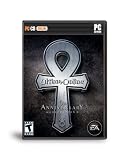
- Electronic Arts 15305 Ultima Online 9th Anniv PC
Ultima VII–IX: the Guardian arc
The last three numbered entries continue the Avatar’s story through increasingly direct conflicts with the Guardian. The Black Gate brings the Fellowship and the Guardian’s plans into focus. Serpent Isle follows the Avatar’s pursuit of Batlin after those events. In Pagan, the Guardian strands the Avatar on another world; Ascension brings the Avatar back to Britannia for a final confrontation involving corrupted Virtues.
For this arc, the most useful order is The Black Gate, then Serpent Isle, then Pagan, and finally Ascension. The first two are especially closely linked by the events around the Avatar’s pursuit of Batlin. The larger sequence then changes setting as the Avatar is taken to Pagan before returning to Britannia. It remains one continuing Avatar-and-Guardian thread, but it is not a story that stays in a single place or maintains precisely the same setting and tone throughout.
These are connected chapters, but not a perfectly uniform sequence of setting or tone: the Avatar’s story moves beyond Britannia before returning. The Codex timeline also allows for many centuries to pass in Britannia for each Earth year, so gaps in the games’ publication dates should not be mistaken for equivalent gaps in the fictional timeline. The Codex timeline describes its scope as canon single-player Ultima games; that is the reference’s organizing framework, not a newly issued EA canon policy.
What’s actually slowing this PC down?
Pick the symptom - the matching free tool is one click away.
Where the spin-offs and other releases fit
Not every game carrying the Ultima name is a numbered main-story installment. The Codex groups several related single-player games into its broader chronology, while treating other branded releases separately from the normal single-player sequence.
Rank #3
![Diablo IV | Age of Hatred Collection | Nintendo Switch 2 [Code in a Box]](https://m.media-amazon.com/images/I/316PBtvThiL._SL160_.jpg)
- COMPLETE DIABLO IV COLLECTION – Includes the Diablo IV base game plus the Vessel of Hatred and Lord of Hatred expansions in one action RPG bundle for Nintendo Switch 2.
- SWEEPING DARK FANTASY CAMPAIGN – Unlikely heroes arise, ancient foes stir, and no soul is safe as Mephisto, the Prime Evil of Hatred, spreads his corruption across Sanctuary.
- 8 PLAYABLE CLASSES – Master eight distinct Diablo IV classes, including the all-new Paladin and Warlock, and build the hero you want to play.
- EXPLORE NAHANTU – Take up the Spiritborn class and become the apex predator of the jungles of Nahantu in the Vessel of Hatred expansion.
- JOURNEY TO THE ISLES OF SKOVOS – Adventure to the never-before-seen region of Skovos in the Lord of Hatred expansion.
- Akalabeth: World of Doom: A precursor also called Ultima 0 by the Codex. It is relevant background, but not one of the ten numbered games.
- Worlds of Ultima and Underworld: The Savage Empire, Martian Dreams, and both Ultima Underworld games appear in the Codex’s broad single-player chronology. They are related franchise stories and side branches, not numbered mainline chapters. See the Codex’s single-player timeline for its classification.
- Ultima Online: The major alternate-continuity case. The Codex places the branch after Ultima I; the online universe then follows an alternate continuity rather than continuing the numbered single-player story. Its timeline entry explains that placement.
- Other branded releases: The Codex places Escape from Mt. Drash, Runes of Virtue I and II, Lord of Ultima, Ultima Forever, and Shroud of the Avatar outside its normal single-player context. Treat them as separate franchise entries unless considering their own individual continuity.
- Compilations: Ultima Trilogy I–III, Ultima Trilogy IV–VI, The Complete Ultima VII, Underworld Series, and Ultima Collection bundle games; they are not new story installments.
So, do spin-offs such as Underworld and Worlds of Ultima follow the same chronology? The Codex includes them in the broad single-player chronology, but their placement there does not make them required chapters in the numbered Avatar sequence. They are connected as franchise stories and side branches. Likewise, a compilation title may sound like another installment, but it is a package of existing games rather than a new point in the plot.
EA’s official Ultima catalog groups the numbered games, Ultima Online, and Underworld among the franchise titles. That catalog confirms the publisher’s grouping, but does not establish plot chronology or original release years.
Which order should you play?
For the clearest main-story progression, play the numbered games in the table from I to IX, including Serpent Isle after The Black Gate. That order preserves the early trilogy’s cause-and-effect and follows the Avatar’s development into the Guardian conflict. It does not mean every entry is equally dependent on its predecessor or that side games must be completed to understand the main sequence.
- Choose I–III first if you want the original Stranger, Mondain, Minax, and Exodus arc.
- Start at IV if your interest is specifically the Avatar and Eight Virtues era; then continue with V and VI to follow that Britannian story.
- Begin with VII only if the Guardian arc is your focus, and understand that it follows substantial earlier story development.
- Explore Underworld or Worlds of Ultima as side branches rather than prerequisites for the numbered sequence.
- Choose Ultima Online for its alternate branch, not as the next chapter after Ultima IX.
These are different starting-point choices, not claims about which games are best or easiest to play. The useful comparison is what story you want: the Stranger’s early trilogy, the Avatar and Virtues, the Guardian conflict, or a side branch. If you are trying to follow every main-story connection, release order is the straightforward choice. If you only want one era, begin with its opening entry while recognizing that later parts continue earlier story threads.
This is a story-order recommendation, not a compatibility or quality ranking. The continuity references establish neither current storefront availability nor modern compatibility, remake status, or comparative game quality.
Independent reader supportYour contribution helps us test, update, and keep practical guides available for everyone.What the release years do—and do not—tell you
The years listed are the original series-level years recorded by the Codex history page. Exact first-release days across platforms and regions are not established by that chronology, and the games appeared in differing versions. If you need a collector’s edition-by-edition timeline, the Codex points readers to a collector’s guide rather than supplying that full date table itself.
That distinction matters if you are comparing dates across catalogs or editions: the table is designed to show the broad historical release sequence, not settle which platform or regional edition appeared first. The listed years are enough to order the series at the level covered here, but not enough to build a complete publication history for collectors.
Free tools Windows power users keep installed
One-click scans. No signup required.
Further reading and source limits
Readers interested in the franchise’s history can look for The Official Book of Ultima, which is surfaced as a series-history reference. Treat it as optional background, not a guide you need in order to understand the main game sequence. Its current retailer listing, edition, availability, and any affiliate program have not been checked, so verify those details before linking or buying. The Codex also points to a collector’s guide for variant editions, but no particular purchasable edition or merchant was verified for this article.
The source roles are different: EA’s catalog is useful for confirming that these titles are grouped under the franchise, while the Codex supplies the release-year history and its single-player/alternate-continuity classifications. The Codex’s statement that its timeline includes canon single-player games is its own description of the reference’s scope, not a newly issued EA canon statement. No current subscription, service, or named partner program has been verified.
Frequently Asked Questions
Are the stories from Ultima I to Ultima VI connected?
Yes, though they form two related arcs. Ultima I–III follow the Stranger’s conflicts with Mondain, Minax, and Exodus. Ultima IV–VI shift focus to the Avatar, the Eight Virtues, and continuing events in Britannia.
Do I need to play every Ultima game in order?
For the clearest main-story progression, play the ten numbered single-player entries in release order. Side branches such as Underworld and Worlds of Ultima are part of the broader franchise chronology, but they are not numbered mainline chapters or prerequisites for the sequence.
Where do Ultima Underworld and Worlds of Ultima fit?
The Codex places both Ultima Underworld games, The Savage Empire, and Martian Dreams in its broad single-player chronology. They are related side branches rather than numbered chapters in the main Avatar story.
Is Ultima Online the sequel to Ultima IX?
Not in the continuity described by the Codex. Its timeline places Ultima Online on an alternate branch after Ultima I, rather than as the next chapter after Ultima IX.
Are the release years exact for every platform and region?
No. The years here are series-level original release years. Exact first-release days across platforms and regions, and exhaustive edition-by-edition details, are not established by the cited chronology.
The Bottom Line
Bottom line: For the main story, play Ultima I–III, then IV–VI, followed by VII: The Black Gate, VII Part Two: Serpent Isle, VIII: Pagan, and IX: Ascension. The early games connect through Mondain, Minax, and Exodus; the later arcs follow the Avatar through Britannia and into the Guardian conflict. Spin-offs broaden the setting, while Ultima Online belongs to an alternate continuity.
Quick wins for a faster PC:
Repair Windows errors before they cause bigger problemsFix Now →Scan for outdated or missing drivers - takes under a minuteDriver Scan →Clear out junk files and repair common Windows errorsFree Scan →Quick Recap
Product prices and availability are accurate as of the date/time indicated and are subject to change. Any price and availability information displayed on Amazon at the time of purchase will apply.

