
Free tools Windows power users keep installed
One-click scans. No signup required.
iTechGuides is reader-supported. When you buy through links on our site, we may earn an affiliate commission. As an Amazon Associate I earn from qualifying purchases. Learn more
TrendForce expects global notebook shipments to decline by a low-single-digit percentage in 2027. If notebook brands pass more of elevated CPU and DRAM costs on to buyers, the decline could reach a high-single-digit percentage. This is a conditional forecast—not a confirmed result, nor a prediction that every laptop’s price will rise by a set amount.
What TrendForce expects for notebook shipments in 2027
In its October 8, 2026 outlook, TrendForce projects a low-single-digit decline in global notebook shipments in 2027. Its higher-cost scenario, in which elevated CPU and DRAM costs are more fully passed through to consumers, could produce a high-single-digit decline. The difference turns on whether buyers can absorb higher prices and continue replacing devices at the expected pace.
TrendForce summarized the issue this way: “The focus of the notebook market in 2027 will shift from whether sufficient components are available to whether consumers can absorb higher prices.” The statement is about market conditions; it does not establish the price change for any individual product.
Do these 3 things before closing this tab:
1Fix the driver behind crashes, sound loss and screen glitches2Repair Windows errors before they cause bigger problems3Scan for outdated or missing drivers - takes under a minuteWhy 2026 shipment support does not prove demand has recovered
TrendForce says improved CPU availability, early component procurement by notebook brands, and replacement purchases brought forward from later periods supported 2026 shipments. Those factors can lift shipments in the near term without indicating stronger underlying demand. Buyers who replace a computer earlier may have less reason to buy another in a subsequent period.
#1 Best Overall

- SLIM. LIGHTWEIGHT. READY TO GO: The all-new slim design is perfect for busy lives on the go.
- SKILLFULLY DESIGNED. MILITARY TOUGH: Built with premium craftsmanship to withstand the occasional drop or ding.
- ALL-DAY, ALL-IN-ONE CHARGING: Power through your school day – and beyond – with a long-lasting 12-hour battery.¹
- 3X FASTER THAN THE PREVIOUS GENERATION OF WIFI: Crush your schoolwork in record time with Wi-Fi that’s three times faster than the previous generation of Wi-Fi.
- YOUR PHONE AND CHROMEBOOK WORK BETTER TOGETHER: Easily transfer files between devices, and control your phone right from your Chromebook.
In its September 4, 2026 update, TrendForce forecast a 9.4% year-over-year decline in global notebook shipments for 2026. That was an estimate at the time, not a final 2026 result. The October outlook describes shipment support from improved availability and purchases shifted forward, but does not characterize it as a meaningful recovery in end-market demand. TrendForce’s September 2026 notebook shipment outlook
Will laptops cost more in 2027?
Some notebook prices could rise if manufacturers pass higher component costs along, but TrendForce’s shipment forecast is not a marketwide retail-price forecast. The effect on a particular model will depend on its configuration, the brand’s costs and pricing choices, and local retail conditions.
TrendForce’s cost benchmark helps explain the pressure. For a mainstream notebook with a US$900 manufacturer’s suggested retail price (MSRP), CPU, DRAM, and SSD together represented about 68% of bill-of-materials (BOM) cost in 3Q26. BOM is the cost of components and materials used to make a product; the 68% figure is a share of that cost, not a projected 68% increase in the laptop’s retail price.
Brands have three broad options when component costs rise:
Rank #2
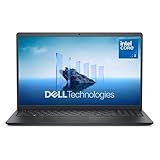
- Effortlessly chic. Always efficient. Finish your to-do list in no time with the Dell 15, built for everyday computing with Intel Core 3 processor.
- Designed for easy learning: Energy-efficient batteries and Express Charge support extend your focus and productivity.
- Stay connected to what you love: Spend more screen time on the things you enjoy with Dell ComfortView software that helps reduce harmful blue light emissions to keep your eyes comfortable over extended viewing times.
- Type with ease: Write and calculate quickly with roomy keypads, separate numeric keypad and calculator hotkey.
- Ergonomic support: Keep your wrists comfortable with lifted hinges that provide an ergonomic typing angle.
- Pass costs through: Raise prices, which may make some customers delay replacing a device.
- Absorb costs: Protect the advertised price but accept pressure on gross margins.
- Change configurations: Reduce specifications, such as memory capacity, which can make a product less competitive.
Manufacturers need not make the same choice, so the forecast does not imply a uniform price increase across models.
Why CPU, DRAM, and SSD costs matter—and why their outlooks differ
TrendForce says lower-cost inventories are being depleted, leaving manufacturers more exposed to current CPU, DRAM, and SSD costs. The component outlook is not uniform: DRAM is expected to remain tight, while NAND supply conditions may ease later in 2027.
DRAM: supply expected to stay constrained
TrendForce expects DRAM supply to remain tight as high-bandwidth memory (HBM) allocation and AI-server demand absorb advanced-process capacity. It does not expect new DRAM capacity to contribute substantially until later. Because memory is part of the notebook cost mix, persistent tightness could add pressure, but the outlook does not specify a price increase for every notebook configuration.
Recommended Free Tools
NAND and SSDs: possible easing in the second half of 2027
TrendForce expects NAND supply constraints to ease in the second half of 2027 as higher-layer production and new fabs increase output. It also points to weak consumer-electronics demand as a source of downward pressure. This is a market expectation, not a guarantee that SSD prices—or notebook prices—will fall on a particular date. TrendForce’s July 2026 DRAM and NAND outlook
Rank #3

- FOR HOME, WORK, & SCHOOL – With an Intel processor, 14-inch display, custom-tuned stereo speakers, and long battery life, this Chromebook laptop lets you knock out any assignment or binge-watch your favorite shows..Voltage:5.0 volts
- HD DISPLAY, PORTABLE DESIGN – See every bit of detail on this micro-edge, anti-glare, 14-inch HD (1366 x 768) display (1); easily take this thin and lightweight laptop PC from room to room, on trips, or in a backpack.
- ALL-DAY PERFORMANCE – Reliably tackle all your assignments at once with the quad-core, Intel Celeron N4120—the perfect processor for performance, power consumption, and value (2).
- 4K READY – Smoothly stream 4K content and play your favorite next-gen games with Intel UHD Graphics 600 (3) (4).
- MEMORY AND STORAGE – Enjoy a boost to your system’s performance with 4 GB of RAM while saving more of your favorite memories with 64 GB of reliable flash-based eMMC storage (5).
What the earlier “nearly 40%” price scenario actually meant
In a March 10, 2026 report, TrendForce modeled a mainstream notebook that originally retailed for US$900. Under its assumptions, memory inflation alone could require a retail-price increase above 30% to preserve existing margins; combining memory and CPU increases could bring the modeled increase close to 40%, assuming brands and distribution channels maintained their existing margins.
That was a conditional scenario for one modeled notebook, not the October 2026 forecast for all notebooks in 2027. The newer outlook focuses on shipment declines under different levels of cost pass-through, not a blanket 40% price increase. TrendForce’s March 2026 modeled notebook price scenario
Will notebook production move out of China?
TrendForce says brands are reassessing manufacturing locations as they balance cost, logistics, component sourcing, operational efficiency, and geopolitical diversification. It estimates that notebook production outside China accounted for about 24% of global production in 2025 and 21% in 2026, and could fall below 20% in 2027. These are estimates, not confirmed relocation plans by particular manufacturers.
Should you buy a laptop now or wait?
The market forecast cannot determine whether an individual laptop is a good deal. Decide based on your current computer, the model and configuration you want, its price in your market, and whether waiting would solve a real need.
Quick Recap
- Buy when you need a replacement: If your current device is failing or no longer handles essential work, an uncertain forecast is not a reason by itself to delay. Compare the current price with the model’s specifications and alternatives.
- Consider waiting if your current laptop works well: TrendForce’s outlook suggests weaker shipments and possible affordability pressure, but it does not say that waiting will guarantee a lower price. Track the exact model and configuration rather than assuming all laptops will move together.
- Check upgradeability before buying less memory: A lower-memory configuration may be a poor compromise if the memory is soldered or otherwise not upgradeable. Verify the manufacturer’s specifications or service documentation for that model before relying on a later RAM upgrade.
Product prices and availability are accurate as of the date/time indicated and are subject to change. Any price and availability information displayed on Amazon at the time of purchase will apply.

