
Quick wins for a faster PC:
Clear out junk files and repair common Windows errorsFree Scan →Scan for outdated or missing drivers - takes under a minuteDriver Scan →Repair Windows errors before they cause bigger problemsFix Now →iTechGuides is reader-supported. When you buy through links on our site, we may earn an affiliate commission. As an Amazon Associate I earn from qualifying purchases. Learn more
Summer Eternal has proposed an experimental studio structure that gives creative staff, other workers, investors and game owners formal places in the same governing system. The proposal reserves a player nonprofit a 5% stake, lets owners of the studio’s games join it, and gives that nonprofit the power to call a General Assembly. It is a published plan from October 11, 2024—not proof that every proposed legal entity has already been formed.
What Summer Eternal is proposing
Summer Eternal’s official studio-architecture proposal describes a shareholding company in Zagreb, Croatia, divided among four stakeholder groups. An Assembly would represent those groups, while a board elected by the Assembly would handle day-to-day management.
| # | Preview | Product | Price | |
|---|---|---|---|---|
| 1 |

|
The World Politics of Disco Elysium (Popular Culture and World Politics) | $133.00 | Buy on Amazon |
| 2 |
|
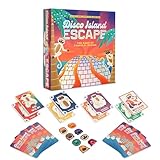
Disco Island Escape Board Game, Race Lemurs Across Lava, 2-4 Players | $24.99 | Buy on Amazon |
| 3 |

|
Disco Elysium | $11.49 | Buy on Amazon |
The model is intended to give people who create the games, support their production, finance development and play the finished work a formal role in the company’s governance. The proposal calls the player component an experimental attempt to formalize community decision-making in game development.
In the words of Aleksandar Gavrilović, who authored the proposal: “This non-profit will be the “voice of the gamers” in an experimental attempt to formalise the community decision-making in game development.”
#1 Best Overall
How the ownership is divided
| Stakeholder group | Share of the proposed structure | Who it includes | Stated role |
|---|---|---|---|
| Creative cooperative | 50% | Full-time creative staff | Retains control of the means of creation. Members who leave are opted out, and new collaborators can be co-opted in. |
| Worker cooperative | 25% | Support and other workers | Tracks members’ capital returns through individual capital accounts rather than individually held shares. |
| Investor limited-liability company | 20% | Development investors | Contractually funds development and receives a revenue share after release, similar to a publisher-financing arrangement. |
| Player nonprofit | 5% | People who own the studio’s games | Represents players, can summon a General Assembly and directs its own nonprofit activity through an all-member assembly. |
What “voice of the gamers” means in practice
Game ownership is the proposed gateway
The proposal says membership in the player nonprofit would be available to people who own Summer Eternal’s games. It does not establish that buying a game automatically activates membership, nor does it publish the enrollment process, verification rules or timetable. Those details would depend on the nonprofit’s final legal and operating documents.
Players could call a General Assembly
The nonprofit would have the right to summon a General Assembly. That gives the player group a formal route to bring matters before the wider governance system instead of relying only on surveys, forums or informal feedback. The proposal does not promise that players would vote on every design choice; it describes a constitutional and organizational channel for community decision-making.
Player-directed use of nonprofit revenue
Revenue allocated to the nonprofit could be used for events, union work or other purposes selected by its all-member assembly. The wording leaves the spending agenda to members rather than prescribing a fixed benefit, fund or reward program.
How decisions would be made
Ordinary board decisions would require a simple majority of more than 50%. Structural or constitutional changes would need a higher threshold: either a 66% or 75% supermajority, depending on the matter. The published outline does not map every issue to one of those thresholds, so the final statutes would have to define which changes receive which protection.
Rank #2
- ALL IS GROOVY on Disco Island where sifaka lemurs dance to the music made by Disco Ball Mountain, until one day the mountain turns out to be a volcano! DISCO INFERNO! Boogie to safety in Disco Island Escape: The Game of Tropical Boogie!
- DANCE YOUR LEMURS across the lava streams by matching a symbol from the lava stream to a card in your hand. The first player to move 3 of your 4 lemurs to safety offshore wins!
- LEARN TO PLAY quickly with fun how-to-play video! Combines classic game mechanics with a modern twist, full of groovy graphics and high-quality components.
- USES SYMBOLS in addition to colors for those with color vision deficiency. No reading required, so everyone can join in the fun!
- BALANCE strategy, luck, and sabotage in order to BOOGIE DOWN & ESCAPE THE LAVA!
The Assembly is the representative layer: it contains the four stakeholder groups and elects the board. The board is the operating layer, responsible for routine management. This separation is designed to prevent daily production decisions from requiring a full membership vote while still reserving major structural changes for broader agreement.
Why the cooperative and legal details matter
Summer Eternal says it enlisted Slovenia’s Institute for Economic Democracy to help implement the cooperatives. Because workers may be spread across multiple countries, the studio says it would probably use a European Cooperative Society form. That is a proposed legal route, not confirmation that the entity has been registered.
The studio also says it would use the Fairshares model. In this context, Fairshares is intended to place workers, investors, collaborators and the wider community inside one stakeholder framework rather than treating outside players as a separate feedback audience.
Do these 3 things before closing this tab:
1Fix the driver behind crashes, sound loss and screen glitches2Repair Windows errors before they cause bigger problems3Scan for outdated or missing drivers - takes under a minuteThe proposal remains early-stage. No independent legal filing confirming completion of the cooperative, investor or nonprofit structure was established in the available reporting. Readers should therefore distinguish between the published governance design and an operating company whose rights and membership procedures are already enforceable.
Rank #3
Where Red Rooster fits
Contemporary 2026 reporting connects Summer Eternal with Red Rooster, an RPG associated with former ZA/UM and Disco Elysium developers. The reported concept is a 3D, real-time, third-person RPG set in the magic-realist river city of Arta-Trantor. Its described mechanics include fire, water and alternate selves.
That project was reported to remain in active development and had no announced release date in the available account. Those details come from secondary reporting; the primary reveal page was not directly accessible for confirmation. A release date, platforms, price and the final relationship between the game and the proposed player nonprofit have not been announced in the material available here.
Other work from the studio
Summer Eternal’s official site has also posted production updates for a physical publishing project. A September 1, 2026 update said the team had received the first physical copies of Summer Eternal Anthology Volume One. That update demonstrates ongoing production activity, but it does not establish retail availability, regional distribution or membership terms for the player nonprofit.
Recommended Free Tools
Quick Recap
What readers can reliably take from the proposal
- The four-part structure assigns 50% to creative staff, 25% to other workers, 20% to investors and 5% to a player nonprofit.
- The player nonprofit is intended for owners of the studio’s games and could call a General Assembly.
- The board would run daily operations, while the Assembly would represent stakeholder groups and elect the board.
- Ordinary decisions use a majority vote; structural changes require 66% or 75% supermajorities.
- The architecture is explicitly experimental and should not be treated as a completed legal arrangement.
- Red Rooster is the associated project reported in 2026, still without an announced release date.
Product prices and availability are accurate as of the date/time indicated and are subject to change. Any price and availability information displayed on Amazon at the time of purchase will apply.

