
iTechGuides is reader-supported. When you buy through links on our site, we may earn an affiliate commission. As an Amazon Associate I earn from qualifying purchases. Learn more
Coral reefs look intensely colorful because living corals share their tissues with microscopic algae called zooxanthellae. Those algae provide food and contribute pigments; the reef’s fish, invertebrates and water-filtering structures add further color and movement. When heat stresses corals, they can expel the algae and turn ghostly white—a warning that the habitat behind the spectacle is in trouble.
The 15-photo tour below moves from coral structure to the animals that shelter, feed and hunt there. Captions identify animals conservatively: reef scenes often require a specialist’s view, and artificial lighting can reveal colors that seawater absorbs before they reach a diver’s eyes.
Why coral reefs are so colorful
Coral reefs occupy less than 1 percent of the ocean floor yet sustain about 25 percent of marine species, according to National Geographic (2024). Their color comes from several sources at once:
Outdated Drivers Are Slowing You Down
One free scan finds every outdated or missing driver and matches the right update for your exact hardware.Free scan · exact hardware matchPC Slower Than It Used to Be?
A free scan shows the junk files, broken settings and background clutter dragging Windows down - then fixes them in one click.Free scan · Windows 10 & 11- Symbiotic algae: Zooxanthellae live inside coral tissues, photosynthesize and help give colonies their brown, gold, green or vivid fluorescent appearance.
- Coral pigments and structure: Proteins and microscopic surfaces scatter and reflect light, producing pinks, reds, purples and blues.
- Reef animals: Fish, turtles, rays, jellyfish, crustaceans, mollusks and tiny specialists provide stripes, spots, iridescence and camouflage.
- Photography: Water removes red and orange wavelengths quickly. Strobes and full-spectrum lights restore colors absorbed on the way down, so a photograph may be more saturated than unaided human vision.
Coral reefs are therefore not painted scenery. Their palette records biology, depth, lighting and stress.
#1 Best Overall
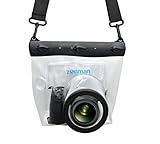
- Universal Compatibility: Designed for a wide range of DSLR, this Zonman waterproof case or bag fits most models of Canon, Nikon, Sony camera bodies. Perfect for cameras with a lens length up to 13cm or 5.12" and a diameter of 8cm or 3.15" , ensuring a secure fit for your valuable equipment. fit for cameras with lens not longer than 5.12'' like ::Canon Rebel T Series 80D 90D 55D 650D 750D 800D 6DMarkII 7DMarkII Nikon D90 D500 D610 D810 D850 D D3500 D5100 D5200 D5300 D5500 D5600 D7500 etc, or similar size.
- Easy Camera Function Access: Though fully enclosed for maximum protection, our housing case or bag features strategically placed finger holes, allowing effortless access to crucial camera functions like shutter release and zoom and focusing. Capture stunning underwater and wet-weather shots with ease.
- Ultimate Protection: Whether you're caught in rain, snow, or a sandy beach, our underwater housing case or bag shields your camera from the elements. Its complete seal locks out water, moisture, dust, mud, and sand, offering unparalleled protection in any environment.
- Dive Deep into Adventure: With an underwater depth capacity of approximately 5 meters or 16 feet, this case is ideal for a variety of water sports including diving, rafting, surfing, snorkeling, and swimming. Capture stunning underwater shots without worrying about water damage.
- Versatile Outdoor Use: Not just for water-based activities, this housing is also perfect for fishing, boating, and other outdoor pursuits where your camera might be exposed to harsh conditions. Enjoy peace of mind knowing your gear is safe from the elements.
A 15-photo visual tour
Use each image as a field note: look at the color source, the habitat’s shape and what the animals are doing. Species names are used only where the cited gallery or institutional descriptions support them.
Photo 1: A wall of branching coral
Branching colonies create a maze of pale tips and darker recesses. The structure offers hiding places for damselfish, shrimps and juvenile reef animals while living polyps add the color.
Photo 2: Clownfish in an anemone
A clownfish sheltering among anemone tentacles shows how reef animals use living neighbors as homes. The orange-and-white pattern is natural coloration, not a camera effect, although lighting can intensify it.
Photo 3: A beaked coralfish or butterflyfish
These laterally compressed fish browse around coral heads. Their high-contrast bands help viewers track movement through a visually complex habitat; exact species identification requires location and a clear profile.
Rank #2

- For Tough TG-6 Digital Camera
- Retains Access to All Camera Controls
- Supports Optional Lens Accessories
- Depth Rating: 147'
- Can Accommodate Two External Flashes
Photo 4: Blackfin barracuda in open water
A barracuda’s streamlined body and dark fin markings contrast with the reef below. Predators such as barracuda connect the small, colorful reef community to larger food-web relationships.
Photo 5: A manta ray over the reef
The broad wings of a manta ray turn a close reef into a landscape. Rays may pass above coral slopes while feeding in the surrounding water, linking bottom habitat with the open sea.
Photo 6: A marine turtle above coral
A turtle’s muted shell can look understated beside fluorescent corals. Its presence is a reminder that reef biodiversity includes long-lived reptiles as well as small reef fish.
The Tool Desk
Outbyte Driver Updater FREEScan for outdated or missing drivers - takes under a minuteDriver Scan →Outbyte PC Repair FREEClear out junk files and repair common Windows errorsFree Scan →Photo 7: Mosaic jellyfish
Translucent bells and repeating patterns create a different kind of reef color—light refracted through gelatinous tissue. Jellyfish may drift over reefs rather than remain attached to the structure.
Rank #3

- Floating】:Our Dving Case Bag makes your camera to avoid dropping your valuables in the water.100% completely sealed, up to 20 meters deep.
- 【Powerful Function】:, dust, mud, sand, snow, grease, can the camera. your camera , for beach, pools, fishing, swimming, boating, kayaking, snorkeling,etc.
- 【Easy to Use】The camera can be operated directly in the case.
- 【Multi-Device Support】Our Dving Case Bag universal for most DSLRs such as for , .
- 【Quality Service】:If you have any questions about this product, you can us at any time. We have a professional customer service team and will provide you with the best quality service. We will try our best to solve your problem in time, please rest assured to buy.
Photo 8: Sea fans in a current
Sea fans spread like living lace. Their flattened branches face moving water to collect plankton, and their reds, oranges or purples become more apparent under appropriate underwater lighting.
Photo 9: A parrotfish grazing
Parrotfish scrape algae from hard surfaces with beak-like teeth. Their vivid scales are easy to photograph, but their ecological role is equally important: grazing helps keep space available for new coral growth.
Photo 10: Pygmy seahorse camouflage
A pygmy seahorse can be nearly invisible against a matching sea fan. The image demonstrates that reef color is also a survival strategy, not merely decoration.
Photo 11: Ghost goby among branches
Ghost gobies perch on or beside branching corals and blend into the background. A wide scene may hide several animals that become visible only when you inspect the branches.
Rank #4

- Compatible with small DSLR/SLR cameras
- 100% waterproof protection, guaranteed for water depths up to 5 meters
- UV polycarbonate coated optical lens (diameter 85mm/3.3") allows you to take clear pictures
- Fits zoom lenses up to 9.5cm (3.7") in length
- Easy button control with the finger sleeve
Photo 12: A Caribbean reef shark patrol
A reef shark moving along the edge of a coral formation adds scale and tension. Sharks occupy a different position in the food web from the tiny fish sheltering inside the coral.
Photo 13: Small reef invertebrates
Look for shrimps, barnacles, sea urchins, oysters, sea slugs, flatworms and snails in the gaps. FAO’s reef-life list shows how much biodiversity exists below the level most visitors notice first.
Photo 14: Scorpionfish and camouflage
A scorpionfish can resemble a piece of rock or encrusting coral. Never touch an unidentified reef animal: some species have venomous spines, and camouflage makes accidental contact more likely.
What’s actually slowing this PC down?
Pick the symptom - the matching free tool is one click away.
Photo 15: A colorful reef beside a pale colony
The strongest conservation image pairs vivid living coral with a nearby bleached patch. The contrast connects beauty to biology: when prolonged heat stresses coral, it may expel zooxanthellae, exposing a white skeleton beneath the remaining tissue.
Best Value

- 【DESIGNED FOR】Go Pro Hero 13 Black/Hero 12 Black/Hero 11 Black/Hero 10 Black/Hero 9 Black.
- 【60M/196FT Waterproof】This waterproof housing case with upgraded waterproof sealing ring and tight buckle that help avoid water leakage effectively.You can use your camera to record underwater activity deep to 196FT/60 Meters without worrying about leaks,and it also won't damage the shooting effect, clear and vivid.
- 【STAINLESS STEEL MATERIAL】The hardware is made of stainless steel to prevent rusting after being used in the sea. You can dive into the sea do not have to worry about rust.
- 【LARGE FLAT GLASS LENS】Delivers maximum image sharpness above and below water.
- 【Excellent PMMA material&High Light Transmission】Waterproof up to 60m/196FT, ideal for diving, surfing, snorkeling and other water sports activities.Toughened glass in front of the camera, you can make your camera better light transmittance, LIGHT TRANSMISSION RATE OF 98.99%, Shoot more real, more beautiful pictures.
What bleaching means for the animals in these photos
Bleaching is not automatically immediate death, but it removes a major energy source and leaves coral vulnerable. Repeated or prolonged heat can cause mortality, reducing the three-dimensional shelter used by fish, crustaceans and other reef life. Ocean warming is joined by acidification, destructive fishing and pollution as documented reef pressures (National Geographic, 2024).
The U.S. National Park Service calls coral reefs “among the most biologically diverse ecosystems on earth.” Their visual richness is therefore an ecological signal: losing coral complexity can mean losing nursery areas, feeding sites and protection for many species at once.
How to photograph a coral reef without misreading the color
- Use an underwater camera housing. A sealed housing protects the camera from pressure and saltwater; choose one rated for the planned depth.
- Control buoyancy first. Maintain neutral buoyancy, keep fins away from the bottom and never rest equipment on coral.
- Use a strobe or full-spectrum light close to the subject. This restores wavelengths absorbed by seawater. Keep the beam aimed at the subject rather than stirring sediment.
- Shoot at the shortest practical distance. Less water between lens and subject means less color loss and haze.
- Record context. Include the coral structure, animal behavior, location and depth in your notes; a brilliant close-up without context can hide bleaching or habitat damage.
- Leave wildlife undisturbed. Do not chase turtles, block rays, handle animals or move a camouflaged subject for a clearer frame.
Commodore Ralph Munroe described reef water in 1877 as “a sort of liquid light, rather than water.” Modern cameras can make that light vivid, but responsible photography keeps the living reef—not the equipment or the image—at the center.
Do these 3 things before closing this tab:
1Clear out junk files and repair common Windows errors2Fix the driver behind crashes, sound loss and screen glitches3Repair Windows errors before they cause bigger problemsQuick Recap
Product prices and availability are accurate as of the date/time indicated and are subject to change. Any price and availability information displayed on Amazon at the time of purchase will apply.

