
PC Slower Than It Used to Be?
A free scan shows the junk files, broken settings and background clutter dragging Windows down - then fixes them in one click.Free scan · Windows 10 & 11Outdated Drivers Are Slowing You Down
One free scan finds every outdated or missing driver and matches the right update for your exact hardware.Free scan · exact hardware matchiTechGuides is reader-supported. When you buy through links on our site, we may earn an affiliate commission. As an Amazon Associate I earn from qualifying purchases. Learn more
The best Nothing Ear setup starts with a secure ear-tip seal, then uses Nothing X to tune sound and noise control for your situation. Begin with the Balanced or default EQ, make only small changes, and choose ANC for constant noise, Transparency for awareness, or Adaptive ANC when conditions keep changing. Exact labels and available modes depend on your Nothing Ear generation and firmware.
What to change first
Nothing Ear has two separate control systems. Equaliser changes the tonal balance of music, podcasts and calls. Active Noise Cancellation (ANC), Transparency and related modes change how much outside sound reaches you. Treat them as separate adjustments: an EQ curve cannot repair a leaking ear-tip seal, and ANC cannot make a dark recording brighter.
- Install or open the Nothing X app and connect both earbuds.
- Check the ear-tip fit before judging bass or isolation.
- Start with the Balanced or default EQ profile.
- Select the noise-control mode that matches your surroundings.
- Change one or two EQ bands at a time, then compare at the same listening volume.
This sequence gives you a repeatable baseline instead of chasing a curve that only sounds good because it is louder.
Get the seal right before tuning
A tight, comfortable seal is a prerequisite for both effective ANC and consistent bass. If an ear tip is loose, outside sound leaks in and low frequencies can disappear; increasing bass in the app may then make the sound boomy without fixing the underlying problem. Nothing’s troubleshooting guidance warns that poorly fitted ear cushions or ear tips can reduce or negate the noise-cancellation effect.
#1 Best Overall
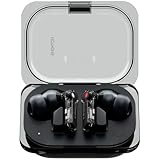
- Powerful 11 mm driver: We've made our driver even more compact. With double the power than Ear (2), Ear (a) delivers an even deeper bass performance. The extra space gives sound waves more room to vibrate. With two new vents, airflow is improved inside the bud. For less distortion and richer overall clarity
- Smart Active Noise Cancellation: Up to 45 dB,Nothing Ear (a) automatically checks for noise leakage between the earbud and your ear canal, then applies more noise cancellation to make up for it. So you receive the best possible noise cancellation. Happens every time you put them in. So you can go from quiet rooms to busy streets without hearing a thing (other than what's playing)
- Clear Voice Technology: Clear as day. Ear (a) isolates your voice from everyday distractions so calls on-the-go feel like face-to-face conversations. With a new talk mic and extra airway on the stem for wind to pass through, we’ve reduced interference by 60% compared to Ear (2)
- Long Playtime, Fast Charging: For speedy power-ups, Ear (a) can Fast Charge for 10 minutes and deliver 10 hours of music playback (with ANC turned off). Compared to Ear (2), Ear (a) can deliver 40.5% more non-stop play time on a single charge. Or pop your earbuds back in the case and stretch listening time to over 42.5 hours (with ANC turned off)
- More Performance: Low Lag mode,Reduced audio lag for better gaming. Stay connected to two devices at the same time. Play music on your laptop then seamlessly switch to answer a call on your phone. Effortless. Adaptive ANC,Next-level escapism. Switch between 3 levels of noise cancellation. Or let Ear (a) take control. By selecting 'Adaptive' in the Nothing X app, Ear (a) automatically applies the right level of noise cancellation according to your surroundings in real time.
Fit checklist
- Remove and reinsert each earbud so the tip sits fully in the ear canal.
- Try the next larger or smaller tip on one side if that ear feels loose, painful or unusually quiet.
- Use the same tip size only when both ears seal comfortably; ears do not always need identical sizes.
- Run the fit test in Nothing X if your model and firmware provide one.
- Clean the tips and the earbud sound outlets. Oil or debris can prevent a seal and reduce output.
Test fit with a familiar track and with ANC enabled before making large EQ changes. If bass and isolation improve immediately after reseating an earbud, keep the physical change and undo any compensating EQ boost.
How to set the Nothing Ear EQ
Supported Nothing Ear models provide an 8-band Advanced Equaliser. Nothing’s documented path is Nothing X app > connect Nothing Ear > Equaliser > Advanced. The Advanced view lets you adjust frequency, Q factor and gain. Menu names can differ by generation and firmware, so use the equivalent Equaliser or Sound section if your app layout is different.
A safe adjustment method
- Play a track you know well, preferably one with clear vocals, bass and cymbals.
- Open Equaliser > Advanced and note the starting profile.
- Change one band, or at most two related bands, rather than moving the entire curve.
- Use a small gain change first. Listen for several passages, not just the first few seconds.
- Return to the original profile at the same volume to check whether the change is genuinely better.
- Save or leave the profile active only after checking several genres and spoken audio.
Use Q factor to control how broadly a frequency adjustment spreads. A narrower change affects a smaller slice of the spectrum; a broader change influences neighboring frequencies. If you are unsure, leave Q near its default and work with modest gain changes. Extreme boosts can reduce headroom, exaggerate distortion or make a recording tiring.
Do these 3 things before closing this tab:
1Fix the driver behind crashes, sound loss and screen glitches2Repair Windows errors before they cause bigger problems3Scan for outdated or missing drivers - takes under a minutePractical EQ settings by listening goal
There is no universally best curve. Ear shape, tip seal, hearing sensitivity, recording quality and genre all change the result. The table below gives a starting direction rather than fixed numbers. Make the smallest change that solves the problem.
| Goal | Starting profile | Adjustment in Advanced Equaliser | Check your result with |
|---|---|---|---|
| Balanced, all-purpose sound | Balanced or default | Leave the curve unchanged initially. Adjust only if a repeated problem appears. | Music, podcasts and video at the same volume |
| Less warmth or boom | Balanced or default | Reduce bass slightly, using a broad low-frequency change rather than a sharp notch. | Bass guitar, kick drums and spoken voices |
| More vocal clarity | Balanced or default | Make a small midrange lift. If voices become nasal, reduce the amount or narrow the affected range. | Dialogue, acoustic vocals and news speech |
| More treble detail | Balanced or default | Try a restrained upper-treble increase only after checking that cymbals and sibilants are not already sharp. | Cymbals, consonants such as “s” and “t,” and quiet detail |
| Softer cymbals or sibilants | Balanced or default | Reduce upper treble slightly. Do not remove all high-frequency energy or the sound may become dull. | Female vocals, hi-hats and compressed streaming tracks |
| More impact without muddiness | Balanced or default | Use a small low-bass lift, then stop if vocals lose definition. A broad, modest change is safer than a large peak. | Electronic bass, kick drums and low male vocals |
If the sound is too warm
Warmth usually means bass is dominating the midrange. Lower the bass a little, then replay a vocal-heavy section. If the voice becomes clearer without losing weight, keep the change. If the track sounds thin, restore part of the reduction rather than adding treble to compensate.
Rank #2

- Smart Noise Cancelling: Nothing but the music. Nothing ear wireless earbuds with up to 45 dB Active Noise Cancellation, Ear features our most effective and intelligent noise cancelling powers yet. Now 1.8x stronger than others. Ear automatically checks for noise leakage between the earbud and your ear canal, then applies more noise cancellation to make up for it. So you receive the best possible noise cancellation
- Clear Voice Technology: HiRes Wireless Audlio, Nothing Ear buds supports high resolution streaming over Bluetooth. The result is powerfully pure audio with no quality damage. Just how the artistintended. Up to 1 Mbps 24 bit/192 kHz with LHDC 5.0 and up to 990 kbps with frequencies up to 24 bit/96 kHz with LDAC, Requires devices that support LHDC or LDAC, Nothing wireless Ear isolates your voice from everyday distractions so calls on-the-go feel like face-to-face conversations.
- Long Playtime, Fast Charging: Ear supports up to 2.5W wireless charging. Power-up on-the-go with reverse charge on compatible devices, like Phone (2). Powered to go further, Ear lasts 25% longer than Ear (2) on a single charge. Or top-up in the case and use consistently for over 40.5 hours (ANC turned off). For speedy power-ups, Ear can Fast Charge for 10 minutes and deliver 10 hours of playback (with ANC turned off)
- Custom Ceramic Driver: Nothing Ear ultra compact but beyond powerful. Our 11 mm driver delivers an unbeatable audio experience.Coupled with a new ceramic diaphragm, we’ve increased airflow by 10% within each bud. For less distortion and richer clarity. Plus, advanced voice pickup tech cuts through background noise so your calls sound natural, like you’re talking face to face.
- More Performance: Stay connected to two devices at the same time. Play music on your laptop then seamlessly switch to answer a call on your phone. Effortless. Reduce audio lag for seamless gaming. Triggered automatically in Game Mode on a Nothing phone. With end-to-end latency at less than 120 ms. Microsoft Swift Pair, LED charging status, Pinch controls, Find My Earbuds, Water resistance IP54 buds / IP55 case, Google Fast Pair, Ear Tip Fit Test supported.
If vocals sound recessed
Apply a small midrange lift. Test both a dense mix and a spoken podcast: a setting that helps one singer may make speech nasal. Keep the gain modest and use Q to avoid lifting a wider range than necessary.
If cymbals or “s” sounds hurt
Reduce upper treble slightly. Harshness is often more obvious at high volume, so compare at the level you normally use. Also test another recording; aggressive mastering can be the source of the problem rather than the earbuds.
Quick wins for a faster PC:
Fix the driver behind crashes, sound loss and screen glitchesFind Drivers →Repair Windows errors before they cause bigger problemsFix Now →If you want more bass
First confirm the seal. Once both earbuds fit tightly, add a small low-frequency lift and check whether voices remain distinct. If bass becomes loose or masks detail, undo part of the boost and try a better-fitting tip instead.
Choose ANC, Transparency or Adaptive ANC
Use the mode that matches both the noise and your awareness requirement. ANC is designed for relatively steady external sound, Transparency deliberately feeds surrounding sound through, and Adaptive ANC is intended to respond when the environment changes on supported models.
| Situation | Recommended mode | Reason | Awareness note |
|---|---|---|---|
| Aircraft cabin, train or bus engine | ANC | Steady low-frequency noise is where cancellation is most useful. | Keep volume moderate and remain alert during announcements. |
| Office HVAC or a constant fan | ANC | Continuous background noise can be reduced without changing modes. | Use Transparency when a colleague needs to speak to you. |
| Street crossing, cycling or walking near traffic | Transparency | You need environmental cues, vehicles and announcements to reach you. | Do not rely on earbuds alone for safety; stay visually alert. |
| Mixed commute with changing noise | Adaptive ANC, if available | The mode monitors environmental noise and adjusts cancellation on supported models. | Verify how your particular generation behaves before relying on it. |
| Conversation without removing earbuds | Transparency | Speech and room sound remain audible. | Lower playback volume so voices are not masked. |
| Quiet room | Off or normal mode, if offered | Noise control adds little benefit when there is little external noise. | Some models require you to add Off to the control cycle in Nothing X. |
What Adaptive ANC does
On supported models, Adaptive ANC monitors environmental noise and adjusts cancellation. It is a useful first choice for places that alternate between quiet sections and loud engines, but it is not guaranteed to exist on every Nothing Ear generation. Look at the modes shown for your connected earbuds rather than assuming the same list appears across the product line.
Rank #3
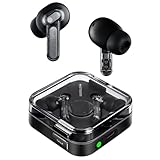
- Your Voice, Amplified. The Noise, Eliminated: Integrated into the Nothing Ear (3) charging case is a advanced dual-microphone system powered by specialized ambient filtering mics. This technology, called Super Mic, precisely targets your voice while cutting through extreme background noise (up to 95 dB), ensuring your calls and voice messages are transmitted with absolute clarity
- Intelligent Silence, Immersive Sound: Featuring Smart Hybrid ANC, Nothing Ear (3) delivers up to 45 dB of Active Noise Cancellation. This Bluetooth wireless earbuds recalibrate every millisecond to block a wide range of noise with a 5000Hz undesired noise to enjoy crystal-clear audio. Switch to Transparency Mode to seamlessly connect with your surroundings
- Super Mic, Tap to Engage: To activate the Nothing ear buds Super Mic, simply press and hold the 'TALK' button with the case within 5cm of your mouth for optimal clarity in loud settings. Hold for quick commands, or double-tap to lock it for extended conversations
- Hi-Res Audio & Ultra-Clear Voice: The Nothing Ear 3 brings you premium Hi-Res Wireless Audio and superior call quality, thanks to 6 HD microphones. With advanced Bluetooth 5.4, these anc earbuds offer smooth, lossless streaming that stays true to the original sound. Inside, a 12mm driver and innovative ceramic diaphragm improve airflow by 10%, reducing distortion and enhancing clarity
- Your Way with Nothing X App : Fine-tune your sound using adjustable EQ, Ultra Bass, and Adaptive Active Noise Cancellation settings.Dive into gaming with dedicated Low Lag Mode, and interact effortlessly using ChatGPT on your Nothing phone. All your Nothing devices work together in perfect, seamless harmony
How to switch modes from the earbuds
Nothing’s general control instruction for its compatible earbuds is to press and hold the control area to switch between Active Noise Cancellation and Transparency Mode. Nothing Ear models commonly use a pinch-and-hold gesture rather than an identical control on every product. Open the device controls in Nothing X to confirm the gesture and the exact cycle for your generation.
The Tool Desk
Outbyte PC Repair FREERepair Windows errors before they cause bigger problemsFix Now →Outbyte Driver Updater FREEFix the driver behind crashes, sound loss and screen glitchesFind Drivers →Adding an Off mode
If you want normal listening without ANC or Transparency, open the control customisation page in Nothing X and include Off or Normal when your model supports it. Do not assume that a long press cycles through the same number of modes on every generation; the available options and order are configurable on some models.
Personal Sound Profile and hearing-based refinement
Supported Ear models include a hearing test under Personal Sound Profile, accessible from device settings or the Equaliser area in Nothing X. Availability, test flow and menu labels vary with model and firmware.
- Establish a comfortable tip seal and a sensible baseline EQ first.
- Open the Personal Sound Profile or hearing-test option shown for your earbuds.
- Follow the on-screen tones and respond in a quiet environment.
- Compare the resulting profile with the Balanced starting point using familiar music and speech.
- Keep the profile only if it improves your everyday listening; it is an optional refinement, not a substitute for fit.
Hearing tests in an earbud app are not a medical diagnosis. If one ear suddenly sounds much quieter, or you experience pain or persistent ringing, stop increasing volume and seek appropriate medical advice.
Settings for common real-world scenarios
Quiet room or desk work
Begin with Balanced EQ and Off or the least aggressive noise-control mode available. If a computer fan distracts you, try ANC; if you need to hear a coworker, switch to Transparency. For long sessions, prioritise comfort and moderate volume over maximum cancellation.
What’s actually slowing this PC down?
Pick the symptom - the matching free tool is one click away.
Rank #4

- Powerful 11 mm driver: We've made our driver even more compact. With double the power than Ear (2), Ear (a) delivers an even deeper bass performance. The extra space gives sound waves more room to vibrate. With two new vents, airflow is improved inside the bud. For less distortion and richer overall clarity
- Smart Active Noise Cancellation: Up to 45 dB,Nothing Ear (a) automatically checks for noise leakage between the earbud and your ear canal, then applies more noise cancellation to make up for it. So you receive the best possible noise cancellation. Happens every time you put them in. So you can go from quiet rooms to busy streets without hearing a thing (other than what's playing)
- Clear Voice Technology: Clear as day. Ear (a) isolates your voice from everyday distractions so calls on-the-go feel like face-to-face conversations. With a new talk mic and extra airway on the stem for wind to pass through, we’ve reduced interference by 60% compared to Ear (2)
- Long Playtime, Fast Charging: For speedy power-ups, Ear (a) can Fast Charge for 10 minutes and deliver 10 hours of music playback (with ANC turned off). Compared to Ear (2), Ear (a) can deliver 40.5% more non-stop play time on a single charge. Or pop your earbuds back in the case and stretch listening time to over 42.5 hours (with ANC turned off)
- More Performance: Low Lag mode,Reduced audio lag for better gaming. Stay connected to two devices at the same time. Play music on your laptop then seamlessly switch to answer a call on your phone. Effortless. Adaptive ANC,Next-level escapism. Switch between 3 levels of noise cancellation. Or let Ear (a) take control. By selecting 'Adaptive' in the Nothing X app, Ear (a) automatically applies the right level of noise cancellation according to your surroundings in real time.
Aircraft and long-distance transit
Use a secure seal and ANC for the continuous engine or rail rumble. Keep the EQ close to Balanced; a large bass boost can make low-frequency cabin noise feel heavier. Switch to Transparency for announcements, then return to ANC when you no longer need awareness.
Busy street or station
Use Transparency when moving through traffic, platforms or crowded areas. If you are seated and the noise changes constantly, Adaptive ANC may be appropriate on supported models, but check your surroundings manually before crossing or boarding.
Podcasts and video calls
Start with Balanced EQ. If speech is recessed, apply a small midrange lift and test both male and female voices. Transparency can help when you need to monitor the room; ANC is useful when a steady background hum competes with speech.
Music with heavy bass
Check the seal, then add only a modest low-bass lift if the recording genuinely lacks impact. If the kick becomes bloated, restore the default curve and try a slightly different tip size. EQ cannot separate a poorly mixed or distorted source.
Why ANC or Transparency may feel weak
Loose or uneven ear tips
This is the first check. Reseat both earbuds, try another size and run the fit test if available. A leak on only one side can make cancellation seem unbalanced and can also alter the stereo bass response.
Best Value

- Powerful 11 mm Driver: We've engineered an even more compact driver that delivers twice the power of Ear (2). In Nothing Ear (a) wireless earbuds, this means deeper, more impactful bass. The refined design provides sound waves with greater space to resonate, while two additional vents optimize internal airflow. The result is reduced distortion and richer, clearer audio overall.
- 45 dB Smart Active Noise Cancellation: Nothing Ear (a) earbuds continuously monitors the seal between the earbud and your ear canal. If noise leakage is detected, it instantly adjusts the cancellation intensity to compensate—ensuring you always get the fullest possible noise reduction. Every time you put them in, they adapt. Move from a quiet room to a busy street without hearing a thing besides your audio.
- Clear Voice Technology: Crystal-clear calls, anytime, anywhere. Nothing Ear (a) ear buds isolates your voice from background noise, making on-the-go conversations feel like you’re talking in person. We’ve added a dedicated talk microphone and an airflow channel along the stem to drastically reduce wind interference—resulting in 60% less noise compared to Ear (2).
- Long-Lasting Battery & Fast Charging: Get back to your music in minutes. With Fast Charge, just 10 minutes of charging delivers up to 10 hours of playback (ANC off). On a full charge, Nothing Ear (a) bluetooth earbuds provides 40.5% more continuous playtime than Ear (2). And with its compact case, you can extend total listening time to over 42.5 hours (ANC off)—so your audio keeps going, day after day.
- More Performance: Engineered for seamless versatility, Nothing Ear (a) wireless earbuds keeps you connected and immersed. Low Latency Mode ensures lag-free gaming, while dual-device connectivity lets you instantly switch between laptop and phone. Adaptive ANC intelligently adjusts to your surroundings or allows manual control through three noise cancellation levels—all via the Nothing X app.
Blocked microphones or sound outlets
Inspect the external microphone openings and speaker meshes for dust, skin oil or moisture. Clean gently according to Nothing’s care guidance; do not push debris into the openings or saturate the earbuds with liquid.
Wrong mode or unexpected control cycle
Open Nothing X and read the active mode directly. A pinch or press may have switched to Transparency, Off or a different ANC level. Reconfigure the control cycle if your model allows it.
Changing environmental noise
ANC is strongest against steady noise and less predictable against intermittent voices, clatter and wind. Try Adaptive ANC where supported, or use Transparency when awareness is more important than isolation.
Model or firmware differences
Nothing Ear generations do not necessarily expose the same ANC levels, Adaptive option, EQ controls or menu labels. Confirm that the earbuds are connected to Nothing X and check for the controls actually listed for that device before troubleshooting a feature that may not exist on your model.
A repeatable way to compare settings
Use three axes whenever you compare profiles: your sound goal, your environment and your awareness requirement.
- Sound goal: balanced, bass-forward, vocal clarity or treble detail.
- Environment: quiet room, office, transit, aircraft, street or conversation.
- Awareness: maximum isolation, some environmental awareness or full awareness.
Change one axis at a time. For example, compare Balanced and a small bass reduction with ANC fixed in a quiet room; then compare ANC and Transparency with EQ fixed on a street. This prevents a noise-control change from being mistaken for an EQ improvement.
Quick Recap
Recommended starting setup
- Fit the tips securely and run the available fit check.
- Select Balanced or the default EQ.
- Choose ANC for steady machinery, Transparency for traffic or conversation, and Adaptive ANC for changing conditions when your model supports it.
- Listen at your normal volume across music and speech.
- Make one small EQ change only when you can name the problem: too warm, recessed vocals, excessive treble or insufficient bass.
- Recheck the physical fit before making a second large change.
- Consider Personal Sound Profile after the baseline works, treating it as optional and model-dependent.
Product prices and availability are accurate as of the date/time indicated and are subject to change. Any price and availability information displayed on Amazon at the time of purchase will apply.
Recommended Free Tools

