
iTechGuides is reader-supported. When you buy through links on our site, we may earn an affiliate commission. As an Amazon Associate I earn from qualifying purchases. Learn more
The best Bluetooth tracker depends on your phone. Buy an Apple AirTag (2nd generation) if you use an iPhone, a Motorola moto tag 2 if you use a compatible Android phone and want precise nearby finding, or a Samsung Galaxy SmartTag2 if your primary phone is a Galaxy. For mixed households, the Pebblebee Clip 5 is the best rechargeable cross-platform pick, while the Chipolo POP is the better inexpensive key tracker.
These are Bluetooth item finders, not live GPS trackers. When a tag is out of your phone’s Bluetooth range, its location can be updated only when a compatible participating phone detects it. Also, most trackers advertised as working with both iPhone and Android use either Apple Find My or Google Find Hub at a time, not both simultaneously.
This guide reflects product availability, specifications and U.S. prices checked against the supplied sources for August 10, 2026. Prices and stock can change. The recommendations are editorial judgments based on published specifications, compatibility, independent testing and practical trade-offs—not claims of unpublished hands-on testing.
Do these 3 things before closing this tab:
1Fix the driver behind crashes, sound loss and screen glitches2Clear out junk files and repair common Windows errors3Scan for outdated or missing drivers - takes under a minuteQuick picks
| Tracker | Best for | Network and app | Nearby finding | Battery | Water rating | Approx. U.S. price | Main caveat |
|---|---|---|---|---|---|---|---|
| Apple AirTag 2 | Most iPhone owners | Apple Find My | Bluetooth and second-generation UWB | Replaceable CR2032; manufacturer-replaceable coin cell | IP67 | $29 each; $99 for four | No built-in key-ring hole; Apple hardware required |
| Motorola moto tag 2 | Android users wanting precise nearby finding | Google Find Hub | Bluetooth, UWB and Bluetooth Channel Sounding | Replaceable CR2032; published claims vary by region | Not stated in the supplied product facts | About $29.99 at U.S. launch | UWB and Channel Sounding need a compatible phone; long-term testing is limited |
| Samsung Galaxy SmartTag2 | Samsung Galaxy owners | Samsung Galaxy Find Network through SmartThings Find | Bluetooth and UWB on compatible Galaxy phones | Replaceable CR2032; up to 500 days normally, according to Samsung | IP67 | $29.99 | Designed for compatible Galaxy phones and tablets, not general Android |
| Pebblebee Clip 5 | Rechargeable cross-platform key tracking | Apple Find My or Google Find Hub | Bluetooth; no UWB listed for this model | USB-C rechargeable; up to 12 months | IP66 | $34.99 | One primary network at a time; charging cable is not included |
| Chipolo POP | Budget cross-platform key tracking | Apple Find My or Google Find Hub | Bluetooth and sound; no UWB | Replaceable CR2032; about one year | IP55 | About $29 | Weaker water resistance and no directional finding |
| Pebblebee Card 5 | Wallet battery life | Apple Find My or Google Find Hub | Bluetooth | Wireless rechargeable; up to 18 months | IP66; do not submerge | About $40 | Cannot use Apple and Google networks simultaneously |
| Chipolo CARD | Wallet convenience | Apple Find My or Google Find Hub | Bluetooth; no UWB | Qi-wireless rechargeable; about one year | IP67 | About $39 | Shorter stated battery life than Card 5; no UWB |
| Tile Pro (2024) | Life360 households and rugged key fobs | Tile network; Tile and Life360 apps | Bluetooth; claimed range up to 500 feet | Replaceable battery; about one year | IP68 | $34.99 launch list price; current pricing varies | Uses Tile’s network; Smart Alerts require a paid plan |
Important: The second-generation AirTag was introduced on January 26, 2026. Buying guides that recommend only the first-generation AirTag are outdated; compare the AirTag 2 with the current models below.
Choose the finding network before the hardware
A Bluetooth tracker is only as useful as the network that can hear it after it leaves your phone’s immediate range. The same-looking tag can perform very differently in a busy airport, a rural road, an apartment building or a country where few people use its network.
#1 Best Overall
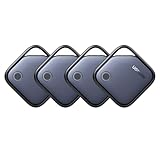
- Easy Find & Family Sharing with Apple Find My: Quickly pair the FineTrack tag with your iPhone or iPad in just one tap. Using the pre-installed Find My app, add the Air Tracker tag to the Items tab to instantly locate and track your keys, wallet, and other valuables. With iOS 17 or later, you can also share your tracker’s location with family members, so everyone can help keep items safe. (Note: Compatible with iOS devices only, not for Android.)
- Smart Tracking Made Easy: Whether Bluetooth Air Tracker Tag is nearby or far away, locate it easily with the Find My app. When within Bluetooth range, play a sound to quickly find the item tracker tag; when out of range, the Apple Find My network uses its vast ecosystem of Apple devices to provide the item finder’s latest location. Enjoy global tracking with Apple’s Find My network without any subscription fees.
- Lost Item Alerts & Lost Mode: When your Air Tracker Tag moves out of range, the Apple Find My app sends an instant lost alert with the last known location. If your item is confirmed lost, you can activate Lost Mode and leave your contact information so nearby Apple devices can remotely access it and help locate your tracker, making recovery quick and easy.
- 2-Year Battery Life & Child-Safe Certified: The UGREEN 4-pack Bluetooth tracker tags feature a replaceable battery that lasts up to 2 years, outperforming standard 1-year trackers. You can check the tracker’s battery anytime in the app and replace it when needed, keeping your valuables always protected. Item finder tags are also UL4200A certified, preventing children from accidentally swallowing the battery.
- Your Privacy, Fully Protected: Certified by Apple MFi, this Bluetooth Air Tracker Tag uses end-to-end encryption to keep your location data private and secure. All communications are anonymous and encrypted, and no location data is stored on the device. Even if your item is lost, your information remains protected and cannot be accessed without your permission — not by Apple, the manufacturer, or any third party.
| Network | Examples | Owner app | What it depends on |
|---|---|---|---|
| Apple Find My | AirTag 2, Chipolo POP, Chipolo LOOP, Chipolo CARD, Pebblebee Clip 5 and Card 5 when configured for Apple | Find My | Nearby Apple devices, an Apple Account and the Find My network |
| Google Find Hub | moto tag 2, Chipolo POP, Chipolo LOOP, Chipolo CARD, Pebblebee Clip 5 and Card 5 when configured for Google | Find Hub | Nearby Android devices, a Google account and Find Hub network participation |
| Samsung Galaxy Find Network | Galaxy SmartTag2 | SmartThings Find | Compatible Galaxy devices, a Samsung account and offline finding participation |
| Tile | Tile Pro, Mate, Slim and Sticker | Tile and Life360 | Nearby Tile or Life360 users and the Tile service |
Apple describes Find My as an encrypted network in which nearby Apple devices can relay a tag’s location without exposing the owner’s identity to those devices. Google’s Find Hub works similarly, but its network settings include a privacy-versus-speed choice: With network in busy places only aggregates multiple reports, while With network everywhere can use a single report. The exact availability and labels can vary by region and Android version. See Apple’s Find My privacy explanation and Google’s Find Hub network documentation.
Universal does not mean simultaneous. A Chipolo POP, LOOP or CARD, and Pebblebee Clip 5 or Card 5, can be paired with Apple Find My or Google Find Hub. Moving one from an iPhone household to an Android household normally requires removing or resetting it and pairing it again. It is not a live bridge between both networks.
Best Bluetooth trackers by phone ecosystem
Best for iPhone: Apple AirTag 2
The AirTag 2 is the default choice for an iPhone owner because setup, map viewing, sound playback, separation alerts, sharing and nearby finding all live in Apple’s Find My app. Apple says the new model provides up to 50% greater Precision Finding range and a louder speaker than the previous generation. It costs $29 for one or $99 for a four-pack in the U.S.; see Apple’s launch announcement and current Apple Store pricing.
- Compatibility: Apple’s technical specifications list iOS 26 or later, but Apple’s setup support page separately says AirTag 2 setup requires iOS or iPadOS 26.2.1 or later. Use the stricter iOS or iPadOS 26.2.1 or later requirement until Apple reconciles the wording.
- Nearby finding: Bluetooth plus second-generation Ultra Wideband. The full expanded Precision Finding experience requires an iPhone 15 or later, with model exclusions and regional UWB availability. Older iPhones may support the basic AirTag functions without supporting the new maximum-range experience.
- Battery and protection: A user-replaceable CR2032 coin cell, IP67 water resistance, a 31.9 mm diameter, 8.0 mm thickness and 11.8 g weight. IP67 is a laboratory rating, not permission to leave the tag submerged indefinitely.
- Attachment: There is no built-in key-ring hole. A holder or key ring is an extra purchase and adds some bulk.
- Sharing: Apple allows the owner to share an AirTag with up to five other people, for six users total including the owner, subject to Apple’s account and software requirements.
Buy it if: your main phone is an iPhone and you want the least complicated experience for keys, luggage, bags, cameras or remotes. Skip it if: your primary phone is Android, or you specifically need a built-in attachment loop or a thin wallet card.
Best for general Android: Motorola moto tag 2
The moto tag 2 is the most technically ambitious Android option in this shortlist. It uses Google Find Hub and combines Bluetooth Low Energy, UWB and Bluetooth Channel Sounding. It launched in the United States on June 30, 2026, at a reported $29.99 launch price; verify current stock and pricing before buying through the launch coverage and Motorola’s user guide.
- Normal Android finding: When close enough, Find Hub can play a sound or help locate the tag nearby. When it is farther away, the Google Find Hub network supplies reports from participating Android devices.
- UWB: Requires a UWB-capable Android phone running Android 12 or later, with UWB enabled.
- Channel Sounding: Requires a compatible phone with Bluetooth 6.0 and Android 16 or later. This is separate from the general Find Hub Find nearby feature and should not be assumed to work on every Android phone.
- Battery: The CR2032 is user-replaceable. Motorola and regional coverage vary between claims of more than 500 days and roughly 600 days, so treat the figure as a manufacturer estimate rather than a guarantee.
- Qualification: The product is newer than SmartTag2 and AirTag, so independent long-term testing is still limited. It is reasonable to call it the most feature-rich Find Hub option here, but not to claim that it is definitively the most reliable.
Google lists examples of Android phones with UWB support, including Pixel 8-series Pro models and later, Samsung Galaxy S21-series Plus and Ultra models and later, and selected Motorola Edge and Razr devices. Verify the exact model in Google’s current compatibility list; the phone brand alone is not enough.
What’s actually slowing this PC down?
Pick the symptom - the matching free tool is one click away.
Buy it if: you use a Pixel, Motorola or another general Android phone and your exact model supports the desired precision technology. Skip it if: your phone lacks UWB and you are paying mainly for precision features, or if your household is committed to Samsung’s SmartThings ecosystem.
Best for Samsung Galaxy: Galaxy SmartTag2
The Samsung Galaxy SmartTag2 is the strongest Samsung-specific choice. It uses the Galaxy Find Network through SmartThings Find and adds a built-in attachment loop, UWB-based Compass View on compatible Galaxy devices, NFC Lost Mode, a customizable ringtone, double-press phone finding and SmartThings automation.
- Phone requirement: Samsung Galaxy smartphones or tablets. Samsung specifies Android 11 or later and at least 3 GB of free RAM for the stated SmartThings Find experience. It is not the general Android equivalent of an AirTag.
- Nearby finding: BLE 5.3 and UWB when both the SmartTag2 and the Galaxy phone support it. Samsung claims up to 120 meters, or about 394 feet, without obstacles.
- Battery: Replaceable CR2032, rated by Samsung for up to 500 days in normal mode and up to 40% longer in Power Saving Mode.
- Durability: IP67 water resistance and a built-in loop, so a separate key-ring holder is unnecessary.
- Remote finding: Offline finding relies on nearby participating Galaxy devices. A SmartTag2 in an area with few Galaxy devices may not update promptly.
Buy it if: your main phone is a compatible Galaxy S, Z or Galaxy tablet and you use SmartThings. Skip it if: your primary phone is a Pixel, OnePlus, Motorola or iPhone, unless you have verified that the exact device combination supports the features you need.
Best rechargeable cross-platform key tracker: Pebblebee Clip 5
The Pebblebee Clip 5 is the best choice for someone who wants a rechargeable key-fob design and the option to use Apple Find My or Google Find Hub. It includes a key-ring carabiner, a loud buzzer and a bright LED, avoiding the extra holder required by an AirTag.
Quick wins for a faster PC:
Fix the driver behind crashes, sound loss and screen glitchesFind Drivers →Repair Windows errors before they cause bigger problemsFix Now →Scan for outdated or missing drivers - takes under a minuteDriver Scan →- Network: Pair it with Apple Find My or Google Find Hub. One Clip 5 can use only one primary network at a time; moving between ecosystems requires a reset and new pairing.
- Battery: USB-C rechargeable, rated for up to 12 months per charge. The charging cable is not included.
- Size and protection: Approximately 45 × 38 × 9.5 mm and 10 g on Pebblebee’s current product page; IP66, so it should be protected from submersion.
- Claimed range: Up to 500 feet or 150 meters in favorable conditions. That is a direct Bluetooth claim, not a promise that a crowd network will find the tag at that distance.
- Extra safety feature: The current Clip product includes a Pebblebee Alert feature that can activate a siren, strobe and location-sharing workflow through the Pebblebee app. It is not a substitute for an emergency service, cellular SOS communicator or medical-alert device.
Buy it if: you want one well-equipped, rechargeable tracker that can move between an Apple or Google household. Skip it if: you want a replaceable battery, simultaneous Apple-and-Google support or wireless charging.
Best inexpensive cross-platform key tracker: Chipolo POP
The Chipolo POP is a good value for keys, backpacks and camera bags. It has a replaceable battery, integrated key-ring hole, loud alarm, colorful design and a phone-finding function. Its typical U.S. price is about $29.
- Network: Apple Find My or Google Find Hub, one at a time. Android users may use Chipolo’s app for some additional features; iPhone users can use native Find My functions.
- Battery: Replaceable CR2032, rated for about one year.
- Sound and range: Chipolo claims approximately 120 dB and up to 90 meters or 300 feet in ideal conditions. Manufacturer decibel figures are not standardized, so do not treat the number as a laboratory comparison with another brand.
- Protection: IP55, weaker than the IP67 or IP68 protection on several alternatives.
- Features: Phone finding, ringtone selection, camera-shutter functionality and out-of-range alerts through the Chipolo app. There is no UWB, so nearby location uses Bluetooth signal strength and sound rather than directional guidance.
Independent testing illustrates why the range number needs context: Tom’s Guide measured about 35 feet as a more common result for the POP in its test environment. That is a test result, not a universal limit; walls, interference, phone model and orientation all matter.
Buy it if: you want an affordable, loud, replaceable-battery tracker that can be assigned to either Apple or Google. Skip it if: the tag will face heavy water exposure, you need UWB, or you prefer not to reset a tag when changing ecosystems.
Rank #2

- FIND YOUR ITEMS ON FIND MY — AirTag (2nd generation) helps you keep track of what matters. Attach one to an item you want to keep track of using the Find My app.*
- EXPANDED PRECISION FINDING ON IPHONE AND APPLE WATCH — Get step-by-step directions to your lost item on iPhone and, now, Apple Watch.*
- ENHANCED SPEAKER — With a 50% louder speaker and a new, distinctive chime, it’s easier than ever to hear and find AirTag.*
- PING FROM FAR AND WIDE — Upgraded Ultra Wideband and Bluetooth chips allow you to find your items from even farther away than ever before.*
- SHARE ITEM LOCATION — Share AirTag location access temporarily and securely with trusted contacts, third parties, or over 50 airline partners if you lose something important.
Best rechargeable alternative: Chipolo LOOP
The Chipolo LOOP costs about $39 and is a more polished rechargeable alternative to the POP. Its flexible silicone loop is built in, and its current product page claims up to one year on a USB-C charge. Some older reviews list six months, so confirm that a review covers the current LOOP hardware before comparing battery figures.
- Network: Apple Find My or Google Find Hub, one at a time.
- Range and sound: Claimed up to 120 meters or 400 feet and approximately 125 dB. These are manufacturer figures measured under conditions that may not match a home, car or airport.
- Durability: IP67.
- Features: Flashing LED, phone finding, ringtone adjustment and camera-shutter control through the Chipolo app.
- Trade-off: It costs more than POP and has no UWB.
Choose LOOP over POP when the integrated loop, rechargeable design and stronger water rating matter more than the lowest price.
Best wallet tracker for long battery life: Pebblebee Card 5
The Pebblebee Card 5 is the best wallet choice if you want a thin card and the longest stated battery interval among the card-shaped models here. Pebblebee rates its rechargeable battery for up to 18 months and lists a thickness of approximately 1.74 mm.
- Network: Apple Find My or Google Find Hub, one at a time.
- Charging: Wireless charging. You must remove the card from the wallet or sleeve when charging it.
- Range: Claimed up to 500 feet, subject to the same line-of-sight limitations as other Bluetooth claims.
- Protection: IP66; Pebblebee says it should not be submerged.
- Battery limitation: The battery is rechargeable but not user-replaceable. It will eventually lose capacity, and the card should be treated as a consumable when its sealed battery reaches the end of its useful life.
Choose Card 5 for a passport holder, laptop sleeve or wallet where a round fob would be uncomfortable. Do not assume rechargeable automatically means maintenance-free: charging is less frequent than replacing a coin cell, but it still has to be done.
Best wallet tracker for convenient charging: Chipolo CARD
The Chipolo CARD is the better choice if you already own a Qi, Qi2 or compatible MagSafe charging setup. It has approximately credit-card dimensions, is about 2.5 mm thick, charges wirelessly and has an IP67 rating.
- Network: Apple Find My or Google Find Hub, one at a time.
- Battery: Chipolo’s current specifications state approximately one year of use.
- Sound and range: About 110 dB and up to 120 meters or 400 feet according to Chipolo’s specifications.
- Trade-off: Pebblebee Card 5 is thinner and has a longer stated battery life, but Chipolo CARD’s Qi charging is convenient if you already have the right charger.
For an even longer-lived sealed wallet alternative, the Tile Slim is thin, rated IP68 and advertised with up to three years of sealed battery life in Life360’s model information. Its battery is not replaceable and it uses Tile’s network rather than Apple Find My or Google Find Hub, so it is best for an existing Tile or Life360 household.
Best for Life360 households and rugged key tracking: Tile Pro (2024)
The Tile Pro (2024) remains a sensible choice when the household already uses Life360 or wants Tile’s platform-neutral app. It has a built-in key-ring hole, replaceable battery, IP68 water resistance, a claimed 500-foot Bluetooth range and a 110 dB alarm according to Life360’s model table.
- Network: Tile’s own network, accessed through Tile and Life360 apps. Tile Pro is not an Apple Find My or Google Find Hub accessory.
- Battery: Replaceable battery rated for approximately one year.
- Life360: A Tile can be linked to a Life360 Circle. The 2024 models also support an SOS workflow through the Life360 app, but the tag must be within Bluetooth range of the phone. This is not satellite or cellular emergency communication.
- Subscription: Tile Smart Alerts, which notify you when you leave an item behind, require Tile Premium or Premium Protect. Other plan benefits vary; see Life360’s plan details.
Buy it if: your family already lives in Tile or Life360, or you prioritize a rugged, replaceable-battery key fob. Skip it if: you want native Find My or Find Hub integration or do not want to pay for left-behind Smart Alerts.
Best tracker for each common use case
Keys
For iPhone, choose AirTag 2 if you are willing to add a holder, or Chipolo POP if you want an integrated key-ring hole and lower cost. For Android, choose moto tag 2 when your phone supports its precision features, or POP for an inexpensive general-purpose option. Pebblebee Clip 5 is the better choice if you prefer USB-C charging.
Wallets and passport holders
Choose Pebblebee Card 5 for its approximately 1.74 mm thickness and up-to-18-month stated battery life. Choose Chipolo CARD if Qi charging is more convenient and IP67 protection matters. Choose Tile Slim only when Tile’s network and sealed, long-life battery are a better fit than native Apple or Google integration. A round AirTag 2 can work with a wallet holder, but it is bulkier than a card.
Luggage
AirTag 2 is the simplest choice for iPhone travelers. Android travelers should choose moto tag 2, SmartTag2 for Galaxy phones, or a Find Hub-compatible POP or Clip 5. Put the tag inside the suitcase rather than only on the outside, where it is easier to remove. A tracker can provide a useful last-seen location, but it is not theft insurance and does not guarantee a live position in an aircraft hold, baggage room or rural destination.
If luggage goes missing, use the network’s map and sharing or lost-item workflow, provide identifying information to the airline, and follow the airline’s current policy. Do not assume every airline accepts every tracker-network link or recovery process. Do not confront a person based solely on a location pin; contact law enforcement when appropriate.
The Tool Desk
Outbyte PC Repair FREERepair Windows errors before they cause bigger problemsFix Now →Outbyte Driver Updater FREEScan for outdated or missing drivers - takes under a minuteDriver Scan →Backpacks, cameras and camera bags
A tracker with a built-in loop or included attachment hardware is easiest. SmartTag2 is convenient for Galaxy owners, Clip 5 includes a key-ring carabiner, and POP has an integrated key-ring hole. iPhone owners can use AirTag 2 with a holder. Keep in mind that metal cases, dense equipment and vehicle bodies can reduce the direct Bluetooth signal.
Remotes, equipment and adhesive mounting
A compact tracker can be attached to a remote or equipment case with an appropriate adhesive mount, but adhesive is a separate failure point. Dirty, textured, wet or hot surfaces can cause it to detach. Clean and dry the surface, avoid covering the speaker, and use a mechanical attachment when losing the item would be costly. The tracker still needs the correct Apple, Google, Samsung or Tile network; adhesive does not turn it into GPS.
Rechargeable ownership
Rechargeable trackers reduce coin-cell purchases and are useful for people who already charge devices on a schedule. Their disadvantages are easy to overlook: the tag must be removed and charged, some omit the cable, wireless charging standards differ, and a sealed battery eventually loses capacity. The longest published battery estimate is not necessarily the best choice if the tag is buried in luggage for months and you are unlikely to check its charge.
Rank #3

- 📱 Global Cloud Positioning – Works with both Google's Find Hub (Android Only,Not for GPS & ios)
- 📢 Loud Alert Sound – Built-in speaker with up to 85dB for quick locating
- 🔋 Far Superior Battery Life – Up to 2 years battery life on Android
- 💧 IP65 Waterproof – It provides protection against rainwaterand splashes
- 👮 Data Encryption – With the help of Google's technology, all location information is encrypted
Privacy-conscious buying
Prioritize a tracker and phone combination with built-in unwanted-tracker alerts, keep your operating system current, and use the platform’s sharing tools for people who are authorized to carry the item. No tracker is made safe for covertly monitoring a person, and encryption or anonymization protects network reports—not every possible form of misuse.
Outdated Drivers Are Slowing You Down
One free scan finds every outdated or missing driver and matches the right update for your exact hardware.Free scan · exact hardware matchPC Slower Than It Used to Be?
A free scan shows the junk files, broken settings and background clutter dragging Windows down - then fixes them in one click.Free scan · Windows 10 & 11How Bluetooth trackers actually work
1. Local Bluetooth finding
The tag periodically broadcasts a Bluetooth signal. When your phone is nearby, the app can connect to it, show an approximate signal-strength direction, and make the tag play a sound. This is the situation in which the manufacturer’s Bluetooth range matters most.
2. Crowd-network finding
When the tag is outside your phone’s direct range, nearby participating phones can detect its Bluetooth broadcast and relay an encrypted or anonymized location report to the relevant service. The tag itself normally has no GPS receiver, Wi-Fi connection or cellular modem. It cannot independently report its location from an empty field, underground garage or remote trail.
The remote location therefore depends on compatible phones passing near the item, with Bluetooth and the required network settings enabled. A busy airport may produce a new report quickly; a quiet rural area may show only an old location, or none at all. A map pin can also be approximate or stale if the item has moved since the last report.
3. Nearby precision finding
UWB can provide distance and directional guidance when both the tag and phone have compatible UWB hardware. It is useful when you know the item is in a room, car or bag but cannot see it. It does not improve the crowd-network location of a tag hundreds of miles away and does not replace that network.
Free tools Windows power users keep installed
One-click scans. No signup required.
Android precision support is particularly fragmented. A Find Hub tag can work normally without UWB, while UWB requires a compatible phone and tag. The moto tag 2’s Bluetooth Channel Sounding feature additionally requires Bluetooth 6.0 hardware and Android 16 or later. SmartTag2 Compass View requires a compatible UWB Galaxy device. AirTag 2’s expanded Precision Finding range requires newer iPhone hardware, and regional UWB availability can apply.
Does Bluetooth range matter?
Yes, but it is frequently overvalued. A manufacturer’s range is usually an ideal, unobstructed, line-of-sight maximum—not the distance at which a tag will reliably connect through walls or inside a vehicle.
- Chipolo POP claims up to 300 feet or 90 meters.
- Pebblebee Clip 5 claims up to 500 feet or 150 meters.
- Tile Pro claims up to 500 feet.
- SmartTag2 claims up to 120 meters, or approximately 394 feet, without obstacles.
- AirTag 2 does not have a straightforward manufacturer-published maximum Bluetooth range in the supplied specifications.
Walls, reinforced concrete, vehicles, metal luggage, dense buildings, radio interference, tag orientation, phone model and transmission power all affect the result. Engadget’s and Tom’s Guide’s measurements show why headline specifications should not be treated as universal limits: independent results vary substantially with the test environment, and Tom’s Guide measured about 35 feet as a common POP result in its setup. Use the claimed range to compare designs cautiously; use network coverage—not the largest number on the box—to judge remote recovery.
An academic 2025 study comparing AirTag, SmartTag and Tile found lower Tile accuracy in its tested regions, particularly in parts of Asia and Africa, which the authors associated with lower Tile adoption. That is useful evidence about network density, but it was not a universal 2026 ranking of every Find Hub-compatible tag or every country. Geography, phone density, network settings and methodology matter; see the study.
Recommended Free Tools
Subscriptions, accounts and network limitations
| Product group | Core tracking subscription? | Account or app requirement | Important qualification |
|---|---|---|---|
| AirTag 2 | No monthly tracking subscription | Apple Account and Find My | Requires compatible Apple hardware and software |
| Find Hub tags | No monthly tracking subscription for core finding | Google account, Find Hub and manufacturer pairing process | Exact Android labels and features vary |
| SmartTag2 | No monthly tracking subscription for core finding | Samsung account, SmartThings and compatible Galaxy device | Offline finding must be enabled if you want Galaxy network assistance |
| Chipolo and Pebblebee universal models | No monthly tracking subscription for core finding | Apple Find My or Google Find Hub; optional manufacturer app features | One primary network at a time |
| Tile Pro | Basic finding works without Premium | Tile or Life360 account and app | Smart Alerts require Tile Premium or Premium Protect; other benefits vary |
No subscription does not mean no account. Apple, Google, Samsung, Chipolo, Pebblebee or Tile accounts may still be needed for setup, sharing, alerts or optional features. Pebblebee’s basic item finding is separate from its optional personal-safety features, and Tile’s SOS workflow requires the tag to be within Bluetooth range of the phone connected to Life360.
Sharing a tracker with family
Sharing is useful for a suitcase, family keys or a camera bag that several people use. Apple Find My supports the owner plus up to five other people for an AirTag. Google says compatible accessories can be shared with up to 10 loved ones. Tile sharing depends on Tile and Life360 accounts and plan features. See Apple’s sharing instructions and Google’s accessory-sharing guidance.
An authorized person carrying a shared tracker may not receive the same unwanted-tracking warning that an unknown tracker would generate. That is expected behavior: the systems are intended to distinguish a shared item from a tag traveling without the person’s knowledge.
Setup and troubleshooting
AirTag 2 setup
- Update the iPhone or iPad. For the current setup requirement, use iOS or iPadOS 26.2.1 or later.
- Turn on Bluetooth and Location Services.
- Turn on iCloud Keychain and make sure the Apple Account is available.
- Unlock the device and hold the AirTag near it.
- Tap Connect.
- Choose a category or enter a custom name.
- Tap Agree or Continue to link the tag to the Apple Account, then tap Done.
If pairing fails, make sure only one AirTag is close to the phone, wake and unlock the iPhone again, and check Bluetooth, Location Services, Precise Location, iCloud Keychain and account settings. Replace the battery if the tag is unresponsive. If it remains associated with a previous account or still will not pair, reset it using Apple’s current setup and reset guidance.
Apple’s technical-specification page says iOS/iPadOS 26.0, while the setup page says 26.2.1. This guide uses the stricter setup-page requirement because it is the one a buyer is most likely to encounter during pairing.
Rank #4

- FIND YOUR ITEMS ON FIND MY — AirTag (2nd generation) helps you keep track of what matters. Attach one to an item you want to keep track of using the Find My app.*
- EXPANDED PRECISION FINDING ON IPHONE AND APPLE WATCH — Get step-by-step directions to your lost item on iPhone and, now, Apple Watch.*
- ENHANCED SPEAKER — With a 50% louder speaker and a new, distinctive chime, it’s easier than ever to hear and find AirTag.*
- PING FROM FAR AND WIDE — Upgraded Ultra Wideband and Bluetooth chips allow you to find your items from even farther away than ever before.*
- SHARE ITEM LOCATION — Share AirTag location access temporarily and securely with trusted contacts, third parties, or over 50 airline partners if you lose something important.
Google Find Hub setup
- Turn on Bluetooth and Location Services.
- Confirm that the phone has Google Play Services and a Google account.
- Trigger Fast Pair or follow the manufacturer’s pairing instructions.
- Accept the prompt to add the accessory to Find Hub.
- Open Find Hub and select the tracker.
- Use Find nearby or Play sound when the tag is close. Use the map and Get directions when it is farther away.
- Mark the item lost if that option is available and add contact information.
To check Find Hub network participation, look under a path similar to Settings → Google → All services → Find Hub. Labels vary by manufacturer and Android version. A screen-lock PIN, pattern or password enables Google’s strongest encrypted-network functionality. Google’s current guidance is at Android Help and Find Hub support.
Samsung SmartTag2 setup and offline finding
You generally need a compatible Galaxy phone or tablet, a Samsung account, SmartThings installed and signed in, Bluetooth, location permissions and offline finding enabled if you want nearby Galaxy devices to help locate an out-of-range tag.
To check offline finding, open SmartThings → Life → Find card → More options → Settings → Allow devices to be found → Offline finding. For Compass View, both the SmartTag2 and Galaxy phone must support UWB. Samsung’s current requirements and feature details are in its SmartThings Find support page.
Do these 3 things before closing this tab:
1Fix the driver behind crashes, sound loss and screen glitches2Repair Windows errors before they cause bigger problems3Scan for outdated or missing drivers - takes under a minuteChanging an AirTag battery
- Press down on the polished metal cover.
- Rotate it counterclockwise until it stops and remove the cover.
- Take out the old battery.
- Insert a CR2032 with the positive side facing up.
- Replace the cover and rotate it clockwise until it locks.
Some bitterant-coated CR2032 batteries may not work in an AirTag. Coin-cell batteries are dangerous if swallowed; keep them and opened trackers away from children. See Apple’s battery instructions.
Independent reader supportYour contribution helps us test, update, and keep practical guides available for everyone.Privacy and unwanted-tracker protection
AirTags, Find My accessories, Find Hub-compatible tags and other Bluetooth trackers can be misused to monitor someone without consent. Do not hide a tracker on another person, in their belongings or in their vehicle. Use sharing features when another person is authorized to carry the tagged item.
Apple and Android have introduced unwanted-tracker warnings. Compatible iPhone and Android devices can alert a person when an unfamiliar tracker appears to be traveling with them. Android 6 and later supports unknown-tracker alerts and can also perform a manual scan. Protection varies by operating system, device, tracker and settings, so keep the phone updated.
If you receive an unknown-tracker alert
- Open the alert and review the map and time pattern.
- Use Play sound to help locate the physical tag.
- Inspect clothing, bags, vehicles and other belongings. Use Find nearby where the phone supports it.
- Save the tag’s identifying information, such as its serial number, if the app shows it.
- Follow the manufacturer’s instructions to disable the tag. On Android, a current path is Settings → Safety & emergency → Unknown tracker alerts; you can review earlier alerts or start a manual scan. Google says alerts may be deleted after 48 hours.
- If you feel unsafe, go to a public place and contact law enforcement or a trusted person.
Turning off Bluetooth, Location Services or Airplane Mode on your phone does not necessarily stop the tracker owner from receiving reports. The physical tracker must be disabled. See Apple’s unwanted-tracking guidance and Google’s Android instructions.
These safeguards reduce covert tracking but do not make misuse impossible. A tracker that is legitimately shared with you may behave differently from an unknown tag, and alert timing depends on the phone, software, network and movement pattern.
Limitations that should affect your purchase
They are not live GPS trackers
A Bluetooth tracker cannot continuously report a pet, child, vehicle or person’s location. It normally has no cellular connection and may not update when no participating phone is nearby. For a dog that leaves home, a cellular GPS pet tracker is more appropriate. For a medical or personal emergency, use a suitable medical-alert or cellular SOS device. Google also cautions that tracker tags should not be used to track pets or locate stolen items; use the appropriate service or contact law enforcement instead.
Location updates can be delayed
The app may show where the tag was last detected rather than where it is now. This is especially likely in a quiet area, a metal container, an underground garage, a reinforced building or a vehicle. A tag in a busy airport may update quickly, but no network guarantees real-time recovery.
Water ratings have limits
IP55, IP66, IP67 and IP68 are laboratory protection ratings with different test conditions. They do not mean indefinite underwater use, immunity to salt water or protection from every impact. Check the individual manufacturer’s instructions, especially for rechargeable cards and tags.
Recommended Free Tools
Battery estimates are not guarantees
Sound playback, Precision Finding, network activity, temperature, battery brand and usage affect battery life. Coin cells can perform poorly in extreme cold, while a tag inside a hot vehicle may not match its advertised estimate. Non-replaceable wallet cards become consumables when their sealed batteries fail.
Decibel ratings are not directly comparable
A manufacturer’s 120 dB claim may use a different distance, test method and environment from another company’s 110 dB claim. A louder speaker is often more useful than a longer theoretical range when the item is under a sofa, in a room or inside a house. LEDs help in darkness but may be difficult to see in daylight.
Stolen-property recovery is not a confrontation tool
A location pin can provide useful evidence, but it does not make it safe or lawful to enter a location or confront a suspected thief. Save the tag’s serial number and location history and provide them to law enforcement where appropriate.
Best Value
![MSEBENT Tracker Tag - 2 Pack [Apple MFi Certified] Bluetooth Trackers Works with Apple Find My (iOS Only) - IP67 Waterproof Item Finders | Track Keys, Wallet, Luggage, Backpack](https://m.media-amazon.com/images/I/41Vy7OTk5CL._SL160_.jpg)
- 【4-Pack Value Set】 This set of four tracking tags includes black and white tags for everyday item tracking. Designed to work with the Find My app and Find My network for iOS devices only, these tracker tags are suitable for keeping track of keys, luggage, wallets, backpacks, bags, and other daily essentials. They are not for Android devices. Whether used as luggage trackers for iPhone users or for managing everyday items, they provide a simple tracking option for daily use.
A simple buying decision tree
- Use an iPhone: Buy AirTag 2. Choose a Chipolo POP, LOOP, CARD or Pebblebee model instead if you want an integrated loop, rechargeable battery or card shape.
- Use a Pixel or general Android phone with compatible UWB: Start with moto tag 2, but verify the exact phone requirements before expecting UWB or Channel Sounding.
- Use a Samsung Galaxy phone: Choose SmartTag2 if SmartThings integration, UWB Compass View and long coin-cell life matter most. Compare Find Hub alternatives if your household uses non-Samsung Android phones.
- Have a mixed iPhone/Android household: Choose Pebblebee Clip 5 for rechargeable key tracking or Chipolo POP for a less expensive replaceable-battery option. Remember that either model must be assigned to one network at a time.
- Need a wallet card: Choose Pebblebee Card 5 for the longest stated battery life or Chipolo CARD for Qi charging and IP67 protection.
- Already use Life360: Choose Tile Pro, especially if its rugged design and Tile/Life360 integration outweigh the subscription requirement for Smart Alerts.
- Need live tracking of a pet, vehicle or person: Do not buy a Bluetooth item tracker. Look for a cellular GPS product designed for that purpose.
Bottom line
There is no universal best Bluetooth tracker because the finding network matters more than the biggest range number on the packaging. AirTag 2 is the safest default for iPhone owners; moto tag 2 is the most technically advanced Find Hub choice for compatible Android phones; SmartTag2 is the best Galaxy-specific option; Pebblebee Clip 5 is the strongest rechargeable cross-platform key tracker; Chipolo POP is the best inexpensive cross-platform fob; Pebblebee Card 5 and Chipolo CARD cover different wallet priorities; and Tile Pro remains compelling for Life360 households.
Before ordering, check your exact phone model, operating-system version, desired network, battery type, water exposure and whether the tracker’s remote-finding network is likely to have participating phones where the item will travel.
Frequently Asked Questions
Do Bluetooth trackers work without Wi-Fi?
The tag itself normally does not need Wi-Fi. Direct finding uses Bluetooth between the tag and your phone. Remote finding requires a participating nearby phone to detect the tag and an internet connection for the location report to reach the relevant service. Without nearby participating phones, the app may show only the last known location or no location.
Can I use an AirTag with Android?
AirTag 2 is designed to be set up and managed with compatible Apple hardware and Find My, not as a normal Android-owned tracker. Android phones can participate in unwanted-tracker detection for compatible tags and may interact with a lost tag in limited ways, but an Android owner wanting normal setup and tracking should choose a Google Find Hub-compatible product.
Can one Chipolo or Pebblebee tracker work with both iPhone and Android at the same time?
No. The Chipolo POP, LOOP and CARD and Pebblebee Clip 5 and Card 5 can be paired with Apple Find My or Google Find Hub, but one tracker uses one primary network at a time. Moving it to the other ecosystem generally requires removing or resetting it and pairing it again.
Quick wins for a faster PC:
Fix the driver behind crashes, sound loss and screen glitchesFind Drivers →Clear out junk files and repair common Windows errorsFree Scan →Scan for outdated or missing drivers - takes under a minuteDriver Scan →Do AirTags have GPS?
No. An AirTag is a Bluetooth and UWB item tracker, not a GPS or cellular device. Its remote location comes from nearby Apple devices detecting its Bluetooth signal. It cannot independently provide a live position in a place with no participating phones.
Can I track luggage internationally?
Yes, a tracker can work internationally if its network and account service are available there, but recovery depends on participating phones, local settings, indoor obstructions and the last time the tag was detected. Put it inside the bag, follow the airline’s current rules and do not assume every airline accepts every tracker-sharing workflow.
Can I use a Bluetooth tracker on my dog?
A Bluetooth tracker is not a reliable substitute for a cellular GPS pet tracker. It may help find a dog nearby or show a crowd-network location in a populated area, but it may provide no update after the dog leaves the range of participating phones. Use a pet-specific GPS device for dependable remote tracking.
Will a tracker notify me when I leave something behind?
Apple Find My provides native separation alerts for supported accessories. Chipolo can provide additional out-of-range alerts through its app, particularly for Android users. Tile’s Smart Alerts require Tile Premium or Premium Protect. Alert timing depends on phone permissions, Bluetooth, location settings and the product’s network.
What’s actually slowing this PC down?
Pick the symptom - the matching free tool is one click away.
Do Tile trackers require a subscription?
Basic Tile finding does not require a monthly subscription, but Smart Alerts and some additional protections and benefits require Tile Premium or Premium Protect. Tile also requires its app and account. This is one reason Tile Pro is most attractive to people already using Tile or Life360.
What happens if the tracker battery dies?
The service can retain the last location reported before the battery died, but it cannot provide new reports. AirTag 2, moto tag 2, SmartTag2, Chipolo POP, Chipolo LOOP and Tile Pro use replaceable batteries. Pebblebee Clip 5 and the card products use rechargeable batteries, and sealed wallet-card batteries eventually lose capacity.
Can someone else see my tracker?
You can deliberately share compatible trackers with family members through Apple Find My, Google Find Hub or Tile/Life360. Apple supports the owner plus up to five borrowers for an AirTag, and Google supports sharing with up to 10 loved ones for compatible accessories. An unrelated person should not receive your normal item location, although nearby devices may participate in the encrypted crowd-finding process.
What should I do if an unknown tracker is following me?
Open the alert, review its map, play the sound, inspect your belongings and vehicle, use Find nearby where available, and save identifying information. Follow the physical disable instructions and contact law enforcement if you feel unsafe. Turning off Bluetooth or Location Services on your phone does not necessarily disable the tracker; the physical tag must be disabled.
Which tracker works best in a wallet?
Choose Pebblebee Card 5 for its thin design and up-to-18-month stated rechargeable battery life, or Chipolo CARD if Qi wireless charging and IP67 protection are more important. Tile Slim is another option for a Tile/Life360 household, but it uses Tile’s network and has a sealed, non-replaceable battery. A round AirTag 2 is bulkier and needs a wallet holder.
Which trackers work with Samsung phones?
Galaxy SmartTag2 is the best fit for compatible Samsung Galaxy phones and tablets because it uses SmartThings Find and supports Samsung-specific features. General Android phones may use moto tag 2, Chipolo or Pebblebee products through Google Find Hub, but verify the exact device and software requirements. SmartTag2 should not be treated as a universal Android tracker.
Does UWB work on every Android phone?
No. UWB requires compatible hardware in both the tag and phone. Google’s supported list includes selected Pixel, Samsung Galaxy, Motorola Edge and Razr models, not every phone in those product families. Moto tag 2’s Bluetooth Channel Sounding has an additional requirement of Bluetooth 6.0 and Android 16 or later. Verify the exact model before buying for precision finding.
The Bottom Line
Choose the ecosystem first: AirTag 2 for iPhone, moto tag 2 for compatible general Android, SmartTag2 for Samsung Galaxy, Pebblebee Clip 5 for rechargeable cross-platform use, Chipolo POP for an inexpensive loud fob, Pebblebee Card 5 or Chipolo CARD for wallets, and Tile Pro for Life360 households. None is live GPS, and no tracker can guarantee a current location when no participating phone is nearby.
Free tools Windows power users keep installed
One-click scans. No signup required.
Quick Recap
Product prices and availability are accurate as of the date/time indicated and are subject to change. Any price and availability information displayed on Amazon at the time of purchase will apply.

