
Free tools Windows power users keep installed
One-click scans. No signup required.
iTechGuides is reader-supported. When you buy through links on our site, we may earn an affiliate commission. As an Amazon Associate I earn from qualifying purchases. Learn more
For a heat-only job, using steam directly is normally more efficient. Steam delivers its latent heat to a process without first converting part of that energy into electricity. A turbine becomes the better choice when the site needs electricity or shaft power at the same time and can use the turbine’s exhaust or extraction steam completely for process heat. In that combined-heat-and-power (CHP) arrangement, fuel utilization can approach boiler efficiency; a condensing turbine that rejects heat to a condenser is a different, electricity-first system and should not be compared with direct steam on a heat-only basis.
Start by defining what “efficient” means
“Steam-turbine efficiency” and “direct-steam efficiency” describe different boundaries. A turbine’s isentropic or machine efficiency measures how closely its expansion approaches an ideal expansion. Direct steam has no turbine expansion step, so the relevant measure is how much of the boiler’s fuel becomes useful heat at the process. For a fair comparison, define the output before choosing the equipment.
- Fuel-to-useful-heat efficiency: useful heat absorbed by the process divided by fuel supplied to the boiler or heat-recovery steam generator (HRSG).
- Fuel-to-electricity efficiency: net electrical output divided by fuel supplied, including generator and auxiliary loads.
- Total CHP efficiency: useful process heat plus useful electricity (or shaft power), divided by fuel supplied. Heat that is dumped to a condenser is not useful output.
A plant can therefore have a highly efficient turbine but poor total fuel utilization if its exhaust heat is rejected. Conversely, a modest turbine can deliver excellent overall performance when nearly all exhaust steam serves a process.
What’s actually slowing this PC down?
Pick the symptom - the matching free tool is one click away.
Why direct steam is usually best for heat alone
Steam transfers latent heat at nearly constant temperature
When saturated steam condenses, it releases a large quantity of latent heat while remaining close to a constant saturation temperature. That makes steam a compact, controllable medium for heating vessels, dryers, evaporators, sterilizers and heat exchangers. The U.S. Department of Energy (DOE) describes steam as useful for many processes below 100 °C and reports that steam supplied about 30% of U.S. manufacturing process heat in the 2018 Manufacturing Energy and Consumption Survey.
#1 Best Overall
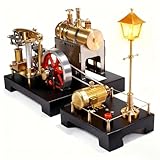
- Highly Restored Engine: Witness the magic of steam power as this lifelike model comes to life. With mini steam generator and lamp scene model
- Impeccable Craftsmanship: Carefully crafted in precision, the Beam Steam Engine Model and Boiler Kit boasts outstanding craftsmanship with rich details. Each part in highquality materials, ensuring durability and longevity
- Educational and Engaging: Assemble the kit and explore early engineering and mechanical principles, providing a fascinating hands-on experience for young and old enthusiasts alike
- Industrial Age Ambiance: Experience the marvels of steam power, immerse yourself in nostalgic history, and admire this beautiful masterpiece that seamlessly blends art and engineering into an impressive work
- Unforgettable Gifts: The Beam Steam Engine Model and Boiler Kit offers the joy of assembly, the allure of steam power, and the charm of bygone eras, all in a stunning package
Two ways a process can receive the heat
- Indirect heating: steam condenses inside a jacket, coil or exchanger and stays separated from the product. Condensate can be returned to the boiler system.
- Direct injection: steam contacts the product or process fluid, transferring heat rapidly. This is suitable only when added water, cleanliness, pressure and product-contact requirements are acceptable.
Direct use avoids generator, turbine, gearbox and condenser losses. It also avoids converting thermal energy into electricity and then attempting to recover low-temperature heat. For a process that needs only heat at the available steam pressure, those extra conversions add no useful output.
What limits direct steam
Steam is not automatically the right medium. Product contamination rules may prohibit direct injection; an indirect exchanger may be required. The process may need a temperature below the available steam saturation temperature, or it may need hot water, thermal oil or another medium for control or materials compatibility. Boiler blowdown, distribution losses, traps, leaks and poor condensate return still reduce fuel-to-process efficiency, so “direct” does not mean lossless.
What changes when steam passes through a turbine
The energy path
High-pressure, high-temperature steam expands through turbine stages, producing shaft power that drives a generator or mechanical load. The outlet can be:
Do these 3 things before closing this tab:
1Scan for outdated or missing drivers - takes under a minute2Clear out junk files and repair common Windows errors3Fix the driver behind crashes, sound loss and screen glitches- Backpressure (non-condensing): exhaust leaves at a pressure and temperature useful to the process.
- Extraction: steam is bled from one or more intermediate stages for process use while the remaining flow expands farther.
- Condensing: steam expands to a low pressure and rejects most remaining heat in a condenser, maximizing electrical output rather than useful process heat.
The turbine can only make substantial power from a useful pressure and temperature drop. Inlet conditions, exhaust pressure, mass flow, stage design, speed, generator loading and annual operating hours all matter.
Machine efficiency is not plant efficiency
DOE reports turbine efficiencies of about 65% for small multistage units to more than 90% for large industrial or utility units. Some small single-stage machines can be as low as 50%. These figures describe turbine performance under the applicable test or design conditions, not the fraction of boiler fuel that becomes electricity.
Rank #2

- NOVEL DESIGNED ----- This engine is a balance style, different from the ordinary Stirling model. It was equipped with a multicolor LED install on the motor. Because of the heat from high-grade alcohol, the engine will run madly and create the electricity. The power will go through the wire and drive the multicolor LED lighting. It's really interesting and imaginative toy.
- EXTREMLY WELL-MADE---- Heating cylinder for the custom-made thick glass material, long-term heating without pressure; It is mainly constructed by metal so it can run quietly and stably (since it is HEAVY, 1.5LB) at speed around 1700 RPM! Our customers are satisfied with the fit and finish of this engine. All the parts have done surface treatment to avoid rusting. You will be pleased once put it on table.
- EASY OPERATION & LONG LASTING----Fill the alcohol burner with your 95% alcohol (we recommend this fuel) and light it. Let the light burn the round ended cylinder for about 60-120 seconds, then give the wheel a gently push, it will run like a charm.
- YOU GET EXTRA BONUS EXCEPT THE STIRING----Still worry about the cylinder glass broken during shipment or usage? It did come with spare glass tubes, one O-rings, check the gallery picture. You can replace it fast and easily if any broken. You can contact us for support if need. We also can make offer for your future parts requirement.
- PRIORITY GIFT OPTION FOR MANY APPLICATIONS----It is an amazing and fantastic product at this price. Its elegant gift package makes it spruce up and presentable. It has a wide range of application as, great gift for science project, Physical/mechanical learning, teacher’s Demo props on the class, birthday gift for friends, families, parents, etc. Many of our customers come from school, colleague, etc.
DOE also reports whole-plant electrical efficiency near 41% at the high end for large utility steam plants, while small plants making electricity as a by-product of process-steam delivery can be below 10%. A low electrical percentage is not necessarily a failure: if the remaining thermal energy is delivered to a process, total CHP efficiency may be high.
When CHP makes the turbine worthwhile
Backpressure CHP
A backpressure turbine is strongest when the factory needs a steady flow of process steam at the turbine exhaust pressure. The turbine generates electricity while the exhaust performs the same heating duty that would otherwise have been supplied directly from a pressure-reducing valve. Because essentially all exhaust steam remains useful, total fuel utilization can approach the boiler’s efficiency.
DOE reports total steam-turbine CHP efficiency generally approaching boiler efficiency, typically 70%–85%, with large topping-cycle systems capable of exceeding 90%. These are total useful heat-plus-power figures, not electrical efficiency alone.
Extraction CHP
Extraction turbines provide flexibility when a plant needs process steam at more than one pressure. Intermediate-stage steam can supply a high-temperature process, while the remaining steam continues expanding to produce additional power or lower-pressure heat. Extraction controls must maintain process pressure and flow; when the process load changes, the turbine’s electrical output and efficiency change with it.
Condensing operation
A condensing turbine is appropriate when electricity is the primary product, when no compatible heat load exists, or when a seasonal heat load is too small. Its condenser rejects heat that direct steam would have delivered to the process. Comparing its electrical efficiency with direct steam’s heat delivery answers a different question and can make the turbine appear better or worse depending on which output is counted.
Rank #3

- The bottom of the model is made of high-quality steel, and the bracket is made of aluminum alloy. The bottom of the bracket is wide, stable and solid, exquisite and atmospheric European style. The attractive color LED of the motor is installed - Stirling engine with color LED. Due to the heat of alcohol, the engine will run wildly and generate electricity. The power supply will pass through the wire and drive the LED light to emit different colors. This is a very interesting and imaginative toy!
- Well made and finely ground; The frame is finished with CNC, indicating that the sand blasting treatment is firm; Aluminum alloy flywheel; The connecting rod is made of stainless steel by laser cutting; The heating cylinder is made of customized thickened glass, and there is no pressure for long-term heating. The overall shape is exquisite, and the texture is combined with beauty!
- Easy to operate and durable - add 95% alcohol to the alcohol burner (we recommend using this fuel) and ignite it. Let the lamp burn on the cylinder at the round end for about 1 minute, and then gently move the wheel with your hand. It will run like charm.
- Strong packaging - glass tubes and bubble bags are packed separately to avoid damage during transportation. You can also get extra rewards - if you are worried about the broken cylinder glass during transportation or use? It does have spare glass tubes and three O-rings. Please check the product pictures. If there is any damage, you can replace it quickly and easily.
- This is an amazing and wonderful product, which has a wide range of applications, such as children's science project gifts, physics / mechanical learning, teacher presentation props in class, friends, family, parents, children's birthday gifts, etc. Many of our customers come from schools, colleagues and so on!
How CHP compares with separate supplies
DOE’s CHP overview reports approximately 45%–55% efficiency when electricity and heat are supplied separately, versus 65%–85% for a properly designed CHP installation. DOE’s Energy Efficiency Handbook reports industrial steam-electric cogeneration thermal efficiency of 80%–90%, compared with roughly 35% for a utility cycle and 75%–85% for industrial steam generation. The figures use different system boundaries and applications, so they should be treated as benchmarks rather than a guaranteed result for a particular plant.
Recommended Free Tools
Direct steam and turbine options compared
| Option | Useful outputs | Where the energy goes | Best fit | Main limitation |
|---|---|---|---|---|
| Direct process steam | Heat only | Steam condenses or is injected at the process | Stable heat demand with no need for on-site power | No electricity or shaft power is produced |
| Backpressure turbine | Electricity or shaft power plus process heat | Expansion produces power; exhaust remains process steam | Large, steady heat load at a useful exhaust pressure | Power output follows steam demand and pressure ratio |
| Extraction turbine | Power plus steam at one or more process pressures | Some flow is extracted before final expansion | Sites with several pressure levels or changing heat loads | More controls, design complexity and operating interactions |
| Condensing turbine | Primarily electricity | Low-pressure exhaust heat is rejected in a condenser | Electricity-led operation with little usable heat demand | Lower total fuel utilization when heat is available but discarded |
How to decide for a particular factory
- List the required outputs. Record hourly and seasonal heat demand, required steam pressure and temperature, electricity or shaft-power demand, and the minimum acceptable reliability. If heat is the only required output, start with direct steam as the reference case.
- Map the existing steam system. Document boiler or HRSG efficiency, fuel, steam flow, inlet pressure and temperature, header pressures, condensate-return temperature, blowdown, pressure-reducing valves and current venting or losses.
- Identify a usable pressure drop. A turbine needs a pressure and enthalpy drop that is large enough to justify its cost and auxiliaries. A small drop may produce little power even when the steam flow is high.
- Match the exhaust to the process. Confirm that exhaust pressure, temperature, dryness, cleanliness and flow range meet the process requirement. A backpressure turbine is valuable only when its exhaust can replace useful process steam.
- Check load factor and operating hours. Turbine economics depend on sustained operation. A unit sized for a short peak may run inefficiently or sit idle for much of the year; a unit sized for maximum steam flow may need a bypass or pressure-reducing valve at low load.
- Model changing heat demand. Include startup, shutdown, weekends, seasonal production and upset conditions. Specify how the plant will supply heat when the turbine is offline or when process demand is below the turbine’s minimum stable flow.
- Calculate three separate balances. Report fuel-to-heat, fuel-to-electricity and total CHP efficiency. Include boiler/HRSG losses, turbine and generator losses, pumps, fans, controls, cooling systems, condensate return and any purchased or exported electricity.
- Evaluate economics with site data. Use actual fuel and electricity prices, export rules, maintenance, staffing, financing, remaining equipment life and annual hours. There is no defensible universal payback or percentage without these inputs.
Should a factory install a backpressure turbine?
A backpressure turbine is a strong candidate when the following conditions are all substantially true:
- The boiler already produces high-pressure steam, or a new high-pressure header is justified for other reasons.
- The process continuously consumes most of the turbine exhaust at a pressure the turbine can maintain.
- The pressure-reducing valve currently wastes an opportunity to recover power.
- Electricity has a meaningful on-site value, and the generator can operate safely in parallel with the grid or in an approved islanding scheme.
- The site can tolerate power output that varies with steam flow, or it has a bypass and supplementary power arrangement.
It is a poor fit when the process needs only low-pressure heat for short periods, when steam flow is highly intermittent, when no pressure drop is available, or when the exhaust would routinely be condensed. In those cases, direct steam with efficient distribution and condensate recovery may deliver more useful heat per unit of fuel and less operational complexity.
How much efficiency is lost by making electricity from steam?
There is no single loss percentage. The answer depends on what happens to the steam after expansion and what output is credited. Making electricity requires an energy conversion, so the electrical portion is always less than the thermal energy released by the boiler. A CHP system can still outperform separate heat and power because its exhaust heat remains useful.
For a heat-only comparison, the relevant question is not “what is the turbine efficiency?” but “how much fuel is required to deliver the same process heat after adding the turbine?” If the turbine exhaust replaces the same process steam, the incremental fuel penalty can be small while the site gains electricity. If the exhaust is sent to a condenser, the comparison must credit only the electricity and count the rejected heat as a loss.
Quick wins for a faster PC:
Clear out junk files and repair common Windows errorsFree Scan →Fix the driver behind crashes, sound loss and screen glitchesFind Drivers →Repair Windows errors before they cause bigger problemsFix Now →Rank #4

- 1. Engaging DIY Experience: Dive into a challenging project with our steam engine assembly kit, featuring nearly 40 parts and clear graphical instructions that guide you through the exciting process of building your own functional steam engine.
- 2. Retro Design and Functionality: The vertical structure showcases a transparent cylinder for easy observation of piston movement, while the large flywheel ensures smooth operation and quick startup, enhanced by a realistic simulated jet sound.
- 3. Safety Features: Designed with user safety in mind, this steam engine includes a spherical boiler for even steam pressure release, a mini safety valve, splash-proof exhaust tube, and a brass alcohol lamp, ensuring safe and enjoyable operation.
- 4. High-Quality Manufacturing: Constructed entirely from metal, the boiler boasts a robust design with a short startup time, blending retro aesthetics with advanced processing technology for a premium mechanical model experience.
- 5. Versatile Applications and Great Gift: Perfect as a teaching aid for scientific experiments or as a stunning desktop decoration, this steam engine model makes an ideal gift for birthdays, holidays, or for any technology enthusiast aged 14 and up.
Use a consistent accounting statement such as:
η_heat = useful process heat ÷ fuel inputη_electric = net electricity ÷ fuel inputη_CHP = (useful process heat + useful electricity) ÷ fuel input
Do not add thermal and electrical efficiencies from different boundaries, and do not compare a turbine’s isentropic efficiency directly with a boiler’s fuel efficiency.
Independent reader supportYour contribution helps us test, update, and keep practical guides available for everyone.Heat quality, compatibility and control issues
Temperature and pressure
Steam saturation temperature rises with pressure. A process must receive steam at a pressure high enough to transfer heat across the exchanger while allowing for control-valve and distribution losses. A turbine exhaust that is ideal for one process may be too cool for another, forcing supplemental firing or bypass steam.
Direct contact versus separation
Direct injection can heat a batch quickly, but it adds condensate to the product and imposes requirements for steam quality and treatment. Indirect exchangers preserve product separation and allow condensate recovery, but they add heat-transfer surface, approach-temperature constraints and fouling risk.
Condensate and water treatment
Returning clean, hot condensate reduces feedwater heating and treatment demand. Contaminated condensate may need diversion, filtration or replacement with treated makeup water. Turbine projects should include traps, flash steam, blowdown, feed pumps and deaeration rather than comparing only the turbine and boiler nameplates.
Controls and protection
A CHP system needs coordinated boiler firing, governor control, extraction or backpressure regulation, bypass valves, overspeed protection, synchronization and emergency shutdown. The heat process must remain safe during a turbine trip. A bypass sized for the required steam flow can preserve production, but it also reduces the power that can be recovered during bypass operation.
Best Value
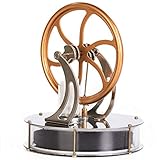
- FANTASTIC SMART THING WITH EXTREMELY WELL MADE WHICH RUNS LIKE A DREAM----The stirling engine is produced with high quality material and elegant workcraft. this stirling engine adopts mirror surface stainless steel for the base, glass cylinder liner, zinc alloy flywheel. All the parts have done surface treatment to avoid rusting. Oil-free.
- OPERATION EASILY----Pour a cup of hot coffee, put the stirling on the cup, it run magically. When it slows down, the coffee temperature is suitable for drink. Enjoy physical powertrain mechanism display and coffee. It also can work on top of ice cube. Some guys put the stirling on cup of hot water and put small ice cubes on the stirling upper plate. This makes the temperature difference much bigger than normal, then it runs even more fast and crazy. Just enjoy the toy!
- LONG LASTING----It can run for 24+ hours continuous without any broken if there are continuous power supplies. One customer put the stirling on USB hot plate (excluded in the package) and the stirling runs on his desk for weeks. Don’t burn the stirling base or put it in the stove, the stirling plastic parts will damage.
- PRIORITY GIFT OPTION FOR MANY APPLICATIONS----It is an amazing and fantastic product at this price. Its elegant gift package makes it spruce up and presentable. It has a wide range of application as, great gift for student's science project, Physical/mechanical learning, teacher’s Demo props on the class, birthday gift for friends, families, parents, students, etc. Many of our customers come from school, colleague, etc.
- AMAZING CONVERSATION PIECES ON YOUR DESK----It's funny to see people's looks and reactions when they squeeze a little shot for this Stirling engine. Put it on the cup which full with hot waters, give the flywheel a gently push, and get the flywheel going, and then it works like charm. All of your guests want to know what happened, ice-breaking success. What a marvelous toy!
Three common operating scenarios
Heat-only plant with a stable low-temperature load
A food, chemical or materials process that needs dependable steam heat but no on-site power normally benefits from direct steam through a properly sized exchanger or injection system. A turbine would add capital equipment and conversion losses without creating a required output.
Continuous process heat plus a large electrical load
A plant with high-pressure boiler steam, a steady lower-pressure process header and substantial electricity consumption can use a backpressure turbine. The pressure drop produces power, while the exhaust continues heating the process. The design target is the heat load and pressure first; electrical output is a by-product constrained by those requirements.
Variable or seasonal heat demand
If process heat falls sharply outside a production season, an extraction or condensing arrangement may provide flexibility, but the condenser then becomes part of the fuel-utilization trade-off. Compare annual operation, not only the best design point, and specify how the system behaves during low-load periods.
Pitfalls that produce misleading comparisons
- Comparing unlike outputs: one case supplies heat and the other supplies electricity, but the analysis labels both “efficiency.” Define the service first.
- Using nameplate turbine efficiency: a laboratory or design-point figure may not represent part-load operation, generator losses or auxiliaries.
- Ignoring exhaust heat: counting electricity while treating useful exhaust as waste understates CHP performance; counting rejected condenser heat as useful overstates it.
- Assuming all steam flow is available: boiler turndown, minimum turbine flow, startup, maintenance and process interruptions reduce annual recovered power.
- Omitting the existing pressure-reducing valve: the correct baseline may already deliver the required heat efficiently; the turbine’s incremental benefit is the power recovered from the pressure drop.
- Forgetting water and maintenance: pumps, treatment, oil systems, controls, seals, blade inspections and generator maintenance consume energy and money.
- Designing for average conditions only: peak steam demand, low-load control and a turbine trip require bypass capacity and a safe heat-supply strategy.
A practical data sheet for a feasibility study
Collect at least one representative year of measured or well-supported data:
- Boiler or HRSG fuel flow, efficiency, steam production and operating pressure/temperature.
- Hourly process-steam flow, pressure, temperature, condensate return and makeup-water rate.
- Electrical demand profile, tariff periods, demand charges, export limits and outage requirements.
- Required process temperatures, allowable pressure variation and whether direct injection is permitted.
- Operating hours, seasonal production, planned outages and future capacity changes.
- Fuel cost, electricity value, maintenance cost, project life and financing assumptions.
With these inputs, compare a direct-steam baseline, a backpressure design, an extraction design and—only if heat cannot be used—a condensing design. Report annual fuel, useful heat, net electricity, emissions if required by the project, capital cost and sensitivity to heat load and energy prices.
Bottom-line decision
Choose direct steam when the requirement is heat and the steam can meet the process safely and controllably. Choose a backpressure or extraction turbine when the site needs power as well as heat, has a sustained pressure drop, and can use the exhaust or extraction steam fully. Expect total CHP efficiency in the broad ranges reported by DOE—generally 70%–85% for steam-turbine CHP, with some large topping-cycle systems above 90%—but treat those as benchmarks, not guarantees. A condensing turbine is an electricity-generation choice; it is not inherently a more efficient way to supply process heat.
Quick Recap
Product prices and availability are accurate as of the date/time indicated and are subject to change. Any price and availability information displayed on Amazon at the time of purchase will apply.

