
Free tools Windows power users keep installed
One-click scans. No signup required.
iTechGuides is reader-supported. When you buy through links on our site, we may earn an affiliate commission. As an Amazon Associate I earn from qualifying purchases. Learn more
Start with your soundbar’s dialogue control—Speech clarity, Voice Enhance, Dialog, or Dialog Enhancer—then raise the center channel in small steps. If voices are still masked, reduce bass or subwoofer output instead of turning up the master volume. Use Night Mode only when you need quieter late-night listening: it improves speech at low volume by reducing bass and dynamic range, but it also removes impact.
The exact names, ranges, remote buttons, app menus, and available adjustments depend on the soundbar model, firmware, and region. The sequence below gives you a reliable baseline without assuming that one brand’s settings apply universally.
What to change first
Most movie and television dialogue is routed primarily through the center channel in a multichannel mix. Samsung support describes the center channel as typically handling most spoken content. That makes a center or dialogue adjustment more effective than simply increasing overall volume, which also makes music, effects, and room noise louder.
Do these 3 things before closing this tab:
1Scan for outdated or missing drivers - takes under a minute2Clear out junk files and repair common Windows errors3Fix the driver behind crashes, sound loss and screen glitches- Enable the dedicated speech control: Look for Speech clarity, Voice Enhance, Dialog, Dialog Enhancer, or a similarly named setting.
- Raise the center level gradually: Increase one step while playing a familiar scene, then stop when consonants are clear.
- Trim bass that masks speech: Lower the Bass or Subwoofer control if explosions, music, or room resonance cover voices.
- Reserve Night Mode for low-volume viewing: It reduces dynamic range and bass, so it is not the best setting when you want full cinematic impact.
Do not assume a larger boost is better. Too much center or vocal emphasis can make voices sound thin, sharp, or detached from the rest of the mix.
#1 Best Overall

- HEAR YOUR TV BETTER: Designed with simplicity in mind, the Bose TV Speaker is an all-in-one soundbar that clarifies speech and is a simple fix for better TV sound
- WIDE, NATURAL SOUND: 2 angled full-range drivers deliver a more realistic, spatial audio experience for overall better TV sound from a small soundbar
- ENHANCED DIALOGUE: This sound bar for smart tv is designed to specifically focus on clarifying and elevating vocals and pronunciation
- BLUETOOTH TV SPEAKER: Pair your device to this Bluetooth soundbar to wirelessly stream your favorite music and podcasts. Connect up to 3 devices through the inputs (HDMI, Optical in, and AUX in); the first powered on device will automatically connect
- SIMPLE SETUP: A single connection from this compact soundbar to the TV via an optical audio cable (included) or an HDMI cable (sold separately) has you up and running in minutes
How the main soundbar controls work
Speech clarity, Voice Enhance, and Dialog
These modes change the balance between speech and effects, often by emphasizing the vocal frequency range and the center-channel signal. Roku describes Speech clarity as boosting dialogue relative to effects. Klipsch’s documented Dialog Mode for the Cinema 1200 raises vocal frequencies by 2 dB per step and the center-channel level by 3 dB per step. Those figures apply to that implementation only; they are not a universal standard.
Use the lowest setting that makes speech intelligible. A high setting can expose sibilance, make announcers sound unnaturally forward, or reduce the sense that voices belong in the scene.
Center-channel level
A separate center control is more precise than a global voice mode because it changes the speech-bearing channel without necessarily changing every frequency. Samsung documents a center-channel range of -6 dB to +6 dB and notes that +6 dB can increase voice clarity. Treat that range as a Samsung-specific example. Other products may offer fewer steps, a different scale, or no manual center adjustment.
Recommended Free Tools
Rank #2
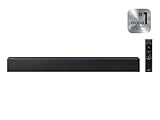
- Full, balanced sound with deeper bass – Enjoy richer TV audio with an included subwoofer that adds punchy low end for movies, music, and gaming, while keeping mids and highs clear for everyday viewing.
- One Remote Control (compatible Samsung TVs) – Use a supported Samsung TV remote to control power, volume, and sound modes, keeping your setup simple and reducing the need for multiple remotes.
- Surround Sound Expansion for a wider soundstage – Expand the listening area with a broader, more immersive sound field so dialogue and effects feel more spacious across the room.
- Clean, easy TV connection – Connect quickly with HDMI ARC or optical for a reliable setup, plus Bluetooth for convenient wireless streaming from your phone or tablet (TV/device compatibility required).
- Dialogue enhancement for clearer voices – Voice-focused processing helps speech stand out over background effects and music, so you can follow conversations more easily without constantly adjusting volume.
Bass and subwoofer level
Bass can mask speech through both sound-system output and room resonance. If dialogue becomes difficult to follow whenever music or effects start, lower the Subwoofer or Bass control by one step and replay the same scene. Definitive Technology documents separate Center and Bass controls, illustrating why independent adjustments are preferable to changing the master volume.
Night Mode
Night Mode is designed for low-volume listening. Klipsch describes it as lowering subwoofer level and dynamic range. Sony says its Night Mode can improve dialogue clarity at low volume while limiting excessive subwoofer noise. Roku likewise describes Night as a lower-volume mode with less bass. Because compression reduces the gap between quiet speech and loud effects, voices become easier to hear without raising the volume, but explosions and musical impact are reduced. Disable it when you want the soundtrack’s full dynamics.
Step-by-step setup for clearer voices and controlled bass
1. Place and aim the soundbar correctly
- Center the soundbar horizontally with the television rather than placing it far to one side.
- Aim the front drivers toward the main listening position if the design allows it.
- Keep the grille, front drivers, and any upward-firing openings unobstructed. Do not push the bar into a cabinet lip that blocks the speakers.
- If the bar has upward-firing Atmos-style drivers, leave the clearance specified by its manual so reflected sound can reach the ceiling.
Bose recommends aligning the bar with the screen so dialogue appears anchored to the picture, then running its CustomTune calibration after all components are in their final positions.
Rank #3

- Simplified 5.1ch Dolby Atmos Setup: Enjoy immersive 4D sound with real Dolby Atmos and 5.1-channel audio. Five built-in speakers, including two side-firing drivers, create wide surround without rear speakers. Precision DSP ensures <0.5 ms latency for smooth, theater-like sound. Setup takes less than 1 minute.
- Voice Clarity Enhancement: VoiceMX technology uses advanced DSP algorithms to isolate and enhance vocal frequencies in real time. Dialogue remains crisp and easy to follow by separating speech from background effects and music, even at low volumes or during intense scenes.
- 300W Output with 6-Driver System: Featuring five precision-tuned full-range drivers and a dedicated wired wooden subwoofer, the system delivers up to 300W of peak power for bold, room-filling sound. With a frequency response of 45 Hz–18 kHz and a maximum SPL of 99 dB, it reproduces everything from subtle nuances to explosive cinematic effects.
- 18 mm High-Excursion Driver: Powered by BassMX technology, the wired wooden subwoofer features a 18 mm high-excursion driver, a 5.3L tuned cabinet, and a high-density magnetic circuit. This design delivers deeper, tighter bass with greater air displacement and enhanced low-frequency performance—bringing more realism to every scene.
- HDMI eARC for True Dolby Atmos: HDMI eARC supports up to 37 Mbps of bandwidth, unlocking the full potential of lossless Dolby Atmos 5.1-channel audio. Compared to standard ARC, eARC delivers richer surround effects and greater detail. CEC integration allows the TV and soundbar to work together with unified control.
2. Choose a neutral starting mode
Select the least processed movie, standard, or direct mode that still gives intelligible speech. Avoid evaluating dialogue while several enhancement modes are stacked together; you will not know which control caused a change. Turn off unusual surround effects temporarily, then enable the model’s dedicated Voice Enhance, Speech clarity, Dialog, or Dialog Enhancer option.
Crashes, No Sound, or Screen Glitches?
Random freezes, missing sound and display glitches usually trace back to one bad driver. Find and replace yours safely.Free scan · under a minuteWindows Errors? Fix Them Before They Spread
Repair common Windows errors and clear accumulated junk for a smoother, more stable PC - no reinstall needed.Free scan · no reinstall3. Raise dialogue in small increments
- Play a scene with quiet conversation followed by music or effects. A familiar program is useful because you know how the voices should sound.
- Increase the center or dialogue setting one step.
- Listen for consonants such as “t,” “k,” and “s,” not just loudness.
- Stop as soon as words are consistently intelligible. If voices become nasal, brittle, or detached, return one step.
On Samsung models that expose the documented -6 dB to +6 dB center range, start near 0 dB and move upward gradually rather than jumping straight to +6 dB. On Denon products with Dialog Enhancer, choose Low first, then Medium or High only if Low is insufficient; Denon describes those levels as adjustments to the center-channel frequency band.
4. Reduce masking bass
- Keep the dialogue setting at the useful level you found in the previous step.
- Lower Subwoofer or Bass by one step.
- Replay the same passage, especially during music, engines, or explosions.
- Continue only until speech separates from the background. If voices become too light, restore one bass step and use a slightly higher center setting instead.
Changing bass and center independently lets you preserve warmth while removing the low-frequency energy that obscures words. If your soundbar has only a combined tone control, make the smallest bass cut available and avoid compensating with a large master-volume increase.
Rank #4

- TV COMPATIBILITY NOTE: Not compatible with TVs that lack audio outputs. Some Samsung and Glass smart TVs with only HDMI ARC/eARC ports require an HDMI ARC Audio Extractor (sold separately) to convert the HDMI signal to Toslink optical (recommended) or analog.
- EASY SETUP + INCLUDED CABLES: Compatible with TVs featuring Toslink optical or analog outputs (3.5mm or RCA). All necessary cables are included for quick, hassle-free setup.
- CRYSTAL CLEAR DIALOGUE: AccuVoice with 12 levels of voice boost makes every word easier to understand—perfect for enhancing speech clarity in shows, movies, and news.
- DISTRACTION-FREE LISTENING: Supervoice mode reduces background noise so voices stand out, delivering focused, clear dialogue for a more enjoyable viewing experience.
- POWERFUL ROOM-FILLING SOUND: Three 2"x3" full-range speakers produce rich, immersive audio that fills the room—ideal for clear, full-bodied TV sound.
5. Configure Night Mode for late viewing
Enable Night Mode when household noise limits require a lower listening level or when effects disturb other rooms. Reassess the bass after enabling it because the mode intentionally lowers subwoofer output and compresses dynamics. If the soundtrack now sounds flat and you are not listening quietly, turn Night Mode off and return to the separate center and bass adjustments.
6. Run automatic room calibration
If your model supports microphone-based calibration, run it only after the bar, subwoofer, and television are in their permanent positions. Bose says CustomTune uses phone microphones to adjust frequency response, delay timing, and level balance. Follow the app’s microphone-placement instructions and keep the room quiet during measurement. Calibration cannot correct a blocked driver or a soundbar that is physically off-center, so placement still matters.
What’s actually slowing this PC down?
Pick the symptom - the matching free tool is one click away.
7. Confirm the exact model instructions
Check the manual or companion app for the precise menu path and available range. Samsung warns that SmartThings support, specifications, and interface labels vary by model and software version. A setting shown in a support article may therefore be absent or named differently on your unit.
Best Value

- 【𝐈𝐦𝐩𝐚𝐜𝐭𝐟𝐮𝐥 𝐕𝐨𝐥𝐮𝐦𝐞 𝐁𝐨𝐨𝐬𝐭】: Elevate faint sounds to vibrant with automatic loudness boost. Experience immersive sound through 4 versatile placements—horizontal for distortion-free audio, vertical for room-filling sound, tabletop for vibrant clarity, or wall mount for 360° cinematic magic. Transforms your room into a personal theater.
- 【𝐄𝐩𝐢𝐜 𝐂𝐢𝐧𝐞𝐦𝐚 𝐀𝐮𝐝𝐢𝐨】: Powered by 4 high-performance drivers, 80W powerful sound output, it provide richer details, like soft whisper or subtle croon, whether deep thunder or sonorous roar, turn flat audioto vivid, adding weight to music, making the virtual game experience immersive.
- 【𝐓𝐚𝐢𝐥𝐨𝐫𝐞𝐝 𝐒𝐨𝐮𝐧𝐝】: Fine-tune your listening experience with 3 dynamic equalizer modes—movie, music, and news. Enjoy rich, cinematic audio, luxurious melodies, and crystal-clear dialogue, tailored to enhance every scene and soundtrack. Spreading the audio evenly throughout a room, ensures that everyone, regardless of seating position, experiences the full range of sound.
- 【𝐄𝐟𝐟𝐨𝐫𝐭𝐥𝐞𝐬𝐬 𝐔𝐬𝐞】: Enjoy seamless setup with cutting-edge Bluetooth 5.0 or reliable ARC, OPT, and AUX connections. In ARC mode, control your soundbar with ease using your TV remote, guided by our easy-to-follow instructions and video tutorials.
- 【𝐄𝐱𝐜𝐞𝐩𝐭𝐢𝐨𝐧𝐚𝐥 𝐒𝐮𝐩𝐩𝐨𝐫𝐭】: Your satisfaction is our top priority. Enjoy peace of mind with our 18-month warranty and 24/7 online tech support. Our 60-day hassle-free replacement policy, with top-tier assistance whenever you need it.
Reference settings documented by manufacturers
| Manufacturer or example | Dialogue control documented | Bass or night behavior | Important qualification |
|---|---|---|---|
| Samsung | Center-channel adjustment from -6 dB to +6 dB; Samsung says +6 dB can increase voice clarity. | Specific Night Mode behavior varies by model. | Current support guidance; SmartThings features and interfaces vary by model and software version. |
| Klipsch Cinema 1200 implementation | Dialog Mode increases vocal frequency range by 2 dB per step and center-channel level by 3 dB per step. | Night Mode lowers subwoofer level and dynamic range. | Values describe the documented Cinema 1200 implementation, not every Klipsch soundbar. |
| Denon | Dialog Enhancer offers Low, Medium, and High levels that adjust the center-channel frequency band. | Separate behavior depends on the model. | Level names and availability are model-specific. |
| Sony | Night Mode is intended to improve dialogue clarity at low volume. | Limits excessive subwoofer noise. | Sony support article modified in 2018; implementation varies by model. |
| Roku | Speech clarity boosts dialogue relative to effects. | Night is a lower-volume mode with less bass. | Menu labels and strength options vary by Roku soundbar or television integration. |
| Bose | CustomTune calibration balances levels and frequency response rather than offering one universal dialogue number. | Calibration also accounts for timing. | Uses phone microphones through the supported setup process. |
| Definitive Technology | Separate Center control is documented. | Separate Bass control is documented. | Illustrates independent adjustment; controls differ on other models. |
Fixes for common dialogue and bass problems
Voices are still quiet after enabling enhancement
- Verify that the program actually contains a center channel. Stereo or poorly mixed content may not respond strongly to a center adjustment.
- Check that the soundbar is receiving the intended audio format from the television. A television output set to an incompatible or altered mode can change channel handling.
- Lower bass one step before adding more vocal boost; low-frequency masking is often the real problem.
- Move the soundbar out from under a cabinet edge or other obstruction.
Dialogue is clear but sounds thin or harsh
- Reduce Voice Enhance or Dialog by one step.
- Restore one bass step if you made a large cut.
- Use a lower center level and rely on moderate room calibration where available.
- Check whether multiple enhancements are active simultaneously, such as a television speech mode plus a soundbar Dialog mode.
Bass booms in some scenes but disappears in others
- Reduce the subwoofer level slightly rather than cutting all low frequencies.
- Move the subwoofer away from a corner or wall if the manual permits; room boundaries can reinforce certain notes.
- Run the manufacturer’s room calibration after moving the subwoofer.
- Compare Night Mode at low volume. If it solves the problem only because it compresses dynamics, disable it for normal-volume listening and keep a separate daytime preset if the product allows one.
Night Mode makes everything sound flat
That result is expected: Night Mode reduces dynamic range and bass by design. Use it only when the listening level or household environment requires compression. For normal listening, turn it off and manage center and bass separately.
You cannot find the advertised setting
Search the exact model number in the manual or app help. Manufacturers reuse names inconsistently, and a feature may be limited to a particular firmware, region, remote, or connected television. If a physical remote is missing, identify the exact model before buying a replacement; remotes are not interchangeable simply because two soundbars share a brand.
What to look for when choosing a soundbar
If clear dialogue is a priority, compare controls rather than relying on a mode name alone. A useful specification checklist is:
| Feature | Why it matters | Questions to ask |
|---|---|---|
| Dedicated dialogue processing | Raises speech relative to effects without requiring a large master-volume change. | Is it called Voice Enhance, Speech clarity, Dialog, or Dialog Enhancer? How many levels are available? |
| Adjustable center channel | Lets you target the channel carrying most movie and television speech. | Is the level adjustable independently, and what range is documented? |
| Separate bass and subwoofer controls | Allows you to remove masking bass while retaining vocal warmth. | Can Bass and Subwoofer be changed independently of Center? |
| Night Mode with stated behavior | Useful for low-volume listening, but its bass and dynamic-range reduction should be predictable. | Does the manual explain how much compression or bass reduction occurs? |
| Automatic room calibration | Can correct frequency response, timing, and level balance caused by room and placement. | Does calibration use a microphone, and can it be rerun after moving the system? |
| Convenient control method | Frequent small adjustments are easier when the remote or app is accessible. | Are the needed controls on the supplied remote, in an app, or both? |
No manufacturer documentation cited here establishes a universal decibel improvement or a cross-brand performance ranking. Use the documented control behavior as a setup guide, then judge the result from your own room, seating position, program mix, and listening level.
A practical preset strategy
If your soundbar supports saved presets, create one for ordinary listening and one for late night. In the ordinary preset, keep Night Mode off, set a modest center or dialogue boost, and trim bass only enough to prevent masking. In the late-night preset, enable Night Mode and verify speech at the volume you actually use. Recheck both presets after a firmware update, a room rearrangement, or a change in television audio output, because those changes can alter the balance you calibrated.
Quick Recap
Product prices and availability are accurate as of the date/time indicated and are subject to change. Any price and availability information displayed on Amazon at the time of purchase will apply.

