
Quick wins for a faster PC:
Fix the driver behind crashes, sound loss and screen glitchesFind Drivers →Repair Windows errors before they cause bigger problemsFix Now →iTechGuides is reader-supported. When you buy through links on our site, we may earn an affiliate commission. As an Amazon Associate I earn from qualifying purchases. Learn more
For most phones, laptops, tablets, cameras and other compact devices, lithium-ion is still the better everyday battery in 2026. It packs more energy into less weight and space, has the widest product support and charging ecosystem, and remains cost-competitive at factory scale. Sodium-ion is more compelling when cold-weather operation, supply diversification, lower weight sensitivity or stationary use matters more than maximum runtime and compactness.
The practical verdict
Battery choice is not a contest with one winner. The right chemistry depends on how much energy a device needs, how tightly that energy must fit into a small enclosure, the temperatures it will face, and whether the battery is replaceable or built into a product.
- Choose lithium-ion for phones, tablets, laptops, cameras, drones and other portable electronics where runtime per gram and per litre is the priority.
- Consider sodium-ion for backup systems, stationary storage, small urban vehicles and equipment that must operate in severe cold or can accept a larger, heavier pack.
- For household AA and AAA cells today, rechargeable lithium-ion products are the practical option. Sodium-ion is not yet a standardized drop-in replacement for ordinary consumer cells.
The International Energy Agency (IEA) describes the trade-off directly: highly optimized lithium-ion, particularly newer lithium-iron-phosphate (LFP) designs, still has advantages in energy density, supply-chain maturity and cost. Sodium-ion’s strongest current differentiator is performance at low temperature, not universal superiority.
Recommended Free Tools
Energy density determines size and runtime
Energy density measures how much energy a cell stores for its mass, usually in watt-hours per kilogram (Wh/kg). Volumetric energy density describes the same idea per litre. Higher values let engineers deliver longer runtime in the same enclosure or make a product smaller and lighter for the same runtime.
#1 Best Overall

- HIGH-CAPACITY POWER: This rechargeable aa batteries with charger set includes 8 lithium batteries aa, each 1.5V 3600mWh aa lithium batteries offer superior performance, reliability, and delivering long-lasting energy to high-drain devices like remotes, security cameras, wireless toys, and more. No need for separate devices; Perfect for households with battery-powered devices.
- SMART LED DISPLAY: The LED display shows the charging status clearly: Blue light flashing for Lithium battery charging, Blue light solid when battery is fully charged, No light for empty battery slot, and Red light flashing indicates that the battery is defective or non-rechargeable.
- FAST 3-HOUR CHARGING & 8-IN-1 CHARGING CASE: Fully charge all 8 lithium aa batteries in just 3 hours with the 5V/3A charging dock. The charging case also functions as a storage box, keeping your batteries organized and protected.
- LONG-LASTING PERFORMANCE – 2500+ CYCLES & 0V ACTIVATION: Rechargeable aa lithium batteries provide up to 2500+ charge cycles for maximum durability. The 0V Activation technology ensures that even deeply discharged batteries can be safely revived and recharged, giving you extended battery life.
- RELIABLE & SAFE PERFORMANCE: Built-in overcharge, overcurrent, overvoltage, overheat, and short-circuit protection ensures safe, stable charging while maintaining battery health. Our rechargeable batteries have earned multiple global certifications, including UL, FCC, IEC, CE, RoHS, CSA, PSE, CB, CCC, UKCA, and more.
| Chemistry | Energy-density figure | What it means for devices |
|---|---|---|
| Sodium-ion | Up to about 175 Wh/kg | Needs more mass or volume for the same stored energy. |
| LFP lithium-ion | Up to about 205 Wh/kg | Moderate energy density with a mature portable and storage ecosystem. |
| NMC lithium-ion | Up to about 255 Wh/kg | Best of these figures for compact, lightweight designs. |
These are upper-end cell figures reported by the IEA in 2026, not guarantees for a finished product. A phone or laptop pack also includes a battery-management system, casing, wiring, thermal components and safety margins. Those parts reduce the energy available per kilogram at the product level.
Phones, tablets and laptops
Portable electronics have tight internal volume and are carried all day. A sodium-ion pack with the same nominal capacity would generally be heavier or thicker than a lithium-ion pack, or it would provide less runtime in the same space. That trade-off affects keyboard thickness, camera-module room, handheld comfort and the time between charges. Unless a manufacturer accepts a larger enclosure for a specific reason, lithium-ion remains the sensible default.
Cameras, drones and tools
Cameras, drones and cordless tools combine energy demands with weight or balance constraints. Lithium-ion’s higher energy density leaves more mass available for optics, motors or accessories. Sodium-ion could make sense for a tool stored in an unheated workshop or vehicle, but the pack must still meet the product’s voltage, current and battery-management requirements; a cell chemistry cannot be substituted safely by matching only the connector.
Cold-weather performance is sodium-ion’s clearest advantage
Low temperatures slow the chemical reactions inside rechargeable cells and can increase internal resistance. The result can be lower available capacity, reduced power output and slower or restricted charging. Device makers often compensate with insulation, heaters, software limits or a requirement to warm the pack before charging.
The IEA reported in 2026 that newer sodium-ion cells can retain around 90% of nominal capacity at −40 °C. That figure refers to the latest cells and does not mean every sodium-ion product will deliver that result. It does show why sodium-ion is attractive for cold climates, outdoor equipment, backup power and vehicles that may sit outside overnight.
Lithium-ion cold performance varies by chemistry, cell design and thermal management. A lithium pack may work acceptably in a mild winter but lose usable capacity in deep cold, especially under high current. Charging a very cold lithium-ion cell can require a delay or a controlled warm-up. Sodium-ion does not eliminate all cold-weather limits, but its wider low-temperature operating window can simplify system design and preserve more usable energy.
Rank #2

- 1.5V High Power AA Lithium Batteries: Revolutionary technology makes batteries larger in capacity, longer lasting,more powerful in output,ideal for high power products.Such as Xbox, blink(some models unsuitable),digital camera,meta quest
- 2500 Cycle Life 0V Activation:Rechargeable aa batteries can be charged up to 2500 times, with no memory effect and low discharge rate, saving you a lot of money. Even if the battery is out of power and the voltage is 0V, the charger can directly activate the refresh battery for charging
- High-tech Charging Storage Box: The stylish and beautiful box design integrates storage and charging. The lithium batteries can be placed inside when not in use,saving a lot of space,very portable.Note:Our charger & lithium battery can only be used together and are not compatible with other brands
- Smart LED Display: The light flashes green to indicate charging,steady light indicate fully charged. Steady red light indicates Adapter incompatible/cable damaged/temperature too high,low.Flashing red light indicates battery cannot be charged, or the charging is overcurrent, overvoltage,undervoltage
- 3H Fast Charging Type C Input Design: 3H fast charging requires 5V3A power supply.The battery is only compatible with our chargers,do not use other chargers
What to check before buying for winter use
- Look for a specified discharge and charging temperature range, not just a marketing statement about cold resistance.
- Check whether the stated capacity is measured at room temperature or at the cold temperature you care about.
- Confirm that the charger and battery-management system allow charging below freezing.
- For an installed pack, verify that the enclosure, cables and display are also rated for the environment.
Safety depends on chemistry and system design
Both sodium-ion and lithium-ion batteries store substantial energy in a compact package. A damaged cell, manufacturing defect, incorrect charger or failed protection circuit can cause overheating, venting or fire. Sodium-ion’s lower energy density can reduce the amount of energy released in a given cell, and its temperature tolerance can ease some operating stresses. Battery Council International summarizes this as a genuine safety advantage from comparatively lower energy density.
That does not make sodium-ion automatically safe or lithium-ion automatically dangerous. Lithium-ion includes several chemistries. LFP is generally more thermally stable than high-energy nickel-manganese-cobalt (NMC), but LFP packs still require correct charging, cell balancing, mechanical protection and a functioning battery-management system. NMC can deliver higher energy density, yet it demands careful thermal and electrical control.
Thermal events and protection electronics
Safety is a property of the complete system: cell chemistry, separator, electrolyte, enclosure, fuses, sensors, firmware and charger. A well-designed lithium-ion product can be safer in practice than a poorly protected sodium-ion product. Look for independent safety certifications, clear operating limits, over-charge and over-discharge protection, short-circuit protection and a manufacturer that publishes service and recycling information.
Shipping and storage
Lower energy density may reduce the severity of an incident, but sodium-ion batteries are still rechargeable batteries subject to packaging, labeling and transport rules. Do not assume that a sodium-ion product is exempt from airline or courier restrictions. Store either chemistry away from heat, moisture, crushing forces and metal objects that could bridge the terminals. Stop using a pack that is swollen, cracked, unusually hot, leaking or producing a chemical smell.
Cycle life and degradation
Cycle life is the number of charge-discharge cycles a battery can complete before its capacity falls to a defined threshold. The threshold, depth of discharge, temperature, charging rate and rest periods all change the result, so a cycle figure is not a universal expiry date.
The International Renewable Energy Agency (IRENA) cited a 4,000–5,000-cycle capacity-retention reference for sodium-ion systems in 2025. That is a reference range for systems and test conditions, not a promise that every consumer pack will reach the same number. Lithium-ion cycle life also varies widely: LFP designs are commonly selected for durability, while high-energy designs may trade some cycle life for compactness. A phone used lightly may last many calendar years even if it never approaches a laboratory cycle count.
Rank #3

- 【12 Pack High-Performance Lithium Batteries】RayHom high-density rechargeable AA lithium batteries are lightweight; cold-resistant and heat-resistant, and can work normally in extreme environments of -20°F~131°F. making them ideal for blink cameras, for Xbox, video doorbell, digital camera, motorized toys, smart home devices, microphone etc.
- 【Large Capacity & Constant Voltage Output】Each double A rechargeable lithium battery offers a substantial capacity of 3700mWh, ensuring prolonged usage. Maintaining a constant voltage output of 1.5V during discharge, guaranteeing that your devices perform at their best throughout the entire usage cycle.
- 【High Charging Cycle Count】These lithium batteries aa are designed to be rechargeable up to 1600 times, significantly extending their lifespan. Compared to disposable batteries, you will not only save on replacement costs but also reduce environmental impact, supporting sustainable usage and demonstrating greater economic value and environmental consciousness.
- 【Fast Charging&Independent Charging Slots】The aa battery charger features advanced Type-C input, supporting a 5V 2A input current, allowing it to quickly charge the batteries in just 2 hours. Each charging slot operates independently, you can charge anywhere from 1 to 12 batteries simultaneously, providing flexibility and greatly improving charging efficiency while minimizing wait times.
- 【Smart LED Indicator】 The LED indicator clearly shows the charging status: Solid red light means charging, solid green light means fully charged, flashing red light indicates an incompatible or damaged battery, and flashing green light signals overheating protection, ensuring safe and clear usage.
Calendar aging matters as much as cycles
A battery ages while it sits, not only when it is charged and discharged. Heat, high state of charge and long periods at either extreme accelerate degradation. For either chemistry, avoid storing a device fully charged in a hot car, use the supplied or approved charger, and follow the manufacturer’s storage percentage when the product provides one.
Are sodium-ion batteries really cheaper?
Sodium is abundant and widely distributed, but material abundance alone does not set the price of a finished battery. Cell factories, production yield, electrode materials, electrolyte, quality control, packaging and supply contracts determine the cost per kilowatt-hour.
IRENA reported an average lithium-ion cell cost of USD 52–81 per kWh in April 2024. The IEA said in 2026 that current lithium prices are not high enough for sodium-ion to undercut LFP in most applications. Sodium-ion could become cheaper in particular markets if manufacturers reach large production volumes, use lower-cost materials and avoid constrained inputs, but that outcome is not guaranteed.
Free tools Windows power users keep installed
One-click scans. No signup required.
| Cost question | What is established |
|---|---|
| Current lithium-ion cell cost | USD 52–81/kWh average reported for April 2024 by IRENA. |
| Can sodium-ion undercut LFP today? | The IEA says present lithium prices are not high enough for sodium-ion to do so in most applications. |
| Future pricing | Depends on factory scale, chemistry, production yield and material prices. |
Retail prices also include the power-management board, casing, charger, warranty, distribution and regional taxes. A sodium-ion product can therefore cost more than a lithium-ion product even if its cell materials are less expensive.
Raw materials and supply-chain resilience
Sodium is abundant, which gives sodium-ion technology a way to diversify battery supply away from lithium. That matters to grid operators, vehicle makers and governments seeking more resilient manufacturing. Lithium-ion, however, benefits from years of investment, established suppliers, standardized equipment and a large installed base.
Supply-chain concentration is not identical to resource abundance. A material can be plentiful in the earth yet have processing concentrated in a few regions. Sodium-ion reduces dependence on lithium-specific inputs, but it still needs processed electrode materials, electrolyte chemicals, current collectors, manufacturing equipment and quality-assurance capacity. Diversification is therefore a strategic benefit, not proof that sodium-ion is automatically cheaper or easier to source in every country.
Rank #4
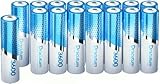
- 【TIPS: USE 1.5V Lithium CHARGER】: When recharging these 1.5v lithium AA batteries, make sure to use 1.5v lithium charger specifically designed for lithium batteries. The 1.2v nimh charger and the 3.7v charger are NOT Compatible with for our 1.5v batteries.
- 【3600mWh High Capacity & 2000 Cycle Charging】Dracutum 3600mWh true capacity (≈2400mAh @1.5V) outperforms standard NiMH batteries, Dracutum 1.5V aa lithium batteries, longer running time, 90% Less Hassle, Keep superior power and performance in 2000 times Cycle charging, Every charging is a new life.
- 【1.5V Output & 3A Peak Current】Dracutum aa rechargeable batteries offer solid 1.5V output (vs NiMH's 1.2V decline) - keeps devices at peak performance, 3A instant-drain capability powers high-drain devices like digital cameras, video doorbells, Game controllers, flashlights, Microphone, Alarm System and more.
- 【CPBI Sealing Technology & Long-Lasting】Dracutum utilize advanced CPBI technology Leak-proof construction protects your devices and keep higher energy density in lithium rechargeable aa batteries which provide long-lasting power compared to alkaline AA batteries.
- 【 Emergency-Ready Power & Multi-protect Safety】Dracutum li-ion aa rechargeable batteries retain their charge even after months of storage, making them convenient replace the dead batteries when needed the most. Built-in microchip and explosion-proof module - 3D Safety Matrix Technology beats standard lithium batteries.
Charging, formats and product availability
Lithium-ion is built into nearly every rechargeable consumer category: phones, laptops, cameras, handheld consoles, power tools, scooters and power banks. Chargers, battery-management chips, replacement packs and repair knowledge are widely available.
Outdated Drivers Are Slowing You Down
One free scan finds every outdated or missing driver and matches the right update for your exact hardware.Free scan · exact hardware matchPC Slower Than It Used to Be?
A free scan shows the junk files, broken settings and background clutter dragging Windows down - then fixes them in one click.Free scan · Windows 10 & 11Sodium-ion commercialization is earlier. CATL announced Naxtra as a mass-producible sodium-ion battery on 21 April 2025, and the chemistry is appearing first in power banks, electric-vehicle packs and stationary storage. That announcement shows industrial progress, not universal retail availability. Cell voltage, pack configuration, firmware and charging profiles differ by product, so a sodium-ion pack is not a drop-in substitute for a lithium-ion pack merely because the connector looks the same.
What about AA and AAA batteries?
Rechargeable lithium-ion AA products are available for ordinary consumer devices. Many include regulation that holds the output near 1.5 V, matching equipment designed for alkaline cells more closely than a bare 3.6–3.7 V lithium-ion cell would. Check the device manual because some products measure voltage or expect a particular discharge curve.
A current Verbatim USB-C rechargeable AA lithium-ion battery listing specifies 2,800 mWh, a regulated 1.5 V output and charging time of up to three hours. Those specifications describe that product format; they are not universal AA standards. USB-C charging can eliminate a separate bay charger, but it also means checking cable fit, charge indicators and whether the cell must be charged individually.
Sodium-ion household AA and AAA cells are not yet broadly standardized or stocked as a drop-in category. If a retailer lists a sodium-ion cell, verify its nominal voltage, charger compatibility, protection circuit, dimensions and intended equipment before use.
Everyday-device recommendations
Smartphones and tablets
Use the lithium-ion battery supplied by the manufacturer. The pack is engineered around the device’s charging firmware, thermal sensors, enclosure and power-management hardware. A third-party chemistry swap is not a safe upgrade, and a larger nominal capacity may not fit or communicate correctly with the device.
Best Value
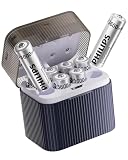
- 3600mWh High-Capacity & Stable 1.5V Output: Crafted with high-grade Li-ion technology, these AA batteries deliver a constant 1.5V voltage from full charge to complete discharge, no voltage drop during use. Boasting 3600mWh large capacity, they offer 40% more endurance than regular Ni-MH AA batteries, effectively preventing sudden power failure for high-drain devices like game controllers, digital cameras and more
- 2-in-1 Charger & Storage Case: Integrated with a Type-C fast charging port and a built-in storage compartment, this 2-in-1 design not only enables quick charging (5V/2A) but also keeps batteries organized. The intelligent identification chip automatically detects battery status, avoiding charging errors and solving the trouble of messy storage and inconvenient outdoor charging
- 1200 Cycles & Cost-Effective: With zero memory effect and a monthly self-discharge rate below 3%, these AA batteries support deep discharge recovery (down to 0V) and can be recharged up to 1200 times. They replace thousands of disposable batteries, helping you save 80% of long-term battery costs and reduce environmental waste
- 4-Layer Safety Protection System: Equipped with overcharge, over-discharge, short-circuit and overheating protection, the flame-retardant ABS shell withstands 1-meter drop impact. Real-time LED indicators clearly show charging progress, full charge status and abnormal alerts, eliminating worries about charging safety and battery damage
- Wide Compatibility for Daily Use: Suitable for most household electronic devices, including game controllers, flashlights, remote controls, voice recorders and RC toys. Note: Not compatible with 3V devices (e.g., smoke alarms, doorbell cameras), please confirm device voltage before use to avoid damage
Laptops
Lithium-ion remains preferable because laptop designers trade battery volume against weight, screen size and cooling hardware. If you need more runtime, a certified replacement pack or USB-C power bank that meets the laptop’s required wattage is more realistic than waiting for a sodium-ion internal battery.
Cameras and handheld gaming devices
Choose the chemistry and pack specified by the manufacturer. Lithium-ion’s energy density helps keep cameras and handheld consoles portable. Spare packs should be stored in protective cases, kept away from extreme heat and charged with the approved charger.
Remote controls, toys and controllers
For devices that accept standard AA cells, regulated 1.5 V rechargeable lithium-ion AAs can be convenient when the device tolerates them. Confirm polarity, physical dimensions and the manufacturer’s battery guidance. Some low-drain devices may run longer on primary alkaline cells because rechargeable cells have different voltage behavior and self-discharge characteristics.
Outdoor sensors and emergency equipment
Sodium-ion becomes more interesting when equipment is exposed to severe cold, installed in a fixed location or serviced infrequently. Confirm that a commercial product actually uses sodium-ion, publishes its temperature and charging limits, and has replacement parts available in your region. For emergency gear, reliability, certification and local support matter more than chemistry alone.
Power banks, backup systems and vehicles
Power banks
The documented consumer example is an Elecom sodium-ion power bank launched for Asian markets in 2025. Its listing claims a 5,000-cycle life and an operating range from −35 °C to 50 °C. Those are product-specific claims, and availability and regional compatibility must be checked before purchase. A lithium-ion power bank remains easier to find worldwide and often offers a smaller, lighter enclosure for the same advertised capacity.
Home backup and stationary storage
Stationary systems can tolerate more mass and volume than a laptop or phone. Sodium-ion’s cold-weather behavior, potential supply diversification and suitability for frequent cycling may therefore outweigh its lower energy density. Compare usable energy rather than nominal cell capacity, inverter efficiency, warranty terms, replacement support and the system’s rated operating temperature.
Small urban vehicles
For short-range vehicles where pack size is less restrictive, sodium-ion can reduce exposure to lithium supply constraints and maintain better performance in cold weather. Long-range cars still place a premium on energy density, so lithium-ion remains difficult to displace in that segment. Vehicle buyers should evaluate the complete pack, charging network, warranty and service availability instead of choosing by cell chemistry alone.
Do these 3 things before closing this tab:
1Clear out junk files and repair common Windows errors2Fix the driver behind crashes, sound loss and screen glitches3Repair Windows errors before they cause bigger problemsA decision framework for choosing a battery
- Define the device’s constraint. Is the limiting factor weight, enclosure volume, runtime, cold-weather operation, purchase price or service life?
- Check the required voltage and current. A chemistry change is safe only when the complete pack and battery-management system are designed for the device.
- Read the temperature specifications. Separate discharge limits from charging limits; they are often different.
- Compare usable energy. Look for watt-hours at the rated load, not only milliamp-hours, and account for conversion losses in regulated-output cells.
- Evaluate the support ecosystem. Confirm charger availability, replacement packs, firmware support, warranty coverage and recycling options in your country.
- Consider the battery’s duty cycle. Frequent deep cycling favors a durable, well-managed pack; occasional emergency use may favor availability and shelf-storage guidance.
- Buy the complete certified product. Do not assemble a pack from loose cells or bypass protection electronics to obtain a different chemistry.
What is likely to change next
Sodium-ion is moving from laboratory demonstrations into commercial power banks, vehicle packs and stationary systems. The 2025 Naxtra announcement and the IEA’s 2026 assessment show that manufacturing capability is advancing. Wider adoption still depends on production scale, standardized formats, product availability and whether manufacturers can turn material advantages into a lower delivered cost.
Lithium-ion will not disappear from compact electronics simply because sodium-ion improves. Its energy-density lead, mature manufacturing and extensive device ecosystem remain decisive. The most plausible near-term outcome is coexistence: lithium-ion for space-constrained portable products, and sodium-ion where cold performance, supply diversification or relaxed weight limits justify a different design.
Quick Recap
Product prices and availability are accurate as of the date/time indicated and are subject to change. Any price and availability information displayed on Amazon at the time of purchase will apply.

