
Free tools Windows power users keep installed
One-click scans. No signup required.
iTechGuides is reader-supported. When you buy through links on our site, we may earn an affiliate commission. As an Amazon Associate I earn from qualifying purchases. Learn more
Smoke taint occurs when smoke-derived compounds enter grapevines and later contribute unwanted aromas or flavors in wine. Laboratory markers can show exposure, but they cannot by themselves predict whether a finished wine will taste smoky; a reliable decision combines representative sampling, controlled microfermentation, sensory assessment, and chemistry.
What smoke taint is—and what it is not
Wildfire smoke contains volatile compounds created when vegetation burns. Grapevines can take up these compounds through berries and leaves. In the fruit, many volatile phenols become glycosidically bound to sugars. The bound forms are less volatile, but fermentation and aging can release some of the free compounds that people perceive as smoky, ashy, medicinal or burnt.
Commonly measured compounds include guaiacol, 4-methylguaiacol, cresols and syringol. They are useful indicators of possible exposure, not a complete definition of taint. Some varieties can contain certain compounds naturally, and barrel aging can add guaiacol or related chemistry. The wine matrix—alcohol, acidity, tannin, sweetness and other aromas—also changes how a concentration is perceived.
Scientists have not established one compound, or one fixed combination, that explains every smoke-related sensory change. Oregon State University scientists have reported that sulfur-containing thiophenols may contribute alongside volatile phenols. In a June 23, 2022 university news release, enology associate professor Elizabeth Tomasino said the newly identified markers were “much more predictive of smoke taint in wine than we previously had.” That statement referred to findings that had not yet been published at the time; it should not be treated as a universal pass/fail rule for current wines.
#1 Best Overall

- 【Precision Accuracy Hydrometer】This triple scale hydrometer kit can test it once to get ABV, Brix and Gravity. It will help you elevate your brew as you'll be able to easily and accurately measure your alcohol percentage until you get it to your liking.
- 【Triple Scale Beer Hydrometer】Brewing hydrometer that reads Brix Balling (0-35), Specific Gravity (0.99-1.17), and Potential Alcohol (0%-20%). This essential proofer is easy to read and free of mercury. It gives you an estimated prediction of what alcohol content you will have in your final product. The CIMALAB hydrometer comes with instructions and 11.8"storage tube.
- 【Easy to Read & Accurate】Knowing exactly of your final gravity reading with this extra large lines and larger font numerals. Graduated color bands making it easier to identify so you can be more precise in your readings. Eliminate guesswork and make home brewing easier!
- 【Designed for Brewing】This wine making supplies is the ideal kit for homebrewers of all experience levels. It comes with everything you need to get easy and accurate readings: triple scale hydrometer, plastic test jar, cleaning brush, detailed instructions, and more. Use it to make lagers, ales, wines, and cider, the rest is up to you!
- 【 What You will Get】1*triple scale hydrometer, 1* clear hydrometer test tube, 1* bottle brush, 1* microfiber cleaning cloth, instruction sheet with conversion chart, an exquisite packing and our worry-free 12-month warranty with friendly customer service! (Great choice to wrap as a gift for brewers!)
Why exposure does not guarantee a tainted wine
Smoke risk is a chain of events rather than a single measurement. The outcome depends on several interacting conditions:
| Factor | Why it matters |
|---|---|
| Exposure duration | Longer contact can increase uptake, but duration alone does not predict the finished wine. |
| Smoke concentration and composition | A dense plume and a light, dispersed haze can deliver different chemical mixtures. |
| Fuel source | Burned vegetation, wood, structures and other fuels produce different smoke profiles. |
| Distance from the fire | Nearby blocks may receive higher concentrations, while wind and terrain can create sharp differences over short distances. |
| Timing | Berry development stage, foliage condition and time between exposure and harvest influence uptake and persistence. |
| Variety and site | Differences are reported anecdotally, but the USDA Agricultural Research Service says varietal sensitivity has not yet been specifically quantified in its current project. |
| Winemaking method | Skin contact, extraction, fermentation and aging determine how much bound material is converted or expressed. |
Consequently, an exposed vineyard can produce wine with little obvious smoke, while another lot exposed under apparently similar conditions can show strong character. A grape result taken at one point in the season also cannot describe every bound compound that may be released later.
Does smoke before veraison affect grapes?
Early-season exposure should not be dismissed automatically. A Wine Australia project examining the 2020 Australian bushfires detected phenolic glycosides in grapes four weeks after the fires. The project later found elevated markers at harvest in affected early-season exposures. In the studied regions and vintage, heavily exposed red wines showed strong unpleasant smoke flavor, while whites made with the evaluated methods showed less intense flavor.
Outdated Drivers Are Slowing You Down
One free scan finds every outdated or missing driver and matches the right update for your exact hardware.Free scan · exact hardware matchPC Slower Than It Used to Be?
A free scan shows the junk files, broken settings and background clutter dragging Windows down - then fixes them in one click.Free scan · Windows 10 & 11Those observations came from particular vineyards, varieties, weather conditions and winemaking procedures. They establish that pre-veraison exposure can matter, not that every early-season event will produce tainted wine. The project covered 24 vineyards and used 65 wines involving Chardonnay, Pinot Noir and Shiraz to examine links among grape markers, wine chemistry and sensory smoke flavor.
Rank #2
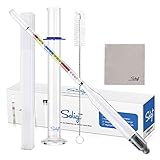
- Complete Set for Home Brewer- Package includes 1*triple scale hydrometer, 1*clear glass cylinder test jar, 1* bottle brush made of stainless steel, 1*sturdy storage case to protect hydrometer from breakage, 1* instruction sheet with conversion chart and 1*microfiber cleaning cloth.
- Accurate & easy to read- Get the perfect measuring result with our high quality hydrometer which comes with detailed markings on specific gravity from 0.99-1.17, brix /balling from 0-35 and potential alcohol by volume from 0%-20% and our glass test tube which you can easily read - for nearly all of your spirit-making needs!
- Save precious liquid- You only need 125ml rather than 250ml beer or wine for testing. Our jar is with narrow opening plus tall enough to help you get the best readings. Waste less, drink (or share) more!
- Perfect packaging- All of our home brewing supplies and equipment are packed in heart designed package box and is drop tested to minimize breakage, which makes it a perfect gift for your friends, family and colleagues.
Wine Australia estimated the economic impact of the 2020 bushfires across the listed Australian regions at $665 million. The same material separately cites a $664 million estimate for 2019/20 across New South Wales, Victoria and South Australia; these figures describe different scopes and should not be combined.
How to tell whether grapes may carry smoke risk
No single test answers “How can you tell if grapes have smoke taint?” The strongest assessment uses several lines of evidence, each with a defined limitation.
1. Map and separate suspect blocks
Record the fire date, wind direction, visible smoke conditions, duration, distance, terrain and vineyard operations. Keep fruit from visibly different exposure zones separate whenever practical. Do not blend a suspect block into a clean lot before it has been assessed; blending removes the ability to compare outcomes and can spread an avoidable problem.
2. Take a representative sample
Sample throughout the relevant block rather than picking only the easiest or most damaged vines. Include interior and edge rows when conditions differed. Follow the receiving laboratory’s current container, temperature, timing and shipping instructions. Maintain chain-of-custody records showing who collected, handled and submitted each sample. Crop-insurance claims may impose additional documentation requirements.
Rank #3

- Acid testing kit for wine
- Easy to Use
- Includes standard sodium hydroxide solution, acid indicator solution, calibrated syringe, test tube and instructions
- Sufficient for 50 to 100 tests
3. Test grapes, juice or wine at the appropriate stage
Laboratories may measure free volatile phenols, bound (glycosylated) forms, or both, in grapes, juice or finished wine. Guaiacol and 4-methylguaiacol are commonly used exposure markers, but OSU Extension cautions that results for those compounds alone do not correlate reliably with sensory perception. A grape result can also differ from a post-fermentation wine result because fermentation and aging release bound compounds.
4. Run a small-lot microfermentation
A microfermentation exposes the sample to the same kind of extraction that can reveal risk in a commercial wine. OSU’s published protocol uses a five-gallon stainless-steel or food-grade bucket for sampled berries and presses the microferment after five full days of skin contact. That is a described protocol, not a universal recipe: use the receiving laboratory or winery’s current instructions for fruit mass, yeast, temperature, pressing and storage.
Keep leaves, stems and other non-grape material out of the fermenter. Label every vessel with block, variety, date and sample code. Preserve an untreated reference when possible so tasters can distinguish smoke character from normal variety, fermentation or oak aromas.
Do these 3 things before closing this tab:
1Fix the driver behind crashes, sound loss and screen glitches2Clear out junk files and repair common Windows errors3Scan for outdated or missing drivers - takes under a minute5. Conduct controlled sensory evaluation
Use multiple screened tasters rather than relying on one person. Present coded samples in randomized order, repeat assessments on another pass, and leave at least two minutes between samples to reduce carryover. Compare with reference wines of the same variety and style when available. Record descriptors, intensity and agreement among tasters.
Rank #4

- Tailored for Wine-Making: The hBARSCI pH Test Strips are ideal for home winemakers, measuring the precise 2.8 to 4.4 pH range essential for perfect wine acidity. Use these wine pH test strips to ensure every batch hits the right note
- Generous 100 Strip Supply: With 100 pH strips per vial, this kit is perfect for repeated batch testing, minimizing the need for constant restocking. Enjoy the convenience of frequent testing without interruption, keeping your wine-making process smooth
- Easy pH Assessment: Simply place a drop of wine on the pH paper and match the color to the chart for an accurate acidity reading. These pH testing strips provide a straightforward method for home winemakers looking to craft the finest wines
- Durable Design: Crafted with durable paper, these multicolor strips are built to withstand repeated use in any home brewing setup. The water-resistant color chart ensures reliable pH readings across repeated tests
- Perfect for Enthusiasts: Whether you're testing wine or water, these versatile strips are a must-have for any science enthusiast. They make an excellent gift for wine lovers and home brewers who appreciate precision and quality in their tools
Sensory testing is inherently subjective, and people differ in smoke sensitivity. A panel can therefore disagree even when chemistry is identical. That disagreement is useful information about uncertainty, not proof that one side is wrong.
How to interpret laboratory results
| Result pattern | Practical interpretation |
|---|---|
| Low markers and no smoke in microferment | Lower apparent risk under the tested conditions; continue normal quality checks because sampling and later release can still matter. |
| Markers detected but no panel consensus | Exposure is established or suspected, but sensory consequences remain uncertain. Consider retesting, another microferment or a different wine matrix. |
| Markers and clear smoke in microferment | Treat the lot as high risk. Keep it separate and decide whether a limited commercial trial, a different style or disposal is economically justified. |
| Strong sensory smoke with modest marker values | Do not dismiss the panel. Matrix effects, unmeasured compounds, bound forms or individual sensitivity may explain the mismatch. |
| High marker values in a barrel-aged wine | Interpret in context: some volatile phenols can arise naturally from the variety or oak, so compare against an appropriate control. |
The cited sources provide no universal laboratory concentration that guarantees acceptable wine for every variety, region or style. Treat a numerical result as one input to a decision, not as a legal or sensory threshold.
Prevention and lot-management steps
- Separate fruit by risk. Keep exposed blocks, rows or harvest dates distinct until results support blending.
- Keep non-grape material out. Leaves and other plant material can add unwanted smoke-related material and complicate interpretation.
- Reduce early skin contact. For whites, whole-cluster pressing can limit extraction compared with extended maceration.
- Match the product style to the risk. A low-extraction white may be more workable than a deeply extracted red, but no style is automatically safe.
- Consider aroma-balancing tools cautiously. Yeast strains that enhance fruity character, or carefully selected oak or oak chips, may reduce the perception of smoke. They do not remove the compounds and can change the intended style.
Document each lot’s exposure history, analytical results, sensory notes, processing choices and final disposition. That record supports consistent blending decisions, buyer communication and any insurance or regulatory paperwork.
The Tool Desk
Outbyte PC Repair FREERepair Windows errors before they cause bigger problemsFix Now →Outbyte Driver Updater FREEFix the driver behind crashes, sound loss and screen glitchesFind Drivers →Can smoke taint be removed from wine?
“Removed” is too strong a promise for current treatments. Reverse osmosis and spinning-cone systems can reduce free smoke aroma compounds, but smoke character may reappear over time as bound compounds release. Treatments also require specialist equipment and can alter alcohol, aroma balance or texture.
Best Value

- Test to control and monitor Malic Acid and completion of Malolactic Fermentation in wines
- Quantitatively measures from from 0 - 500 mg/L
- Every kit comes with ten strips and ten samplers and requires no extra chemicals or instrumentation for accurate readings
- Accuvin strips have a unique construction enabling the removal of pigments from red wines making them usable on any wine
- No sample prep required, enabling you to get actionable results in a matter of minutes!
Wine Australia’s project found activated carbon treatment of white juice before fermentation to be the most successful of the approaches it evaluated. Carbon products differ, and performance depends on the juice or wine matrix, dose, contact conditions and filtration. Carbon can strip desirable aroma and color as well as smoke compounds, so bench trials and sensory checks are essential.
Options for red wine remediation are more limited because red wines derive color, tannin and structure from skin contact. Any treatment can affect flavor, color, style, quality and cost. A practical trial should compare untreated wine with one or more treatment doses, then reassess after storage rather than judging only immediately after processing.
A decision path for growers and winemakers
- Define the lot. Identify variety, block, harvest date, intended wine style and documented smoke conditions.
- Hold fruit separately. Do not blend while exposure and sensory risk are unresolved.
- Collect representative samples. Use the laboratory’s current protocol and preserve chain of custody.
- Order a panel suited to the question. Ask whether the lab measures free compounds, bound compounds, or both, and whether it accepts grapes, juice or wine.
- Make a controlled microferment. Follow a documented protocol, including the planned skin-contact period.
- Run a coded sensory panel. Use multiple tasters, reference wines, repeated passes and two-minute breaks.
- Integrate the evidence. Weigh exposure history, chemistry, sensory results and the target wine style together.
- Choose a commercial path. Options include a limited trial, low-extraction processing, treatment trials, blending only after compatibility testing, or rejecting the lot.
- Recheck treated or aging wines. Because smoke character can return, evaluate after the planned storage interval as well as immediately after treatment.
What remains uncertain
Questions about uptake through berries and leaves, varietal differences, ash effects, exposure-risk models, sprays and improved sampling remain active. A USDA Agricultural Research Service project listed for August 1, 2026 through August 31, 2028 is examining those topics along with processing approaches. Its scope confirms that no universal smoke dose, exposure duration or marker value currently guarantees an acceptable wine.
For consumers, the practical implication is that a bottle from a smoke-affected region is not automatically tainted, and a bottle with measurable markers is not automatically undrinkable. For growers and winemakers, the defensible approach is evidence from the specific lot and intended style: representative samples, controlled fermentation, trained sensory work and appropriately interpreted laboratory data.
Quick Recap
Product prices and availability are accurate as of the date/time indicated and are subject to change. Any price and availability information displayed on Amazon at the time of purchase will apply.

