
Outdated Drivers Are Slowing You Down
One free scan finds every outdated or missing driver and matches the right update for your exact hardware.Free scan · exact hardware matchPC Slower Than It Used to Be?
A free scan shows the junk files, broken settings and background clutter dragging Windows down - then fixes them in one click.Free scan · Windows 10 & 11iTechGuides is reader-supported. When you buy through links on our site, we may earn an affiliate commission. As an Amazon Associate I earn from qualifying purchases. Learn more
The most reliable strategy is a modest, automatic setback tied to your routine: keep the home at the lowest heating and highest cooling temperatures everyone can comfortably tolerate, then set it back 7–10°F during absences of about eight hours or longer. The U.S. Department of Energy (DOE) says that approach can save as much as 10% a year on heating and cooling costs. Use a smaller setback when schedules are unpredictable, and verify compatibility before changing settings on a heat pump, variable-capacity, multi-stage, or zoned system.
Start with settings people will actually keep
A thermostat saves energy only when the household follows its schedule. If someone repeatedly taps “hold,” raises the heat, or lowers the cooling setpoint, the program is too aggressive, mistimed, or failing to account for a room that feels different from the thermostat’s location.
DOE’s 2024 guidance gives a useful starting point for winter: 68–70°F while people are home and awake. DOE also says that, when you are away, setting the temperature back 7–10°F for at least eight hours can save as much as 10% annually on heating and cooling costs. That is a potential maximum, not a guarantee for every home.
Free tools Windows power users keep installed
One-click scans. No signup required.
| Situation | Practical starting setting | How to refine it |
|---|---|---|
| Home and awake in winter | 68–70°F | Lower it if occupants remain comfortable; add clothing or local room heat before raising the whole-house setpoint. |
| Home and awake in summer | The highest cooling setpoint occupants can comfortably tolerate | Increase it gradually and use fans where appropriate. Comfort, humidity, and health needs take priority. |
| Sleeping | A modest change from the occupied setting | Use bedrooms or room sensors to avoid conditioning empty parts of the house. |
| Away for about eight hours or more | 7–10°F warmer in cooling season or cooler in heating season | Use the smaller end of the range when return times vary or recovery is slow. |
| Short errand | Usually leave the occupied setting in place | A brief setback may save little and can cause unnecessary recovery cycles. |
DOE also states that Americans may choose whatever temperature they want. The 68–70°F winter value and the 7–10°F away change are guidance, not a legal or health requirement. Older adults, infants, people with medical conditions, pets, and homes with humidity problems may need different limits.
#1 Best Overall

- Save up to 23% every year on heating and cooling costs, adjusts to your set schedule to save energy when you’re gone and optimize comfort when you’re home. Compared to a hold of 72
- Compatible with 85% of systems, check your system’s compatibility with our online ecobee Compatibility Checker on the ecobee support page
- Change your temperature by easily tapping the color touchscreen or using the ecobee app. Plus, free software upgrades ensure you get the best out of your Smart Thermostat Essential, for years to come
- Automatically adjusts to your set schedule to save energy when you’re gone and optimize comfort when you’re home. Keep track of your energy consumption when you're on the go on the ecobee app
- Easy DIY install. No C Wire, no problem. Get the ecobee Power Extender Kit (PEK) for homes without a C-Wire and keep your walls looking nice with our trim kit – both sold separately
Build a schedule around real occupancy
Automation works best when it reflects when rooms are used, not an idealized weekday. Make one change at a time so you can tell whether comfort and runtime improved.
- Log one representative week. Note when the first person wakes, leaves, returns, goes to bed, and uses particular rooms. Include weekends, remote-work days, and regular exceptions.
- Set the occupied boundaries. Choose the lowest winter heating temperature and highest summer cooling temperature that everyone accepts. Start near 68–70°F for winter, then adjust in 1°F increments.
- Create occupied, sleep, and away periods. Give each period enough time to match the routine. Do not schedule a setback for a 30-minute trip if the system needs most of that time to recover.
- Apply the 7–10°F setback only to long absences. An eight-hour absence is the DOE benchmark. Use a smaller change if the house is slow to recover, occupants return unpredictably, or the equipment is a heat pump or variable-capacity system.
- Add preconditioning. Let the thermostat begin recovery early enough to reach the occupied setting by arrival. A gradual recovery is usually more comfortable and less demanding than a sudden manual jump.
- Test overrides. Keep the schedule running for at least several comparable days. If people override it, identify whether the problem is timing, a cold or hot room, sensor placement, or an unrealistic setpoint.
- Review results monthly. Check runtime and energy reports alongside outdoor weather, utility rates, and occupancy. These reports are directional; they cannot isolate thermostat savings from a mild month, a rate change, or a different household routine.
Use smart features as safeguards, not substitutes for a schedule
Learning schedules
Learning thermostats observe adjustments and propose recurring periods. Approve only patterns that match your actual routine. A one-time late night, holiday, or sick day can otherwise become an unwanted permanent change.
Geofencing
Geofencing changes the mode when a household member’s phone leaves or enters a defined area. Treat it as a supplement to a schedule. Confirm that every relevant household member is represented, and account for phones left at home, children without phones, guests, and people who work in the house.
Recommended Free Tools
Rank #2
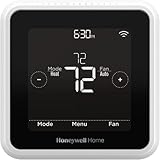
- High use of the scheduling feature of the T5 thermostat saved customers between 8 and 16% on heating and cooling bills. Dollar savings range based on nationwide average annual single-family detached home's heat and cooling bills; actual savings varies based on consumption.
- Save Energy and Get Rewarded. Check with your energy provider about available energy savings rebates to save on your purchase. Plus, eligible customers can enroll in their local Utility's "DEMAND RESPONSE PROGRAM" which can reward you for allowing the utility to slightly adjust your AC or furnace temperature settings when there is high energy demand.
- 7-Day Flexible Scheduling or Location Based Temperature Control. It’s your choice. 7-day scheduling programs your thermostat. Geofence technology helps make you comfortable by using your smartphone’s location to know when you’re away and when you return.
- Auto Home and Away Mode. Enjoy ideal temperatures at home, then save when away.
- ENERGY STAR certified. Help save energy, track your heating and cooling with monthly energy reports and get personalized tips on reducing energy use.
Occupancy and room sensors
Occupancy sensors can avoid conditioning empty zones, while room sensors can prevent a hallway thermostat from misrepresenting a bedroom. Check how the thermostat combines multiple readings: some average sensors, some prioritize the active room, and some use sensors only during selected periods. Place sensors away from sunlight, drafts, supply registers, exterior doors, and heat-producing electronics.
Vacation mode
Vacation mode is appropriate for a known multi-day absence. Set a safe temperature and a return time, and protect plumbing where freezing is a risk. Do not use an extreme temperature merely to chase a theoretical maximum; moisture, frozen pipes, and a long recovery can cost more than the avoided conditioning.
Check HVAC compatibility before changing settings
Compatibility is more than matching two wires. Before buying or installing a thermostat, identify the system type, number of heating and cooling stages, heat-pump configuration, zones, line-voltage versus low-voltage control, accessory equipment, and whether a C-wire supplies continuous power.
Rank #3

- PRIVACY PROTECTION*: Sensi won’t sell your personal information to third parties
- EASY DIY INSTALLATION: Use the built-in level and step-by-step app instructions for a quick installation. Works with HVAC equipment found in most homes. Common wire (c-wire) is not required in most applications
- SAVE ABOUT 23% ON HVAC ENERGY*: The ENERGY STAR-certified Sensi smart thermostat can help you save energy with features like flexible scheduling, remote access and usage reports
- SIMPLE CONFIGURATION: Looks and feels like a thermostat. Has buttons and fits the same space as a traditional thermostat so you don’t have to patch and paint your walls
- SMART MAINTENANCE: Sensi can help monitor the performance and efficiency of your HVAC system by delivering valuable usage reports, alerts about your equipment, and maintenance reminders like filter replacement
| Check | Why it matters | What to verify |
|---|---|---|
| HVAC type | Heat pumps and conventional furnaces use different control logic. | Whether the thermostat explicitly supports your equipment and emergency or auxiliary heat. |
| Stages | Single-, multi-stage, and variable-capacity systems recover and modulate differently. | Supported heating and cooling stages, compressor protection, and staging controls. |
| Zoning | A zoned system may need a thermostat designed for the zone controller. | Manufacturer requirements for each zone and damper panel. |
| Power | Some smart thermostats need continuous 24-volt power. | C-wire presence, an approved adapter, or a professional wiring solution. |
| Voltage | Line-voltage electric heaters are not interchangeable with standard low-voltage thermostats. | Voltage and load rating on the existing control and equipment documentation. |
| Installation support | Incorrect wiring can damage controls or disable safety features. | Manufacturer instructions and whether a qualified installer is required. |
Heat pumps and variable-capacity equipment need special care
DOE cautions that newer variable-capacity equipment may respond differently to setbacks. Recovery can trigger a high-capacity, lower-efficiency mode, reducing or eliminating the expected benefit of a large temperature change. ENERGY STAR likewise advises following the equipment and thermostat manufacturer’s guidance for variable-capacity heat pumps and air conditioners.
Do these 3 things before closing this tab:
1Clear out junk files and repair common Windows errors2Fix the driver behind crashes, sound loss and screen glitches3Repair Windows errors before they cause bigger problemsAfter a change, watch whether the system runs for unusually long periods, switches to auxiliary heat, produces temperature swings, or fails to reach the target. If those symptoms appear, reduce the setback, lengthen recovery, or have the installer review staging and control settings.
What savings are realistic?
Heating and cooling are a major household expense. ENERGY STAR’s consumer guidance says they account for almost half of the average American household’s annual energy bill and can exceed $900 a year. Those are national-average context figures, not a prediction for a particular home.
Rank #4

- EASY DIY INSTALLATION: Do it yourself fast with a built-in level and simple step-by-step instructions. Works with the HVAC equipment found in most homes
- COMMON WIRE REQUIREMENTS: Common wire(C-Wire) required for heat pump and heat/cool only systems. C-wire not required on most systems
- SAVE ABOUT 23% ON HVAC ENERGY: ENERGY STAR-certified and packed with features that help you save money, including flexible scheduling, geofencing, remote access and usage reports
- PRIVACY PROTECTION: Sensi won’t sell your personal information to third parties or leverage your thermostat activity data for targeting or advertising purposes
- CONTROL FROM ANYWHERE: The top-rated mobile app for Android and iOS devices makes it easy to control your comfort from a smartphone or tablet
ENERGY STAR reports average savings of approximately 8% of heating and cooling bills—about $50 per year—for an ENERGY STAR smart thermostat. The organization says actual savings vary with climate, occupancy, comfort preferences, and HVAC equipment. An always-occupied home generally has fewer opportunities to reduce runtime than a home empty every weekday.
Certification is based on aggregated field data rather than a promise for each installation. ENERGY STAR’s Smart Thermostats Key Product Criteria include a lower-bound weighted national reduction of at least 8% in heating runtime and 10% in cooling runtime; the weighted 20th-percentile thresholds are 4% for heating and 5% for cooling. Runtime reduction is not the same as a guaranteed bill reduction because weather, rates, equipment efficiency, and fuel prices change.
Diagnose comfort problems before abandoning automation
| Symptom | Likely cause | Adjustment |
|---|---|---|
| House is still cold or hot at arrival | Recovery starts too late or the setback is too large. | Start recovery earlier and use a smaller setback. |
| Frequent manual overrides | Setpoints or period times do not match occupants. | Move the period, change it by 1°F, or remove that period. |
| One room is uncomfortable | Thermostat location or airflow does not represent the room. | Use a compatible room sensor, adjust airflow, and shield the sensor from drafts or sun. |
| Auxiliary heat runs during recovery | Heat-pump staging or an aggressive setback is forcing rapid recovery. | Reduce the setback, extend recovery, and follow the equipment maker’s staging guidance. |
| Runtime rose after automation | Weather, occupancy, rates, or equipment behavior changed. | Compare similar weather periods and inspect runtime by mode before judging the schedule. |
| Thermostat loses power or reboots | Insufficient C-wire power or incompatible wiring. | Stop experimenting with wiring; use the approved adapter or a qualified technician. |
Choose a thermostat by control quality, not the largest feature list
An ENERGY STAR certified smart thermostat is the most relevant buying category for readers seeking independently field-tested savings. ENERGY STAR says certification is based on actual field data. Use its Product Finder to identify certified models, then verify the installation details for your home.
Best Value

- ENERGY STAR certified smart thermostat for home that helps you save energy and stay comfortable.Connectivity : Wi-Fi - 802.11b/g/n 2.4 GHz, 802.11a/n 5 GHz Wi-Fi., Wireless interconnect : Bluetooth Low Energy Please refer to the product description section below for all applicable legal disclaimers.Product note: You can also check your system’s compatibility before purchasing a Nest thermostat with our online Nest Compatibility Checker on the Google Nest support page
- The Nest Thermostat is designed to work without a C wire in most homes, but for some systems, including heating only, cooling only, zone controlled, and heat pump systems, you’ll need a C wire or other compatible power accessory
- Nest Thermostat turns itself down when you leave, so you don’t waste energy heating or cooling an empty home. Lock feature: No
- Programmable thermostat that lets you create an energy efficient schedule in the Google Home app on your Android or iPhone
- Remote control lets family members change the thermostat temperature from anywhere on a phone, laptop, or tablet[1]
| Decision area | Questions to ask |
|---|---|
| HVAC compatibility | Does it support your heat pump, stages, zones, auxiliary heat, and voltage? |
| Scheduling and learning | Can you edit periods directly, disable unwanted learning, and set different weekday and weekend routines? |
| Geofencing and occupancy | Can all household members participate, and does the system handle phones left behind? |
| Room sensors | Are temperature and occupancy sensors supported, and can you choose which rooms matter during sleep? |
| Manual control | Can a person make a temporary change without destroying the programmed schedule? |
| Utility programs | Is the model eligible for a local rebate or demand-response program, and what enrollment controls or event limits apply? |
| Installation | Is a C-wire required, is an adapter approved, and is professional installation recommended? |
| Privacy and data controls | What occupancy, location, and usage data are collected, and can sharing be limited? |
| Total cost | What remains after any location-specific rebate, including sensors, adapters, and installation? |
Utility rebates and demand-response eligibility are location-specific and can change. Confirm the current terms with your utility before assuming a discount or enrollment payment.
Commission the system after installation
- Confirm the displayed indoor temperature against a reliable thermometer in the same room.
- Verify that heating, cooling, fan, emergency heat, and any connected accessories respond correctly.
- Set the clock, time zone, home location, and household accounts accurately.
- Enter occupied, sleep, and away periods before enabling learning or geofencing.
- Run a short test of each sensor and confirm that the thermostat uses the intended room during each period.
- Enable vacation mode only after checking the safe minimum and maximum temperatures for the building and equipment.
- Record baseline runtime and comfort for several days, then compare after one schedule change.
The best setting is the one that lowers conditioning demand while remaining invisible in daily life. Start with DOE’s modest, eight-hour setback, automate only the occupancy patterns you can verify, and let comfort feedback determine whether the schedule should be smaller, earlier, or removed.
Quick Recap
Product prices and availability are accurate as of the date/time indicated and are subject to change. Any price and availability information displayed on Amazon at the time of purchase will apply.

