
iTechGuides is reader-supported. When you buy through links on our site, we may earn an affiliate commission. As an Amazon Associate I earn from qualifying purchases. Learn more
There is no single “seller financing” product for pre-listing repairs. In practice, the phrase can mean that the homeowner pays with cash or home-equity borrowing, a listing agent advances money, a buyer receives a repair-related concession after making an offer, or a lender-approved escrow funds work after closing. Those arrangements have different repayment triggers, risks, and rules.
For a U.S. seller, the safest choice usually starts with an itemized repair scope, written financing terms, and a plan that still works if the listing is delayed or the sale falls through. State law, loan-program rules, appraisal results, and the exact contract control what is permitted.
What “seller financing” means in this repair context
In ordinary real-estate usage, seller financing often means the seller lends money to the buyer to purchase the home. That is not the focus here. “Seller financing for pre-listing repairs” is an ambiguous phrase that may describe several very different transactions.
- Owner-funded repairs: You use savings, a home-equity loan, or a home-equity line of credit (HELOC) before listing.
- Agent or broker advance: A listing professional pays a contractor and expects reimbursement from sale proceeds.
- Buyer concession: You list or negotiate a sale, then give the buyer a credit or contribution that may help cover work the buyer will undertake.
- Post-closing repair escrow: The lender holds money after closing for specifically permitted postponed improvements.
A buyer-funded escrow after closing is not the same as financing repairs before marketing the property. The sections below keep those choices separate so you can identify who supplies the money, when repayment occurs, who controls the work, and what happens if the transaction fails.
#1 Best Overall

- 【Lightweight Cordless Drill】The 8V drill set can be used for drilling in wood and plastic, and tightening/loosening screws.Press the switch to adjust the speed of the electric drill, the maximum no-load speed of the mini drill is 800r/min. The net weight of the hand drill is only 1.65 pounds, and it is easy to operate with one hand.
- 【Rechargeable Battery】This drill is supplied with a type-C 1.5A charging cable.A universal charger or USB output(5Vd.c) can charge the small drill.The battery indicator light is at the back of the drill.
- 【Be a Handy Women】This cordless drill combo kit are made of alloy steel, chrome plated to prevent corrosion, grip is anti-skid and comfortable.It is a good tool sets for women to do general DIY.
- 【Multi-functional Tool Kit with Drill】This tool set contains the most practical and advanced tools for design, repair or maintenance. This tool box is perfect for decoration, furniture assembly, drilling, cutting, gardening, office or daily home maintenance.
- 【Package Included】8V Cordless Drill, hex nut screwdriver, Screwdriver, precision Screwdriver, twisted drills, hex key, magneitc bits holder, 50L bits, 25I bits, 1/4" sockets, Measure Tape Ruler, fasteners, claw hammer, adjustable wrench, Utility Knife Blade, Utility knife, Long Nose Pilers, User Manual.
Option 1: Pay cash or borrow against your home equity
Cash from savings
Cash avoids interest, application fees, liens, and a repayment obligation tied to the sale. It also leaves less liquidity for moving expenses, a replacement home, taxes, insurance, emergency repairs, or a contractor overrun. Set a maximum repair budget before authorizing work, and keep a reserve rather than committing every available dollar.
Home-equity loan
A home-equity loan normally provides a lump sum and usually has a fixed interest rate. The home secures the debt. If you stop making required payments, foreclosure is possible even if the house is listed for sale. Ask each lender for the complete payoff calculation at several possible sale dates, not just the advertised monthly payment.
HELOC
A HELOC generally provides a revolving credit line with an adjustable rate. The payment can change as the balance or rate changes, and the plan may have a draw period followed by a repayment period. The Consumer Financial Protection Bureau says some plans may charge an application fee, origination or other opening costs, appraisal and title charges, annual or inactivity fees, cancellation fees, and conversion fees. A particular HELOC may charge only some of these, so rely on the written disclosure for that plan.
Crashes, No Sound, or Screen Glitches?
Random freezes, missing sound and display glitches usually trace back to one bad driver. Find and replace yours safely.Free scan · under a minuteWindows Errors? Fix Them Before They Spread
Repair common Windows errors and clear accumulated junk for a smoother, more stable PC - no reinstall needed.Free scan · no reinstallBecause both products are secured by the property, compare the expected balance at closing with your available sale proceeds. A lower initial rate does not necessarily mean a lower total cost. Include interest through the payoff date, all lender fees, recording or title charges, and any fee for early closure or converting a balance.
When equity borrowing can make sense
- The repair is likely to improve marketability or protect value and you can carry the debt if the home takes longer to sell.
- You have enough equity and income to satisfy the lender’s underwriting requirements.
- The contractor’s scope and completion date are clear enough to estimate the amount you will actually draw.
- You have compared the loan payoff with the likely net sale proceeds after commissions, taxes, existing mortgages, and other liens.
Option 2: Ask the listing agent or broker to advance repair money
An agent advance can appear convenient: the contractor is paid now and the agent is reimbursed from the closing statement. However, the sale may never close. The property could be withdrawn, a buyer could terminate under a contingency, financing could fail, or title problems could delay the transaction. The agent would then be trying to collect from a seller who may not have cash available.
Rank #2

- HIGH QUALITY&STANDARDS:Forged from high-quality steel and finished in high-polish chrome,strength, durability, anti-corrosion protection.All the tools meet or exceed ANSI critical standards
- COMPLETE VARIETIES:Contains tools needed for most small repairs and basic DIY projects around the house.Perfect for Handyman’s, repairmen, construction workers, mechanics, body shops etc. also a great tool set to have at home, garage and the workshop
- INCLUDES:Comprehensive assortment of professional-grade wrenches, ratchets, a complete range of 1/4 inch and 3/8inch metric-sized sockets and precision screwdriver, hammer, tape measure, pliers, wrench,and etc. The 72-tooth ratchet easily shift to change direction by flick of 5-degree switch.Variety of 1/4-inch screwdriver bits: Phillips, slotted, square, star and pozi.Also includes soft-grip handle on screwdriver, plier, srtipper and hammer provides excellent comfort and control
- EASY TO CARRY&STORAGE:Housed in a handy blow-molded case for easy tool storage and portability. Its sturdy interior and organizer keeps tools in place
- DESIGN OF GREAT ORGINALITY:Black case makes it dirt-resistant.Diamond shape design makes it unique and fashion .Case size:17.5"*13.5"*3.94".Net Weight 12.78 lb
NC REALTORS® states, “We do not recommend that listing agents advance repair costs for their seller clients.” Its explanation identifies two concerns: the risk of nonpayment if there is no closing, and a possible conflict in the agent’s objectivity. An agent who has money at risk may feel pressure to favor advice that preserves a particular deal, even when a later inspection, appraisal, or disclosure issue should be addressed differently.
This is professional-association guidance, not a nationwide prohibition. State licensing rules, brokerage policies, and the written listing agreement may impose additional limits. If an agent proposes an advance, obtain independent legal advice before signing and insist that the agreement specify:
The Tool Desk
Outbyte PC Repair FREERepair Windows errors before they cause bigger problemsFix Now →Outbyte Driver Updater FREEScan for outdated or missing drivers - takes under a minuteDriver Scan →- the exact amount and whether it includes contractor invoices, management fees, interest, or other charges;
- the event that triggers repayment and the due date if the listing ends or the sale is canceled;
- whether the amount becomes a lien, is secured by another instrument, or is merely an unsecured debt;
- who selects and supervises the contractor, approves changes, and bears overruns;
- how disputes, incomplete work, contractor liens, and a delayed closing will be handled; and
- how the advance affects the agent’s continuing duties and your ability to terminate the listing.
Option 3: Negotiate a buyer concession after an offer
Instead of borrowing before listing, a seller can negotiate a contribution toward the buyer’s closing costs or other permitted expenses. The buyer then decides whether to perform the repair, obtain a contractor after closing, or use the credit for an allowed cost under the loan program and contract.
The CFPB explains that a credit reduces the amount the buyer must bring to closing; it does not erase the cost of work the buyer performs afterward. A concession therefore shifts the timing and control of the repair rather than making the expense disappear. The buyer may accept a lower effective price, request a larger credit, or demand that a particular defect be repaired before closing.
Conditions that can limit a concession
- The purchase agreement must describe the credit accurately. Undisclosed side agreements can create contract and lending problems.
- The buyer’s loan program may cap or restrict seller contributions, and the lender must approve the final terms.
- The appraiser may conclude that the agreed price is not supported, forcing a renegotiation or additional cash from the buyer.
- A credit may not be usable for a repair that the lender requires to be completed before closing, such as a safety or habitability issue.
- The buyer, not the seller, generally controls contractor selection and the post-closing schedule once the transaction closes.
Have the buyer’s lender and the closing professional review the proposed language before you rely on a credit. A concession is not a substitute for disclosing known defects or complying with a lender’s completion requirement.
Rank #3

- 65-piece tool set; carrying case included
- Includes 8 piece SAE and 8 piece metric hex keys (Allen Wrenches)
- 13-ounce fiberglass hammer; 16-foot tape measure with auto locking mechanism; 9-inch torpedo level; retractable 6-3/4-inch utility knife with 8 snap-off blade sections
- Includes both standard slip joint pliers with two locking positions as well as needle nose pliers with 1-inch jaw
- Chrome-Vanadium Phillips and flat head screwdrivers; 5 inch long ¼-inch ratchet with 8 SAE sockets (1/32, 3/16, 7/32, ¼, 9/32, 5/16, 11/32, 3/8)
Option 4: Use a post-closing repair escrow only when the lender permits it
A postponed-improvement escrow is a financing arrangement in which work is completed after closing under written lender conditions. It is distinct from paying for repairs before marketing and is not available for every property, loan, or defect.
Do these 3 things before closing this tab:
1Clear out junk files and repair common Windows errors2Fix the driver behind crashes, sound loss and screen glitches3Repair Windows errors before they cause bigger problemsFannie Mae’s Selling Guide permits certain postponed improvements subject to its requirements. In the provision reviewed for 2026, the lender must establish a completion escrow and withhold funds equal to 120% of the estimated completion cost, among other conditions. The 120% figure is a requirement for specified Fannie Mae circumstances, not a universal formula for every repair holdback or lender.
Questions to ask before relying on an escrow
- Does the specific loan program permit the improvement to be postponed?
- Who prepares and approves the estimate, plans, permits, and contractor documentation?
- Where is the escrow held, and who controls disbursements?
- What inspection, invoice, lien-waiver, and completion evidence is required?
- What deadline applies, and what happens if weather, permitting, or a contractor dispute causes a delay?
- Who pays an overrun, and who receives any unused balance?
Do not advertise a property or promise a buyer that an escrow will be accepted until the lender confirms the arrangement in writing. A lender’s approval for one transaction does not establish a general right to use the same structure elsewhere.
Compare the routes before choosing one
| Route | How money is supplied | Cost information established by available guidance | Repayment trigger | Does the home secure debt? | Risk if sale is delayed or canceled | Who controls the repair |
|---|---|---|---|---|---|---|
| Cash | Seller’s savings | No national repair-cost average is established; obtain itemized contractor estimates. | No loan repayment; cash is spent when invoices are paid. | No | Seller bears the sunk cost and any overrun. | Usually seller, subject to contractor agreement. |
| Home-equity loan | Lump-sum secured loan | Rate, fees, term, and payoff depend on the written lender offer; no representative national rate is established. | Scheduled payments and payoff, often at sale. | Yes | You still owe the balance if the listing or closing fails. | Seller. |
| HELOC | Revolving secured credit line | Possible application, opening, appraisal, title, annual, inactivity, cancellation, and conversion fees; actual charges depend on the plan. | Payments during the plan and payoff when the balance is closed. | Yes | Variable rates and an outstanding balance continue while you wait. | Seller. |
| Agent advance | Agent, broker, or related party pays initially | No standard national advance fee or amount is established. | Usually on closing; the written agreement must address a failed sale. | Not necessarily; security depends on the contract and state law. | Agent may seek repayment even without a closing; potential advice conflict. | Must be defined in writing; agent involvement can affect objectivity. |
| Buyer concession | Buyer accepts a contract credit or contribution | Amount is negotiated; lender and appraisal rules may limit it. | Reflected in the closing statement rather than a seller loan. | Not a seller debt, although the buyer’s mortgage rules apply. | Deal may be renegotiated or fail if the lender rejects the credit. | Usually buyer after closing. |
| Post-closing escrow | Lender-controlled holdback | Fannie Mae specifies 120% of estimated completion cost in certain permitted cases; other programs may differ. | Escrow disburses after required completion evidence. | Part of the buyer’s financing structure. | Strict deadlines and documentation; approval is not universal. | Set by the lender, contract, and escrow instructions. |
Calculate the real cost, not just the repair invoice
Start with the contractor’s itemized scope: labor, materials, permits, demolition, disposal, inspections, and tax. Obtain at least one written estimate detailed enough to compare line by line. Ask what is excluded and how change orders are approved. Because no cited source establishes a national “typical” repair price, a local estimate is more useful than an online average.
For borrowed money, request a written disclosure showing the annual percentage rate or applicable rate, every upfront and recurring fee, draw and repayment periods, payment schedule, early-closure conditions, and the payoff method. Model at least three sale dates: the expected closing, a delay of several months, and a scenario in which the property does not sell during the listing period. Add carrying costs such as utilities, insurance, taxes, and mortgage payments while waiting.
Rank #4
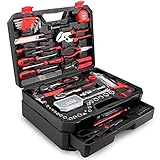
- [Toolbox Included] - Includes 1-Drawer storage box with independent sliding drawer to enlarge the capacity more than common toolbox. Assortment of necessary tools are in one tool chest, durable plastic case with internal molded compartments to keep each component protected and easily accessible. All tools meet or exceed ANSI standard.
- [High Quality Material] - Made of high-quality steel and finished in heat treated chrome, durable and corrosion resistance. Handles made of TPR material, comfortable for grip.
- [Muti-purpose Tools Kit] - 325Pcs tools set for most small repairs and DIY projects around the house. It is perfect for handyman, construction workers, mechanics, work shops etc. This tool set is also a good gift choice for family member, friends, partners, etc.
- [Complete Varieties] - Comprehensive assortment of professional-grade wrenches, a complete range of 1/4 inch and 3/8 inch metric-sized sockets and precision screwdrivers, hammer, tape measure, pliers etc. The 72-tooth ratchet. Variety of 1/4-inch screwdriver bits: Phillips, slotted, square, star and pozi. Soft-grip handle on screwdrivers, pliers, srtipper and hammer provides excellent comfort and control.
- [Great Gift Choice] -This tool kit is easy to carry and stock. It is a good gift choice for men and women. Also this tool set is perfect for Father's Day, and is a great option as gift for Dad, Boyfriend & Brothers when chrismas.
For an agent advance, calculate the amount owed if the listing is canceled, expires, or changes brokers. For a buyer concession, compare the credit with the likely price reduction and with the cost of completing the work yourself. For an escrow, identify the amount the lender will withhold and the cash you would need if the estimate proves too low.
Independent reader supportYour contribution helps us test, update, and keep practical guides available for everyone.A practical decision process
- Classify the repair. Separate safety, structural, water-intrusion, code, and lender-required items from cosmetic improvements. A necessary repair may need completion before closing regardless of the financing route.
- Get a documented scope. Use licensed or appropriately qualified contractors where required, request permits when applicable, and obtain written completion dates and payment milestones.
- Estimate the sale impact conservatively. Ask your agent for comparable evidence, but do not assume every repair returns its full cost or shortens the marketing period.
- Check your fallback. Decide how payments will be made if the home takes longer to sell, the buyer requests another concession, or the transaction terminates.
- Obtain independent approvals. A lender should approve financing or escrow terms; a state-licensed attorney or real-estate professional should review local contract and licensing issues.
- Put the arrangement in writing before work starts. Oral promises about reimbursement, credits, or completion are difficult to enforce and may conflict with disclosure obligations.
- Reconcile the closing statement. Confirm payoff amounts, credits, invoices, lien releases, and the party responsible for any remaining balance before signing.
Contract and project terms that prevent disputes
Whichever route you select, the written documents should identify the property, repair scope, contractor, maximum authorized amount, payment trigger, and completion deadline. State who approves substitutions and change orders, who bears overruns, and what happens if the contractor abandons the job. Require invoices, permits, inspection reports, and lien waivers when appropriate.
Also address a delayed or canceled sale, a listing transfer, a buyer termination, casualty damage, and a dispute over workmanship. Specify whether any advance or loan is secured, its payoff priority, and whether it can be demanded immediately. Keep disclosures to prospective buyers accurate; financing a repair does not change the duty to disclose a known material condition under applicable state law.
Common failure modes and responses
The repair costs more than estimated
Pause before authorizing additional work. Obtain a revised scope and a second opinion where practical. If financing is capped, decide in writing whether the seller, buyer, agent, or escrow bears the excess; never assume the closing proceeds will cover it.
What’s actually slowing this PC down?
Pick the symptom - the matching free tool is one click away.
The sale is delayed or canceled
Continue required loan payments and ask the lender for a current payoff. Review the advance or contractor agreement for its due date. If a buyer concession was contingent on a particular closing, have the contract professional explain whether it survives termination.
Best Value

- LOW PROFILE RATCHET: Up to 25% thinner head* for access in tight spaces (as compared to CMMT81747 & CMMT81748)
- 90-TOOTH RATCHET: Delivers 5 degree arc swing
- CONVENIENCE: Comprehensive set of 1/4-in and 3/8-in drive mechanics tools and mixed hand tools
- DURABLE BLOW MOLD CASE: For mobility and easy storage
- Full Lifetime Warranty on Mechanics Tools; Limited Lifetime Warranty on Hand Tools
The lender rejects the credit or escrow
Do not hide the arrangement or pay a contractor through an undisclosed side agreement. Ask the lender whether the defect must be repaired before closing, whether a different permitted credit is available, or whether the contract price must change.
A contractor files or threatens a lien
Verify licensing and insurance before work starts, document payments, and obtain lien releases consistent with local law. A lien can delay closing even when the repair itself is complete.
The agent’s advice seems influenced by an advance
Ask for the agent’s recommendation in writing, disclose the financial arrangement to all required parties, and obtain independent advice. You should be free to evaluate price, timing, and repair alternatives without pressure created by the agent’s unpaid exposure.
Who should review your plan
Use a licensed contractor for scope and pricing, the lender for loan and escrow eligibility, the title or closing company for payoff and lien requirements, and a state-licensed attorney or real-estate professional for local contract rules. This is general U.S. consumer information, not individualized legal, tax, lending, or real-estate advice. Requirements vary by state, property, loan program, and transaction.
Bottom line
Choose the funding route that remains affordable if the home does not sell on schedule. Cash has no financing charge but uses liquidity; home-equity borrowing adds secured debt and possible fees; an agent advance creates repayment and potential-conflict concerns; a buyer concession transfers timing and control to the buyer; and a post-closing escrow works only when the lender and program expressly permit it. Written scopes, written terms, and an independent review are more important than the label attached to the arrangement.
Quick Recap
Product prices and availability are accurate as of the date/time indicated and are subject to change. Any price and availability information displayed on Amazon at the time of purchase will apply.

