
Crashes, No Sound, or Screen Glitches?
Random freezes, missing sound and display glitches usually trace back to one bad driver. Find and replace yours safely.Free scan · under a minuteWindows Errors? Fix Them Before They Spread
Repair common Windows errors and clear accumulated junk for a smoother, more stable PC - no reinstall needed.Free scan · no reinstalliTechGuides is reader-supported. When you buy through links on our site, we may earn an affiliate commission. As an Amazon Associate I earn from qualifying purchases. Learn more
Samsung Memory sells memory and storage products such as DRAM, NAND, HBM, LPDDR, UFS and SSDs. Samsung Foundry is a contract manufacturing business: it produces system semiconductors to customers’ designs and requirements, while also providing process technology, design enablement, packaging and manufacturing support.
Both businesses sit in Samsung Electronics’ Device Solutions (DS) division, but they serve different purposes. Memory is a product business; Foundry is a customer-directed manufacturing and engineering service. Samsung’s System LSI business is a third, separate DS activity that designs and sells chips such as mobile application processors and camera image sensors.
The difference at a glance
| Question | Samsung Memory | Samsung Foundry |
|---|---|---|
| What is sold? | Finished memory and storage products, including DRAM and NAND-based products. | Semiconductor manufacturing for customers, plus process, design, packaging and production support. |
| Who specifies the product? | Samsung defines and develops its own memory product portfolio and specifications. | The customer supplies the chip design and requirements; Foundry manufactures it. |
| Typical technologies | DRAM, NAND, HBM, LPDDR, UFS and SSDs. | Process technologies for system semiconductors, design libraries, process design kits, packaging and manufacturing. |
| Primary value delivered | Capacity, performance, power characteristics and reliability of memory or storage. | Manufacturing capability, process performance, design enablement, quality, packaging and customer collaboration. |
| Business relationship | Samsung sells products to customers and systems manufacturers. | Samsung makes chips on a consignment basis for customers, including fabless companies. |
The word “chip” can obscure this distinction. A DRAM chip is a Samsung-designed memory product. A Foundry-made chip may belong to another company’s product and be manufactured by Samsung under contract.
Quick wins for a faster PC:
Repair Windows errors before they cause bigger problemsFix Now →Fix the driver behind crashes, sound loss and screen glitchesFind Drivers →What Samsung Memory makes
DRAM is working memory
DRAM is volatile memory. It holds data temporarily while a computer, phone, server or other device is operating; its contents are lost when power is removed. System designers choose DRAM for characteristics such as speed, capacity, bandwidth and power behavior.
#1 Best Overall

- Samsung DDR5 Memory RAM | Part Number: M425R2GA3BB0-CWM
- Single 16 GB RAM Module; DDR5 SO-DIMM 262-Pin; Speeds up to 5600 MHz, PC5-44800 (PC5-5600B)
- NON-ECC Unbuffered; 1Rx8 (Single Rank x8); JEDEC DDR5 standard 1.1V
- Compatible for select Laptop, Notebook Computers
- Expands your system's available memory resource improving performance, reducing bottlenecks, and increasing workload capacity
Samsung’s Memory business manufactures and sells DRAM products rather than manufacturing an unrelated customer’s design. The portfolio includes conventional DRAM as well as specialized forms such as high-bandwidth memory (HBM) and low-power LPDDR memory. HBM is aimed at applications that need very high memory bandwidth, while LPDDR is designed for devices where power consumption is a major constraint. Those descriptions identify the product roles; exact performance depends on the particular generation and configuration.
NAND is persistent storage
NAND is non-volatile technology: it retains data without continuous power. It is the underlying storage technology in solid-state drives, phones, tablets, memory cards and other products. Samsung sells NAND components and finished storage products built around NAND.
The official Samsung Memory business-area page lists DRAM, NAND, HBM, LPDDR, UFS and SSDs among the business’s products. UFS is a storage standard commonly used in mobile devices, while an SSD is a complete storage product that uses NAND together with a controller, firmware and supporting components. A consumer drive such as the Samsung 990 PRO NVMe SSD is therefore an example of the Memory business’s NAND-storage connection, not a Foundry service.
What’s actually slowing this PC down?
Pick the symptom - the matching free tool is one click away.
How Memory earns revenue
Memory develops a catalog of products and sells those products to device makers, data-center customers, distributors and other buyers. Customers select a suitable Samsung part based on attributes such as capacity, interface, power envelope, form factor and qualified operating conditions. They are buying a defined Samsung product, even when it is incorporated into someone else’s computer or phone.
Memory demand can vary with production of phones, PCs, servers and other electronics. That market exposure is different from Foundry’s relationship with a customer, because the Memory business is selling its own products rather than accepting a customer-specific chip design for manufacture.
What Samsung Foundry does
Manufacturing chips to customer designs
Samsung describes Foundry as being responsible for the “consignment production of semiconductors.” In practical terms, a customer—often a fabless semiconductor company—develops a system-chip design and contracts Samsung to manufacture it. Samsung Foundry’s official description says it “retains deep expertise in manufacturing system semiconductors for customers.”
Rank #2
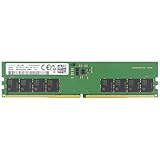
- Samsung DDR5 Memory RAM | Part Number: M323R2GA3DB0-CWM
- Single 16 GB RAM Module; DDR5 DIMM 288-Pin; Speeds up to 5600 MHz, PC5-44800 (PC5-5600B)
- NON-ECC Unbuffered (UDIMM); 1Rx8 (Single Rank x8); JEDEC DDR5 standard 1.1V
- Compatible for select Desktop Computers/PCs
- Expands your system's available memory resource improving performance, reducing bottlenecks, and increasing workload capacity
The customer’s design determines what the chip does: for example, the logic, interfaces, accelerator functions or signal-processing features in the finished device. Foundry’s job is to translate that design into repeatable physical production that meets the agreed technical and quality requirements. Samsung is not selling that customer’s chip as a standard Samsung-branded memory part.
More than wafer production
Foundry support can begin before a wafer is manufactured. Samsung’s offering includes:
- Process technology: the manufacturing process options on which a customer implements its design.
- Design libraries and process design kits (PDKs): the technical building blocks and rule sets needed to design for a particular process.
- Design support: assistance that helps a customer adapt, verify or prepare a design for manufacturing.
- Packaging: assembling and protecting the manufactured die in a package suitable for the customer’s system.
- Manufacturing: producing the customer’s semiconductor under the agreed specifications and quality controls.
This broader package matters because a chip cannot be manufactured successfully from a schematic alone. The design must use process-compatible libraries and rules, pass manufacturing checks and be integrated into a package that works in the final product. The exact services and process choices depend on the customer’s project.
Who uses a foundry?
Foundry customers include companies that design chips but do not operate all the factories needed to produce them. A fabless company can concentrate on architecture, software, product definition and sales while relying on a foundry for physical manufacturing. Larger integrated semiconductor companies may also use foundry capacity for particular products or processes.
The commercial relationship is therefore project-specific. A customer provides requirements, design data, forecasts and qualification criteria; the foundry supplies process access, engineering support, production and, where contracted, packaging. The resulting chip remains the customer’s product, not a generic item selected from Samsung’s Memory catalog.
Free tools Windows power users keep installed
One-click scans. No signup required.
Where System LSI fits
System LSI is part of the same DS division but is neither the Memory business nor the Foundry business. Samsung describes System LSI as a design-and-sales activity for products such as mobile application processors and camera image sensors.
Rank #3

- Samsung DDR5 Memory RAM | Part Number: M425R4GA3BB0-CWM
- Single 32 GB RAM Module; DDR5 SO-DIMM 262-Pin; Speeds up to 5600 MHz, PC5-44800 (PC5-5600B)
- NON-ECC Unbuffered; 2Rx8 (Dual Rank x8); JEDEC DDR5 standard 1.1V
- Compatible for select Laptop, Notebook Computers
- Expands your system's available memory resource improving performance, reducing bottlenecks, and increasing workload capacity
This three-way distinction prevents a common mistake:
- Memory manufactures and sells memory and storage products.
- System LSI designs and sells certain system chips, including mobile processors and image sensors.
- Foundry manufactures system semiconductors for customers and supports those customers’ designs.
A Samsung-designed application processor may be associated with System LSI, while a different company’s processor could be manufactured by Samsung Foundry. The fact that both are semiconductors does not put them in the same business unit.
How the two business models work in practice
Memory product path
- Samsung develops a memory technology and product family, such as a DRAM generation, NAND component or SSD.
- The product is characterized for capacity, speed, power, interface, package and operating requirements.
- Samsung manufactures the product at scale and sells it as a component or finished storage device.
- A customer selects the product and integrates it into a computer, phone, server or other system.
The buyer’s main decision is which Samsung memory product fits the system. The buyer does not normally provide the internal design of the DRAM or NAND device.
Recommended Free Tools
Foundry customer path
- A customer defines a system semiconductor and creates its circuit and physical design.
- The customer chooses a Samsung Foundry process and uses the associated libraries, PDKs and design rules.
- Samsung and the customer prepare the design for manufacturing and complete required verification and qualification work.
- Samsung manufactures wafers to the customer’s specifications.
- The die may receive contracted packaging services before delivery for integration into the customer’s product.
Here, the customer’s design is the starting point, and manufacturing capability is the service being purchased. The two paths can involve similar semiconductor factories and engineering disciplines, but the commercial output is different.
Comparing what “performance” means
| Decision area | Memory | Foundry |
|---|---|---|
| Performance target | Memory bandwidth, latency, capacity, endurance or storage throughput, depending on the product. | How well the customer’s system chip achieves its design goals on the selected process, including power, speed, density and yield considerations. |
| Power focus | Power consumed by the memory or storage part in its intended operating modes. | Power characteristics enabled by the process and the customer’s circuit implementation. |
| Customization | Customers choose among Samsung product specifications and supported configurations. | Customers bring a custom design and work with Samsung to make it manufacturable. |
| Quality responsibility | Samsung qualifies and supports the memory product it sells. | Samsung is responsible for manufacturing execution and agreed process quality; the customer remains responsible for the design’s intended function. |
These are useful distinctions, not absolute walls. Memory products also require advanced manufacturing and packaging, and Foundry projects involve design engineering. The difference is what the customer is buying: a finished Samsung memory product in one case, and a manufacturing platform plus production service in the other.
Independent reader supportYour contribution helps us test, update, and keep practical guides available for everyone.How Samsung’s DS organization is reported
Samsung Electronics’ 2025 Sustainability Report identifies Memory, Foundry and System LSI as businesses within Device Solutions. For FY2024, the report gives DS-wide sales of KRW 111.066 trillion and DS-wide operating profit of KRW 15.0945 trillion.
Rank #4

- Samsung DDR5 Memory RAM | Part Number: M425R4GA3BB0-CQK
- Single 32 GB RAM Module; DDR5 SO-DIMM 262-Pin; Speeds up to 4800 MHz, PC5-38400 (PC5-4800B)
- NON-ECC Unbuffered; 2Rx8 (Dual Rank x8); JEDEC DDR5 standard 1.1V
- Compatible for select Laptop, Notebook Computers
- Expands your system's available memory resource improving performance, reducing bottlenecks, and increasing workload capacity
Those figures cover the entire DS division. They are not separate Memory and Foundry results, so they cannot be used to claim that one of those businesses generated a particular amount or was more profitable than the other. A division-wide total is useful for understanding scale, but it does not provide a business-by-business comparison.
Samsung’s 2025 Half Interim Report also describes the division-of-work distinction, including Memory’s manufacture and sale of DRAM and NAND products and Foundry’s consignment semiconductor production. Financial reporting labels and boundaries can change, so readers should check the latest company filings when they need current segment figures.
Common misconceptions and the precise correction
“Foundry is Samsung’s non-memory chip business.”
That is too broad. System LSI is also a non-memory semiconductor business, but it designs and sells products. Foundry is specifically the manufacturing and customer-support operation for system semiconductors.
“Samsung Foundry makes Samsung’s Memory chips.”
The businesses may share corporate ownership and semiconductor expertise, but Memory is itself a product business that manufactures and sells DRAM and NAND products. Foundry’s defining role is producing customer-directed system chips on a consignment basis.
“A Samsung SSD is a Foundry product because it contains a controller chip.”
The SSD belongs to the Memory portfolio because it is a NAND-based storage product sold by Samsung Memory. Individual components inside an SSD can involve several design and manufacturing activities, but the product category is determined by what Samsung is selling to the customer.
Do these 3 things before closing this tab:
1Scan for outdated or missing drivers - takes under a minute2Clear out junk files and repair common Windows errors3Fix the driver behind crashes, sound loss and screen glitches“All Samsung semiconductor revenue can be assigned to Memory.”
That conclusion is not supported by the DS-wide figures. Device Solutions includes Memory, Foundry and System LSI, and the published FY2024 totals combine those businesses.
Which Samsung business is relevant to a particular question?
- If you are choosing RAM for a server, phone or PC, you are evaluating a Memory product, usually DRAM or LPDDR.
- If you are evaluating solid-state storage, UFS or an SSD, you are looking at NAND-based Memory products.
- If you are designing a custom application processor, connectivity chip, accelerator or other system semiconductor and need a manufacturing partner, Foundry is the relevant business.
- If you are asking who designs and sells a Samsung-branded mobile processor or camera sensor, System LSI is the relevant DS business.
- If you are reading Samsung’s DS financial totals, treat them as combined figures unless a filing explicitly separates the businesses.
The bottom line
Samsung Memory sells the memory and storage devices that systems use, while Samsung Foundry manufactures system chips designed by customers and supplies the process, design and packaging support needed to produce them. System LSI sits alongside both as a separate design-and-sales business. Keeping those roles separate makes Samsung’s semiconductor organization, products and financial disclosures much easier to understand.
Samsung’s Business Areas overview provides the company’s current high-level description of these DS activities, while the dedicated Foundry business page and Memory page give more detail on each offering.
Quick Recap
Product prices and availability are accurate as of the date/time indicated and are subject to change. Any price and availability information displayed on Amazon at the time of purchase will apply.
The Tool Desk
Outbyte Driver Updater FREEScan for outdated or missing drivers - takes under a minuteDriver Scan →Outbyte PC Repair FREEClear out junk files and repair common Windows errorsFree Scan →
