
Recommended Free Tools
iTechGuides is reader-supported. When you buy through links on our site, we may earn an affiliate commission. As an Amazon Associate I earn from qualifying purchases. Learn more
Browser tracking rules can matter in an antitrust dispute, but they are not a standalone defense. Safari’s cookie policy, Chrome’s third-party-cookie choices and Privacy Sandbox proposals, and court rules about search defaults address different questions. Together, they show how privacy design can become part of competition analysis—not that either browser’s tracking policy has already defeated an antitrust claim.
What could “antitrust defense tool” mean?
A company facing a competition challenge may point to privacy requirements when explaining a product decision, a limit on data access, or a change in advertising measurement. Regulators may also need to consider whether a proposed privacy change affects rivals’ ability to compete. In that limited sense, browser privacy policy can be relevant evidence or part of a company’s argument.
That is different from having a recognized defense that “we changed tracking rules for privacy” automatically defeats an antitrust claim. The official materials discussed here do not establish such a rule. A privacy rationale does not, by itself, prove that a policy is necessary, applied consistently, or competitively neutral. Those questions depend on the conduct and evidence in a particular case.
Quick wins for a faster PC:
Clear out junk files and repair common Windows errorsFree Scan →Scan for outdated or missing drivers - takes under a minuteDriver Scan →Three issues that should not be conflated
- Tracking policy: what a browser says it does with third-party cookies and related tracking mechanisms.
- Competition effects: whether a policy change or business arrangement affects rivals’ access to users, data, advertising measurement, or distribution.
- Legal remedy: what a court or regulator requires concerning agreements, defaults, or access to data.
A ruling about search distribution is not a finding that one browser is more private. A browser’s cookie policy is not, by itself, proof of an antitrust violation or a defense to one.
#1 Best Overall

- Privacy Protection and Lens Care: Avoid private information from hacking while preventing dust-fall and scratching of the camera lens
- Multiple Compatibility: Suitable for Logitech webcam C920x, C920, C922, C930e, C922x Pro Stream HD Camera
- Artful Design: Modeled and designed exclusively to fit the above devices from Logitech and make it more stylish
- Easy Flip Mechanism: Can be turned 180 angle and easily take the cover off when flipping more than 180
- Simple Installation: Attaches securely to your Logitech webcam without leaving residue, allowing for quick and hassle-free setup
What do Safari and Chrome say about tracking?
The available descriptions come from WebKit and Google, the respective vendors’ sources. They describe policy, not an independent, like-for-like test of how much tracking each browser blocks.
Safari and WebKit
WebKit says that the default cookie policy on Apple’s iOS, macOS, iPadOS, tvOS, and watchOS disallows a third party from setting new cookies unless it already has cookies. WebKit says the policy has been in effect since Safari 1.0 and is part of the “Prevent cross-site tracking” setting. This describes cookie behavior; it does not mean Safari blocks every form of tracking.
Rank #2

- Privacy Protection: CloudValley webcam cover is designed for those who prioritize privacy, security, and peace of mind when using laptops, tablets, and computers
- Fashion Design: The space aluminum alloy webcam cover features a subtle design which compliments the beautiful aesthetic of top devices
- Ultra-Thin Design: Measures only 0.023 (0.6 mm) inch thin, ensuring it does not interfere with closing your laptop or device while providing reliable camera coverage
- Broad Compatibility: Works flawlessly with most laptops (MacBook, HP, Dell, Asus, Acer, Lenovo), All-in-One PCs and leading tablets including iPad, Surface Pro, Galaxy Tab, Fire HD, and Google Pixel Tablet
- Simple to Use: Only need to align to the webcam, attach and press it firmly for 15 seconds. Does not interfere with web use or indicator light
WebKit also describes measures addressing cloaking and a seven-day cookie-expiry cap in specified cloaking scenarios. That limit applies to the scenarios WebKit identifies; it should not be read as a universal expiry rule for every cookie. WebKit’s account is available in its Tracking Prevention in WebKit documentation.
Outdated Drivers Are Slowing You Down
One free scan finds every outdated or missing driver and matches the right update for your exact hardware.Free scan · exact hardware matchPC Slower Than It Used to Be?
A free scan shows the junk files, broken settings and background clutter dragging Windows down - then fixes them in one click.Free scan · Windows 10 & 11Chrome and Google’s stated approach
Google said Chrome would maintain users’ choice about third-party cookies rather than add a new standalone prompt. Google also said third-party cookies would remain blocked by default in Incognito mode and that it would continue enhancing Incognito tracking protections. These are Google’s statements about Chrome policy and plans, not independent evidence of comparative privacy performance. A stated plan should not be assumed to have rolled out in full without checking the current product behavior.
Rank #3
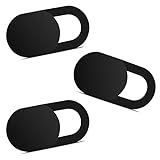
- Note: Not suitable for MacBooks released after 2023 or devices with a protruding front camera; Not applicable to full-screen or notch-style tempered glass screen protectors; Do not use on the rear camera of the phone.
- 💻 Why Do You Need a Webcam Cover Slide? — Safeguard your privacy by covering your webcam with our reliable webcam cover when not in use. Don't let anyone secretly watch you. Stay protected!
- ✅ Thin & Stylish — Enhance your laptop's functionality and aesthetics with our 0.027" ultra-thin webcam covers. Seamlessly close your laptop while adding a touch of sophistication.
- ✅ Fits Most Devices — Compatible with laptops, phones, tablets, desktops! Keep your privacy intact on Ap/ple, Mac/Book, iPh/one, iP/ad, H/P, L/novo, De/ll, Ac/er, As/us, Sa/msung devices.
- ✅ 365 Days Protection — Our upgraded 3.0 adhesive ensures a strong hold that won't damage your equipment. Experience reliable, long-term privacy protection day in and day out.
Google’s announcement is titled A new path for Privacy Sandbox on the web. Privacy Sandbox refers to Google’s proposed tools and approach for advertising and measurement as third-party-cookie use changes; the CMA’s investigation examined competition concerns about removing cookies while moving related functions to Chrome.
How to compare the policies fairly
- Check third-party-cookie behavior in ordinary browsing separately from private browsing.
- Distinguish cookie restrictions from protection against other tracking techniques.
- Separate what the vendor says about user choice from what the browser currently does.
- Identify any proposed replacement advertising or measurement tools and who controls them.
- Keep legal scrutiny of competition effects separate from a technical assessment of privacy effectiveness.
The materials cited here do not establish an independently measured Safari-versus-Chrome tracking score. A claim that one browser is categorically “better” would require a defined test method and comparable results.
Rank #4

- 【Premium Webcam Cover】This webcam privacy cover is an accessory of computer webcam. No worry about interfering with web camera lens use or indicator light; No damage to your device in any way as well. A helpful privacy protector and dust separator
- 【Privacy Protector】Slide the web camera cover over your webcam lens when not in use, and prevents web hackers from Spying on you. It is perfect to provide privacy security and peace of mind to individuals, groups, organizations, companies and governments. It also protects your camera lens from dust, and keeps it in high-definition resolution all the ways
- 【Durable Material】The web cam cover is made of high-strength plastic, which ensures that your privacy is protected for a long and lasting period of time. The back of the web camera privacy cover slide also has a strong 3M adhesive layer. It helps the privacy protector stick firmly to your device. The most convenient, super thin design, and extra mini size, make it perfectly combine with your devices
- 【Wide Compatibility】This webcam cover is compatible with most popular webcams with flat area surrounding lens or with protruding lens, such as Logitech HD Pro Webcam C920 C920x C930e and C922, Logitech C615 and C270 (NOT fit Logitech C910, B910, C310). It can be also used as a cover for the peep hole on door
- 【For Logitech Webcam Cover】 The streamcam cover kit comes with 2 pack. Please clean the lens surface before applying. Make sure the mounting surface is cleaned completely so that it sticks properly and firmly
What did regulators and courts decide?
The relevant proceedings address distinct conduct. The UK Competition and Markets Authority (CMA) examined competition concerns around Chrome’s proposed cookie changes. The U.S. search case concerns distribution, default search arrangements, and related competition issues. The Federal Trade Commission’s (FTC) earlier Safari matter was a consumer-protection settlement, not a ruling in the later search case.
| Date | Proceeding | What it establishes—and what it does not |
|---|---|---|
| 2012 | FTC settlement concerning Google’s representations to Safari users and tracking cookies. | Google agreed to pay a $22.5 million civil penalty to settle FTC charges. The settlement concerned consumer-protection allegations and an earlier privacy settlement; it was not an antitrust fine or a finding in the later search case. |
| 2021–February 2022 | CMA investigation of Google’s proposed Chrome third-party-cookie changes and Privacy Sandbox tools. | The CMA accepted binding commitments to address competition concerns and ended its investigation without deciding whether Google infringed competition law. |
| September 2025 | DOJ summary of proposed U.S. search-case remedies. | The Department of Justice described restrictions on certain exclusive distribution and revenue-share arrangements, along with requirements for some search data to be made available to rivals and for syndication services to be offered. For the operative legal terms, the court’s final judgment is the primary document. |
| December 5, 2025 | U.S. district court final judgment in the Google search case. | The judgment regulates certain distribution and default-search agreements. Its terms address conditioning payments on default search placement involving Apple features and browser access points, and govern browser developers’ default choices and promotion of rival services. It is not a finding about Safari’s relative privacy or a holding that tracking prevention is an antitrust defense. |
| January–July 2026 | Post-judgment compliance and appellate activity listed on the DOJ case page. | The page lists a technical committee appointment in January, a compliance status report in May, and an appellate filing in July. Those entries show that implementation and legal posture continued to develop; they do not establish what may have happened after the page’s July 2026 entries. |
The judgment itself is available from the U.S. Department of Justice’s Google search case materials; the DOJ page also lists later case activity. The CMA’s Privacy Sandbox case page records that commitments ended the investigation without an infringement decision. The FTC’s 2012 settlement announcement describes the separate Safari-cookie matter.
Best Value
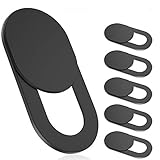
- 【Protect Privacy Security】Focusing on network security, now we can easily and effectively protect personal and family privacy security , Just gently slide the slide and close the camera, you can stop the intrusion of hackers.
- 【 Ultra Thin Design】The new ultra-thin design, with a thickness of only 0.022 inches, is made of flexible ABS material and is not fragile. Will not affect the closing of the laptops and scratch the laptops.
- 【Easy to install】 Strong adhesive makes the cover not fall, keep the screen clean and free of stains during installation, tear off the adhesive tape on the back, align it with our camera, and press hard for 10 seconds to work.
- 【Compatible with 】Compatible with camera for Laptop, tablet, computers, Echo Show and Apple Devices,as: MacBook Pro,Macbook Air,iMac ,Mac mini,iPad,MacBook Air, iPhone 6/7/8 Plus etc front camera .
- [What you get] 6 pack black webcam covers.
How can privacy policy enter a competition argument?
The CMA’s Privacy Sandbox case illustrates the connection. It investigated the competitive implications of Google’s plan to remove third-party cookies from Chrome while replacing related functions with tools under the Privacy Sandbox. The concern was not simply whether cookie blocking is good or bad for privacy; it was also whether the change could shift control or competitive advantage as advertising and measurement functions changed. The CMA accepted commitments to address its concerns, but expressly made no decision on whether competition law had been infringed.
The U.S. search judgment addresses another route by which browsers can matter to competition: distribution and defaults. Browser features and access points can be relevant to how search services reach users, so the judgment sets rules for certain agreements and default arrangements. That does not turn the case into a trial of browser tracking policies. A privacy change could be relevant to a separate competition analysis if evidence connects it to market effects, but the judgment does not make that connection on its own.
What should readers conclude from the history?
The 2012 FTC settlement is useful background because it involved Safari cookie behavior and Google’s representations to users. The FTC said Google agreed to pay $22.5 million to settle charges that it misrepresented whether it would place tracking cookies or serve targeted ads to Safari users, in violation of an earlier privacy settlement. The agency described Google as exploiting an exception in Safari’s cookie behavior. This is a separate consumer-protection matter; it does not prove that current Safari policy is a defense in antitrust litigation.
Likewise, the CMA’s commitments and the U.S. court’s remedy should not be treated as equivalent outcomes. The CMA ended its investigation without an infringement finding. The U.S. judgment imposes terms concerning specified search distribution and default arrangements. Neither outcome establishes a general legal principle that privacy rules excuse conduct that would otherwise violate competition law.
Quick Recap
How to assess a future claim about browser privacy and antitrust
- Identify the exact conduct. Is the dispute about cookie handling, a proposed replacement tool, access to data, search defaults, or a distribution agreement?
- Separate rationale from effect. A stated privacy purpose explains a design choice; it does not alone establish what the choice does to rivals or users.
- Check who made the claim. Vendor documentation describes vendor policy. A regulator’s commitments announcement, a court judgment, and a complaint or agency summary carry different legal weight.
- Read the outcome precisely. An investigation ending with commitments is not an adjudicated infringement; a remedy governing defaults is not a comparative privacy finding.
- Check the date and status. Browser policies, remedy implementation, and appeals can change. The DOJ case page entries available here run through July 2026, so later developments are not established by those entries.
Product prices and availability are accurate as of the date/time indicated and are subject to change. Any price and availability information displayed on Amazon at the time of purchase will apply.

