
iTechGuides is reader-supported. When you buy through links on our site, we may earn an affiliate commission. As an Amazon Associate I earn from qualifying purchases. Learn more
Reusable products usually create less waste than compostable products when they are used repeatedly in a working collection, washing and return system. Compostables are a conditional option: they need the right certification, separate collection and a commercial composting facility that accepts them. A label alone does not determine what happens after use.
The practical answer depends on the whole system around an item—how many times it is used, how it is washed, how far it travels, what energy powers those steps and whether local waste facilities can recover it. The same cup or container can have a different environmental outcome in two cities.
What “less waste” means in this comparison
Waste is not determined only by what you throw away at the end. A fair comparison follows the item through its complete life cycle:
What’s actually slowing this PC down?
Pick the symptom - the matching free tool is one click away.
- Raw-material extraction and processing
- Manufacturing and packaging
- Transport to the user and, for reusables, transport back to a wash or return point
- Energy and water used during washing
- Collection, sorting and treatment after use
- Whether the system prevents production of another single-use item
The United Nations Environment Programme’s 2021 life-cycle synthesis argues that “single-use” is often the more important problem than whether a product is made from plastic. It encourages replacing single-use products with reusable systems where a circular model can operate: UNEP, 2021.
#1 Best Overall

- Sturdy Rip-stop Fabric: the WISELIFE reusable grocery bag is made of heavy-duty non-woven fabric reinforced with finished stitches; these large grocery shopping bags are strong and can accommodate odd-shaped items and hold up to 50 lbs
- Super Easy To Clean: the shopping totebags' special fabric is easy to clean; simply use a wet cloth to wipe off the dirt or rinse off under cold water and allow the bag to air dry
- Two Ways of Carrying: the grocery bag has a long and wide handle for easy carrying by hand or over the shoulder; the handle is 9.5 inch long to fit any body type; sturdy fabric ensures that the bag will not break
- Foldable and Portable : each grocery bag measures 16.1” x 13” x 10.2” (L x H x W); folds flat for easy storage in your kitchen, car, handbag, backpack, and luggage; great not only for veggies and fruit, but also great for food shopping, or clothes
- Reusable: one reusable shopping bag is equivalent to 1000+ times of using plastic disposal bags; as an alternative to single-use plastic bags, reusable shopping bags make the future cleaner and more livable
That does not make every reusable item automatically better. A heavy container used once, washed inefficiently and then abandoned may perform poorly. Conversely, a certified compostable item can avoid conventional plastic waste only when it reaches the biological-treatment process for which it was designed.
When reusable products are the lower-waste choice
Repeated use is the main advantage
A durable cup, plate or food container spreads its manufacturing impacts across every use. The more times the same item replaces a single-use item, the less material is needed per serving. The Environmental Protection Agency describes reusable food service ware as the preferred choice when an effective system repeatedly collects, washes and returns it: “Reusable food service ware is the preferred choice because it will use less energy and fewer resources over its lifespan if an effective reuse system is developed and operated.” See the EPA’s criteria for sustainable food service ware at EPA: Identifying Sustainable Food Service and Food Service Ware.
The system matters as much as the object
Reuse works best when the user can return the item conveniently and the operator controls washing and redistribution. A deposit-and-return service, a cafeteria wash station or a workplace collection route can keep items circulating. If people must drive long distances to return a container, or if returned items are not washed and recirculated, the expected number of uses falls and transport impacts rise.
Recommended Free Tools
Washing also has a footprint. Water heating, detergent, machine efficiency, load size and electricity generation all affect the result. A full commercial dishwasher running on a relatively low-carbon electricity mix is a different case from repeatedly hand-washing one item under hot running water. The relevant question is not whether washing uses energy; it is whether that energy is outweighed by avoiding enough new single-use products.
How many uses are enough?
There is no universal break-even count for every product. The UNEP materials-substitution guidance gives a global-warming break-even range of roughly 20 to 70 uses for reusable cups in the examples it cites. That range is wide because product weight, washing, transport, energy mix and user behavior change the calculation: UNEP materials-substitution guidance.
Rank #2
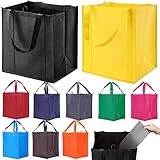
- STURDY & DURABLE: There are reinforced handles sewn to the bottom of the tote bag for extra durability, and there is a thick removable plastic bottom insert for extra strength while grocery shopping.
- LARGE CAPACITY: 15" H x 13" L x 10" W. After extensive research, we believe this size is the most practical size. You can carry the grocery bags over your shoulder and easily carry heavy loads.
- ECO-FRIENDLY: Made of recycled polypropylene, use reusable bags to protect the environment.
- EASY TO CLEAN: Machine Washable, Hand Washing recommended, easy to fold after wash the tote bags, Hang dry only.
- VERSATILITY: These heavy duty reusable shopping bags are great for GROCERY SHOPPING, picnics, laundry, the beach, travel, and more.
Use that figure as a planning reference, not a guarantee for your particular mug or container. A lightweight reusable cup used daily can reach its break-even point sooner than a heavy insulated vessel used occasionally. Count actual uses: if an item replaces one disposable cup each workday, 20 uses takes about four workweeks; 70 uses takes about fourteen workweeks. If it is used only once a week, the same physical break-even point takes much longer to reach, and the item is more likely to be forgotten or replaced before it does.
Conditions that make reuse work
- Durability: The item survives the intended number of cycles without cracking, warping or losing its seal.
- High use frequency: People choose it often enough to displace a meaningful number of single-use products.
- Efficient washing: Loads are consolidated, equipment is maintained and hot water is not wasted.
- Short return routes: Collection and redistribution do not require excessive transport.
- Reliable participation: Users actually return the item instead of keeping or discarding it.
- Replacement discipline: A new item is not purchased every time a minor stain or cosmetic mark appears.
What “compostable” means—and what it does not
Commercially compostable is a specific treatment claim
The EPA defines commercially compostable plastic as material that biodegrades under commercial biological-treatment conditions, generally within six months, without leaving toxic residue. That definition describes a controlled facility, not an ordinary backyard pile: EPA: Frequently Asked Questions About Plastic Recycling and Composting.
Outdated Drivers Are Slowing You Down
One free scan finds every outdated or missing driver and matches the right update for your exact hardware.Free scan · exact hardware matchPC Slower Than It Used to Be?
A free scan shows the junk files, broken settings and background clutter dragging Windows down - then fixes them in one click.Free scan · Windows 10 & 11Commercial facilities manage temperature, moisture, aeration and processing time. They may also screen finished compost and enforce rules about which certified products can enter the system. “Compostable” therefore describes a product’s behavior under specified conditions; it does not promise that every composting site can process it.
Home composting is a separate claim
Unless a product is explicitly labeled for home composting, the EPA advises that you should not put it in a home compost pile. A product marked only “commercially compostable” may remain intact in a backyard system because home piles usually do not sustain the same controlled conditions or processing schedule.
Packaging language can be confusing. Words such as “plant-based,” “biodegradable” or “made from renewable materials” do not, by themselves, establish that an item is certified for commercial composting or home composting. Look for an explicit compostability claim and then confirm that your local facility accepts that type of item.
Rank #3
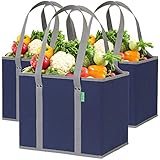
- Stands Up & Stays Open: Making shopping so much easier! With a rigid box structure, our reusable bags are super easy to load & unload compared to ordinary floppy bags – Long handles let you carry tall items or sling a tote bag over your shoulder
- Extra Large so You can Carry More: A 3 pack of our large tote bags holds the same as 10 single-use grocery bags! Great for family sized trips to the supermarket, for carrying bulky items, and for organizing produce, meats, and grocery items
- Sturdy & Made to Last: Our super strong grocery tote bag maintains its shape like a box even when fully loaded with groceries or whatever you need to carry – Each sturdy utility tote is crafted from top quality materials for reliable use over and over
- Won't Fall Over in the Trunk: Best shopping bags for groceries! Design is spill proof so items stay put while driving – No more groceries rolling around in the trunk – Bananas, bread, produce and other soft items won't be damaged on your way home
- Easy to Clean: Simply use a damp cloth or sanitizer wipe to clean, then allow to air-dry – Our reusable grocery bags are foldable like a notebook when not in use – conveniently stores under your car seat, trunk, or a kitchen drawer
The collection route determines the result
A compostable fork in a landfill generally does not receive the controlled biological treatment promised by its label. A compostable liner placed in a recycling cart can contaminate a recycling stream, while a compostable plate placed in a general trash bin is treated as trash. Even a correctly certified product can fail if it is put in the wrong bin or if the receiving facility rejects it.
The EPA places certified commercially compostable food service ware behind reusables in its preference order. It notes that compostables can reduce conventional plastic waste and help divert food scraps only when they are collected separately and sent to an appropriate facility; availability is limited and some facilities do not accept them. Read the agency’s guidance at EPA: Identifying Sustainable Food Service and Food Service Ware.
Reusable and compostable options compared
| Decision factor | Reusable product | Certified commercially compostable product |
|---|---|---|
| Expected number of uses | Designed for repeated cycles; the environmental benefit grows as actual use count rises. | Normally intended for one service period before collection and treatment. |
| Key operating requirement | Effective collection, washing and return. | Separate organics collection and an accepting commercial composting facility. |
| Energy and resources during use | Washing uses water, heat, detergent and electricity; efficiency affects the life-cycle result. | No routine washing for another user, but production and transport occur for each new item. |
| End-of-life condition | Continues circulating while it remains usable; eventual disposal depends on its material and local recovery route. | Must reach the commercial biological-treatment conditions for which it was certified. |
| Contamination risk | Lost or discarded items can become waste before their expected cycles are reached. | Can contaminate recycling or be rejected by compost facilities when placed in the wrong stream. |
| Evidence on break-even | UNEP examples put reusable-cup global-warming break-even at roughly 20–70 uses. | No single use-count threshold applies; outcome depends primarily on collection and facility acceptance. |
| Best fit | Events, workplaces, cafés or households with dependable return and washing infrastructure. | Situations where reuse is unavailable but certified products, separate collection and a suitable facility are all present. |
How to choose the lower-waste option where you live
- Map the service pattern. Write down how often the item will be used, who will collect it, where it will be washed and how it will return to the next user. If you cannot describe those steps, do not assume a reusable system will achieve repeated use.
- Estimate realistic reuse. Use expected behavior, not the product’s maximum lifespan. Include losses, breakage and occasions when users choose a disposable substitute. Compare that estimate with the UNEP examples’ roughly 20–70-use range for cups, while recognizing that your item and conditions may differ.
- Check washing impacts. Identify whether washing is done in full loads, what energy heats the water and whether collection adds long transport routes. Improving these operations can matter as much as changing materials.
- Verify composting acceptance before buying compostables. Ask the local commercial composting operator or municipal program whether it accepts the exact serviceware type. A general statement that the city “collects organics” is not enough; some facilities accept food scraps but reject compostable plastics.
- Confirm the treatment label. Ensure the product is certified for commercial composting if that is the intended route. Do not infer home-composting suitability from a commercial-compostability claim.
- Provide separate, obvious bins. At the point of disposal, place compostables with the food scraps only when the receiving facility instructs you to do so. Keep recycling and trash containers clearly separate to reduce contamination.
- Measure what actually happens. Track return rates for reusables, wash cycles, losses and the amount of compostable material rejected or sent to landfill. Adjust the system when real behavior differs from the plan.
- If neither route works, reduce consumption. When there is no workable return-and-wash system and no accepted composting route, the lowest-waste move is often to avoid unnecessary single-use serviceware and choose the option compatible with the most effective local recovery method.
Situations where the answer changes
Household food storage
A reusable container is usually the stronger choice when the household will use it repeatedly for leftovers, lunches or bulk foods and can wash it with regular dish loads. Choose a size and shape that will be used often rather than a specialized container that sits in a cupboard. If the container is used only a few times before being replaced, its manufacturing impact is not spread across enough uses.
Office or school cafeteria
A managed return system can make reusables practical: users drop cups or plates at collection points, staff run consolidated washes and clean items return to service. The system needs enough inventory to cover peak periods and clear instructions so items do not leave the site. If return rates are poor, the operator may end up buying both reusable and disposable stock, weakening the expected benefit.
Large outdoor event
Events should first test whether cups and food containers can be collected, washed and redistributed on the event site or through a nearby service. If that infrastructure is unavailable, certified commercially compostable ware may be reasonable only when the event has a confirmed separate organics route and a facility that accepts the products. Without those arrangements, “compostable” items can follow the same trash route as conventional disposables.
Rank #4

- Extra-Large 35L Capacity: Measuring 16.1×10.2×13.0, each spacious collapsible grocery tote bag accommodates up to 35L of groceries, household items, or clothing. Long, sturdy handles offer multiple ways to comfortably carry the bag, by hand, over the arm, or over the shoulder
- Easy to Clean & Reuse: The large reusable shopping bags have a protective coating that resists water and stains, making the bags effortless to clean with a damp cloth. They serve as a long-lasting alternative to flimsy plastic bags or paper bags that are prone to ripping for all your daily errands
- Premium Details: The thick non-woven fabric of the kitchen reusable grocery bags withstands tears and daily wear. Designed for heavy-duty use, these reusable shopping bags with handles feature reinforced stitching and well-finished edges, capable of holding up to 30
- Foldable to Save Space: At only 0.15 per bag, these foldable grocery bags with handles are incredibly easy to carry anywhere without extra weight. Fold the bag flat for compact storage in your trunk, handbag, or backpack, saving space when not in use
- Versatile Use: WISELIFE reusable tote bags with handles are reliable for grocery shopping, trunk organization, camping, picnics, storage, and more. They keep your items neat and organized on the go, offering a portable storage solution for all kinds of outings
Takeaway food with no return program
When a restaurant has no collection and washing loop, a reusable container that the customer keeps can still be useful if that person will use it many times. A container purchased for one takeaway and then forgotten does not deliver the repeated-use benefit assumed in life-cycle comparisons. A compostable container is not automatically better: it needs separate collection and accepted commercial treatment after the meal.
Independent reader supportYour contribution helps us test, update, and keep practical guides available for everyone.Common mistakes and how to prevent them
Choosing a label instead of a system
“Compostable” describes a treatment requirement, not a guarantee that treatment is available. Before purchasing, identify the receiving facility, the accepted product list and the correct collection bin.
Putting commercially compostable items in home compost
Do not do this unless the product is explicitly labeled for home composting. Commercially compostable and home-compostable claims refer to different operating conditions.
Sending compostables to recycling
Compostable plastics can look like conventional plastics and may be rejected by recycling systems. Follow local instructions rather than placing them in a recycling cart by default.
Assuming a reusable item is beneficial after one use
Reuse is a cumulative strategy. A heavy item, an inefficient wash routine or a low return rate can delay or erase its advantage. Design the program around frequent use and reliable circulation, then verify that those uses occur.
Best Value
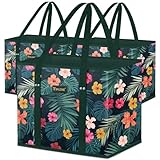
- Rigid Box Shape: Sits upright in your shopping cart and car trunk without collapsing, so items stay sorted from store to kitchen; Reinforced bottom panel keeps the grocery tote bag steady under a full load
- Extra Long Handles: 12" Reinforced handles provide a comfortable grip for carrying groceries by hand or over the shoulder; Built to support loaded grocery runs without stretching or tearing through hundreds of uses
- Ready to Load: Each of these shopping bags for groceries measures 10" × 11" × 13"; Doubles as a tote bag grocery for laundry, books, or household supplies
- Water Resistant & Easy to Clean: Water-resistant surface resists spills and stains, helping keep grocery totes clean for every shopping trip; Simply wipe with a damp cloth for easy cleaning after wet produce or everyday use
- Folds Flat Easily: Folds in seconds and tucks into a kitchen drawer, trunk, or closet so a reusable grocery bag is always within reach; Reusable design helps replace disposable shopping bags
Ignoring food contamination
Food residue can affect both recycling and composting. Use the disposal instructions supplied by the collection operator; do not send a product to a stream merely because its material label sounds compatible.
What the broader evidence says about material choices
The European Commission’s circular-economy study found weak evidence for special agronomic benefits from compostable plastic and recommended prioritizing recyclability over compostability when choosing materials. Its conclusion reinforces the need to evaluate an actual recovery route rather than treating compostability as an automatic environmental upgrade: European Commission circular-economy study.
UNEP’s substitution guidance likewise lists product weight, number of uses, energy mix, consumer behavior and waste infrastructure as decisive variables. These factors explain why a generic ranking can reverse from one location to another. A city with dependable container returns and efficient commercial washing can favor reusables strongly; a location without either a return loop or accepted composting may need to focus first on reducing demand for disposable serviceware.
A practical checklist
- Can the item be used many times by the same person or through a managed return program?
- Is there a convenient collection and washing process?
- Will washing be consolidated and reasonably efficient?
- Is the expected number of real uses high enough to spread manufacturing impacts?
- If considering compostables, is the product explicitly certified for commercial composting?
- Does a named local facility accept that exact product type?
- Are separate bins and clear disposal instructions available where the item is used?
- Could the item end up in landfill or recycling because users lack a workable alternative?
- Would reducing the number of items purchased avoid more waste than switching material?
In short, choose a durable reusable item when repeated use, washing and return are dependable. Choose certified commercially compostable serviceware only when reuse is unavailable and a separate, accepted commercial composting route is confirmed. If neither system functions locally, reduce consumption and select the option that matches the recovery infrastructure you can actually use.
Quick Recap
Product prices and availability are accurate as of the date/time indicated and are subject to change. Any price and availability information displayed on Amazon at the time of purchase will apply.

