
The Tool Desk
Outbyte PC Repair FREEClear out junk files and repair common Windows errorsFree Scan →Outbyte Driver Updater FREEScan for outdated or missing drivers - takes under a minuteDriver Scan →iTechGuides is reader-supported. When you buy through links on our site, we may earn an affiliate commission. As an Amazon Associate I earn from qualifying purchases. Learn more
ReGLOSS: CROSS is closer to a compact, deterministic routing puzzle than to an anime jigsaw, traditional Sokoban game, or Picross title. You choose a direction, ReGLOSS members travel in a straight line until a dead end, and matching colors must meet. Warp Panels and switch-controlled Signs add constraints as the stages become harder.
That distinction matters when deciding whether the game fits you. Its anime identity, character cast, and music provide the presentation, but the main activity is planning movement. CCMC announced five regular stages, three extra stages, and 70 puzzles in total on September 24, 2026. The Windows Steam release supports English and Japanese, with Steam listing a $3.99 price while the Japanese announcement lists a planned price of 490 yen.
| # | Preview | Product | Price | |
|---|---|---|---|---|
| 1 |

|
Puyo Puyo Tetris - Nintendo Switch | $18.98 | Buy on Amazon |
| 2 |

|
Jigsaw Fun: 3-in-1 Collection Nintendo Switch | $29.99 | Buy on Amazon |
| 3 |

|
Hidden Objects Collection - Volume 2 | $26.43 | Buy on Amazon |
| 4 |
|
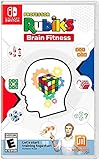
Professor Rubik's Brain Fitness (NSW) - Nintendo Switch | $19.97 | Buy on Amazon |
| 5 |

|
Agatha Christie: Murder on the Orient Express - Nintendo Switch | $25.80 | Buy on Amazon |
What kind of puzzle game is ReGLOSS: CROSS?
ReGLOSS: CROSS is a single-player, 2D logic game developed by yado and published through holo Indie. Steam’s description frames the premise simply: ReGLOSS members are running late and need help meeting safely. In play, each character acts like a moving piece on a grid or maze. You select a direction, and the character continues in that direction until reaching a dead end.
Recommended Free Tools
The resulting challenge is route planning rather than manual movement. You are not steering a character one square at a time, nor are you assembling a picture. You are deciding which direction to issue, anticipating where each member will stop, and arranging for two members of the same color to meet. A pair is cleared when that meeting occurs.
#1 Best Overall
- Ferocious Competition - At the heart of Puyo Puyo Tetris is the fighting spirit of players competing against each other to be most clever, cunning, and quick-witted one to set up devastating attacks on opponents. It's the classic easy-to-learn puzzles mashed up into a multiplayer battle like no other!
- Adventure Mode - The game also has a single player mode with ten unique acts, eatch with ten stages. They feature different characters from the Puyo Puyo or Tetris universes and have unique challenges to learn and master game mechanics that players must overcome!
- Arcade Modes - Online play has Puzzle League, which tracks players' ratings, players can save replays to upload and share, and more.
- There's also an in-game shop players can use their points to unlock different Puyo and Tetrimino skins, background music, stages, and more.
The core turn
- Choose a direction for the available character movement.
- Let the members travel in straight lines until the level’s walls or other dead ends stop them.
- Check whether same-color members have met and been cleared.
- Continue routing the remaining members until the stage is solved.
Because the movement follows the selected direction and continues to a stopping point, the game rewards prediction. A move that looks useful for one character can leave another in the wrong lane, so the order and direction of moves matter.
Obstacles that change the route
Warp Panels teleport characters, creating a connection between locations that are not adjacent in the visible layout. Signs initially block passage and become passable after a switch is activated. These mechanics turn an otherwise simple straight-line system into a sequence of dependencies: a switch may need to be reached before a route can be completed, while a Warp Panel can send a character to a position that changes later movement options.
Steam says the difficulty increases through the stages. The available description establishes the progression, but it does not provide a level-by-level difficulty rating, average solve time, or completion percentage. It is therefore more accurate to describe ReGLOSS: CROSS as a staged logic challenge than to promise a particular difficulty curve for every player.
Quick wins for a faster PC:
Fix the driver behind crashes, sound loss and screen glitchesFind Drivers →Clear out junk files and repair common Windows errorsFree Scan →ReGLOSS: CROSS compared with similar anime-style puzzle formats
| Game or format | Puzzle operation | Goal condition | Content structure | Presentation and identity |
|---|---|---|---|---|
| ReGLOSS: CROSS | Choose directions; characters move straight until a dead end; use warps and switches | Bring members of the same color together | Five regular stages, three extra stages, 70 announced puzzles | ReGLOSS characters, anime presentation, and music context support the logic game |
| Anime Girl Puzzles | Assemble interlocking jigsaw pieces | Complete an image | Image-based puzzle progression and gallery-style rewards | Anime artwork is the main completion reward |
| Pushing POPO | Push boxes to manipulate the level and open a route | Move boxes into the required positions and reach the goal | Sokoban-like authored stages with additional mechanics, including a bow later in the game | Character presentation surrounds a box-pushing logic system |
| Jupiter’s Juufuutei Raden’s Guide to Pixel Museum | Fill nonogram clues to reveal pixel images | Complete a grid and create pixel art | Nonogram progression with voiced explanations | Art, culture, and crafts provide educational context for each completed image |
The table shows why genre labels alone can mislead. All four games can be described as anime-adjacent 2D puzzles, but they ask the player to perform different mental tasks: route moving pieces, assemble an image, push boxes, or deduce a hidden picture from numbers.
Rank #2
- 4 different puzzle sizes (30/120/300/600 pieces)
- Easy and accessible touch controls
- Pick up where you left off with the automatic save feature
- Up to 4 player local multiplayer
ReGLOSS: CROSS vs. anime jigsaw games
What you manipulate
In an anime jigsaw, the pieces are static fragments of an illustration. Your immediate task is visual matching: edges, colors, and recognizable parts of the picture tell you where each piece belongs. In ReGLOSS: CROSS, the characters are active pieces. Their positions change after every directional command, and a move can affect the future route of multiple members.
What counts as success
Anime Girl Puzzles uses image completion as its payoff. The completed illustration is both the objective and the principal reward. ReGLOSS: CROSS instead asks you to produce a particular relationship between pieces: two members of the same color must meet. The anime art identifies the characters, but solving the stage depends on spatial planning rather than revealing a picture.
Which player is better served?
- Choose the jigsaw format if you want relaxed visual assembly, artwork collection, or a puzzle whose progress is easy to see at a glance.
- Choose ReGLOSS: CROSS if you prefer short logic problems in which each input changes the board state and the solution depends on predicting movement.
Neither structure is inherently better. They provide different kinds of satisfaction: recognition and completion in a jigsaw, versus route discovery and constraint management in ReGLOSS: CROSS.
ReGLOSS: CROSS vs. Sokoban-style games
The crucial mechanical difference
Sokoban-like games are built around pushing boxes. A box generally moves only when the player moves into it, and a major part of the challenge is avoiding irreversible deadlocks. Pushing POPO is described as a Sokoban-like game and adds mechanics such as a bow later in its progression.
Rank #3
- 1912 Titanic Mystery
- Family Vacation California
- Mary kay Andrews: The Fixer Upper
- Emily Archer and the Curse of Tutankhamun
- The Mysterious Case of Dr. Jekyll and Mr. Hyde
ReGLOSS: CROSS has no box-pushing objective in the cited Steam description. Its members move continuously in the selected direction until a dead end, and the target is a same-color meeting. That means the central question is not “Where can I push this box without trapping it?” but “Which direction sends each member to the stopping point needed for a future pair?”
How the friction feels different
- Sokoban: friction comes from push order, deadlock prevention, and preserving access to the remaining boxes.
- ReGLOSS: CROSS: friction comes from line-of-travel, stopping locations, teleportation, and opening Signs through switches.
Players who enjoy Sokoban may recognize the importance of planning ahead, but should not expect the same box-and-goal vocabulary. ReGLOSS: CROSS is best understood as a directional routing system with pairing objectives, not as a conventional Sokoban clone.
ReGLOSS: CROSS vs. Picross and nonogram games
Different information, different deduction
Picross, also called a nonogram, gives you numerical clues for rows and columns. You infer which cells are filled, and the completed grid forms an image. Jupiter’s Juufuutei Raden’s Guide to Pixel Museum uses that model: solving each puzzle creates pixel art and unlocks voiced explanations about art, culture, and crafts.
Free tools Windows power users keep installed
One-click scans. No signup required.
ReGLOSS: CROSS does not use row and column clues to reveal an image. The information is spatial and behavioral: character positions, walls, Warp Panels, switches, and Signs tell you what a directional command will do. The output is a solved route and cleared pair, not a newly drawn picture.
Rank #4
- 12 mini-games and 4 additional puzzle games including tetrubik
- 2 different ways to Play: daily training or Free training
- Train your memory, logic, speed, and space visualizations
- Track your activity with Professor Rubik's and see your progress
- Progressive difficulty making the game evolve with you
Why the comparison is still useful
Both games can appeal to players who like deduction without reflex pressure. The difference is what you hold in your head. In a nonogram, you track certainty about cells; in ReGLOSS: CROSS, you track the consequences of movement and the dependencies created by obstacles. If you want educational explanations and image completion, Pixel Museum is the closer fit. If you want compact spatial experiments, ReGLOSS: CROSS is the more direct match.
How much content does ReGLOSS: CROSS have?
CCMC’s September 24, 2026 announcement lists 70 puzzles across eight stages: five regular stages and three extra stages. That is the clearest published content count.
| Content element | Published information |
|---|---|
| Regular stages | 5 |
| Extra stages | 3 |
| Total puzzles | 70 |
| Players | One player |
| Languages announced | Japanese and English |
The count indicates a focused puzzle package rather than an open-ended editor, procedural system, or gallery with an unspecified number of images. The available information does not establish average completion time, whether solved stages can be replayed with rankings, or whether additional downloadable puzzles are planned. Those are meaningful differences from some puzzle collections, so do not infer them from the 70-puzzle figure.
Difficulty, progression, and replay value
What is established
Steam states that difficulty increases through the stages. The listed mechanics also provide a natural progression path: early boards can teach directional stopping and same-color pairing, while later boards can combine Warp Panels and switch-controlled Signs. That is a description of the rules’ expansion, not a measured claim that every later puzzle is harder for every player.
Best Value
- New character: The game is a faithful but augmented adaptation of the original story, with a new character named Joanna Locke added to the mix. With her, you can regularly exit the train environment during playable flashbacks.
- Gameplay: Enter into Hercule Poirot’s head to discover mind maps and make deductions, adding an extra layer of depth to the gameplay. And don't forget the many puzzles with object manipulations that are scattered throughout each chapter.
- Plot: Get ready for major plot twists that will keep the players hooked until the very end. Murder on the Orient Express is renowned for having one of the best plot twists in literary history, and this game is no exception.
- Solve puzzles: As you play, you'll take on the roles of Poirot and Joanna, solve puzzles and make deductions to uncover the truth behind the murder. In a 3rd person view, you'll inspect the sets and talk to all the protagonists, searching for clues and confronting the suspects.
What is not established
No equivalent playtime tests, completion-rate data, or review consensus are available in the supplied information. Steam showed only two user reviews and no generated score at the time checked. That sample is too small to support a quality rating or a reliable claim that the game is unusually easy, difficult, short, or long.
Practical replay expectations
Fixed authored stages usually emphasize finding a solution rather than generating endless variation. ReGLOSS: CROSS’s announced stage-and-puzzle structure therefore suggests a finite campaign. You may replay boards to improve your own solution process, but there is no published evidence here of time trials, alternate solutions, leaderboards, or a level editor. Treat those features as unknown rather than assumed.
Independent reader supportYour contribution helps us test, update, and keep practical guides available for everyone.Presentation and ReGLOSS identity
The anime presentation is not merely a picture gallery layered on top of unrelated puzzles. The controlled pieces are ReGLOSS members, and the premise is built around helping them meet. Character identity and music give the routing problems a recognizable setting.
At the same time, the license or fan identity does not change the underlying operation. A player who does not know the group can still understand the rules from the movement and pairing objectives. A fan may value the cast, atmosphere, and music as additional motivation, while a logic-game player may judge the title primarily by the quality and variety of its 70 boards.
Platform, language, and price
| Item | Published detail |
|---|---|
| Platform | Windows PC through Steam |
| Minimum operating system | Windows 10, according to the Steam listing |
| Interface and subtitles | English and Japanese |
| Steam price | $3.99 on the current listing cited |
| CCMC announcement price | 490 yen planned price in the September 24, 2026 announcement |
The two prices should not be treated as a guaranteed exchange-rate conversion. Steam prices can vary by region, tax treatment, storefront currency, or when the listing is updated; 490 yen is the price stated in the announcement, while $3.99 is the price shown on Steam. Check the store page for the amount charged in your account’s region before purchasing.
Who should buy ReGLOSS: CROSS?
It is a good fit when you want
- A low-cost, single-player logic game with a clearly defined finite set of stages.
- Directional movement puzzles in which planning matters more than reflexes.
- Anime characters integrated into the puzzle rules rather than used only as unlockable images.
- A short-session format that can be approached one authored board at a time.
- English or Japanese interface and subtitles on Windows 10 or later-supported Steam setups.
Look elsewhere when you want
- Traditional jigsaw assembly and a large image gallery.
- Classic box-pushing with Sokoban deadlock management.
- Nonograms that produce pixel art and explanatory material.
- Verified long-term replay systems, competitive scores, or a large community review record.
A simple buying decision
- Identify your preferred operation. If you want to move characters through routes, ReGLOSS: CROSS is the relevant match; if you want to assemble images, push boxes, or fill clue grids, choose the corresponding format instead.
- Check the content scale. The announced package is 70 puzzles in five regular and three extra stages. Decide whether that finite scope suits your budget and expectations.
- Verify your platform and language. The cited listing is for Windows 10 on Steam, with English and Japanese support.
- Confirm the regional price. Steam lists $3.99 in the cited listing, while CCMC announced 490 yen; your storefront may show a different local amount.
- Weight the uncertainty correctly. With only two Steam reviews and no generated score at the cited check, buy for the documented mechanic and cast rather than for an established consensus.
Bottom line
ReGLOSS: CROSS occupies a distinct space among anime-style 2D puzzle games. It is not primarily an image-reveal jigsaw, a box-pushing Sokoban game, or a Picross-style nonogram. Its identity comes from directional routing: ReGLOSS members travel until they stop, matching colors must meet, and Warp Panels and switch-controlled Signs complicate the route. The announced 70-puzzle, eight-stage package and low digital price make it a focused option for players who want character-themed logic puzzles, while the small review sample means its quality and longevity should be judged from those concrete features rather than from a broad review consensus.
Quick Recap
Product prices and availability are accurate as of the date/time indicated and are subject to change. Any price and availability information displayed on Amazon at the time of purchase will apply.

