
Do these 3 things before closing this tab:
1Scan for outdated or missing drivers - takes under a minute2Repair Windows errors before they cause bigger problems3Fix the driver behind crashes, sound loss and screen glitchesiTechGuides is reader-supported. When you buy through links on our site, we may earn an affiliate commission. As an Amazon Associate I earn from qualifying purchases. Learn more
Ray Kurzweil is an American inventor and author whose work spans assistive reading technology, speech recognition, music synthesis, and predictions about artificial intelligence. The Kurzweil Reading Machine, introduced in 1978, turned printed material into synthetic speech; his later public profile is closely tied to forecasts about machine intelligence and a future “singularity.” Those forecasts have had both successes and misses, and the most ambitious remain predictions rather than established outcomes.
What did Ray Kurzweil invent?
Kurzweil’s inventions include technologies for scanning print, recognizing text, converting text to speech, synthesizing music, and recognizing spoken language. Penguin Random House’s author biography lists a CCD flat-bed scanner, omni-font optical character recognition (OCR), a print-to-speech reading machine, a text-to-speech synthesizer, a music synthesizer, and commercially marketed large-vocabulary speech-recognition software. Penguin Random House’s biography of Kurzweil also reports that he received the National Medal of Technology, was inducted into the National Inventors Hall of Fame, and received a Grammy for music technology.



What was the Kurzweil Reading Machine?
The Kurzweil Reading Machine was an early system that let blind and print-disabled readers listen to printed material. The American Foundation for the Blind (AFB) says Kurzweil founded Kurzweil Computer Products in 1975 and introduced the Reading Machine in 1978. It converted books and other printed material into synthetic speech. AFB’s history of the Kurzweil Reading Machine explains that building it required a CCD flatbed scanner, dependable OCR capable of handling varied typefaces, and full text-to-speech synthesis.
Recommended Free Tools
The significance was not simply that a machine could read aloud. The system brought scanning, text recognition, and speech generation together so a reader could access ordinary printed text without waiting for a separate recorded or specially prepared version. AFB also describes later Kurzweil 1000 and 3000 software, which enabled personal computers to read digital and scanned text. That history helps explain Kurzweil’s contribution without implying that one inventor created all modern assistive technology.
#1 Best Overall
How did Kurzweil become an AI futurist?
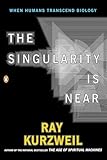
Kurzweil’s career moved from practical technologies that interpreted and generated information toward broader questions about what increasingly capable computers might do. He is also an author; books listed by Penguin Random House include The Age of Spiritual Machines, The Singularity Is Near, How to Create a Mind, and The Singularity Is Nearer. The books develop his arguments about machine intelligence, its development, and its possible consequences for people.
One starting point for readers interested in his ideas is the publisher-listed paperback of The Age of Spiritual Machines (ISBN 9780140282023). Penguin Random House lists its publication date as January 1, 2000. The book presents Kurzweil’s arguments; reading it is not independent evidence that his predictions are correct. See the publisher’s listing for The Age of Spiritual Machines.
Were Ray Kurzweil’s predictions right?
There is no sound single-word verdict. TIME’s September 5, 2024 profile recounts selected forecasts, including examples it says came true and one it identifies as a miss. It is a selection, not a comprehensive independent audit of all Kurzweil’s predictions. A useful assessment asks when a forecast was made, how specifically it was framed, what deadline it set, and what evidence would count as success.
| Forecast, as reported by TIME | Deadline | What the account says |
|---|---|---|
| In 1990, Kurzweil forecast that AI would beat the best human chess player. | Before the year 2000 | TIME says the projection came true. |
| In 1990, he forecast mobile devices connected to a global information network. | Within the next decade | TIME says the projection came true. |
| In 1999, he forecast that computers would match human intelligence in every domain. | 2029 | This is a forecast with a future deadline, not an outcome verified by TIME’s 2024 account. |
| He forecast that speech-to-text would dominate writing. | 2009 | TIME reports that this did not happen. |
TIME’s September 5, 2024 profile provides the examples and their framing. The table should not be read as a scorecard: it contains selected cases, and what counts as “came true” depends in part on how a broad forecast is interpreted.
What does Kurzweil predict about the AI singularity?
Kurzweil uses “the singularity” for a future point when technological change, particularly advances in AI, transforms human life. TIME reported in 2024 that he placed it around 2045 and envisioned people merging with AI through brain-computer interfaces. This is Kurzweil’s forecast, not a settled scientific consensus or a confirmed timetable.
TIME’s profile also describes Kurzweil as optimistic about AI’s potential benefits, including medical advances, while acknowledging that AI carries risks. These are his views about possible outcomes, not guarantees that technology will deliver them or that its risks will be resolved.
Rank #4
What does “the restless genius” mean?
“The restless genius” is an attributed description, not a formal award or an independently established title. Kurzweil Technologies and the XPRIZE Foundation attribute the phrase to The Wall Street Journal. XPRIZE’s profile also attributes “the ultimate thinking machine” to Forbes. XPRIZE’s profile of Ray Kurzweil presents these as descriptions credited to those publications.
Quick Recap
Best Value

- Identifying the problems of the body and how to correct and take care of them
Product prices and availability are accurate as of the date/time indicated and are subject to change. Any price and availability information displayed on Amazon at the time of purchase will apply.

