
The Tool Desk
Outbyte Driver Updater FREEFix the driver behind crashes, sound loss and screen glitchesFind Drivers →Outbyte PC Repair FREEClear out junk files and repair common Windows errorsFree Scan →iTechGuides is reader-supported. When you buy through links on our site, we may earn an affiliate commission. As an Amazon Associate I earn from qualifying purchases. Learn more
Choose solo if you want complete control over pace, route, risk and session length. Choose co-op if you enjoy dividing roles, communicating under pressure and rescuing teammates when a run goes wrong. Neither format is universally better: the right choice depends on how much control, social coordination and recovery capacity you want in each extraction.
The practical difference is larger than simply having more guns on the field. A solo run makes every decision yours, but every mistake is yours too. A team can solve problems that one player cannot, while introducing shared tempo, scheduling and communication overhead.
| # | Preview | Product | Price | |
|---|---|---|---|---|
| 1 |

|
Sniper Elite 5 (XSX/XONE) | $50.94 | Buy on Amazon |
| 2 |

|
Jumanji: The Video Game - Nintendo Switch | $24.50 | Buy on Amazon |
| 3 |
|
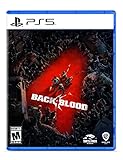
Back 4 Blood - PlayStation 5 | $10.41 | Buy on Amazon |
| 4 |

|
Rico Console Video Games - Nintendo Switch | $29.99 | Buy on Amazon |
Solo or co-op at a glance
| What matters to you | Better fit | Why | Main trade-off |
|---|---|---|---|
| Control over route and timing | Solo | You choose when to explore, fight, hide or extract. | There is no teammate to cover a retreat or recover a failed decision. |
| Complementary abilities | Co-op | Different classes, gadgets or jobs can solve separate problems at once. | Progress depends on coordination and a shared plan. |
| Short, irregular sessions | Solo | You can start or stop without matching another player’s schedule. | You must handle every objective and threat yourself. |
| Rescues and second chances | Co-op | An ally may revive, cover or retrieve a downed player. | A rescue attempt can endanger the whole squad. |
| Stealth, scarcity and isolation | Solo | Enemy attention and resource use stay predictable and personal. | There is no second pair of eyes or emergency tool. |
| Shared stories and coordinated pressure | Co-op | Communication creates emergent moments that a solo run cannot reproduce. | Voice or text communication becomes part of the workload. |
Use this table as a starting point, then check how a particular game treats solo players. Some titles are built around team synergy and merely permit solo play; others deliberately support a lone-player rhythm.
What’s actually slowing this PC down?
Pick the symptom - the matching free tool is one click away.
What changes when you play alone or with friends?
Pacing and control
Solo play gives one person ownership of the tempo. You can take a long route around a patrol, stop to search a room, abandon an objective or extract immediately without explaining the decision. That control is valuable when you prefer methodical planning or when your available play time changes from day to day.
#1 Best Overall
- EXPANSIVE CAMPAIGN: Many real-world locations have been captured using photogrammetry to recreate a living, immersive environment, and multiple infiltration and extraction points and kill list targets provide a whole new perspective on each mission. Take on the Nazi plot solo or work with a partner, with improved co-op mechanics allowing you to share ammo and items, give orders and heal each other.
- ADVANCED GUNPLAY PHYSICS AND TRAVERSAL: Use ziplines, slide down slopes and shimmy along ledges to reach the perfect vantage point, or to sneak past a sharp-eyed lookout. Factor in rifle stock and barrel options along with gravity, wind and heart rate while you line up your sights on the target.
- HIGH CALIBRE CUSTOMISATION: Use workbenches to customise and upgrade virtually every aspect of your weapon – change scopes, stocks, barrels, magazines and more. Rifles, secondaries and pistols all have a huge variety of options. On top of that you can select the ammo to suit your target, from armour-piercing right down to non-lethal.
- INVASION MODE – CAMPAIGN DROP IN PvP AND CO-OP: Invade another player’s Campaign as an Axis sniper and engage in a deadly game of cat and mouse, providing a new dimension to the challenge as you stalk your prey. Alternatively, as Karl you can call for assistance and have a second sniper drop in to help you out of a tricky situation.
- TENSE ADVERSIAL MULTIPLAYER: Customise your character and loadout and earn XP, medals and ribbons as you take on intensely competitive 16 player battles that will really test your sharpshooting skills. If co-op’s more your style, you can team up with up to 3 other players against waves of enemies in Survival mode.
Co-op creates a shared tempo. A fast player may want to push while a cautious player wants to search, heal or wait for a better opening. Good teams turn that tension into a plan—one person scouts, another watches an exit and a third carries the objective—but the plan takes communication. The game feels less like executing a private route and more like synchronizing several people around one.
Role dependence and loadouts
A team becomes especially valuable when its tools are complementary rather than interchangeable. One player can provide reconnaissance, another sustained fire, another a way through terrain and another defensive coverage. The result is not simply higher damage; it is access to solutions that a single flexible loadout may not provide.
Solo play rewards self-sufficiency. You need enough information, mobility, protection and damage to survive without assuming that somebody else will handle a particular task. That can make a versatile build more useful than a highly specialized one, even when the specialized option is stronger in a coordinated squad.
Do these 3 things before closing this tab:
1Scan for outdated or missing drivers - takes under a minute2Repair Windows errors before they cause bigger problems3Fix the driver behind crashes, sound loss and screen glitchesFailure, recovery and extraction decisions
In a solo run, a mistake is absorbed by one character. A missed sound cue, an overextended fight or a blocked escape route can cost the entire haul. The upside is that you never have to wait for another player to make a recovery attempt, and you can leave the moment the risk stops making sense.
Co-op adds a recovery layer. A teammate can provide cover, revive a downed operator or carry an objective while another player retreats. That softens some errors, but it also creates new ones: a rescue can pull the whole team into a bad position, and a player who stays too long to save a friend may lose everyone’s extraction.
Social load and session logistics
Solo removes scheduling, voice-chat etiquette and the need to match a group’s experience level. It is a strong fit when you play at unusual hours, prefer concentration or do not want a failed run to affect friends.
Co-op adds social energy as well as obligations. Clear callouts, agreed priorities and a willingness to disengage when the team votes for safety matter as much as aim. A group that communicates calmly can make difficult situations feel manageable; a group that argues over every route can make an otherwise excellent game exhausting.
Where the tension comes from
Solo tension comes from the environment and your own limited resources: hostile AI, uncertain routes, ammunition, healing and the value of the items already in your pack. Co-op adds interpersonal uncertainty. You may need to choose between securing loot and returning for a downed ally, or decide whether a noisy attack is worth exposing the squad.
Who should choose solo?
- You value authorship. Every route, engagement and extraction call follows your own priorities.
- Your schedule is unpredictable. You can play one run without assembling a group.
- You enjoy stealth and information management. A quiet route remains quiet when nobody else can accidentally fire or sprint through it.
- You prefer responsibility to negotiation. There is no argument about whether to push, hide or leave.
- You want a self-contained challenge. Surviving with limited tools can be more satisfying when no teammate can correct the mistake.
Solo is not automatically the easier mode. It usually demands broader situational awareness because you cannot delegate scouting, security or carrying. A solo-friendly game may compensate with a helper, generous tools or objectives designed to be completed by one character; a co-op-first game may leave a lone player doing every job at once.
Who should choose co-op?
- You enjoy role division. Planning who scouts, carries, clears or protects gives the squad a concrete identity.
- You like rescue stories. Recovering a teammate under fire creates stakes that scripted objectives rarely match.
- You communicate naturally. Short, useful callouts and shared decisions turn pressure into teamwork.
- You want to experiment with specialized builds. A team can cover the weaknesses that make a narrow loadout risky alone.
- You enjoy emergent chaos. Multiple players produce surprising plans, mistakes and recoveries.
Co-op is strongest when the game gives each player meaningful work. If four people all perform the same task, the social burden remains while the strategic benefit shrinks. Look for games where classes, gadgets, objectives or terrain create genuine reasons to coordinate.
Rank #2
- Unite in adventure and laughter in the action-packed game of Jumanji, as you try to survive the ultimate challenge for those seeking to leave their world behind!
- Only you and three teammates can recover the JEWELS and save Jumanji. So get online, gather friends for split-screen play, or go alone with AI companions.
- There’s an army of evil marauders to take on, deadly beasts and traps to dodge, and cool customizations to unlock. And with heroes Dr. Bravestone, Ruby, Mouse, and Prof. Oberon as your avatars, you know you’ve got the unique abilities – and hilarious failings – to save the day!
- Play as movie heroes Dr. Bravestone, Ruby, Mouse, and Prof. Shelley in a hilarious new 3D action adventure.
- In online or split-screen modes, work together with up to three friends or AI teammates to defeat enemies, survive deadly traps, and save the world.
Deep Rock Galactic: co-op-first design with a credible solo option
Deep Rock Galactic is officially a four-player science-fiction co-op shooter set in procedurally generated, fully destructible caves. Missions combine objectives with mineral collection, so the team is constantly balancing exploration, traversal, combat and the decision to leave with what it has found.
The official FAQ says the game is meant to be experienced with others but supports a single-player experience through Bosco, a robot helper that joins missions when you play alone. That distinction matters: solo is supported rather than ignored, yet the central design assumes that several players will divide the cave’s problems.
Why co-op is the natural fit
The PlayStation listing identifies four distinct classes and describes their jobs: the Gunner clears enemies, the Scout provides lighting and reconnaissance, the Driller cuts through rock and the Engineer builds defensive structures and turrets. These abilities overlap enough to keep a team moving, but they also make class synergy visible. A squad can illuminate a chamber, open a route, establish defenses and control a swarm as a coordinated unit.
The listing supports up to four online players with a PlayStation Plus subscription, states that online play is optional and also lists one-player play. The standard PS4/PS5 edition was shown at $29.99 on the listing when that price was observed; storefront prices and editions can change by region and date.
What Bosco changes for a lone player
Bosco reduces the burden of being alone by providing an additional source of help during missions. You retain control over the route and timing, while the helper addresses some of the tasks that would otherwise require another player. That makes solo practical for players who want the cave-mining loop without arranging a squad.
Free tools Windows power users keep installed
One-click scans. No signup required.
The trade-off is emotional and strategic. A robot assistant does not reproduce the improvisation, callouts or class-combination moments of three human teammates. Choose solo here when convenience and control outweigh the appeal of coordinated class play; choose co-op when the interaction between Gunner, Scout, Driller and Engineer is the feature you most want to experience.
Rainbow Six Extraction: a tactical middle ground
Ubisoft describes Rainbow Six Extraction as a tactical, co-op PvE first-person shooter in which a squad faces an evolving alien threat, with teamwork, tactics and precise execution central to survival. The official description gives players two clear structures: assemble a squad of up to three Operators or go solo.
That explicit choice makes the game a useful middle ground for players deciding between concentration and coordination. Solo play lets you read an objective and manage exposure without a squad changing the plan. A group can assign angles, coordinate movement and recover a compromised operation, but every sound or movement decision affects the others.
Who fits the solo path?
Choose solo if you enjoy objective-driven tactical play and want to own the timing of every breach, retreat and extraction. The format suits players who would rather repeat a careful route than explain a change of plan over voice chat.
Who benefits from a squad?
Choose a squad when communication is part of the fun. Three teammates can watch separate approaches, synchronize actions and decide whether saving a vulnerable operator is worth the additional exposure. That creates a different kind of tension from solo: the risk is not only losing your own progress but also making a call that strands somebody else.
Rank #3
- Fight your way through a perilous world In a 4-player co-op story campaign where you must work together to survive increasingly challenging missions
- Choose from 8 customizable cleaners and a range of lethal weapons and items
- Play with or against friends in PvP
- A new Roguelike card system creates different experiences each and every time
- A PlayStation Plus subscription is required to play Back 4 Blood on PlayStation or Xbox consoles.
Rainbow Six Extraction released on January 20, 2022, for PC, PlayStation 5, Xbox Series X|S, PlayStation 4 and Xbox One. Those are the platforms documented by Ubisoft for the release; current availability, updates and player populations should be checked separately before purchase.
The Forever Winter: stealth, scarcity and the value of a rescue
PC Gamer characterizes The Forever Winter as pure co-op PvE that also supports solo play. Its solo experience is described as survival-horror-like: shoot only when necessary, sneak through hostile territory, scavenge for scrap and escape quickly. That profile suits players who want extraction tension to come from vulnerability rather than from constant firefights.
Why solo feels unusually intense
When you are alone, every noise and line of sight has a direct cost. Avoiding a battle preserves ammunition and time, but it also means relying on route knowledge and patience. A lone player cannot ask someone else to distract a threat or carry supplies while scouting, so stealth and evasion become active strategies rather than optional flavors.
Quick wins for a faster PC:
Fix the driver behind crashes, sound loss and screen glitchesFind Drivers →Clear out junk files and repair common Windows errorsFree Scan →What co-op adds
Co-op improves survival through coordination instead of simply making enemies weaker. Players can divide scouting and scavenging, choose when to engage and attempt to rescue an ally who has been downed. The rescue decision changes the risk calculation: returning for a teammate may save a run, but it can also expose everyone to the same danger.
Choose The Forever Winter solo if you want an atmospheric, stealth-led challenge in which every encounter feels personal. Choose co-op if the prospect of asymmetric danger, coordinated aggression and rescue decisions is more appealing than perfect control over your route.
Arc Raiders: a multiplayer extraction loop that can feel nearly solo
Arc Raiders is a useful example of a game designed around multiplayer uncertainty while aiming to remain approachable to a lone player. GamesRadar quoted Embark lead Stefan Strandberg explaining that development began with PvE and co-op, including the game’s PvE enemies, before the team concluded that the initial approach did not hold up. The same interview quoted him saying that players can “almost play it as a single-player game if you want.”
The reported structure combines AI-controlled robots, quests, skill trees, a base and loot-driven progression with an extraction loop. That combination can give a solo player an individually authored sense of progression while preserving the possibility that multiplayer conditions will alter a run.
How to interpret the solo promise
“Almost” is important. A game can let you make decisions alone without becoming a conventional single-player campaign. Extraction risk, other players, shared spaces or changing mode rules may still shape the experience. Treat Arc Raiders as a near-single-player-accessible multiplayer case, not as proof that every part of the game is designed for isolated play.
Live rules, PvE availability, platforms and progression systems can change. Verify the current mode description and platform information before deciding, especially if your choice depends on a strictly solo session.
Independent reader supportYour contribution helps us test, update, and keep practical guides available for everyone.A practical decision framework
Use these questions before choosing a mode or game. Answer them for your normal week, not for an ideal session with unlimited time.
Rank #4
- Arcade-paced, bullet-time fueled, cooperate FPS
- Kick down doors, shoot bad guys, exploit the element of surprise
- Instantons cooperative multiplayer thrills both local and online play
- Daily Play challenges, leaderboards, and unlockable rewards for incentive replay value
- Randomly generated cases, operations, and environments
- How much control do you need? If you want to change route or extract without consulting anyone, start with solo. If shared decisions are part of the appeal, start with co-op.
- Would specialized roles feel rewarding? If yes, favor a game where classes or tools complement one another, such as Deep Rock Galactic. If no, choose a self-sufficient solo structure.
- How do you react to failure? If you prefer a clean personal challenge, solo keeps responsibility simple. If you enjoy recovering a bad situation, co-op provides revives and rescue choices.
- Can you reliably coordinate sessions? A co-op game is a better long-term fit when friends can play at similar times and communicate clearly. Otherwise, a solo mode or flexible matchmaking prevents scheduling from becoming the main obstacle.
- What kind of tension do you want? Pick stealth, scarcity and isolation for solo pressure; pick communication, rescue and synchronized objectives for co-op pressure.
How to make solo extraction runs work better
Plan an exit before chasing value
Identify a realistic extraction route before entering the highest-risk area. The point is not to avoid ambition; it is to prevent a valuable find from forcing an improvised escape through terrain you have not considered.
Outdated Drivers Are Slowing You Down
One free scan finds every outdated or missing driver and matches the right update for your exact hardware.Free scan · exact hardware matchPC Slower Than It Used to Be?
A free scan shows the junk files, broken settings and background clutter dragging Windows down - then fixes them in one click.Free scan · Windows 10 & 11Favor information and flexibility
Because nobody else can scout while you fight, tools that reveal routes, warn of threats or let you disengage have unusual value. A flexible setup is often safer than a specialized one when every task belongs to the same character.
Set a personal risk threshold
Decide in advance what would make you leave: a depleted healing supply, a noisy encounter, a damaged escape route or a particular objective completed. A threshold turns extraction into a deliberate decision rather than a reaction to panic.
Use stealth as resource management
Avoiding an unnecessary fight preserves ammunition, time and attention. In games such as The Forever Winter, stealth is not passive play; it is the method that keeps a solo run viable when direct combat would consume too much.
How to make co-op extraction runs work better
Agree on a simple priority
Before the first objective, decide whether the group is prioritizing a mission, specific resources, reconnaissance or a safe extraction. A shared priority prevents four individually sensible decisions from pulling the squad apart.
Recommended Free Tools
Give every player a job
Assign scouting, security, carrying or route opening according to the game’s tools. Clear responsibility reduces duplicated effort and makes it obvious who should act when a plan changes.
Use short, actionable callouts
Good communication names a threat, direction and action: an enemy is approaching, an exit is compromised or the team is leaving. Long explanations during contact consume the attention needed to survive.
Define rescue limits
Agree on when a downed player can be recovered and when the remaining team should extract. Rescue play is one of co-op’s strongest advantages, but it works only when the group understands how much risk it is willing to accept.
Final choice by playstyle
| If this describes you | Start with | Best evidence from these games |
|---|---|---|
| You want teamwork to be the main attraction | Co-op | Deep Rock Galactic’s four classes and destructible cave missions make role synergy central. |
| You want tactical objectives with a clear solo option | Either, then compare your preferred tempo | Rainbow Six Extraction supports a squad of up to three Operators or solo play. |
| You want fear, stealth and scavenging | Solo first | The Forever Winter’s solo profile emphasizes evasion and resource scarcity. |
| You want rescue stories and coordinated aggression | Co-op | The Forever Winter’s co-op structure adds ally recovery to the survival problem. |
| You want multiplayer progression that can still feel individually authored | Solo-friendly multiplayer | Arc Raiders was described by its lead as playable “almost” like a single-player game. |
| You cannot rely on a regular group | Solo or a game with robust solo assistance | Deep Rock Galactic pairs solo missions with the Bosco helper. |
The shortest answer is therefore conditional: solo is better for control, independence and stealth-led tension; co-op is better for role synergy, communication and recovery. Select the game whose underlying design supports that preference rather than assuming that every PvE extraction shooter treats lone players the same way.
Quick Recap
Product prices and availability are accurate as of the date/time indicated and are subject to change. Any price and availability information displayed on Amazon at the time of purchase will apply.

