
iTechGuides is reader-supported. When you buy through links on our site, we may earn an affiliate commission. As an Amazon Associate I earn from qualifying purchases. Learn more
An eye tracker cannot read mental effort from pupil diameter directly. It records a mixed signal: illumination and stimulus luminance drive the fast, powerful pupillary light reflex, while task demands can produce a slower task-evoked dilation. Researchers make the slower component interpretable by matching visual input, stabilizing gaze, recording the lighting environment, removing blinks and dropouts, and applying a defensible baseline correction.
A larger pupil often accompanies greater cognitive demand, but it is not a dedicated effort meter. Arousal, uncertainty, emotion, fatigue, eye movements and luminance can all change the measurement. Trustworthy pupillometry therefore depends as much on experimental control and preprocessing as on the eye tracker itself.
What pupillometry measures
Pupillometry is the measurement of pupil size over time. In cognitive-pupillometry experiments, researchers use task-evoked pupil responses to study attention, mental effort, working memory, arousal and related processes. An eye tracker estimates the diameter of one or both pupils while also recording when samples were captured and, in many systems, where the participant was looking.
The pupil is an adjustable opening rather than a fixed sensor. Across ordinary conditions its diameter is roughly 2–8 mm, according to Mathôt and Vilotijević (2023). A measurement in that range is shaped by the amount of light entering the eye, the participant’s physiological state and the task being performed. The useful question is not “How large is the pupil?” but “How did pupil size change relative to a well-matched baseline, and what other causes of that change were controlled?”
#1 Best Overall
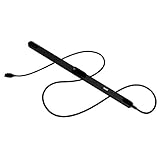
- WORKS IN ALL LIGHT CONDITIONS - Our eye and head tracking technology makes your favorite games more immersive whether you are in a pitch black room or in bright daylight.
- HEAD AND EYE TRACKING IN ONE DEVICE - Tobii Eye Tracker 5 tracks both head and eye movements for more immersive PC gaming experiences. Compatible with Windows 10 and Windows 11
- 170+ ENHANCED GAMES - Celebrated by players for bringing game changing features to Star Citizen, Microsoft Flight Simulator, War Thunder, Euro Truck Simulator, and 170+ other game titles.
- NO WEARABLES NEEDED - Say goodbye to devices that require you to wear trackers on a hat and enjoy the freedom in game and outside of it.
- WINDOWS HELLO - Tobii Eye Tracker 5 is compatible with Windows Hello and uses biometric data to make your device safer.
Two parts of the signal matter most:
- Baseline pupil size: overall illumination largely sets the starting diameter. Dark surroundings generally permit a larger baseline pupil; brighter surroundings generally produce a smaller one.
- Evoked response: a change in stimulus luminance can trigger a visual response, while a demanding task can produce a psychological response. The visual response may be faster and larger than the cognitive response.
These components overlap in the recorded trace. Separating them is an experimental-design and analysis problem, not a feature that an eye tracker solves automatically.
Why lighting can look like mental effort
The pupillary light reflex is a rapid control system. When a display or scene becomes brighter, the pupil constricts; when it becomes darker, it tends to dilate. Steinhauer and colleagues’ 2022 guidelines warn that a transition from a darker prestimulus field to a brighter display can evoke a light reaction whose amplitude is greater than the response to the psychological manipulation under study.
This creates a straightforward confound. Suppose a difficult condition is shown on a slightly darker background than an easy condition. A larger pupil in the difficult condition could reflect the luminance mismatch, the greater task demand, or both. The same problem occurs when a participant looks from a bright area to a dark one: the eye movement changes the local visual field and can produce a pupil response unrelated to the intended manipulation.
Illumination and stimulus luminance should therefore be treated as different variables. Ambient illumination helps determine the participant’s general baseline. The luminance of the display, background and individual stimuli determines the strength of visually evoked responses. Recording only room brightness does not establish that two on-screen conditions were visually equivalent.
What a cognitive-load effect should look like
A common pattern is gradual dilation during or after a more demanding trial, relative to a matched lower-demand trial. A review by van der Wel and van Steenbergen (2018) found that increased task demands typically produced increased pupil dilation in updating, switching and inhibition tasks. This supports dilation as a useful indicator of effort-related processing.
It does not make dilation specific to effort. The same direction of change can be associated with heightened arousal, uncertainty, emotional significance or fatigue. Eye movements and luminance can change the trace without any change in cognitive demand. Bremner and colleagues’ systematic review of cortical modulation screened 8,809 papers and included 258 studies; it describes pupil changes as widely used indices of attention and arousal while noting that the exact cortical circuits remain incompletely understood.
Interpret a pupil result as evidence that a condition changed the participant’s physiological response under controlled visual conditions. Do not label every larger pupil “higher workload” unless the design and other measures rule out plausible alternatives.
The Tool Desk
Outbyte Driver Updater FREEScan for outdated or missing drivers - takes under a minuteDriver Scan →Outbyte PC Repair FREEClear out junk files and repair common Windows errorsFree Scan →Rank #2

- Immersive In-Game Head Tracking — Converts natural head movements into camera control for ultra-realistic gameplay in flight, racing, and combat simulators..
- Precision Tracking with TrackClip PRO — Attaches to hats or visors and reflects infrared signals for accurate, low-latency tracking—even in low-light environments.
- True 6DOF Motion Capture — Tracks yaw, pitch, roll, and movement across X, Y, and Z axes for full 3D control in supported games and simulation software.
- Customizable Software Profiles — Fine-tune tracking speed, motion curves, and dead zones, or select from preset profiles for plug-and-play setup.
- Stable Mounting on Most Monitors — Magnetic base and adjustable legs ensure secure installation on nearly any screen, with quick setup and removal.
Design the experiment so light and effort are separable
Match visual input between conditions
Keep background and stimulus luminance the same across the conditions you intend to compare. Match display geometry, stimulus size and position, contrast and timing where the task allows. If the manipulation requires a visual change, measure that change and model it rather than assuming it is negligible.
Use the same screen, viewing distance and display settings throughout a session. A change of monitor, window, scaling or background can alter luminance even when the nominal color values look identical. Record the display configuration so a later analysis can distinguish a cognitive manipulation from an equipment change.
Control gaze and fixation
Eye movements alter the visual input reaching the retina and can expose the participant to a different local luminance. They also introduce measurement artifacts when the pupil is partly occluded or moves toward the edge of the camera image. Provide a stable fixation point when that is compatible with the task, and monitor gaze position when eye position is part of the expected source of variation.
Do not use fixation as a substitute for visual matching. A participant can maintain fixation while the display itself changes brightness, and a perfectly matched display can still produce artifacts if the participant looks away.
Free tools Windows power users keep installed
One-click scans. No signup required.
Use an intermediate, measured lighting environment
Very dark and very bright conditions push the pupil toward physiological limits, reducing room for a response in one direction. Mathôt and Vilotijević’s 2023 methods guide recommends an intermediate environment, with ambient lighting around 30 lux (reported in the guide as approximately ±30 lux) and background luminance around 30 cd/m² for typical experiments. Treat these as practical reference points, not universal requirements: the correct setting depends on the display, task and population.
Measure illuminance at the participant’s eye position and keep it stable. Log changes caused by daylight, overhead lights, doors, monitors or equipment indicators. Measure or otherwise characterize screen luminance for every condition, especially when stimuli differ in brightness.
Give the response time to recover
Rapidly repeating trials can stack one pupil response on another. The methods guide recommends slow-paced trials with about 2–3 seconds of recording after the stimulus and intertrial intervals of at least 3 seconds to help separate successive responses. Longer intervals may be needed when the task or luminance change produces a prolonged response.
Rank #3

- COMPLETE BUNDLE - Includes Tobii Eye Tracker 5, a protective carry case, and an additional mounting kit for flexibility and convenience.
- HEAD AND EYE TRACKING IN ONE DEVICE - The Tobii Eye Tracker 5 is the only device that can track both your head and eyes at the same time for more immersive experiences.
- WORKS IN ALL LIGHT CONDITIONS - Our eye and head tracking technology makes your favorite games more immersive whether you are in a pitch black room or in bright daylight.
- CUSTOMIZABLE MOUNTING OPTIONS - The additional mounting kit allows you to create another eye tracker-ready setup on a second monitor. Perfect for users who move between locations—just take the tracker with you, and seamlessly switch between different screens without any hassle.
- PORTABLE AND DURABLE CASE - Safeguard your eye tracker during travel or storage with a compact carry case.
Use the same timing in every condition. If one condition has a longer response window, its average pupil size can differ simply because it includes more of the recovery period.
Windows Errors? Fix Them Before They Spread
Repair common Windows errors and clear accumulated junk for a smoother, more stable PC - no reinstall needed.Free scan · no reinstallOutdated Drivers Are Slowing You Down
One free scan finds every outdated or missing driver and matches the right update for your exact hardware.Free scan · exact hardware matchA practical acquisition protocol
- Define the comparison. Specify the cognitive manipulation, the baseline period and the time window in which a task-evoked response will be evaluated.
- Standardize the room. Set ambient illumination to an intermediate level, measure it at the participant’s viewing position and document the value and any permitted variation.
- Standardize the display. Keep screen, distance, geometry, background and stimulus luminance matched between compared conditions. Record display settings and stimulus timing.
- Calibrate the eye tracker. Confirm that the system can locate the pupil and, when required, both eyes and gaze position. Recalibrate if accuracy or tracking quality changes during the session.
- Stabilize viewing. Use fixation or gaze monitoring when appropriate. Design the task so necessary eye movements are either matched across conditions or explicitly modeled.
- Collect a clean baseline. Record a prestimulus period long enough to estimate the participant’s current pupil size without an unplanned luminance transition immediately beforehand.
- Record the response and recovery. Capture the task period plus roughly 2–3 seconds afterward, and use intertrial intervals of at least 3 seconds when the design permits.
- Log context. Preserve trial condition, stimulus luminance, ambient illuminance, calibration status, gaze quality and any interruptions. These fields are essential when a lighting difference appears to explain a result.
Preprocess the trace in the right order
Preprocessing choices can create or erase an apparent cognitive effect. Mathôt and Vilotijević (2023) note that there is no commonly agreed-upon workflow for cognitive-pupillometry experiments, so the analysis plan should be explicit and reproducible.
1. Mark invalid samples before correction
Identify blinks, missing samples, camera dropouts and periods in which the pupil estimate is clearly invalid. Keep a record of how much data each trial loses. A blink near the expected peak can bias a trial differently from a blink during a flat baseline.
2. Inspect raw and cleaned traces
Plot representative uncorrected traces and the same traces after artifact handling. Check for abrupt jumps, clipped pupil estimates, long gaps and condition-specific dropout. A polished average can conceal a camera or gaze problem that is obvious in individual trials.
3. Apply baseline correction after artifact handling
For a subtractive baseline correction, calculate the mean pupil size during the defined prestimulus period and subtract it from each subsequent sample. The result expresses the response as a change relative to that trial’s starting level, rather than as an absolute diameter that is heavily influenced by room illumination.
Baseline correction does not remove a luminance confound that occurs at stimulus onset. It only accounts for the starting level. If one condition produces a brighter visual transition, the resulting light reaction remains in the corrected trace.
4. Inspect corrected and uncorrected data together
Keep both versions for quality control. A condition difference that appears only after an aggressive transformation deserves scrutiny. Compare the timing, direction and size of effects in raw, cleaned and baseline-corrected traces, and report the exclusion and correction rules used.
Rank #4

- Increased realism enhances your game experience through subtle immersion. Note: Item does not include TrackClip PRO.
- 6 Degrees of Freedom (6DOF) – Tracks motion across yaw, pitch, roll, and X, Y, Z axes for full three-dimensional movement in supported PC games and simulation software.
- High-Precision USB Optical Sensor – Delivers smooth, low-latency tracking with accurate motion capture—even in low-light conditions—for seamless gameplay.
- Customizable Software Profiles – Includes powerful software that lets you adjust motion curves, sensitivity, and dead zones, or choose from pre-configured game profiles.
- Magnetic Mount for Easy Setup – Attaches securely to most monitors with an adjustable magnetic base, allowing for fast setup and removal without tools.
5. Reject implausible baseline trials
Discard trials with unrealistically small baseline values, as recommended by the methods guidance. Such values can indicate a blink, a tracking failure or an invalid pupil estimate rather than an unusually constricted physiological state. Set the threshold before looking at condition outcomes and apply it consistently.
Respect the pupil’s response latency
A manipulation cannot produce a physiologically plausible pupil response instantaneously. Steinhauer and colleagues’ guidelines advise caution when interpreting apparent effects within approximately ±220 ms of the manipulation. A difference confined to that interval may reflect timing misalignment, interpolation, a blink boundary or another processing artifact rather than a genuine pupil response.
Recommended Free Tools
Align trials to a clearly defined event, preserve the eye tracker’s time stamps and state the analysis window. When a visual change and a cognitive instruction occur together, consider whether the early part of the trace is dominated by the light reflex before assigning a later change to task demand.
How to interpret “bigger pupil” claims
| Observation | What it can support | What it cannot establish by itself |
|---|---|---|
| Larger dilation in a harder condition with matched luminance and clean gaze | The harder task is associated with a stronger task-evoked pupil response. | That effort is the only cause, or that every participant experienced the same mental process. |
| Different absolute pupil diameters between participants | Individual physiological or lighting differences exist. | That one participant exerted more effort than another. |
| Early constriction or dilation immediately after a brightness change | A visual response to luminance is plausible. | A cognitive-load effect, unless visual input is matched or modeled. |
| A difference during fatigue, emotional material or uncertainty | A change in arousal or state may be present. | Specific changes in working memory, attention or workload. |
Use the pupil as one measure in a converging design. Task accuracy, reaction time, self-report or another physiological measure can help determine whether a pupil difference tracks the intended manipulation or a broader change in state.
Independent reader supportYour contribution helps us test, update, and keep practical guides available for everyone.What a recent lighting comparison shows
A 2026 study published in Frontiers in Public Health measured 48 adults under 300- and 500-lux conditions while they completed writing and n-back tasks. Pupil diameter was recorded with Pupil Labs Core eye-tracking glasses. The direct illuminance comparison found no significant effect on the reported pupillary parameters, with absolute effect sizes of |d| ≤ 0.19.
This result does not make lighting irrelevant. It shows why illuminance should be measured and included in the design or statistical model rather than assumed to explain every workload difference. A null comparison under those conditions cannot be generalized automatically to every display, brightness transition, participant group or task.
Choosing or comparing an eye-tracking workflow
The most useful comparison is not a single headline specification. Evaluate the complete measurement and analysis chain against the questions your study must answer.
Best Value

- What does it include? - This kit includes extra mounts for your Tobii Eye Tracker 5 and Tobii Eye Tracker 4C.
- Made for various shapes - The Flex Mount places underneath your curved, flat, ultrawide, or thin-bezel screen.
- Your preference matters - For built-in screens or to place your tracker directly on the front of your screen bezel, use the Metal Plate Mount.
- Catch your right angle - We all have different postures and heights. Therefore our positioning in front of a screen will vary. Use the Flex Mount to put the tracker at the right angle.
| Comparison axis | Questions to ask | Why it matters for cognitive pupillometry |
|---|---|---|
| Camera and sampling performance | How reliably does the system capture pupil boundaries, and how are timing and missing samples recorded? | Weak sampling or unstable timing can obscure the slower task-evoked response. |
| Eye and gaze coverage | Can it measure both eyes and gaze position, and can those streams be synchronized? | Binocular data and gaze context help identify asymmetry, occlusion and luminance changes caused by eye movements. |
| Lighting measurement | Can the workflow control or log display luminance and ambient illuminance? | Without those variables, a light-reflex explanation is difficult to test. |
| Blink and dropout handling | Are invalid samples marked, exported and auditable? | Artifact decisions must occur before baseline correction and should be reproducible. |
| Baseline correction | Can you define a prestimulus window, use subtractive correction and retain corrected and uncorrected traces? | Baseline-aware analysis makes between-trial comparisons more interpretable. |
| Latency and temporal resolution | Are event markers synchronized accurately enough to evaluate the expected response window? | Effects near ±220 ms require particular caution. |
| Calibration stability | Does tracking remain reliable throughout the session, and can recalibration be documented? | Drift or loss of the pupil estimate can masquerade as a condition effect. |
| Reproducible analysis | Can the system export raw data, quality flags, event markers and preprocessing settings? | There is no universally agreed workflow, so transparent records are part of the evidence. |
Troubleshooting common failures
The “high-load” condition has a brighter screen
Treat the result as confounded. Re-run the comparison with matched luminance, or include measured luminance as a planned factor. Do not rescue the interpretation with baseline subtraction alone.
Effects appear only in the first few hundred milliseconds
Check event synchronization, the preceding prestimulus field and any brightness transition. Because responses within about ±220 ms are physiologically questionable, verify timing and artifacts before interpreting the effect.
One condition has more missing data
Inspect gaze position, blink frequency, occlusion and calibration status by condition. If data loss is condition-dependent, report it and test whether the remaining trials are representative; silently averaging the survivors can bias the comparison.
What’s actually slowing this PC down?
Pick the symptom - the matching free tool is one click away.
Absolute pupil size differs greatly between participants
Use within-participant baselines and analyze changes over time rather than ranking people by raw diameter. Ambient light, physiology and camera geometry all affect the absolute value.
Responses overlap across trials
Lengthen the intertrial interval, slow the task or analyze a window that is not contaminated by the preceding response. The methods guidance suggests at least 3 seconds between trials where practical.
A defensible conclusion
Pupillometry distinguishes cognitive effort from lighting by controlling the light pathway rather than pretending it is absent. Match luminance, stabilize gaze, measure ambient conditions, allow recovery, reject invalid samples, apply baseline correction after artifact handling and respect the pupil’s response latency. After those steps, a larger pupil can be interpreted as evidence of a stronger task-evoked response associated with greater demand—but still not as a unique or universal measure of mental effort.
Quick Recap
Product prices and availability are accurate as of the date/time indicated and are subject to change. Any price and availability information displayed on Amazon at the time of purchase will apply.
Do these 3 things before closing this tab:
1Repair Windows errors before they cause bigger problems2Scan for outdated or missing drivers - takes under a minute3Clear out junk files and repair common Windows errors
