
iTechGuides is reader-supported. When you buy through links on our site, we may earn an affiliate commission. As an Amazon Associate I earn from qualifying purchases. Learn more
Progressive resistance training is the main treatment for sarcopenia. Protein matters because it supplies the raw material for repair, but whey powder or any other supplement is not a stand-alone cure. The most defensible plan is a medically appropriate strengthening program, enough protein from food and supplements when useful, balance practice, and regular checks of function such as chair rises, walking speed and grip strength.
That conclusion comes from several recent evidence reviews. Results are encouraging, but trials are small and varied, so no single powder, dose or exercise routine can be promised to every older adult. A clinician or dietitian should adapt the plan for kidney disease, swallowing difficulty, allergies, cancer treatment, medication restrictions, pain or high fall risk.
What sarcopenia is and why the treatment has two parts
Sarcopenia is the age-associated loss of muscle strength and physical performance, often accompanied by reduced muscle quantity or quality. In practice, weakness and difficulty performing daily activities are more important than body weight alone. Someone can weigh the same, or even gain weight, while losing useful muscle.
Muscle responds to two linked signals. Resistance exercise creates a stimulus for the nervous system and muscle fibers to become stronger. Dietary protein provides amino acids needed to repair and build tissue. If either signal is consistently missing, progress is harder. Exercise without adequate nutrition may be limited by poor recovery; protein without a training stimulus has a less reliable effect on strength and function.
#1 Best Overall

- GOLD STANDARD WHEY PROTEIN - 24 g of premium whey protein per scoop from whey protein isolate and concentrate to help build and maintain lean muscle when paired with regular resistance training.
- ANYTIME FORMULA - A great choice post run or lift, between meals, with a meal, or any time of day when you need extra protein.
- POST WORKOUT RECOVERY - Loaded with 5.5 g of naturally occurring BCAAs (branched-chain amino acids) and 11 g of essential amino acids (EAAs) to supercharge recovery and get the most out of your workouts.
- TRUSTED AND SAFE - Banned-substance tested and made by the world’s #1 sports nutrition brand - The Gold Standard for protein quality so you feel comfortable and safe down to the last scoop!
- INSTANTIZED FORMULA - Ultra easy mixing, no clumps. Just shake, stir, or blend one scoop with 6–8 oz of water, milk, or your favorite beverage for about 20 seconds.
International clinical-practice guidance identifies progressive resistance exercise as the foundation of management and supports improving protein intake, while noting that evidence for some nutrition recommendations remains limited (international clinical-practice guidance, cited as c3).
What recent trials show
Whey protein reviews from 2024
A 2024 systematic review of randomized trials in older adults diagnosed with sarcopenia examined whey protein with or without resistance training. It assessed muscle mass, strength and physical performance (c1). A separate 2024 systematic review found that protein supplementation combined with resistance exercise improved muscle mass and strength in community-dwelling older adults with sarcopenia, but cautioned that the number of randomized trials was limited and certainty is therefore reduced (c2).
These reviews support whey as a practical way to close a protein shortfall, not as a replacement for exercise. The pooled studies differed in participant health, products, exercise programs and outcome definitions. A favorable average does not establish that every product or dose will work for an individual.
PC Slower Than It Used to Be?
A free scan shows the junk files, broken settings and background clutter dragging Windows down - then fixes them in one click.Free scan · Windows 10 & 11Outdated Drivers Are Slowing You Down
One free scan finds every outdated or missing driver and matches the right update for your exact hardware.Free scan · exact hardware matchCombined exercise and nutrition appear strongest
A 2024 network meta-analysis reported that resistance-and-balance training combined with protein-based nutrition was the strongest compared intervention for several outcomes. Compared with the analysis’s reference condition, the estimated differences were:
| Outcome | Estimated mean difference | 95% confidence interval | How to interpret it |
|---|---|---|---|
| Grip strength | 5.45 kg | 3.58 to 7.33 kg | Average advantage in the included comparisons; not a guaranteed personal gain. |
| Gait speed | 0.20 m/s | 0.11 to 0.29 m/s | A population estimate that can be meaningful for walking safety and independence. |
| Short Physical Performance Battery (SPPB) | 3.59 points | 1.91 to 5.27 points | Improvement in a composite lower-body function test. |
| Skeletal muscle index | 0.95 kg/m² | 0.16 to 1.74 kg/m² | Average change in a body-size-adjusted muscle measure. |
The findings are from a 2025 publication titled Comparative Effectiveness of Exercise and Protein-Based Interventions on Muscle Strength, Mass, and Function in Sarcopenia (c5). Confidence intervals describe uncertainty around the pooled estimates; they do not predict the exact response of one person.
Resistance training works even without a supplement
A 2023 network meta-analysis included 50 randomized controlled trials and 4,085 participants. It found resistance training, with or without added nutrition, was positively associated with improved strength and physical performance (c4). That is why waiting to buy a supplement should not delay starting a safe strengthening plan.
Rank #2
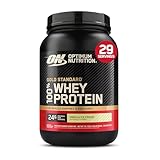
- GOLD STANDARD WHEY PROTEIN - 24 g of premium whey protein per scoop from whey protein isolate and concentrate to help build and maintain lean muscle when paired with regular resistance training.
- ANYTIME FORMULA - A great choice post run or lift, between meals, with a meal, or any time of day when you need extra protein.
- POST WORKOUT RECOVERY - Loaded with 5.5 g of naturally occurring BCAAs (branched-chain amino acids) and 11 g of essential amino acids (EAAs) to supercharge recovery and get the most out of your workouts.
- TRUSTED AND SAFE - Banned-substance tested and made by the world’s #1 sports nutrition brand - The Gold Standard for protein quality so you feel comfortable and safe down to the last scoop!
- INSTANTIZED FORMULA - Ultra easy mixing, no clumps. Just shake, stir, or blend one scoop with 6–8 oz of water, milk, or your favorite beverage for about 20 seconds.
When sarcopenia and obesity occur together
For sarcopenic obesity, a 2023 analysis associated resistance training with a 1.53% reduction in body fat, a 2.72% increase in muscle mass, a 4.42 kg increase in muscle strength and a 0.17 m/s increase in gait speed (c6). These are population-specific averages from the analyzed studies, not promises for every person. Aggressive dieting can worsen muscle loss, so weight goals should be coordinated with a clinician or dietitian.
Free tools Windows power users keep installed
One-click scans. No signup required.
How to build a resistance program
The goal is progressive overload: begin at a level that can be performed safely and repeatedly, then gradually increase challenge as movement becomes easier. Progress can mean more repetitions, a heavier object, a larger range of motion, slower lowering, less assistance or an additional set. The safest progression depends on balance, pain, cognition, vision, medications and other illnesses.
Start with movements that transfer to daily life
- Leg strengthening: sit-to-stand from a firm chair, supported squats, step-ups on a low step and controlled knee extensions.
- Hip strengthening: standing hip abduction or extension while holding a stable surface, and bridges if getting down to the floor is safe.
- Pulling: resistance-band rows or a cable row with the shoulders relaxed and the spine supported.
- Pushing: wall push-ups, incline push-ups on a sturdy counter or a machine press adjusted by a professional.
- Carrying and lifting: light, controlled carries or household objects when grip and balance permit.
- Balance: tandem stance, weight shifts and turning practice near a countertop or with supervision.
Use a stable chair or railing rather than a wheeled object. Stop for chest pain, faintness, unusual shortness of breath, sudden weakness or sharp joint pain and seek medical advice.
Use a simple progression log
- Record the exercise, assistance used, repetitions and how difficult it felt.
- Repeat the same movement pattern consistently enough to judge change.
- When all repetitions are controlled and symptoms remain acceptable, change only one variable: a small resistance increase, one or two additional repetitions, a slower lowering phase or less hand support.
- Keep a recovery note. Persistent exhaustion, worsening pain, repeated falls or declining function means the plan needs review rather than more intensity.
A physical therapist, exercise physiologist or trained clinician is particularly valuable for frailty, recent falls, osteoporosis, neurological disease, severe arthritis, multiple medications or uncertainty about technique.
Where balance training fits
Strength alone does not teach the body to react to a trip or to turn safely. Add balance work suited to the person’s ability, always near support. Progress from wide-stance weight shifts to narrower stances, head turns, stepping in different directions and task-specific movements. Someone with a history of falls should be assessed before practicing unsupported balance.
How to use protein without overpromising
Make daily adequacy the first question
Think of protein as a daily adequacy problem rather than a search for a magic serving. Food-first planning can include dairy or fortified alternatives, eggs, fish, poultry, meat, tofu, beans, lentils and other protein-rich foods that fit the person’s culture, chewing ability, appetite and medical plan. A dietitian can estimate an appropriate target and distribute it across meals.
Rank #3
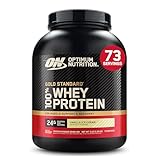
- High-Protein Formula to Support Muscle Health – Delivers 24g of fast-absorbing 100% whey protein per scoop to support post-workout muscle recovery, muscle strength and muscle building when taken over time with regular resistance training.
- Enhanced Muscle Recovery With BCAAs – Includes naturally occurring BCAAs and EAAs that help get you back to your best, faster and speed up recovery after intense training sessions.
- Optimized Support for Strength & Hypertrophy Goals – Whey protein isolate is the primary ingredient with excess carbs and fat “isolated” out. Ideal for athletes looking to increase muscle strength or boost recovery between workouts.
- Mixes Smoothly for Rapid Post-Workout Use – Instantized powder dissolves quickly in water or milk, making it a convenient shake immediately after training.
- Backed by thousands of hours of research – For 35 years, athletes have trusted Optimum Nutrition to fuel their training. Optimum Nutrition delivers proven quality. Whey is backed by science and trusted by athletes, we set the Gold Standard in protein
The available reviews do not establish one universal dose, timing schedule or product for everyone with sarcopenia. Requirements change with body size, kidney function, illness, energy intake, activity and treatment goals. Do not copy a high-protein plan from a gym or social-media post without medical review.
When whey protein powder is useful
Whey protein powder is a convenience option when appetite is poor, chewing is difficult, access to cooking is limited, or a person cannot reach an agreed protein target at ordinary meals. It can be mixed into a familiar drink or soft food, making it easier to consume after exercise or between meals. Choose a product whose ingredients and serving information are clear and compatible with allergies, swallowing recommendations and medication restrictions.
Whey is milk-derived, so it may be unsuitable for a milk-protein allergy and can cause problems for some people with lactose intolerance, depending on the formulation. A clinician or dietitian should review its use in kidney disease, significant liver disease, cancer care, fluid restrictions, swallowing disorders or complex medication regimens. Supplements can also add calories, sweeteners or minerals that matter medically.
What’s actually slowing this PC down?
Pick the symptom - the matching free tool is one click away.
Why protein alone is not enough
Without progressive loading, extra amino acids do not reliably translate into stronger walking, rising from a chair or preventing falls. The most plausible benefit occurs when adequate protein accompanies a training stimulus. A shake cannot correct an unsafe exercise plan, inactivity, vitamin deficiency, untreated pain, poor sleep or a medical condition causing weakness.
Intervention comparison
| Approach | Strength and function | Muscle mass | Feasibility and supervision | Safety and contraindications | Cost and adherence | Value beyond resistance training |
|---|---|---|---|---|---|---|
| Progressive resistance training | Consistent evidence of improved strength and physical performance, including in the 2023 analysis of 50 trials. | Can increase or preserve muscle, although the amount varies. | Can begin with a chair, bands or body weight; technique and progression are important. | Needs adaptation for pain, osteoporosis, heart or lung disease, neurological problems and fall risk. | Low equipment cost is possible; supervised sessions cost more but may improve safety and adherence. | It is the essential stimulus and should not be omitted. |
| Protein-rich food | Supports recovery when intake is inadequate; effects depend on total diet and training. | Provides amino acids and calories needed for tissue maintenance. | Usually practical, but appetite, chewing, shopping and cooking can be barriers. | Must fit kidney, swallowing, allergy and medication requirements. | Cost varies by food and location; familiar foods may be easiest to sustain. | Adds nutritional adequacy, not a substitute for loading. |
| Whey protein powder | 2024 reviews suggest benefit mainly when paired with resistance exercise; pooled results are heterogeneous. | May help close a shortfall in protein intake. | Fast and portable; requires selecting a suitable product and preparing it consistently. | Milk allergy, intolerance, kidney disease, fluid limits and additives require review. | Recurring purchase; adherence is good only if taste, digestion and routine are acceptable. | Useful convenience when food intake falls short; no established stand-alone cure. |
| Resistance plus balance plus protein-based nutrition | Strongest compared combination for several outcomes in the 2025 network meta-analysis. | Improved skeletal muscle index in that analysis. | More components to schedule; supervision may be worthwhile for frail adults. | Each component must be screened separately for medical suitability. | Potentially higher time and service costs, but can be adapted to home routines. | Best-supported combined strategy, while certainty remains limited by trial differences. |
Safety checks before increasing protein or exercise
- Kidney disease or abnormal kidney tests: obtain an individualized protein plan rather than assuming more is better.
- Swallowing difficulty: ask for a swallowing assessment; powder thickness and liquid volume may need specific instructions.
- Allergy or intolerance: check milk-derived ingredients and cross-contamination statements.
- Cancer, recent surgery or acute illness: coordinate exercise and nutrition with the treating team.
- Medication restrictions or fluid limits: review the full ingredient list and serving size with a pharmacist or clinician.
- Falls, dizziness, chest symptoms or severe pain: seek assessment before unsupervised strengthening or balance drills.
Older adults who have been inactive should not test maximal lifts. A professional can check blood pressure response, gait, footwear, assistive devices and technique. Resistance training is not automatically safe merely because the load is light.
A practical starting sequence
- Get a baseline. Note how many controlled chair rises are possible, usual walking speed or a timed walk, grip strength if available, recent falls and which daily tasks are difficult.
- Arrange medical and exercise clearance. Ask about conditions, medications, pain, bone health, nutrition, kidney function and swallowing before adding a supplement or demanding program.
- Choose two or three lower-body and two upper-body movements. Begin with supported versions that allow controlled technique and breathing.
- Add balance practice. Use a stable support and an environment free of rugs, clutter and pets.
- Plan protein at ordinary meals first. If the agreed target is difficult because of appetite, chewing, access or timing, discuss whey powder or another suitable option.
- Progress gradually. Change one training variable only after the current level is repeatable without worsening symptoms.
- Reassess function. Review chair rises, walking, grip, falls, confidence and exercise progression with the care team instead of relying on body weight alone.
How to tell whether the plan is working
Muscle size is only one outcome and can be difficult to measure accurately outside a clinic. More useful day-to-day signs include standing from a chair with less arm support, walking farther or faster, climbing steps, carrying groceries, opening containers, recovering from a trip and completing exercises with better control.
Rank #4
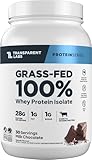
- Naturally Flavored Clean Protein Powder: Made from naturally-fed, hormone-free whey, free of artificial sweeteners, food dyes, gluten, and preservatives. Transparent Labs 100% Grass-Fed Whey Protein Isolate is one of the cleanest proteins on the market.
- 28g of Protein Per Serving: Transparent Labs Whey Protein Isolate is sourced from 100% grass-fed, grass finished American dairy cattle. It contains one of the industry’s highest protein-by-weight ratios, and packs 28g of protein per serving with minimal sugar or fat.
- Enhance Recovery, Increase Strength: Transparent Labs 100% Grass-Fed Whey Protein Isolate gives you a highly bioavailable protein that is light on the stomach and goes down easily. This is the perfect protein for those who want to support recovery and promote muscle growth, while promoting overall health and longevity.
- Contains All Nine Essential Amino Acids: Protein is made up of amino acids, which are the building blocks of muscle proteins. Depending on where your protein comes from, it will contain different amounts of the various building blocks. All of our protein powders contain all nine essential amino acids in a balanced ratio to support muscle protein synthesis, so you can trust that our protein powders will help you reach your muscle building and fitness goals.
- Easily Digestible & Rapidly Absorbed: There’s nothing worse than the digestive discomfort often associated with trying to increase your protein intake. Our protein powder is designed with your digestive health in mind. No more bloating, gas, or digestive woes - just pure protein goodness that your body can readily utilize.
Keep measurements under similar conditions. A single unusually good or bad day is not a trend. If function declines despite adherence, investigate pain, infection, medication effects, depression, inadequate calories, poor sleep, anemia or another medical cause rather than simply adding more protein.
Do these 3 things before closing this tab:
1Scan for outdated or missing drivers - takes under a minute2Repair Windows errors before they cause bigger problems3Fix the driver behind crashes, sound loss and screen glitchesCommon mistakes and fixes
“I bought whey, so I can skip strength work.”
Fix: Treat the powder as a food supplement and keep the progressive resistance plan. The evidence does not support whey as a stand-alone treatment.
“I am training hard but eating very little.”
Fix: Ask a dietitian to review total energy and protein intake. Severe restriction can undermine recovery and worsen muscle loss, particularly in sarcopenic obesity.
“I increase the weight every session.”
Fix: Progress only when technique, breathing, balance and recovery remain acceptable. Rapid increases can provoke injury or fear of movement.
“The scale has not changed, so nothing is working.”
Fix: Track function, strength, gait and falls. Muscle and fat can change without a large change in body weight.
The Tool Desk
Outbyte PC Repair FREERepair Windows errors before they cause bigger problemsFix Now →Outbyte Driver Updater FREEFix the driver behind crashes, sound loss and screen glitchesFind Drivers →“A home routine feels unsafe.”
Fix: Start with supervised instruction, stable supports and an uncluttered space. Frailty and falls justify professional assessment rather than trial and error.
Bottom line
For sarcopenia, build the plan around progressive resistance training, add balance work, and make protein intake sufficient for the individual. Food is a reasonable first choice; whey protein powder can fill a practical gap when meals do not, but it is not a cure by itself. Because trials are heterogeneous and medical risks differ, a clinician or dietitian should set the protein strategy and a qualified professional should adapt exercise when frailty, falls, pain or multiple illnesses are present. Judge success by stronger, safer movement and better daily function—not by a supplement label or the bathroom scale.
Quick Recap
Product prices and availability are accurate as of the date/time indicated and are subject to change. Any price and availability information displayed on Amazon at the time of purchase will apply.

