
iTechGuides is reader-supported. When you buy through links on our site, we may earn an affiliate commission. As an Amazon Associate I earn from qualifying purchases. Learn more
Police body cameras and mixed-reality displays solve different problems. A body-worn camera records audio and video from the officer’s position for later review, evidence, investigation, training, and accountability. A mixed-reality (MR) display puts digital information into the wearer’s view of the physical scene, making it an in-the-moment interface rather than an automatic evidentiary record.
That distinction determines the trade-off. Cameras create a governed record but bring activation, storage, disclosure, privacy, and retention obligations. MR displays may provide timely information without requiring an officer to look down at a separate device, but the available policing material describes those applications as possibilities, not as a proven, widely deployed replacement for cameras or dispatch tools.
What each technology is designed to do
Police body-worn cameras
The National Institute of Justice (NIJ) defines a body-worn camera as a mobile audio-video device that captures what an officer sees and hears, particularly during duties outside the range of an in-car camera. The device is normally mounted on clothing, equipment, or a helmet, and its footage can document encounters, preserve potential evidence, support investigations and prosecutions, and provide material for training and policy review. NIJ’s Primer on Body-Worn Cameras for Law Enforcement explains the category and its uses.
A recording is tied to the camera’s location, orientation, field of view, microphone, settings, and activation. It is therefore a record of what the device captured—not a complete or perfectly neutral record of everything an officer perceived. A camera can miss events outside its field of view, lose intelligibility in noise, be blocked or pointed away, or stop recording if its battery or storage is exhausted.
#1 Best Overall

- 128GB Large Memory: Built in 128G Large Memory,there will be plenty of space to store all video captured throughout your upcoming working days
- 1296P HD,NIGHT VISION :1296P HD recording, this body camera equipped with high-intensity infrared LEDs, also capture clear footage up to 50 feet away in pitch-black darkness
- Long Battery Life:A powerful 3500mAh battery lets you record footage for up to 11 hours in a row, 2 Inch LCD monitor allows you to instantly watch back previous recordings
- Safety: the camera has password protection to prevent unauthorized changes on menu.Password or password-free setting to suit different requirements
- Simple operation: camera can be connected to any computer to read the disk automatically.
Mixed-reality displays
An MR display overlays digital information onto the user’s view of the real environment. In policing, a wearable display could, for example, present an alert, map, identity or location information, sensor output, or procedure prompts while the wearer remains oriented toward a physical scene. The FBI’s discussion of Police Augmented Reality Technology describes potential applications involving wearable displays and tracking or sensing systems.
The display’s primary output is information shown to the wearer at the time of action. Unless a separate camera and evidence system records the scene, the display itself should not be treated as creating the same audio-video record as a body camera. The reviewed FBI material does not establish current police adoption rates, comparative outcome data, or a standard operating model for MR displays.
Side-by-side comparison
| Dimension | Body-worn camera | Mixed-reality display |
|---|---|---|
| Primary function | Capture audio and video for documentation and later review | Present digital information in the wearer’s view of the physical world |
| When it helps most | After an incident: investigation, evidence review, training, disclosure, and policy analysis | During an incident: hands-free access to relevant information or guidance |
| Evidence value | Potentially usable recorded evidence, subject to policy, law, quality, and chain-of-custody controls | Not an equivalent evidentiary record unless paired with an independently governed recording system |
| What determines coverage | Mount position, field of view, activation, battery, storage, audio and video quality | Display field of view, sensor inputs, network and software availability, and the wearer’s ability to interpret overlays |
| Privacy workload | Activation rules, access, retention, review, redaction, release, and deletion | Information security, access control, sensor-data governance, and possible recording or telemetry controls; policing-specific requirements are not established in the cited material |
| Research on police outcomes | NIJ reports mixed findings across a 70-study review | Comparative police outcome evidence is not established in the cited material |
| Adoption statistic available here | 47% of U.S. general-purpose law-enforcement agencies had acquired cameras in 2016 | No comparable current adoption statistic is provided |
What police body cameras are used for
Documenting encounters
A camera can preserve an audio-video account of an interaction away from a patrol vehicle, including statements, commands, movements, and environmental context that might otherwise depend on memory or a third-party witness. The recording can be reviewed by supervisors, investigators, prosecutors, courts, oversight bodies, and authorized parties under the agency’s rules and applicable law.
Quick wins for a faster PC:
Fix the driver behind crashes, sound loss and screen glitchesFind Drivers →Repair Windows errors before they cause bigger problemsFix Now →Preserving potential evidence
Footage may support an investigation or prosecution when it captures relevant conduct, statements, injuries, property, or the sequence of events. Its usefulness depends on whether recording was activated, whether the lens and microphone had a usable view, whether the file is complete and authentic, and whether the agency preserved and handled it correctly.
Training and policy review
Agencies can use authorized recordings to examine communication, de-escalation, tactical decisions, supervision, and adherence to policy. Training use requires careful selection and protection of victims, witnesses, minors, and sensitive scenes; the fact that footage exists does not make every clip suitable for general circulation.
Accountability and public information
Recordings can inform internal review and, where disclosure is legally permitted, public understanding of an incident. Release decisions must account for privacy, investigative needs, due process, court orders, and records law. A camera program is therefore an information-governance program as much as a hardware purchase.
Rank #2

- 【4K/2160P Video Resolution & 42 Million Pixels】4K video brings you an extraordinary visual experience, the video is clearer and smoother, and any details are clearly visible. 170°Ultra-Clear wide angle video is clearer and suitable for police on-site law enforcement video forensics, recording business meetings, lawyers for playback, etc. The image can be zoomed in and out during recording, and snapshot is supported
- 【256GB Body Camera & Loop Recording】 Built-in 256GB SD card to store all your videos, audios and pictures. When the SD card reaches the storage limit, the latest video will automatically overwrite the oldest video, ensuring that more important scenes can be recorded at any time. Select local playback to browse saved files or TRANSFER to your computer using USB
- 【Body Camera Longer Battery Life】4400mAh polymer lithium batteries record video for 14hours(2psc 2200mAh,720p). Remove battery and body camera still works for 3 minutes. V8 body camera and extra battery can be charged Synchronously using the charging base, ideal body camera for Shift work
- 【Ultra Clear IR Night Vision Body Camera】 Two powerful IR night vision LED lights support to capture people and objects within 50 feet. In the dark, V8 body camera can automatically switch to Night Vision Mode. The police can turn on the Red and Blue Warning Lights in an Emergency to protect their safety and deter illegal acts on the scene, Easy to Use
- 【Double Security Protection Body Camera】 1. Turn on Date Stamp, all videos, audios and pictures are time stamped and CANNOT be Modified or Deleted, which can be used as key evidence in court proceedings////// 2.Turn on Camera Password, must enter the password to view the body camera or read the camera body from the computer (both can be turned off)
What the evidence says about camera outcomes
Body cameras are often introduced with goals such as reducing use of force, improving officer or public behavior, reducing complaints, or strengthening prosecutions. Those goals are not the same as demonstrated effects. NIJ’s Research on Body-Worn Cameras and Law Enforcement (January 7, 2022) summarizes a 2020 meta-analysis covering 70 studies. It reports no consistent or statistically significant effects across several outcomes, including use of force, assaults on officers, arrests, and traffic stops.
That finding does not mean a camera has no operational value. It means an agency should not promise that deployment will reliably prevent misconduct, reduce force, or improve every measured outcome. Results can depend on activation compliance, policy design, officer and supervisor training, local practice, the comparison group, and how the program is evaluated. Benefits such as having a reviewable record may be important even when broad behavioral effects are not consistent.
Camera placement and technical trade-offs
NIJ’s Primer on Body Worn Camera Technologies identifies body placement, field of view, battery, video and audio quality, storage, and system integration as selection considerations. Those factors interact rather than operate independently.
Chest, shoulder, and head placement
A chest-mounted camera can provide a relatively stable forward view but may be blocked by equipment, a jacket, or an officer’s arms. A head- or helmet-mounted unit can follow the wearer’s gaze more closely, yet it may produce more motion and a different perspective from the officer’s torso. Placement changes what enters the frame and where the microphone sits, so an agency should test mounts with the uniforms and equipment actually used in the field.
Field of view and orientation
A wide field of view can include more surrounding activity but may make distant details smaller or introduce distortion. A narrower view may show a subject more clearly while omitting activity at the edges. Neither setting records events behind the camera or outside the lens, and an officer’s body position can change the apparent sequence.
Battery, recording limits, and storage
Long shifts, pre-event buffering, high-resolution video, wireless transfer, and repeated uploads all affect battery and storage demand. Procurement should specify expected shift duration, charging and docking procedures, failure alerts, upload behavior, local storage protection, and what happens when capacity is reached. The cited NIJ material identifies these as issues to evaluate but does not establish one universal battery life, resolution, or storage capacity for all products.
Rank #3

- ONCHEER 1080P Body Camera, with 32G TF Card Shoulder & Waist Clips, Police Body Cam Long Time Record, Personal Body Worn Cameras for Law Enforcement, Security Guards, Bike Trip
Audio and video quality
Speech can become difficult to understand in traffic, wind, crowds, or when the microphone is covered. Night scenes, glare, rain, and rapid movement can reduce visual value. Agencies should assess representative conditions rather than rely solely on laboratory specifications, and should document known limitations when footage is reviewed.
Integration
A camera program may need links to evidence-management, computer-aided dispatch, records, identity, docking, and disclosure workflows. Integration can reduce manual handling but also expands the number of systems, permissions, interfaces, and failure points that must be secured and audited.
Policy, privacy, and legal work required by cameras
The Bureau of Justice Assistance’s BWC Toolkit privacy guidance warns: “However, it is important to understand all of the privacy and liability considerations involved (e.g., when and how to record, view, discard, redact, and share video).” That warning captures why a camera cannot be evaluated as a standalone gadget.
Free tools Windows power users keep installed
One-click scans. No signup required.
Activation and deactivation
Policy should define when recording is mandatory, when it is permitted, when it is prohibited, and how an officer documents a failure to record or an interruption. Rules should address planned contacts, arrests, searches, emergencies, interviews, private residences, hospitals, schools, victims, confidential informants, and conversations in which privacy interests are especially high. Officers need practical training on audible or visible indications, pre-event buffering, and safe ways to announce or explain activation when circumstances allow.
Access and review
Access should be role-based and logged. The agency should distinguish routine supervisory review, investigation, prosecutorial access, defense discovery, public-records requests, training use, and quality assurance. Review-before-reporting rules can affect the independence of an officer’s initial account, so the policy should state when footage may be viewed and by whom.
Retention, deletion, and preservation
Retention schedules should match the legal classification and operational value of each recording. Categories may include non-event footage, administrative material, a complaint, an arrest, a use-of-force incident, or evidence in a pending case. A legal hold or investigative flag must suspend ordinary deletion. Automatic deletion without a documented schedule creates risk; indefinite retention creates cost and privacy exposure.
Rank #4
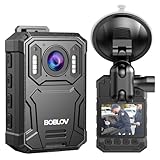
- Enhanced Visuals with 2K/38MP Resolution: The BOBLOV KJ23PRO body camera offers stunning 2K video and 38MP photo clarity. Ideal for law enforcement and personal documentation, this body worn camera captures every detail with precision and sharpness
- 4000mAh Battery with 15 Hours Recording Time: Equipped with an inner 4000mAh battery, the KJ23PRO body camera with audio supports up to 15 hours of continuous recording at 1080P. Perfect for long shifts, it ensures you document every critical moment without interruptions
- Night Vision with Five IR Lights: The KJ23PRO body camera excels in low light conditions with its five IR lights. This feature makes it perfect for night patrols and surveillance, providing clear visibility and recording quality even in complete darkness
- Loop recording ensures crucial moments: The BOBLOV KJ23PRO defaults to 10-minute video segments. When the memory card storage reaches its limit, the device will automatically overwrite the oldest recordings, ensuring that the latest important videos are continuously recorded
- Built-in 128GB Memory: The KJ23PRO body camera comes with 128GB of built-in memory, offering ample storage for high-definition video and audio files without frequent changing memory cards,get ready to use when you get the wearable camera
Redaction and release
Faces, voices, medical details, minors, home interiors, victims, witnesses, and sensitive investigative information may require redaction or withholding. Redaction must be applied to the released copy while preserving the original under controlled access. The U.S. Department of Justice’s best-practices announcement for body-worn cameras (September 12, 2014; the page notes a 2025 update) is one federal reference for policy considerations.
What’s actually slowing this PC down?
Pick the symptom - the matching free tool is one click away.
Privacy beyond the subject of an encounter
Recording can capture bystanders, children, victims, witnesses, officers, private conversations, computer screens, and locations unrelated to the original call. Agencies should explain notice, access, complaint, and release procedures to the public and should audit whether the program is collecting more material than its stated purpose requires.
Potential uses of mixed-reality displays in policing
MR displays could be useful where timely information must be consulted while the wearer remains engaged with a physical environment. Possible scenarios discussed in the FBI material include wearable displays and systems that track or sense people, objects, or locations. Examples of potential functions include:
- Navigation and scene orientation: showing a route, building layout, perimeter, or location marker without requiring the wearer to look down at a handset.
- Information prompts: presenting procedure reminders, translated text, or task information when a connected system has reliable and authorized data.
- Sensor and team awareness: displaying alerts from approved sensors or the positions of cooperating personnel, subject to latency and accuracy limits.
- Remote assistance: allowing a specialist to send visual guidance during a technical or hazardous operation.
These are possible applications, not evidence that agencies commonly use them or that they improve safety, speed, or decision quality. The cited material does not quantify distraction, error, workload, privacy impact, or comparative performance in police operations. Any agency considering a display would need a controlled evaluation in its own environments.
Independent reader supportYour contribution helps us test, update, and keep practical guides available for everyone.Mixed-reality trade-offs
Attention and cognitive workload
An overlay can reduce the need to look at a separate screen, but it also adds information to an already dynamic scene. The wearer must divide attention between people, vehicles, terrain, hazards, radio traffic, and displayed symbols. Poorly timed, cluttered, inaccurate, or low-contrast overlays could slow recognition rather than improve it. The reviewed sources do not establish a police-specific threshold for safe information density or distraction.
Do these 3 things before closing this tab:
1Scan for outdated or missing drivers - takes under a minute2Repair Windows errors before they cause bigger problems3Fix the driver behind crashes, sound loss and screen glitchesAccuracy, latency, and connectivity
A display is only as useful as the data behind it. Delayed positioning, stale records, a weak network, sensor occlusion, or an incorrect match can create false confidence. A deployment plan should specify what happens when data is unavailable, how uncertainty is shown, and whether the wearer can dismiss or verify an alert without losing awareness of the scene.
Best Value
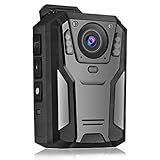
- 【Portable FHD 1440P Body Cam 】- This body video / audio Camera for law enforcement with FHD 1440P video and 3300pixels photo and 150° wide angle allows users to get footage clearly and widely. Perfect for police officers, security guards,police officers, or other personal.Video Capture:Default resolution is 720p, up to 1440p (When set to 720p, the camera lasts the longest time.)
- 【Long Battery Life & 64GB Ultra large Memory】 - With a built-in powerful 3300 mAh battery, the body cam supports 11 hours non-stop recording, enough to get through multiple shifts without worry about battery life. And its built-in 64 GB Memory allows for hours of footage without worrying about running out of space.
- 【Super Infrared Night Vision & HDR technology】- With high-perormance Mstar COMS sensor and HDR technology the body camera provides great exposure and dynamic range in low light conditions and 6 infrared LED lights can handle low light conditions and ensure flawless video footage even in total darkness at night.
- 【One key operation & Multi Function】- The body camera supports one key to Record Audio, Video and Take Photograh, not need to power on the cam, make the operation simpler in a sudden state. The camera also supports one-key to turn on the flashlight, red dot positioning laser function
- 【Motion Detection & Loop Recording】 - Optional intelligent motion detection and loop recording for different usage requirements. You can set a password for the camera to avoid all recorded files being stolen or deleted. Some PC players may not be compatible with the camera video format. If the video has no sound on the PC, please try another player.*(Example: KM player/vlc player...)
Wearability and environment
Weight, comfort, prescription-lens compatibility, heat, rain, darkness, glare, battery life, and protective equipment affect whether an officer can wear a display for a full shift or only for a defined task. These requirements are separate from the requirements for a body camera, even if both devices are worn on the same person.
Privacy and security
If the system uses cameras, microphones, location data, facial or object recognition, or cloud processing, it creates additional governance questions. Agencies would need rules for collection, access, retention, vendor or system integration, audit logs, cybersecurity, and disclosure. A display that merely receives authorized information has a different data profile from one that continuously senses and transmits the environment.
How to compare the technologies for a real program
Use the following dimensions instead of asking which device is “better.” They answer different operational questions.
- Define the job. If the requirement is a reviewable record of an encounter, begin with a camera and its evidence workflow. If the requirement is timely information during movement, investigate an MR display as an interface experiment.
- Specify the decision time. Camera value is largely realized after an event; display value, if demonstrated, would occur during an event. A program may need both, but one cannot be substituted for the other merely because both are wearable.
- Map the information lifecycle. For cameras, document activation, upload, classification, retention, access, redaction, release, and deletion. For displays, document data sources, latency, authorization, logging, and failure behavior.
- Test the physical perspective. Evaluate camera mounts, field of view, audio, occlusion, and motion in representative uniforms and activities. For displays, test visibility, symbol interpretation, ergonomics, and safe use in daylight, darkness, weather, and high-stress movement.
- Measure outcomes that match the claim. Do not infer reduced force, complaints, response time, or safety from the mere presence of equipment. Establish a baseline, define a comparison, and publish the limits of the evaluation.
- Plan for exceptions. Include lost connectivity, empty batteries, damaged devices, accidental recording, sensitive scenes, incorrect data, system outages, and requests for footage or logs.
Procurement checklist for body-camera programs
NIJ’s technology primer provides the starting categories; an agency can turn them into acceptance tests.
- Mounting: verify chest, shoulder, or head placement against uniforms, body armor, seat belts, and other equipment.
- Capture: test field of view, stabilization, low-light performance, audio in wind and traffic, pre-event buffering, and indicators that recording is active.
- Power and storage: model a full shift, multiple incidents, docking cycles, upload queues, and operation during network loss.
- Evidence integrity: require authentication, tamper-evident handling, audit logs, reliable timestamps, and controlled export.
- Workflow: connect assignment, docking, classification, supervisor review, disclosure, redaction, retention, and legal holds.
- Security and access: apply least privilege, strong authentication, logging, monitoring, and a process for revoking access.
- Training and support: train officers, supervisors, records staff, investigators, prosecutors, and public-records personnel; test replacement, repair, and outage procedures.
- Evaluation: state the outcomes the agency will measure and avoid treating vendor claims or deployment counts as proof of behavioral effects.
Historical adoption context
The Bureau of Justice Statistics survey reported that 47% of U.S. general-purpose law-enforcement agencies had acquired body-worn cameras in 2016. NIJ identifies this figure in its research overview at https://nij.ojp.gov/topics/articles/research-body-worn-cameras-and-law-enforcement; the underlying BJS report was published in November 2018 and describes 2016 conditions. It is historical, not a present-day adoption rate, and it should not be used to estimate current use without newer data.
No equivalent current police-adoption statistic or comparative outcome evaluation for MR displays is established by the cited sources. That difference in evidence maturity matters when an agency is deciding whether to deploy a proven recording category, run a limited display pilot, or defer a purchase until requirements and safeguards are clearer.
Which technology should an agency choose?
Choose a body-camera program when the central need is an audio-video record that can be preserved, reviewed, investigated, and disclosed under policy and law. Budget for the entire lifecycle—not only the camera—including mounts, charging, storage, evidence management, redaction, retention, training, audits, and public-records work.
Outdated Drivers Are Slowing You Down
One free scan finds every outdated or missing driver and matches the right update for your exact hardware.Free scan · exact hardware matchWindows Errors? Fix Them Before They Spread
Repair common Windows errors and clear accumulated junk for a smoother, more stable PC - no reinstall needed.Free scan · no reinstallConsider an MR display only for a defined information problem that cannot be solved adequately with existing radios, mobile terminals, maps, or other interfaces. Treat the effort as a measured pilot unless independent evidence demonstrates broader value. Define acceptable latency and accuracy, test cognitive workload and environmental usability, and keep the recording and privacy obligations separate from the display’s interface benefits.
For many operations, the technologies are complementary: a body camera can document an encounter while an authorized display, if it proves reliable and safe, can present information during that encounter. Neither device should be described as a universal replacement for the other.
Quick Recap
Product prices and availability are accurate as of the date/time indicated and are subject to change. Any price and availability information displayed on Amazon at the time of purchase will apply.

