
Outdated Drivers Are Slowing You Down
One free scan finds every outdated or missing driver and matches the right update for your exact hardware.Free scan · exact hardware matchWindows Errors? Fix Them Before They Spread
Repair common Windows errors and clear accumulated junk for a smoother, more stable PC - no reinstall needed.Free scan · no reinstalliTechGuides is reader-supported. When you buy through links on our site, we may earn an affiliate commission. As an Amazon Associate I earn from qualifying purchases. Learn more
For most casual vacations, a smartphone is the better camera because it is already in your pocket, processes difficult scenes automatically and shares photos instantly. A dedicated pocket camera becomes the better choice when you need real optical zoom, a larger sensor for dim light and heavy cropping, RAW files, physical controls or a more intentional shooting experience. For many travelers, the strongest setup is both: use the phone for spontaneous photos and the compact for zoom, night scenes and planned portraits.
The short answer: “better” depends on the scene
A phone can produce the better vacation photograph simply because you have it ready when the moment happens. It handles exposure, HDR, sharpening, noise reduction and often night processing without requiring a separate bag or a settings lesson. For daylight streets, food, family snapshots, selfies and short video clips, the convenience advantage is substantial.
A pocket camera has a technical advantage in situations that small phone lenses and sensors still find difficult. A larger sensor can collect more light and retain more detail. A true optical zoom keeps distant subjects sharper than a digital crop. RAW capture gives you more latitude for editing, while a grip, control dial, viewfinder or tilting screen can make deliberate shooting easier. Those benefits matter for stage performances, wildlife, distant architecture, night scenes, large prints and images you expect to crop heavily.
The result is not a universal winner. Image quality depends on the lighting, the distance to the subject, the output size, the amount of cropping and how much control you want. A compact camera with a small sensor and an average lens may not beat a current flagship phone in every sunny snapshot; a capable compact can pull clearly ahead once light falls or the subject is far away.
#1 Best Overall

- 20. 1MP 1. 0 Type stacked CMOS sensor, Zeiss Vario Sonnar T 24 200 millimeter F2. 8 F4. 5 large aperture high magnification zoom lens
- 0. 02 sec. High AF speed, 357 point focal plane Phase detection AF and 425 point contrast detection AF
- Up to 20 fps blackout free shooting, using up to 60 times/sec. AF/AE calculations. Diopter Adjustment: -4.0 to +3.0 m-1. Operating Temperature- 0 degrees C.- +40 degrees C. / 32 degrees F. - 104 degrees F
- AI based real time tracking for stills and movies, and touch tracking. Real time eye AF for human (stills and movies), and for animal (stills only)
- 4K video with us log3 and Interval Shooting. Microphone jack and vertical position data recording. Active mode image stabilization in 4K video recording, and Movie Edit add on compatible
Where each camera has the edge
| Decision factor | Smartphone | Pocket travel camera | Practical implication |
|---|---|---|---|
| Readiness and weight | Already carried; no extra battery, case or memory card | Adds a device, charging routine and protection | Readiness often matters more than a small laboratory advantage |
| Daylight snapshots | Excellent automatic exposure and HDR on modern models | Can be excellent, but may require more setup | Use a phone for quick street, food and family pictures |
| Low light | Night modes combine multiple frames and brighten scenes | Larger sensors generally retain more detail and cleaner files | A compact is stronger for dim scenes, moving subjects and editing |
| Distant subjects | Digital crops lose detail; telephoto modules narrow the gap | Optical zoom preserves detail through the lens | Choose a zoom compact for wildlife, architecture or a stage |
| Portrait rendering | Portrait modes simulate background blur | Sensor size and a bright lens can create natural separation | A compact gives more consistent optical rendering, especially indoors |
| Dynamic range | Computational HDR balances bright skies and dark faces | Larger sensors can provide more editing latitude; JPEG processing varies | Phones are easy; RAW-capable compacts offer more control |
| RAW and editing | Some phones offer RAW or proprietary computational RAW | Many enthusiast compacts record standard RAW files | Use a compact when color, highlights or shadows need extensive adjustment |
| Controls and composition | Touchscreen and automatic modes are fast | Dials, buttons, grips, viewfinders and tilting screens support intent | Physical controls help when you shoot often or in bright sun |
| Video and autofocus | Strong stabilization, automatic exposure and immediate sharing | Some compacts offer excellent autofocus and video; models differ widely | Check the exact model if video or subject tracking is central |
| Sharing | Immediate messaging, backup and social publishing | Usually requires Wi-Fi, a cable, a card reader or a computer | Phone wins for a same-minute post |
| Cost | Uses a phone you may already own | Requires the camera and often a card, spare battery and case | Budget for the complete kit, not only the camera body |
Why smartphones are so strong on vacation
Readiness beats specifications
Unique Photo’s comparison identifies smartphones as the best fit for casual travelers, social content and ultra-light packing. The camera is available when a parade turns a corner, a child makes an expression or a sunset changes in seconds. A compact left in a hotel room has no image-quality advantage at all.
Phones also remove friction. You do not need to decide which lens to mount, find a memory card, carry a second charger or transfer files before sharing. That convenience is why Unique Photo describes a smartphone as the most convenient camera many travelers own.
Computational photography handles difficult exposure
Modern phones combine several camera modules with software that merges frames, recognizes faces and skies, reduces noise and recovers highlights. DXOMARK reported in 2019 that smartphone image quality had improved by more than 4 EV over the preceding decade: approximately 1.3 EV came from sensor improvements and about 3 EV from post-capture processing. In practical terms, that is roughly four to four-and-a-half stops of progress, although the result varies by phone, mode and scene.
The Tool Desk
Outbyte PC Repair FREERepair Windows errors before they cause bigger problemsFix Now →Outbyte Driver Updater FREEScan for outdated or missing drivers - takes under a minuteDriver Scan →Automatic HDR is particularly useful when a traveler stands in shade beneath a bright sky. Night modes can produce a bright, shareable scene without a tripod. Portrait modes can separate a person from a background when the phone’s depth estimation is accurate. These systems are not magic: moving subjects can show ghosting, fine foliage may look over-processed and different phones render color differently. They nevertheless make acceptable results easy for non-specialists.
Phones are ideal for people, food and short video
For family groups, phones simplify selfies, front-camera portraits and quick clips. Stabilization and automatic audio are normally ready without an accessory. Food photos benefit from computational exposure and a close-focusing main camera. If the final image is viewed on a phone or posted online, the phone’s processing may be all the quality you need.
Rank #2
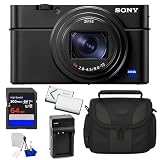
- Premium Compact Camera: Sony RX100 VII (DSC-RX100M7) with 1.0-type stacked CMOS sensor for high-resolution, low-noise images.
- ZEISS Vario-Sonnar T Lens:* 24–200mm equivalent zoom lens with excellent clarity, contrast, and minimal distortion.
- 4K Video & High-Speed Autofocus: Shoot professional-quality 4K video, slow motion, and high-speed continuous shooting up to 20 fps.
- Renewed & Tested: Professionally inspected, tested, and certified to work like new, offering great performance at a great value.
- Compact & Portable: Lightweight and pocketable design makes it ideal for travel, vlogging, and everyday photography.
Where a phone reaches its limits
- Zoom: A digital crop enlarges the center of a frame and cannot restore detail that the lens never resolved. Flagship phones with dedicated telephoto modules have narrowed the gap, but their reach and quality still vary by model.
- Dim, moving scenes: Night modes often combine several exposures. A moving performer, child or animal can therefore blur or show artifacts.
- Manual control: Touch controls are convenient but less tactile than a shutter button, mode dial or exposure wheel, particularly while wearing gloves or working quickly.
- Editing latitude: Computational JPEGs look finished. They may leave less recoverable highlight and shadow information than a well-exposed RAW file from a larger sensor.
- Ergonomics: A thin phone is easy to carry but can be awkward to hold steadily, especially when using a long digital crop.
Why a pocket camera can produce the better picture
Larger sensors collect more useful light
RTINGS notes that some point-and-shoot cameras improve image quality with larger sensors, while TechRadar explains that a larger sensor generally improves detail and low-light performance. A 1-inch sensor gathers substantially more light than the tiny sensors used in many phone modules; an APS-C sensor gathers more still. More captured light can mean cleaner shadows, finer textures and greater flexibility when you brighten or darken a file.
Sensor size is not the only factor. Lens brightness, stabilization, autofocus and the camera’s image processing all matter. A large sensor paired with a slow lens may not dominate in every situation, and a modern phone may produce a more pleasing automatic JPEG in bright light. Treat sensor size as an advantage that becomes more visible in dim conditions, at high ISO settings, in large prints and during aggressive edits.
Optical zoom preserves distant detail
A zoom lens changes the angle of view before the image reaches the sensor. A 30x optical zoom can frame a distant building detail or animal without enlarging empty pixels afterward. TechRadar distinguishes this from digital zoom, which crops and enlarges an existing image. Phones with multiple lenses provide several optical viewpoints, but a compact superzoom can still offer a longer continuous reach in a similarly small package.
Optical reach is valuable on trips with no opportunity to move closer: safari vehicles, observation decks, concerts, sporting events and viewpoints across a river. It is less important for street scenes, meals and people standing a few steps away.
Controls make deliberate photography easier
Dedicated buttons, a secure grip, a tilting screen and an electronic viewfinder can improve composition and stability. A physical exposure dial lets you change brightness without hunting through menus. A viewfinder can remain usable in harsh sunlight when a phone screen is difficult to see. A tilting or fully articulated screen helps with low or high viewpoints and with self-recorded video.
Rank #3
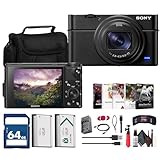
- Sony USA Authorized. Bundle Includes: Sony Cyber-shot DSC-RX100 VII Digital Camera, 64GB Memory Card, Small Case, Replacement NP-BX1 Battery, Photo Software with PhotoMirage/AfterShot/Painter Essentials/PaintShop Pro/VideoStudio, Micro HDMI Cable, NP-BX1 Charger, Flexible Tripod, Memory Card Wallet, Cleaning Kit
- Premium Compact Performance – The RX100 VII combines a 20.1MP 1-inch stacked CMOS sensor with the BIONZ X processor to deliver professional image quality in a pocket-friendly body. Perfect for travelers, vloggers, and everyday creators, it balances portability with power, making it one of the most versatile compact cameras available.
- ZEISS 24–200 mm Zoom Lens – Equipped with a ZEISS Vario-Sonnar T* 24–200 mm F2.8–4.5 lens, this camera covers wide to telephoto perspectives. Optical SteadyShot stabilization ensures crisp handheld shots, while ZEISS optics deliver rich color, sharp detail, and reliable performance across the zoom range.
- Professional 4K HDR Video – Record oversampled 6K video downsampled to 4K with full pixel readout and no pixel binning. The camera supports HDR (HLG), S-Log3, and high-frame-rate recording up to 960 fps for dramatic slow motion. An external microphone input gives creators better audio quality for vlogs and video projects.
- Key Features: 20.1MP 1" Exmor RS BSI CMOS Sensor - BIONZ X Image Processor Front-End LSI - ZEISS Vario-Sonnar T* f/2.8-4.5 Lens - 24-200mm (35mm Equivalent) - Up to 20-fps Blackout-Free Shooting - UHD 4K30p Video with HLG S-Log3 Gammas - 0.39" 2.36m-Dot OLED Pop-Up EVF - 3.0" 921.6k-Dot 180� Tilting Touchscreen - Fast Hybrid AF, 357 Phase-Detect Points - Real-Time Tracking and Eye-AF
These features do not automatically create better photographs. They reduce the effort required to make a deliberate photograph, which matters to travelers who enjoy choosing shutter speed, aperture, focus point or exposure compensation.
Recommended Free Tools
RAW files support a longer editing workflow
RAW records sensor data with less in-camera processing than a finished JPEG or HEIC. You can often recover more highlight and shadow information, change white balance non-destructively and apply your own noise reduction and sharpening. The trade-off is time: files are larger, editing software is required and sharing is slower. If you only post quick snapshots, RAW may add work without adding value.
Current pocket-camera examples and what they illustrate
These models demonstrate different reasons to carry a compact. They are examples, not a universal ranking; availability, firmware and prices vary by country and date.
| Model | Design emphasis | What it demonstrates | Important limitation |
|---|---|---|---|
| Sony RX100 VII | 1-inch travel compact with a broad zoom range | RTINGS lists it as a 1-inch travel camera. TechRadar highlights reliable face and eye autofocus, strong video and very high image quality in a pocketable body. | TechRadar warns that it is expensive; the small body can also be less comfortable for long sessions than a larger camera. |
| Fujifilm X100VI | APS-C sensor and fixed 35mm-equivalent lens | RTINGS says its APS-C sensor offers greater dynamic range and low-light flexibility than 1-inch compacts. The bright fixed lens supports image quality and natural background separation. | The fixed field of view cannot optically zoom to distant subjects; you must move, crop or carry another camera. |
| Panasonic Lumix ZS99/TZ99 | 30x optical-zoom travel compact | TechRadar highlights its reach for distant travel details and subjects. | Image quality trails premium compacts, particularly when light is poor. |
| Panasonic TZ300 | 1-inch sensor with less reach than the ZS99/TZ99 | It illustrates the trade-off between a larger sensor and a shorter zoom: better potential quality in exchange for less framing flexibility. | You give up some telephoto reach compared with a superzoom compact. |
| Sony ZV-1 | 1-inch compact designed for travel vlogging | RTINGS lists a fully articulated screen and external-microphone support, useful for self-recorded video and changing camera angles. | Its strengths are video handling and portability; choose a different design if long optical reach is the priority. |
Match the camera to the trip
Light packer: phone only
Take the phone when every gram matters, most images will be viewed or shared online, and the itinerary centers on daylight streets, restaurants, museums and people nearby. Free storage before departure, carry a small power bank if navigation will be heavy, and turn on automatic cloud backup when you have reliable Wi-Fi.
Family trip: phone plus a flexible compact zoom
A phone handles spontaneous family photos and sharing. A compact zoom earns its space when children are on a field, a viewpoint is crowded or you need to photograph a performance from a fixed seat. The combination also gives you a second battery and storage device if one runs out at an inconvenient moment.
Rank #4

- Sony USA Authorized. Bundle Includes: Sony Cyber-shot DSC-RX100 VII Digital Camera, 2 x 64GB Extreme PRO SDXC Memory Card, Small Case, 3 x Replacement NP-BX1 Battery, Memory Card Reader, LED Light, Photo Software with PhotoMirage/AfterShot/Painter Essentials/PaintShop Pro/VideoStudio, Micro HDMI Cable, NP-BX1 Charger, Flexible Tripod, Memory Card Wallet, Cleaning Kit
- Premium Compact Performance – The RX100 VII combines a 20.1MP 1-inch stacked CMOS sensor with the BIONZ X processor to deliver professional image quality in a pocket-friendly body. Perfect for travelers, vloggers, and everyday creators, it balances portability with power, making it one of the most versatile compact cameras available.
- ZEISS 24–200 mm Zoom Lens – Equipped with a ZEISS Vario-Sonnar T* 24–200 mm F2.8–4.5 lens, this camera covers wide to telephoto perspectives. Optical SteadyShot stabilization ensures crisp handheld shots, while ZEISS optics deliver rich color, sharp detail, and reliable performance across the zoom range.
- Professional 4K HDR Video – Record oversampled 6K video downsampled to 4K with full pixel readout and no pixel binning. The camera supports HDR (HLG), S-Log3, and high-frame-rate recording up to 960 fps for dramatic slow motion. An external microphone input gives creators better audio quality for vlogs and video projects.
- Key Features: 20.1MP 1" Exmor RS BSI CMOS Sensor - BIONZ X Image Processor Front-End LSI - ZEISS Vario-Sonnar T* f/2.8-4.5 Lens - 24-200mm (35mm Equivalent) - Up to 20-fps Blackout-Free Shooting - UHD 4K30p Video with HLG S-Log3 Gammas - 0.39" 2.36m-Dot OLED Pop-Up EVF - 3.0" 921.6k-Dot 180� Tilting Touchscreen - Fast Hybrid AF, 357 Phase-Detect Points - Real-Time Tracking and Eye-AF
City and street trip: APS-C fixed-lens compact
Choose an APS-C fixed-lens design when low-light cafés, evening streets, discreet handling and a deliberate shooting process matter more than distant subjects. The fixed lens encourages you to work with position and timing. It is a poor fit if you expect wildlife, sports or architecture details far across a valley.
Wildlife, safari or concerts: optical-zoom compact or interchangeable-lens camera
Distance is the deciding factor. A long optical zoom gives you a realistic chance of filling the frame without walking closer. A phone alone is the least suitable option because digital crops magnify blur and atmospheric haze along with the subject. Confirm venue rules before bringing a camera to a concert or performance.
Mixed itinerary: a hybrid kit
For a trip that includes both casual wandering and planned scenes, carry the phone as the always-ready camera and reserve the compact for zoom, night work, portraits or RAW capture. Keep the compact accessible in a small sling rather than buried in luggage; the hybrid approach only works when the dedicated camera is available at the moment you need it.
Independent reader supportYour contribution helps us test, update, and keep practical guides available for everyone.A practical decision framework before you pack
- List the hardest scene you expect. Identify whether it is a distant subject, a dark interior, a moving performer, a large group, a self-recorded video or a scene you will heavily edit.
- Decide how the photos will be used. Phone-screen memories and social posts need less resolution than wall prints, photo books or aggressive crops.
- Check your phone’s actual lenses. Note which focal lengths are optical, which are digital crops and how much usable reach remains in low light.
- Choose the smallest device that solves the hardest problem. Do not buy a camera for a capability your phone already provides; do buy one if the phone cannot reach, hold detail or give you the control you need.
- Account for the complete carry. Include camera, battery, charger, memory card, case, strap and the time needed to transfer files.
- Practice before departure. Learn the zoom rocker, exposure compensation, focus mode, flash behavior and file-transfer method at home.
How to get better results with either choice
Phone checklist
- Clean the lenses before leaving and whenever fingerprints or sunscreen soften contrast.
- Use the main camera in low light rather than an extreme digital crop.
- Tap the subject to set focus and exposure, then lower exposure slightly when bright skies are clipping.
- Hold still during night-mode captures; brace the phone against a railing for static scenes.
- Move closer instead of zooming digitally when the subject and situation allow it.
- Keep enough storage for video and enable a backup plan before the trip.
Compact-camera checklist
- Carry at least one charged spare battery for a full day of navigation and shooting.
- Use optical zoom deliberately and avoid extending the lens farther than the light supports without raising ISO or slowing the shutter excessively.
- Set a minimum shutter speed or an appropriate motion mode for children, animals and performers.
- Choose RAW plus JPEG only when you will actually edit; otherwise, JPEG saves space and time.
- Use a viewfinder or stabilized grip in bright sunlight and check the histogram when highlights are important.
- Protect the lens and screen from sand, rain and condensation when moving between air-conditioned rooms and humid streets.
Common mistakes and how to avoid them
Buying a compact only for “better quality”
A dedicated camera does not guarantee a visibly better image in every situation. If most of your photos are bright, close and destined for a phone screen, the phone’s processing may look just as good or better. Buy for a specific unmet capability such as optical reach, cleaner files in dim light, RAW editing or physical control.
What’s actually slowing this PC down?
Pick the symptom - the matching free tool is one click away.
Confusing zoom numbers with image quality
A longer zoom is useful, but a superzoom compact may use a smaller sensor and a slower lens than a premium short-zoom model. The Panasonic ZS99/TZ99 demonstrates this trade-off: its 30x optical reach is valuable, while TechRadar notes that its image quality trails premium compacts. Decide whether framing distance or low-light quality is the harder requirement.
Best Value
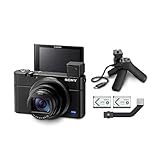
- 20. 1MP 1. 0-Type stacked CMOS sensor, Zeiss Vario-Sonnar T* 24-200mm F2. 8-F4. 5 large aperture high magnification zoom lens
- Kit includes shooting grip capable of controlling camera (capture/zoom/rec) plus converts into a mini-tripod. Use the included bracket to attach an optional microphone such as Sony’s ECM-XYST1M for optimal audio performance.
- Real-time eye AF detects subject's eyes and maintains focus as the subject Moves, leaving you free to compose your shot.
- RX100 VII records 4K movies internally with full pixel readout and no Pixel binning, with oversampling for high image quality
- Get amazing time lapses with interval shooting, and edit the resulting still images into a time-lapse movie on a PC
Leaving the camera inaccessible
A camera in checked luggage cannot record a spontaneous moment. Keep whichever device you expect to use in a reachable pocket or sling, and store it securely when moving through crowded areas. Convenience is part of photographic performance.
Ignoring transfer and backup
Phone photos are normally ready to share. Compact-camera files may remain on a card until you use Wi-Fi, a cable, a card reader or a computer. Test that workflow before departure and carry enough storage. A second copy protects against loss, theft or a damaged card.
Expecting night mode to freeze action
Computational night modes are strongest with static subjects. They can merge several frames, so a moving person may appear doubled or blurred. For action in low light, use a camera and shutter speed that can record the movement in one exposure, or accept a higher-noise frame rather than relying on a multi-frame phone mode.
Quick wins for a faster PC:
Repair Windows errors before they cause bigger problemsFix Now →Fix the driver behind crashes, sound loss and screen glitchesFind Drivers →What the extra camera really costs
The purchase price is only one part of the decision. A compact camera may require a memory card, spare battery, charger, protective case and occasional replacement accessories. You also pay in luggage space, charging time and the attention needed to move files and maintain another device. A premium compact such as the RX100 VII can be expensive even before those additions.
The return is capability, not merely status: optical zoom, a larger sensor, a physical interface and files that tolerate deeper editing. If those capabilities will change the photographs you bring home, the cost and weight can be justified. If they will stay in a hotel drawer, the phone is the more economical camera.
Bottom line
Choose the smartphone for convenience, automatic HDR and night rendering, selfies, video, instant sharing and the highest likelihood that you will actually capture the moment. Choose a pocket camera when the trip depends on optical reach, larger-sensor low-light performance, natural background separation, RAW editing or hands-on controls. For travelers who face both ordinary snapshots and technically difficult scenes, a phone-plus-compact kit is the most flexible answer: the phone covers the everyday record, while the dedicated camera is ready for the photographs the phone cannot reliably make.
Quick Recap
Product prices and availability are accurate as of the date/time indicated and are subject to change. Any price and availability information displayed on Amazon at the time of purchase will apply.

