
Do these 3 things before closing this tab:
1Clear out junk files and repair common Windows errors2Fix the driver behind crashes, sound loss and screen glitches3Repair Windows errors before they cause bigger problemsiTechGuides is reader-supported. When you buy through links on our site, we may earn an affiliate commission. As an Amazon Associate I earn from qualifying purchases. Learn more
Optical storage puts digital data on discs that a compatible drive reads or writes with a laser. CDs, DVDs, and Blu-ray Discs can be read-only, write-once, or rewritable, but none has a guaranteed lifespan. For preservation, use verified, redundant copies and plan for the hardware and software needed to read them later.
What optical storage is and how it works
An optical disc stores data in physical layers. A compatible drive uses a laser to read the recorded pattern; with recordable media, the drive also uses a laser to write it. The broad consumer and data-disc families are CD, DVD, and Blu-ray Disc (BD), but each has formats and specifications that a drive may or may not support. Check the exact format, not just the disc family, when choosing media or a reader.
ROM, R, and RW mean different things
- ROM (read-only): Data is stamped into the disc during manufacture. It cannot be rewritten by the user.
- R (recordable): The user records data once on a photosensitive dye layer. The recorded data is not meant to be erased and replaced.
- RW (rewritable): A phase-changing metal-alloy film allows data to be erased and recorded again, subject to the format and media’s limits.
Common disc construction includes a polycarbonate substrate, a reflective layer, and protective coating, alongside the data-recording layer. The materials and layer details vary by manufacturer and production period; exact compositions may be proprietary. The Library of Congress explains disc construction and preservation factors in its CD-R and DVD-R/RW Longevity Research.
The Tool Desk
Outbyte Driver Updater FREEFix the driver behind crashes, sound loss and screen glitchesFind Drivers →Outbyte PC Repair FREERepair Windows errors before they cause bigger problemsFix Now →How CD, DVD, and Blu-ray differ
CD, DVD, and BD are families of formats, not interchangeable labels for identical media. The practical differences for storage are the specific format a disc uses, whether it is ROM, R, or RW, and whether the drive and software support it. Capacity depends on the particular format and disc; the sources cited here do not establish a single capacity for each entire family, so check the disc and drive specifications before recording.
#1 Best Overall
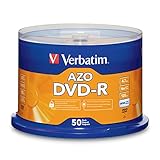
- 4.7GB OR 120-MINUTE CAPACITY: Each DVD-R disc stores up to 4.7GB of data or 120 minutes of DVD-quality video.
- UP TO 16X WRITE SPEED: Supports recording speeds up to 16X for fast, efficient burning with compatible DVD-R hardware.
- WIDE DVD COMPATIBILITY: Read compatible with most DVD-ROM drives and DVD video players for convenient recording and playback.
- AZO RECORDING DYE: Optimized recording dye provides reliable read/write performance for home movies, video clips, files, and backups.
- 50-PACK SPINDLE: Includes 50 branded-surface, write-once DVD-R discs and a Verbatim Limited Lifetime Warranty.
| Disc family | Examples covered by ISO/IEC 16963:2017 | What to check |
|---|---|---|
| CD | CD-R and CD-RW | Confirm the drive supports the specific recordable or rewritable format. |
| DVD | DVD-R, DVD-RW, DVD-RAM, DVD+R, and DVD+RW | Check the exact DVD format; support for one does not establish support for every other format. |
| Blu-ray Disc (BD) | Recordable and rewritable BD formats | Verify the drive and recording software support the specific BD format. |
The table reflects the scope of ISO/IEC 16963:2017, an accelerated-aging test method for estimating retrievability on covered recordable and rewritable media. It is not a complete compatibility list for every optical format or device. The standard’s 2017 edition was reviewed and confirmed in 2023.
How long do CDs, DVDs, and Blu-ray discs last?
There is no universal lifespan for an optical disc. Material, manufacturing, storage temperature and humidity, handling, and the availability and condition of a compatible reader all affect whether files can still be accessed. A disc’s physical condition is only part of the question: the data must remain retrievable through a working drive and software.
Rank #2

- 4.7GB OR 120-MINUTE CAPACITY: Each DVD-R disc stores up to 4.7GB of data or 120 minutes of DVD-quality video.
- UP TO 16X WRITE SPEED: Supports recording speeds up to 16X for fast, efficient burning with compatible DVD-R hardware.
- WRITE-ONCE RECORDING: Provides reliable storage for photos, videos, documents, backups, and other important digital content.
- AZO AND HARDCOAT PROTECTION: AZO technology resists UV light, while the water-resistant HardCoat surface guards against scratches, fingerprints, dust, temperature, and humidity.
- 10-PACK MATTE SILVER DISCS: Includes 10 matte-silver DVD-R discs designed to last up to 100 years when stored properly and backed by a Verbatim Limited Lifetime Warranty.
What the NIST and Library of Congress study found
The NIST and Library of Congress study of recordable CDs and DVDs used accelerated aging and statistical analysis to model expected retrievability. The Library of Congress reports that all tested CD products and most tested DVD products had modeled life expectancies greater than 30 years under the study’s model at 25°C and 50% relative humidity. DVD estimates varied among products. These are estimates for the tested media under stated conditions, not guarantees for an individual disc or every product. The Library of Congress study summary notes that more severe temperature and humidity conditions are expected to shorten life; the underlying report was published in 2005. NIST describes the project and its approach in its NIST/Library of Congress Optical Media Longevity Study.
Why lab estimates are not a calendar guarantee
Accelerated-aging tests expose media to defined conditions and use a statistical model to estimate how long data may remain retrievable. ISO/IEC 16963:2017 uses a lognormal-distribution assumption. Such extrapolation is useful for comparing tested media, but it cannot represent every cause of failure in everyday use. The NIST/Library of Congress study focused on temperature and relative humidity; it did not model light, corrosive gases, contaminants, mishandling, or differences among playback systems.
Rank #3

- 4.7GB OR 120-MINUTE CAPACITY: Each DVD-R disc stores up to 4.7GB of data or 120 minutes of DVD-quality video.
- UP TO 16X WRITE SPEED: Record a complete disc in approximately five minutes using compatible 16X DVD-R hardware.
- WIDE DVD COMPATIBILITY: Read compatible with most DVD-ROM drives and DVD video players and supports DVD-R writers from leading manufacturers.
- ADVANCED AZO RECORDING DYE: Optimized recording dye delivers reliable read/write performance, recording quality, and archival life.
- 25-PACK SPINDLE: Includes 25 branded-surface, write-once DVD-R discs and a Verbatim Limited Lifetime Warranty.
The Library of Congress says recordable media can deteriorate and tend to degrade faster than ROM media. That broad observation does not establish a fixed ranking for every brand, production batch, disc, or storage condition. Nor does a label such as “archival” turn a lifespan estimate into a guarantee.
Are optical discs suitable for long-term storage?
They can be part of a long-term preservation plan, but a disc should not be the only copy of important files. Preservation depends on maintaining readable data and a way to access it. A disc may remain physically intact while its drive, connection, operating system, or software becomes difficult to obtain or use. NIST’s evidence-handling guidance treats media recommendations as conservative guidance rather than a fixed lifetime promise and highlights the need to consider future readers; see NIST IR 8387.
Rank #4
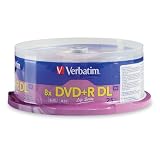
- 8.5GB OR 240-MINUTE CAPACITY: Each single-sided DVD+R DL disc stores up to 8.5GB or approximately four hours of high-quality video—twice the capacity of a standard recordable DVD.
- UP TO 8X WRITE SPEED: Supports recording speeds up to 8X for fast, reliable burning with compatible DVD+R DL writers.
- WIDE DVD COMPATIBILITY: Compatible with supported dual-layer writers and ready for playback with most standard DVD players and DVD-ROM drives.
- RELIABLE WRITE-ONCE FORMAT: Helps preserve movies, music, photos, backups, and other important files from accidental erasure.
- 25-PACK SPINDLE: Includes 25 Verbatim LifeSeries DVD+R DL discs and a Limited Lifetime Warranty.
Optical discs are most useful when their specific format suits the task, recording is verified, and copies are kept in a broader backup plan. They are a poor fit as a “write it once and forget it” archive: media can degrade, and future access is not automatic.
Free tools Windows power users keep installed
One-click scans. No signup required.
How to record and preserve data on an optical disc
- Choose a compatible format. Match the disc’s exact CD, DVD, or BD format to the drive and recording software. Verify supported formats and connections before buying a reader or writer.
- Use reliable media and recording software. The Library of Congress recommends reliable materials and software for creating discs.
- Record in one session when practical. The Library of Congress advises completing a disc in a single session rather than writing multiple sessions.
- Test the finished disc. Read it on two different machines, as recommended by the Library of Congress. Confirm that the files open, not merely that the disc appears in a drive.
- Keep a backup. Store another copy separately so one damaged, lost, or unreadable disc does not become the only remaining copy.
- Handle and store discs carefully. Dirt, fingerprints, deposits, and scratches can interfere with reading. The National Archives discusses these risks and other preservation challenges in its Machine-Readable Media guidance.
- Periodically verify the files. Recheck that the data remains readable and maintain copies in formats and systems you can access. A usable archive needs both retrievable bits and a practical path to read them.
For broader collection maintenance guidance, see ISO/TR 10255:2009. Its existence does not change the central preservation requirement: maintain redundant, verified copies and account for future compatibility.
Quick Recap
Best Value
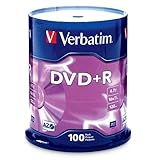
- 100 high-grade non-rewritable DVD+R discs with a one hundred year archival life and OEM drive certified
- Advanced AZO recording dye optimizes read/write performance allowing to record in approximately 5 minutes
- 4.7GB is ideal for storing digital images, music , video and more. Each DVD+R allows you to store up to 1550 photos or more than 120 minutes of 720p video
- Compatible with most DVD-R and DVD+R drives including Pioneer, Apple, Sony, Dell, LG, HP, Lenovo and others
- Verbatim has been a leader in data storage technology since 1969, and guarantees this product with a limited lifetime warranty and technical support
Product prices and availability are accurate as of the date/time indicated and are subject to change. Any price and availability information displayed on Amazon at the time of purchase will apply.

