
iTechGuides is reader-supported. When you buy through links on our site, we may earn an affiliate commission. As an Amazon Associate I earn from qualifying purchases. Learn more
To send logs from an existing logging library to OpenTelemetry, connect the library’s appender or handler to the OpenTelemetry Logs API, map each source record into the OpenTelemetry log data model, and pass it to the SDK for processing and export. Encoding is only the wire-format step: preserving meaning, handling queues and delivery, and choosing the right integration are equally important.
What an OpenTelemetry log bridge does
The OpenTelemetry Logs API is designed primarily for logging-library authors to build appenders that bridge existing logging libraries to the OpenTelemetry log data model. An application’s normal logging calls can continue to use its existing library; the bridge connects that library’s output to OpenTelemetry rather than requiring every call site to adopt an OpenTelemetry-specific API.
The path has distinct components: a LoggerProvider supplies Logger instances, a logger emits LogRecords, and the SDK processes those records before an exporter delivers them. The API defines how records enter the OpenTelemetry model; the SDK controls processing and export afterward. See OpenTelemetry’s Logs API and logging overview.
Map meaning before choosing an encoding
The OpenTelemetry log data model is a logical representation, independent of the physical format used to transmit it. A bridge therefore needs to translate the source record’s meaning, not merely serialize its fields as JSON or Protobuf. The model accommodates mappings from existing formats when they are semantically meaningful, but not every source-library field has a lossless equivalent.
#1 Best Overall

- !!Please NOTE: this is MALE RS232 to DB9 SERIAL CABLE ,Not VGA!!!It is 9 pin, NOT 15 pin!! Look carefully of the Pin is match with your device. Before ordering , please confirm the interface gender is waht you need. After receiving ,please read user manual /instruction at first and download the Driver at first from FT232 Official website or Cisco website . Customer service always online.
- Wide range of applications: USB to RS232 DB9 male serial adapter can work with your Windows (10 / 8.1 / 8 / 7 / Vista / XP), MAC or Linux system and other platforms. USB adapter is designed to connect to serial devices, such as serial modem with DB9, ISDN terminal adapter, digital camera, label writer, palm computer, barcode scanner, PDA, cash register, CNC, PLC controller, tax printer, POS, bar code scanner, label printer, etc
- High quality: ftdi usb serial,the latest ftdi chip set ensures more reliable and faster operation. USB 2.0 to RS232 male DB9 console cable will support 1Mbps date transfer rate.
- Most convenient: rs232 to usb simple installation, plug and play, COM port creation, baud rate can be changed to the required settings. USB power supply - no external power supply required.
- Exquisite design: usb-to-serial,Gold Plated USB RS232 connector and PVC cable ensure high performance and extra durability. Powered by USB port, this USB to DB9 series RS232 adapter cable is designed to fit easily into your handbag.
At minimum, decide how the bridge maps the source timestamp, severity, body, attributes, resource identity, and any trace context into the OpenTelemetry record. Preserve distinctions that matter to operators: for example, do not turn structured attributes into an undifferentiated message string simply because the source library makes that convenient. Check the OpenTelemetry Logs Data Model against the source library’s record semantics.
Trace and span identifiers deserve explicit attention. If the source integration makes trace context available, map it into the corresponding log-record context rather than burying it in the body. A receiver can then associate logs with trace data when the destination supports that relationship.
Build the bridge in four stages
- Receive the source event. Implement the logging library’s integration point, such as an appender, handler, or equivalent hook. OpenTelemetry’s supplementary guidance discusses acquiring a logger and emitting a log record, with a Python logging
Handlerand a Go zapCoreas examples. The exact integration depends on the language and library; see the supplementary guidelines. - Map it to a LogRecord. Convert the source fields into the OpenTelemetry data model, retaining their meaning where possible and making deliberate choices where the models differ.
- Submit it to the SDK. SDK processors run in registration order. The standard SDK defines simple and batch processors, and separate pipelines can end in individual exporters. The SDK’s processing responsibilities are described in the Logs SDK specification.
- Export it to the destination. The selected exporter handles protocol-specific encoding and transmission. For OTLP, that includes delivery concerns such as concurrent requests and retry behavior, as well as the receiver’s endpoint configuration.
Choose between a direct appender and Collector file ingestion
A direct appender or handler is a fit when you can configure the application’s logging library and want records to go straight into the Logs SDK. This route can add trace context and send logs over OTLP to a Collector or backend without first writing them as text files.
Do these 3 things before closing this tab:
1Repair Windows errors before they cause bigger problems2Scan for outdated or missing drivers - takes under a minute3Clear out junk files and repair common Windows errorsRank #2

- [ USB to RS-232 Serial Adapter ] : 5ft Cable Length - Easily connect legacy DB-9 serial devices to modern USB-equipped computers. Uses include industrial, lab, and point-of-sale applications.
- [ Easy Testing ] : Built-in signal tester features full LED indicators with dual-color display for quick and easy testing of RS-232 host-to-device connections.
- [ Wide Compatibility ] : Built with an FTDI Chipset. Works seamlessly with Windows 7, 8, 10, 11, Linux, and macOS 10.X, making it a highly versatile solution across platforms.
- [ Why Gearmo? ] : Your trusted partner based in the USA, providing advanced engineering, highly reliable and superior built products to handle the most demanding industries for over 10 years.
- [ Engineering Support ] : Need specs? Contact us for CAD files, mechanical drawings, or datasheets to support your integration or project needs.
Its operational tradeoff is that a local text file is no longer the natural record to inspect, and the destination must accept the network protocol. Keeping logs in files and collecting them later may be preferable when local inspection or existing file-based operations are important.
For applications that are hard to change, the OpenTelemetry Collector can read and tail existing log files, handle common rotation schemes, checkpoint positions, and parse common formats. This lets teams collect existing logs without changing each application’s logging statements. The logging overview describes both approaches: OpenTelemetry Logging.
- Application control: direct bridging requires access to configure or extend the application’s logging integration; file ingestion can work with an unchanged application.
- Local text files: direct export can bypass them; file ingestion retains them as the collection input.
- Parsing: a bridge maps structured source records; file collection depends on the Collector’s parser and the format written by the application.
- Trace context: a direct integration can carry available context from the logging event; a file parser can only recover what the file contains.
- Protocol and delivery: direct export needs a network-capable destination and assigns protocol delivery to the exporter. With file ingestion, the Collector reads and processes the files before exporting onward.
There is no published benchmark here establishing that one route is cheaper, faster, or more reliable in general. The practical choice depends on application control, file-retention needs, source format, trace-context availability, and the destination pipeline.
Rank #3

- Serial adapter allows a serial device to be connected to a USB computer
- Plug and play convenience:DB9 serial port is seen as a COM port by your computer, and is available for use by any program that accesses COM ports
- No need for an external power adapter:draws power directly from your computer via the USB connection
- DB9 serial port supports data transfer rates up to 230 Kbps:twice the speed of a standard built in serial port
- LED shows adapter status and data activity at a glance
Separate SDK processing from OTLP encoding
Processors and exporters have different jobs. A processor may batch records; an exporter implements protocol-specific encoding and transmission. Keeping that boundary clear helps locate failures: incorrect meanings or missing fields point toward source mapping, queue and flush behavior toward processing, and wire format, endpoint, authentication, or retries toward export and the destination.
The Logs SDK specification lists these standard batch processor defaults:
| Setting | Specification default |
|---|---|
| Maximum queue size | 2048 records |
| Scheduled delay | 1000 milliseconds |
| Export timeout | 30000 milliseconds |
| Maximum export batch size | 512 records |
These are specification defaults, not a guarantee that every language SDK version behaves identically at runtime. A full queue drops logs. Exporters must not block indefinitely and must use a reasonable upper timeout; calls for the same exporter instance should not run concurrently. The exporter is responsible for its concurrent-request and retry policy. Consult the Logs SDK specification and the implementation documentation for the SDK version you deploy.
Rank #4
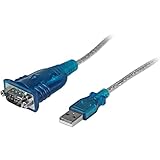
- MAXIMIZED PORTABILITY: This USB to serial RS232 adapter converts a USB port into an RS232 DB9 serial port; Compatible with barcode readers/scanners, networks switches, receipt printers, PLCs, medical devices, oscilloscopes, scales, etc.
- BROAD COMPATIBILITY: Compatible with your USB 1.0, 2.0 or 3.0 ports, this USB-A to RS232 converter works with your Windows, MacOS or Linux system
- PORTABLE DESIGN: ?Powered by a USB port, this USB to RS232 serial adapter cable?features a lightweight design?that conveniently fits into your carrying case, making it ideal for professionals on the go
- USB TO SERIAL ADAPTER SPECS: 17in (43cm) Cable Length | Max Baud 921.6 Kbps | 512 Byte FIFO | Supports Windows, macOS, and Linux | Prolific PL2303GT Chipset | Odd, Even, Mark, Space, or None Parity Modes | 5/6/7/8 Data Bits
- THE IT PRO'S CHOICE: Designed and built for IT Professionals, this USB to serial converter cable is backed for 3-years, including free lifetime 24/5 multi-lingual technical assistance
Configure OTLP for the actual transport
OTLP 1.11.0 defines gRPC and HTTP transports and Protobuf schemas for moving telemetry between sources, intermediate nodes, and backends. OTLP/HTTP can carry either binary Protobuf or JSON-encoded Protobuf payloads, using the same underlying message schema. The default HTTP path for log requests is /v1/logs, and the request body is an ExportLogsServiceRequest.
OTLP’s JSON representation follows Protobuf JSON mapping with OTLP-specific requirements: traceId and spanId are hexadecimal strings, while enum values must be integers rather than enum-name strings. Binary Protobuf uses the content type application/x-protobuf. These details are defined in the OTLP specification.
The Tool Desk
Outbyte Driver Updater FREEScan for outdated or missing drivers - takes under a minuteDriver Scan →Outbyte PC Repair FREEClear out junk files and repair common Windows errorsFree Scan →Exporter configuration lists grpc, http/protobuf, and http/json as transport values. SDKs should support gRPC and HTTP Protobuf; HTTP JSON support is optional, so check the specific SDK before selecting it. See the protocol exporter specification.
Best Value

- Gold Plated USB 2.0 to RS232 Female DB9 Serial Cable connects serial DB9 (9 PIN) devices such as modems to standard computer USB ports, supporting up to 1Mbps data transfer rate. [ IMPORTANT NOTE ]: This USB to RS232 adapter features a female RS232 connector, NOT male — please confirm your device’s serial port type before purchase
- Adopted with latest Prolific PL2303 chipset, this USB to RS232 adapter supports Windows 11/10/8.1/8/7, Linux and Mac OS. Windows 11/10/8.1/8/7 is plug-and-play and will be automatically identified as COM port. Windows built-in drivers match most USB-to-serial chips; it will automatically download and install the matched driver under network environment. For offline Windows, Mac OS and most Linux systems, please download and install the official driver from CableCreation official website. Ubuntu Linux supports plug and play without driver installation
- Widely compatible with modems, ISDN terminal adapters, digital cameras, label writers, palm PCs, PDAs, cash registers, CNC, PLC controllers, tax printers, POS machines, barcode scanners, and other devices with standard DB9 serial ports. Please be noted this USB to RS232 female DB9 serial converter cable is NOT compatible with cutting plotter and SCM equipment. Kindly confirm your device interface and model before placing an order
- Features tinned copper conductor and triple shielding to ensure stable and high-quality data transmission. USB bus-powered design requires no external power adapter. If your computer cannot recognize the cable normally, please match it with a null modem adapter for normal use
- CableCreation provides 24-month warranty and lifetime professional customer service. This 6.6ft USB 2.0 to RS232 Female DB9 serial converter cable follows standard pin definition, suitable for the device requiring female RS232 interface. If you encounter any problems of driver installation or device compatibility, please contact our customer service at any time, and we will assist you within 24 hours
Endpoint paths differ by transport. A base OTLP/HTTP endpoint is used to construct signal-specific paths such as /v1/logs; a logs-specific HTTP endpoint can include that path itself. For gRPC, configure a gRPC target rather than appending an HTTP signal path. Environment-variable configuration varies among language SDKs, so verify the language-specific guidance in OTLP exporter configuration.
Test the mapping and delivery path
Use a real OTLP receiver or a protocol-aware test harness to inspect what the bridge emits. A useful check follows a record through the whole path rather than treating successful serialization as proof of a working bridge.
- Confirm timestamps, severity, body, attributes, and resource identity arrive in the intended fields.
- Check that trace and span identifiers survive mapping when the source event has context.
- For HTTP JSON, verify hexadecimal trace identifiers and integer enum values.
- Confirm the HTTP request reaches the logs path, or that the configured gRPC target is valid.
- Exercise queue pressure, flush behavior, timeouts, and exporter retry behavior against the SDK and receiver you actually deploy.
The standard-output exporter can help with debugging and learning, but its output format varies by implementation and is not a stable serialization contract. It is not intended for production use; see the standard output exporter documentation.
Recommended Free Tools
Check language support rather than assuming maturity
The OpenTelemetry specification status summary marks the Logs API, SDK, and protocol as stable, but notes that appenders are under development in many languages. Stable underlying components therefore do not mean every language and logging-framework bridge is equally mature. Verify the specific integration’s status and behavior before making a language-wide or version-specific implementation choice. The status summary is at OpenTelemetry specification status.
Quick Recap
Product prices and availability are accurate as of the date/time indicated and are subject to change. Any price and availability information displayed on Amazon at the time of purchase will apply.

