
Crashes, No Sound, or Screen Glitches?
Random freezes, missing sound and display glitches usually trace back to one bad driver. Find and replace yours safely.Free scan · under a minuteWindows Errors? Fix Them Before They Spread
Repair common Windows errors and clear accumulated junk for a smoother, more stable PC - no reinstall needed.Free scan · no reinstalliTechGuides is reader-supported. When you buy through links on our site, we may earn an affiliate commission. As an Amazon Associate I earn from qualifying purchases. Learn more
Yes, an open-source voice device can give you a meaningfully different privacy and ownership model from Alexa or Google Nest—but only when you choose a local speech pipeline. Home Assistant Voice Preview Edition is built for Home Assistant and can process a limited set of home-control phrases locally. It can also use more demanding fully local processing or Home Assistant Cloud, which sends speech to the cloud. The hardware is therefore a configurable smart-home voice endpoint, not an automatic offline replacement for every Echo or Nest capability.
The trade is straightforward: you gain control over where supported data is stored and how speech is processed, while taking on a Home Assistant installation, compatible hardware, pipeline choices and more limited general-assistant features. The Voice Preview Edition has a recommended MSRP of $69 / €59, but a fair total-cost comparison must also include a Home Assistant host, optional cloud service and any external speaker you need.


What is the real difference?
The important distinction is architectural, not simply whether a product carries an “open-source” label.
Quick wins for a faster PC:
Scan for outdated or missing drivers - takes under a minuteDriver Scan →Repair Windows errors before they cause bigger problemsFix Now →Fix the driver behind crashes, sound loss and screen glitchesFind Drivers →- Home Assistant: the platform is designed to run on hardware you own, keep data locally and communicate directly with supported devices on your local network. Its voice device lets you select a focused local, full local or cloud speech path.
- Alexa: an Echo detects its chosen wake word on the device, then sends a recording to Amazon’s cloud after activation so the request can be processed and answered.
- Google Nest: Google documents microphone, wake-word sensitivity, Voice Match and personal-results controls. Those controls do not establish that ordinary Nest requests are processed entirely on the device.
Consequently, “more private” is conditional. A Home Assistant speaker using local speech can avoid sending that speech to a vendor cloud for recognition. The same device using Home Assistant Cloud has a different data path. Alexa and Nest provide user controls around cloud assistants, but the documented materials do not show an equivalent local-only path for general voice requests.
#1 Best Overall

- Designed for Home Assistant Voice & Music Workflows: Preloaded with Home Assistant Voice Assistant and Music Assistant. Functions as both a voice input terminal and an audio playback endpoint.
- Dual Microphones for Voice Capture: Built with dual digital microphones for wake word or button-activated voice capture. Audio is streamed to the Home Assistant voice pipeline.
- Integrated 3W Speaker for Direct Playback: The built-in 3W/4Ω speaker supports TTS playback, Music Assistant streaming, and system audio without external speakers.
- Linux-Based Local Operation: Runs a lightweight Linux system on a quad-core ARM A53 CPU with 256MB RAM and 512MB flash for local audio processing.
- Development & Debugging Capabilities: Supports firmware flashing, and also provides access to live logs, on-device editing—suitable for routine development or issue diagnosis.
At-a-glance comparison
| Question | Home Assistant Voice Preview Edition | Alexa (Echo) | Google Nest |
|---|---|---|---|
| Primary purpose | Voice control for a Home Assistant smart home | General cloud assistant integrated with Echo devices and services | General cloud assistant integrated with Nest devices and Google services |
| Speech processing | Selectable: focused local, full local or Home Assistant Cloud | Wake-word detection on the device; activated audio is sent to Amazon’s cloud | Google documents privacy controls, but the cited material does not establish local-only processing for general requests |
| Offline capability | Focused local processing can handle a defined set of common home-control phrases offline; full local processing requires more computing power | Not presented here as an offline general-assistant mode | Not established by the cited documentation |
| Home-control locality | Home Assistant can communicate directly with supported devices on the local network; the speech path remains a separate choice | Depends on the Echo service path and connected ecosystem | Depends on Google and connected ecosystem services |
| Physical privacy control | Hardware mute switch | Hardware microphone-disable button | Microphone mute control documented for Nest devices |
| Audio output | 3.5 mm output and dedicated DAC for an external speaker | Built-in speaker characteristics vary by Echo model | Built-in speaker characteristics vary by Nest model |
| Confirmed price in the supplied evidence | $69 / €59 recommended MSRP; regional pricing varies | Current comparable price not established | Current comparable price not established |
How Home Assistant’s privacy model works
User-owned platform and local device control
Home Assistant says its platform runs on user-owned hardware, stores data locally and can communicate directly with supported devices over the local network. Some local protocols can operate without an internet connection. This can reduce dependence on a vendor account for automations and device state, but it does not automatically make every voice interaction offline.
Think of the system as two linked paths:
- Control path: Home Assistant sends commands to compatible lights, switches, sensors and other devices. When the integration and protocol support local communication, that command can stay on your network.
- Speech path: the spoken audio must be recognized by a local speech engine or a cloud service. Your choice here determines whether the audio leaves the home.
A local control path paired with cloud speech is still partly cloud-dependent. Conversely, a local speech path does not make an unsupported device local; the integration may still require an internet service.
The three Voice Preview Edition processing modes
| Mode | What it does | What you give up or need |
|---|---|---|
| Focused local processing | Recognizes a defined set of common home-control phrases offline | Limited vocabulary and intent coverage; it is not a broad conversational assistant |
| Full local processing | Runs a more capable local speech pipeline | Requires a Home Assistant host with greater computing capacity; the available product information does not specify a universal minimum CPU or memory requirement |
| Home Assistant Cloud | Sends speech to the cloud service for processing, which is intended to provide accurate recognition on lower-powered systems | Audio processing depends on a cloud service and its availability; some languages may have a better experience through this option |
Home Assistant’s product page states, “You do not need Home Assistant Cloud.” That statement means the device can be used without that subscription, not that every configuration is offline. The same page notes that Home Assistant Cloud may provide the best experience for some languages because local speech models do not support every language.
The Tool Desk
Outbyte PC Repair FREERepair Windows errors before they cause bigger problemsFix Now →Outbyte Driver Updater FREEFix the driver behind crashes, sound loss and screen glitchesFind Drivers →What “open-source” changes—and what it does not
Home Assistant presents the Voice Preview Edition as open-source hardware and software. In practical terms, this gives you a platform designed around user control, a configurable voice pipeline and a Home Assistant installation you can operate on your own hardware. It does not guarantee that every component, integration or language model is equally open, local or mature. The selected pipeline and the devices you connect still determine the actual data flow.
How Alexa handles privacy
Amazon’s documented Alexa architecture is cloud-based after activation. The Echo detects the chosen wake word locally; once activated by the wake word or a button, it sends a recording to Amazon’s cloud to process and answer the request.
Controls you can use
- Microphone-disconnect button: Echo hardware includes a physical control that disables the microphones.
- Voice-history review and deletion: Alexa users can review recordings and delete voice history.
- Retention settings: Amazon provides controls for how long voice recordings are retained.
False wakes can occur. Amazon describes a cloud verification mechanism intended to check whether the device actually heard its wake word, but an accidental activation can still create an interaction record. Deleting voice history should not be interpreted as proof that every related record or piece of account information is erased; Amazon distinguishes interaction records from other retained information.
These controls are useful, but they are controls around a cloud assistant rather than a user-selectable general-purpose local speech mode.
How Google Nest privacy controls compare
Google documents several controls for Nest devices:
- Wake-word sensitivity: adjust how readily the device responds to its activation phrase.
- Microphone mute: disable the microphone using the device control.
- Voice Match: distinguish recognized household speakers for supported features.
- Personal results: control whether personalized information can be returned on a shared device.
These settings affect activation, identity and the information shown to different people. They are not evidence that general Nest requests are processed entirely on the device. The available Google documentation also does not settle every question about audio retention, so a precise comparison should not claim that Google and Amazon retain data in identical ways.
What the Voice Preview Edition can and cannot replace
Strong fit: smart-home commands
The device is designed around Assist, Home Assistant’s voice assistant. Its clearest use is controlling entities already exposed in Home Assistant: turning devices on or off, changing a supported setting or asking for the state of a sensor. Focused local processing is specifically aimed at common home-control phrases.
Weaker fit: broad questions and conversations
A predefined home-control grammar is different from asking a general assistant for news, open-ended explanations, shopping information or a wide range of third-party actions. The Voice Preview Edition should not be treated as a like-for-like replacement for every general-assistant feature found in consumer Echo or Nest speakers.
AI integrations require caution
Home Assistant describes AI integrations as experimental and advises caution when giving an AI system control over important home functions. If you enable an AI service, check which provider receives the request, what entities are exposed and what happens when the service is unavailable or misunderstands an instruction. Keep safety-critical devices out of broad AI control unless you have an independent safeguard.
Rank #3
Audio playback
The Voice Preview Edition includes a 3.5 mm audio output and a dedicated digital-to-analog converter for an external speaker. That is useful if you already have suitable powered audio equipment or want to choose your own speaker. It does not make the device acoustically equivalent to a standalone Echo or Nest speaker, whose enclosure, drivers and microphones are designed as an integrated product.
Setup: a practical path from hardware to private voice control
The device requires an existing Home Assistant system. Before buying, decide whether you already have a host capable of running Home Assistant and, if you want local speech, whether it has enough capacity for the selected speech models.
- Prepare Home Assistant. Install and update Home Assistant on hardware you own, then add the smart-home integrations and devices you want to control. Give each device a clear name and area so voice commands are unambiguous.
- Connect the Voice Preview Edition. Follow the device’s included power and network onboarding instructions, then add it to your Home Assistant installation.
- Configure an Assist voice pipeline. In Home Assistant’s voice-assistant settings, select the speech-to-text, conversation and text-to-speech components you intend to use. The exact choices determine whether audio stays local or is sent to a cloud service.
- Choose the processing mode deliberately. Start with focused local processing if you only need a limited set of home-control phrases. Select full local processing only after confirming that your host can run the required models responsively. Choose Home Assistant Cloud when recognition quality, language support or lower host requirements matter more than keeping speech processing local.
- Set the device’s exposed entities. Expose only the devices and scenes you expect to control by voice. Remove sensitive or safety-critical entities from broad conversational or experimental AI access.
- Test the physical mute switch. Activate the mute control and verify that the device stops responding. Test it again after updates so everyone in the household knows what the indicator means.
- Connect optional audio equipment. Use the 3.5 mm output if you need a larger or better-positioned speaker. Confirm that the external speaker is powered and that volume is controlled as expected.
- Test failure behavior. Try a supported command with the internet disconnected if your selected pipeline is supposed to be local. Then test what happens when Home Assistant, the speech engine or a connected device is unavailable. A predictable failure is safer than silently falling back to a cloud service.
Cost: what the confirmed price does and does not tell you
Home Assistant lists a recommended MSRP of $69 / €59 for the Voice Preview Edition. The company says regional prices vary; the USD figure excludes taxes, while the EUR figure includes applicable taxes. Retailers set their own prices. The figure is a product price, not a study statistic, and it was current on the cited product page accessed October 13, 2026.
What’s actually slowing this PC down?
Pick the symptom - the matching free tool is one click away.
No comparable current Echo or Nest model price was verified in the supplied evidence, so it would be misleading to name a cost winner. Prices change by model, country, sale period and bundle. Check the exact model and region before making a purchase decision.
Build your actual total
- Voice hardware: the $69 / €59 recommended MSRP, subject to regional taxes and retailer pricing.
- Home Assistant host: include the cost only if you do not already own suitable hardware. The required specification depends on whether you use focused local, full local or cloud speech.
- Optional Home Assistant Cloud: not required, but relevant if you choose the cloud speech path or need its language and recognition advantages.
- External speaker: necessary only if the device’s 3.5 mm output is not sufficient for your room or listening preferences.
- Existing smart-home devices: compatibility and any required hubs or bridges can dominate the total more than the voice device itself.
Which approach fits your priorities?
Choose the open-source route when
- You already run Home Assistant or want a user-owned smart-home control plane.
- You value a configurable local speech path and accept narrower phrase coverage or additional setup.
- You want local-network device control and the ability to choose whether speech recognition is local or cloud-based.
- You are comfortable diagnosing integrations, host performance and pipeline failures.
- You prefer a 3.5 mm output so you can select the external speaker rather than buying an all-in-one acoustic design.
Choose an integrated assistant ecosystem when
- You prioritize broad general questions, mature third-party services and minimal configuration.
- You want the speaker, microphones, account services and audio system packaged as one consumer product.
- You accept cloud processing after activation and prefer account-level history, retention and personalization controls to managing a local stack.
Neither choice is universally private or universally convenient. The open-source advantage is control over the platform and the speech path; the cost is responsibility for setup, compatibility and performance.
Common pitfalls and how to avoid them
Calling every Home Assistant setup “fully offline”
Only the configured local pipeline can support that claim, and focused local processing covers a limited set of phrases. Check the actual speech-to-text, conversation and text-to-speech components rather than inferring privacy from the hardware name.
Rank #4
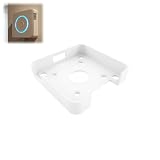
- Fitment For: Designed for Home Assistant Voice Preview Edition, ensuring a secure and stable wall mounting fit.
- Optimized Voice Interaction: Positions your device at a convenient height for better voice control experience.
- Stable Device Support: Provides firm support to keep the device securely positioned during daily use.
- Space Saving Wall Mount: Wall mount holder keeps your smart speaker off desks and counters for a cleaner setup.
- Multi Room Application: Ideal for kitchens, bedrooms, offices, and other smart home locations.
Confusing local device control with local speech recognition
A light can be controlled over your LAN while the spoken command is recognized in the cloud. Evaluate both paths separately.
Assuming full local processing works on any host
Home Assistant says full local processing needs greater computing power but does not establish one universal minimum CPU in the available product information. Measure responsiveness on your own host before committing to a large local model.
Expecting consumer-speaker feature parity
The Voice Preview Edition is a Home Assistant voice-control device. Its focused local mode is intentionally narrower than a general cloud assistant, and its 3.5 mm output requires external audio equipment for a room-filling setup.
Treating mute buttons as proof that no audio was ever captured
Use the mute control, but also understand activation behavior and history settings. Alexa documents false wakes and cloud verification; Google’s controls govern sensitivity, identity and personal results. Hardware controls reduce risk but do not replace a clear data-path decision.
Comparing prices without counting the host
The $69 / €59 figure covers the Voice Preview Edition at recommended MSRP. If you do not already have Home Assistant hardware, include that system, optional services and audio equipment before comparing totals.
Recommended Free Tools
Bottom line
Open-source smart-home voice hardware offers a genuinely different ownership model when you run Home Assistant on hardware you control and select local speech processing. The Voice Preview Edition makes that option concrete, with a mute switch, configurable Assist pipelines, a Grove port and 3.5 mm audio output. Its focused local mode is deliberately limited, full local mode needs a more capable host, and Home Assistant Cloud sends speech to the cloud. Alexa and Google Nest remain easier, broader consumer assistants with documented privacy controls, but the supplied evidence does not establish a comparable local-only path for their general requests. Decide first whether local speech and ownership outweigh setup work; then price the complete system rather than the speaker alone.
Quick Recap
Product prices and availability are accurate as of the date/time indicated and are subject to change. Any price and availability information displayed on Amazon at the time of purchase will apply.

