
iTechGuides is reader-supported. When you buy through links on our site, we may earn an affiliate commission. As an Amazon Associate I earn from qualifying purchases. Learn more
Open-ear earbuds usually leak more sound and offer less privacy than in-ear earbuds, but they let you hear traffic, coworkers and conversations more easily. In-ear earbuds generally seal the canal, reducing leakage and outside noise; models with active noise cancellation (ANC) can make moderate listening levels easier in noisy places. Neither design is automatically safe for hearing: risk depends mainly on volume, listening time and how often you are exposed.
Use open-ear earbuds when environmental awareness is worth accepting some leakage. Choose sealed in-ear earbuds when private, immersive listening matters. In loud workplaces or at concerts, use certified hearing protection rather than ordinary earbuds or ANC.
What open-ear and in-ear earbuds actually do
Open-ear earbuds
Open-ear earbuds place their drivers outside the ear canal. They do not rely on a plug or an enclosed ear cup, so outside sound remains naturally audible. Depending on the design, a small transducer points sound toward the ear, rests near the cheekbone, or uses another air-conduction arrangement. The ear canal stays open, which is why a nearby person can often hear both your surroundings and some of your playback.
Outdated Drivers Are Slowing You Down
One free scan finds every outdated or missing driver and matches the right update for your exact hardware.Free scan · exact hardware matchWindows Errors? Fix Them Before They Spread
Repair common Windows errors and clear accumulated junk for a smoother, more stable PC - no reinstall needed.Free scan · no reinstallThe unsealed layout is a design tendency, not a fixed leakage rating. How much sound escapes depends on playback level, the angle and distance of the driver, your ear shape, the fit of the retaining hook or band, room acoustics, and signal processing. A quiet bedroom and a crowded street can produce very different results from the same earbuds.
#1 Best Overall

- Ultra-Comfort with Open-Ear Design: Experience matchless comfort even for all-day wear with these non-intrusive, open-ear Bluetooth earbuds.
- Enhanced Situational Awareness: V20i open-ear wireless earbuds let you stay connected to the world while enjoying pristine playback. Ideal for both urban life and outdoor ventures.
- Four Adjustable Positions for a Secure, Comfy Fit: Easily rotate to find the sweet spot for your ears with these bluetooth earbuds, boosting stability and comfort. Listen and move freely with V20i open-ear earbuds throughout the day.
- Powerful Sound with 16mm Drivers: Immerse in rich, resonant bass fueled by V20i's advanced 16mm drivers—featured in these wireless earbuds—with titanium-coated domes and soundcore's proprietary BassUp technology.
- Clear Calls with 4 Mics and AI Enhancement: Equipped with four mics and an AI algorithm, V20i open-ear Bluetooth earbuds ensure crisp and clear calls wherever you are.
In-ear earbuds
In-ear earbuds position the speaker at the entrance to or inside the ear canal. Most use silicone or foam tips to create a seal. That seal blocks some outside sound and keeps more of the driver output inside the ear, so leakage is generally lower than with an open design when the tip fits correctly.
Sealing is not absolute. A poor tip size, a loose fit, a vent in the housing, or very high playback can still make music audible to someone nearby. Conversely, a well-fitted in-ear earbud can be difficult for others to hear even without ANC.
Sound leakage: can people nearby hear open-ear earbuds?
Yes, they can, especially in quiet rooms, on trains, or when sitting close to you. Open-ear earbuds radiate sound into the surrounding air instead of confining most of it to a sealed canal. At a low level, a bystander may hear little or nothing; at a higher level, speech, cymbals and other high-frequency details can become obvious. There is no universal decibel figure that applies to every open-ear model or listener.
What’s actually slowing this PC down?
Pick the symptom - the matching free tool is one click away.
Why leakage changes from one situation to another
- Playback level: Raising the volume increases both what you hear and what escapes. A level that is acceptable outdoors can be intrusive in a silent office.
- Fit and ear geometry: Small changes in the driver’s angle or distance from the ear alter how efficiently sound reaches you and the room.
- Room acoustics: Hard surfaces reflect sound, making leakage easier to notice than in a carpeted, noisy space.
- Content and processing: Bright vocals and high-frequency percussion are more readily identified by a nearby listener than low, steady bass. Equalization and beam-forming can change the pattern.
- Distance: Leakage drops quickly as another person moves away, but close seating makes even modest spill audible.
A simple leakage check
- Set the earbuds to the level you normally use, not the maximum level.
- Play a familiar track with vocals and a steady rhythm.
- Ask someone to stand at the distance that matters to you: about an arm’s length for an office, or a neighboring seat for travel.
- Have the listener describe whether words, melody or only a faint hiss are audible.
- Repeat in a quiet room and in a typical noisy setting. Do not raise the volume to compensate for a test; that would change the result.
This check tells you how your particular fit behaves. It is not a laboratory leakage measurement and should not be generalized to other people or models.
Rank #2

- Open Design, All-Day Comfort: The X5S open ear headphones are ergonomically designed to gently contour your ears while keeping the ear canal completely unobstructed – delivering a genuinely comfortable and secure fit. Weighing just approximately 6.7g per earpiece, they feel incredibly lightweight and barely noticeable. Even during extended wear, the wireless earbuds remain comfortable with no discomfort. Ideal for sports, running, commuting, and daily use.
- Seamless Bluetooth 6.0 Connectivity: These open ear earbuds utilise the latest Bluetooth 6.0 technology for quick pairing and an exceptionally stable connection. Enjoy uninterrupted, low-latency audio and effortless switching between devices. Once you take the Bluetooth earbuds out of the charging case, they automatically pair. Furthermore, the over ear earbuds are compatible with nearly all Bluetooth-enabled devices.
- Situational Awareness: The open-ear design allows you to stay aware of your surroundings, even while listening to music. Immerse yourself in rich, clear sound while staying aware of your surroundings—perfect for video calls and streaming your favorite playlists. Whether you're cycling, walking, running, exercising, or driving, the sports headphones keep you focused, safe, and able to quickly respond to any changes around you.
- Immersive Sound & Clear Calls: Enjoy your music with the open ear headphones wireless bluetooth, featuring a 14.2mm dynamic driver for rich audio. The open ear buds also employ a unique directional sound transmission technology to prevent sound leakage and protect your privacy. Equipped with a highly sensitive ENC noise-cancelling microphone that accurately captures your voice and effectively filters out background noise – ideal for use in the office or on the go.
- 40-Hour Playtime, LED Display, Non-Stop Music: The over the ear earbuds feature an LED indicator displaying the charging case's battery status. The wireless earphones offer 8-10 hours of playtime per charge (depending on actual volume level), extended to a total of 40 hours with the charging case. Thanks to USB-C fast charging, the battery is fully recharged in just 1.5 hours – perfect for a dynamic lifestyle.
Privacy and situational awareness are opposing goals
When open-ear earbuds are the better choice
Open-ear earbuds are useful when you need to hear an approaching vehicle, a colleague calling your name, a doorbell, or instructions while moving. Runners and walkers can keep environmental sound available without repeatedly removing an earbud. In an office, you can listen quietly and still participate in a nearby conversation.
The trade-off is that people around you may hear part of your program, and conversations are not private. A person beside you may also hear enough to identify a podcast topic, a call, or a song even when the audio is not loud to you.
When in-ear earbuds are the better choice
In-ear earbuds are the stronger option for private listening, travel, focused work and calls in noise. A good seal reduces both outward leakage and incoming sound, so your audio is less exposed and outside distractions are lower. ANC can deepen isolation by electronically reducing steady external noise.
Isolation also reduces awareness. Sealed earbuds with ANC can mask announcements, bicycles, alarms or a coworker. Transparency or ambient mode can feed outside microphones into the earbuds, restoring awareness while retaining some of the seal, but it is not identical to having an unobstructed ear.
Rank #3
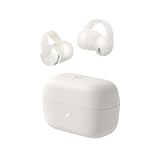
- Open Ear Earbuds Over Ear for Running & Gym: Clip-on design sits comfortably over your ear without blocking the ear canal. Perfect for running, workouts, and sports—stay aware of surroundings. More comfortable than in-ear, better sound than bone conduction.
- FlexiClip Design, Secure Fit: Memory titanium FlexiClip adapts to any ear shape for all-day comfort. Ultra-lightweight and stable—won't fall off during intense workouts or running. Designed for active lifestyles.
- Powerful Bass, 12mm Drivers: Custom 12mm drivers deliver deep bass and 86dB max output. Clear, loud sound for gym workouts and running—superior audio quality compared to bone conduction headphones.
- AI Clear Calls: Advanced AI filters background noise for crystal-clear calls during outdoor running, gym workouts, or commutes. Perfect for work calls on the go.
- 28H Playtime : 8 hours single charge, 28 hours with case. IP55 waterproof protects against sweat and rain during outdoor running and gym sessions. Bluetooth 6.0 for ultra-stable connection.
Privacy in common settings
| Situation | Open-ear tendency | In-ear tendency | Practical choice |
|---|---|---|---|
| Quiet office or library | Leakage is more noticeable; nearby conversations remain easy to hear. | Usually discreet when the tip seals; stronger privacy. | Use in-ear at a low level if privacy matters; use open-ear only if some spill is acceptable. |
| Street running or walking | Traffic and people remain audible. | Seal and ANC can reduce awareness; transparency helps. | Open-ear is convenient when environmental awareness is the priority. |
| Airplane or train | Engine or carriage noise may encourage higher volume and leakage. | Seal and ANC reduce noise and can support lower playback. | In-ear ANC is usually better for privacy and comfort, while checking announcements manually. |
| Shared bed, desk or waiting room | Close listeners may hear your program. | Less spill with a good seal. | Choose in-ear for private content; keep the level modest. |
Which design is safer for hearing?
Neither open-ear nor in-ear construction guarantees hearing safety. The main exposure variables are the sound level at your eardrum, how long you listen, and how frequently you repeat the exposure. The World Health Organization’s 2026 safe-listening guidance states that volume, duration and frequency all affect hearing, and advises keeping device volume below 60% of maximum. Its reference level is 80 dB for up to 40 hours per week for adults.
The National Institute on Deafness and Other Communication Disorders (NIDCD) says repeated exposure at or above 85 dBA can cause hearing loss and identifies high-volume MP3 players, earbuds and headphones as recreational sources. It also notes that sounds at or below 70 dBA are unlikely to cause hearing loss even after long exposure. These are population-level reference points, not a promise that every device’s 60% setting equals a particular dB value.
Why open-ear use can raise exposure
Because outside noise remains audible, open-ear users sometimes increase playback to compete with traffic, ventilation or conversation. That raises the dose reaching the ear and can erase the hearing advantage of listening at a lower level. An open design is therefore not a license to turn the volume up.
Do these 3 things before closing this tab:
1Fix the driver behind crashes, sound loss and screen glitches2Clear out junk files and repair common Windows errors3Scan for outdated or missing drivers - takes under a minuteWhy ANC can help without being hearing protection
ANC reduces incoming noise electronically. In a steady noisy environment, that may reduce the temptation to increase music volume, potentially lowering your listening dose. The benefit depends on the quality of the seal, the ANC implementation and the noise spectrum.
Rank #4

- [SUPREMELY COMFORTABLE ULTRA-LIGHT] - Enjoy unparalleled comfort with TOZO OpenEarRing, expertly crafted for high-resilience materials and featuring a secure clip-on design, with a single earbud is only weigh 5.1g, allowing you to enjoy music with a lightweight and pressure-free experience.
- [TOZO EXCLUSIVE ORIGX ACOUSTIC TECH] - Hi-Res Stereo for Audiophiles & Movie Buffs—Our proprietary OrigX tech delivers crystal-clear stereo resolution, capturing every vocal inflection and instrumental layer music lovers crave. For binge-watching or movie nights, it restores vivid dialogue and immersive background details—from subtle rustles to dynamic soundtracks.
- [DIGITAL DISPLAY& 40H PLAYTIME] - Enjoy music for up to 10 hours on a single charge with open ear earbuds. The charging case provides an additional 30 hours of playback, totaling an impressive 40 hours. The compact charging case with digital display and support Type-C charge, don't worry about low battery, enjoy music anytime,and anywhere.
- [TOUCH AND ENJOY] - Simple button controls on TOZO OpenEarRing with your finger, make it easy to switch between answer/hang up calls, with just a press, effortlessly control your music and answer calls, It brings great safety and convenience when you are driving, exercising or running.
- [CUSTOMIZE YOUR OWN EQ] - With TOZO APP to customize your favorite EQ mode, there are 32 EQ modes, allowing you to listen to various vocal music more accurately, such as jazz, blues, classical music, etc. Let's start your own music festival with TOZO OpenEarRing!
ANC earbuds are not personal protective equipment. The National Institute for Occupational Safety and Health (NIOSH) states in its 2024 guidance that active noise cancellation “should not be considered hearing protection unless labeled with an NRR.” For hazardous workplace noise, machinery, firearms or concerts, use certified earplugs or earmuffs with an appropriate noise-reduction rating. You may listen through compatible hearing-protection equipment only if the combination is approved for that use.
WHO and ITU device guidance you can apply
The World Health Organization and International Telecommunication Union’s 2019 safe-listening device standard recommends three functions: exposure tracking, individualized sound-allowance feedback and volume limiting. Its adult reference mode is 80 dB for 40 hours per week; its child mode is 75 dB for 40 hours per week. Device implementations vary, so check whether your phone and earbuds actually report exposure or enforce a limit rather than assuming they do.
Set a safer routine
- Start below the maximum: Keep the device volume below 60% of its maximum, as WHO advises, then increase only enough for clear speech or music.
- Use exposure information: Turn on your phone’s headphone-safety or listening-exposure dashboard when available. Treat the estimate as a guide because fit and calibration affect accuracy.
- Limit continuous sessions: Insert quiet breaks instead of listening for hours without interruption.
- Lower the level in quiet places: Open-ear leakage is less intrusive and your ears need less output when the environment is already quiet.
- Recheck after changing tips or modes: A different in-ear seal, equalizer preset or transparency setting can change how loud the same numeric volume feels.
Open-ear and in-ear formats compared
| Axis | Open-ear earbuds | In-ear earbuds |
|---|---|---|
| Ear contact | Outside the canal; unsealed. | At or in the canal, commonly with a sealing tip. |
| Sound leakage | Usually more leakage; no universal dB figure applies. | Usually less leakage when the seal fits well. |
| Privacy | Weaker in quiet rooms or close seating. | Stronger isolation and privacy, especially with ANC. |
| Situational awareness | Stronger because outside sound remains audible. | Lower with a sealed fit and ANC; transparency can restore awareness. |
| Noisy settings | May require higher playback volume; monitor exposure carefully. | ANC can reduce the need to raise playback volume, but does not make the device PPE. |
| Best fit | Running, walking, office awareness and conversations. | Travel, focused listening, calls in noise and private listening. |
Examples of current product implementations
Open-ear example: OpenFit
Shokz describes OpenFit as having an “Open-Ear Design” intended to help users “Maintain Situational Awareness.” Its product page identifies DirectPitch as air-conduction technology, lists up to 7 hours of listening per charge and up to 28 hours with the charging case, and gives the earbuds an IP54 sweat-resistance rating. Those specifications describe the format and features; they do not establish a universal leakage level or guarantee that bystanders will hear nothing.
Recommended Free Tools
In-ear ANC example: AirPods Pro 3
Apple describes AirPods Pro 3 as in-ear earbuds with Active Noise Cancellation and an upgraded acoustic seal. The feature set includes Adaptive Audio, Transparency and hearing-protection functions, and Apple lists up to 8 hours of ANC listening on one charge. Battery figures depend on the stated test conditions and mode. The seal can improve isolation and privacy, but no in-ear model is perfectly private at every volume or fit.
Best Value

- Open Ear Earbuds Over Ear for Running & Gym: Clip-on design sits comfortably over your ear without blocking the ear canal. Perfect for running, workouts, and sports—stay aware of surroundings. More comfortable than in-ear, better sound than bone conduction.
- FlexiClip Design, Secure Fit: Memory titanium FlexiClip adapts to any ear shape for all-day comfort. Ultra-lightweight and stable—won't fall off during intense workouts or running. Designed for active lifestyles.
- Powerful Bass, 12mm Drivers: Custom 12mm drivers deliver deep bass and 86dB max output. Clear, loud sound for gym workouts and running—superior audio quality compared to bone conduction headphones.
- AI Clear Calls: Advanced AI filters background noise for crystal-clear calls during outdoor running, gym workouts, or commutes. Perfect for work calls on the go.
- 28H Playtime : 7 hours single charge, 28 hours with case. IP55 waterproof protects against sweat and rain during outdoor running and gym sessions. Bluetooth 6.0 for ultra-stable connection.
Choosing by activity
Running, cycling and outdoor walking
Choose open-ear earbuds when hearing traffic, other people and your surroundings is the primary requirement. Keep playback low enough that a vehicle horn or shouted warning remains obvious. For cycling on roads, follow local laws and do not let any audio device replace visual checks and safe road behavior.
Commuting by plane, rail or bus
In-ear ANC earbuds are usually more practical when engine or carriage noise would otherwise push you toward a high volume. Keep one earbud out or enable transparency when you need announcements, and monitor exposure during long journeys. Do not assume ANC removes all dangerous sound.
Office work and shared spaces
Use in-ear earbuds for confidential calls or content that should not be overheard. Open-ear earbuds suit a collaborative desk where you must respond to colleagues, provided you accept that nearby people may hear leakage. In either case, take the earbuds out when someone is speaking to you rather than relying solely on an audio mode.
Calls in noisy environments
A sealed in-ear fit generally gives the microphones and your ears a quieter acoustic environment. Transparency or adaptive modes can help you monitor your own voice, but they may also pass surrounding conversations into the call. Test the microphone in the actual location before relying on it for important conversations.
Fit, volume and mode troubleshooting
People can hear your open-ear earbuds
- Lower the volume first; do not try to solve leakage by moving the driver closer and then increasing output.
- Reposition the ear hook or band so the driver points toward the ear rather than the room.
- Switch to content or an equalizer setting with less boosted treble if speech and cymbals are the intrusive elements.
- Move farther from others or use in-ear earbuds when privacy is non-negotiable.
In-ear earbuds sound weak or leak more than expected
- Try the supplied tip sizes and perform the manufacturer’s fit test if available.
- Clean the tip and acoustic mesh; debris can make you raise the volume.
- Check that both earbuds are fully inserted and that a vent is not blocked.
- Do not compensate for a poor seal by listening louder. Replace worn or damaged tips.
Outside noise is still too loud with ANC
- Confirm ANC is actually enabled rather than transparency or off mode.
- Improve the physical seal; ANC cannot compensate for a large acoustic leak.
- Remember that ANC is most effective against steady, low-frequency noise and less effective against sudden voices or alarms.
- For hazardous noise, switch to certified hearing protection with an NRR instead of relying on ANC.
Signs that your listening level is too high
Temporary ringing, muffled hearing, a feeling of blocked ears or difficulty understanding speech after listening are warning signs to stop increasing the volume. Remove the earbuds and give your ears a quiet period. If ringing, muffled hearing, pain or trouble understanding speech persists, arrange a hearing evaluation with a qualified clinician. Sudden hearing loss or severe symptoms require prompt medical care.
Quick Recap
A decision checklist
- Need to hear traffic or coworkers continuously? Start with open-ear earbuds and keep the volume low.
- Need private, immersive audio? Choose well-fitted in-ear earbuds.
- Listening in steady engine or street noise? In-ear ANC can help you avoid turning up the volume, but keep transparency available for announcements.
- Working around hazardous noise? Use certified earplugs or earmuffs with an NRR; ordinary earbuds and ANC are not substitutes.
- Unsure about your exposure? Stay below 60% volume, use exposure tracking or a limiter, and schedule quiet breaks.
Product prices and availability are accurate as of the date/time indicated and are subject to change. Any price and availability information displayed on Amazon at the time of purchase will apply.

