
iTechGuides is reader-supported. When you buy through links on our site, we may earn an affiliate commission. As an Amazon Associate I earn from qualifying purchases. Learn more
Neither open-back nor closed-back headphones are universally better. For music listening in a quiet room, open-back headphones usually deliver a wider, more speaker-like presentation, cooler earcups and an engaging sense of space. Closed-back headphones are usually the better choice when you need isolation, privacy, portability, recording control or stronger bass impact.
The right design depends on where you listen and what you value most. This guide explains the acoustic trade-offs, shows how each type behaves with different music and situations, and gives you a practical way to choose one pair—or decide that owning both designs makes sense.
What open-back and closed-back headphones are
Open-back headphones
Open-back headphones use earcups with vents, grilles or perforations that allow air and sound to pass through the rear of the driver. The earcups do not form a sealed chamber around your ears. External sound can enter, and some of the music can be heard by people nearby.
Recommended Free Tools
That acoustic openness often produces a broad, airy presentation. Instruments may seem to occupy positions in front of and around you rather than being concentrated inside your head. This is why open-back designs are frequently chosen for attentive home listening, classical music, jazz, acoustic recordings and other material where spatial relationships matter.
#1 Best Overall
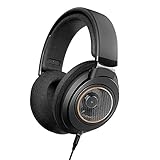
- All New Philips Shp9600 With The Perfect Blend Of Performance, Comfort, And Quality
- Open-Back Design With Spacious Sound. Ideal For Listening To Your Favorite Music Everyday At Home
- Perfectly Tuned 50 Mm Drivers Deliver Crisp Bass, Balanced Midrange, And Prstine High Frequencies.
- The Drivers Are Engineered To Fit The Ear'S Natural Geometry, Ensure No Detail Is Lost.
Closed-back headphones
Closed-back headphones have solid outer earcups that seal the driver chamber. The enclosure blocks more outside sound and keeps more of your music from escaping. The seal also lets the driver build air pressure more easily, which commonly produces a stronger sense of low-bass impact.
Closed-back models are generally more practical in offices, shared rooms, public transport, airplanes and other places where you do not want to disturb people or hear every surrounding conversation. Their sound can feel more intimate or concentrated, although tuning varies substantially from one model to another.
Semi-open headphones
Semi-open headphones sit between the two categories in construction, but the label does not guarantee a middle-ground listening experience. Beyerdynamic’s guidance notes that its semi-open models behave more like open headphones for isolation and leakage. Treat a semi-open design as an open-style option unless the manufacturer provides measured isolation and leakage information for the specific model.
Open-back vs closed-back: the practical differences
| Decision factor | Open-back tendency | Closed-back tendency |
|---|---|---|
| Presentation | Wider, airier and more speaker-like; often appealing for classical, jazz, acoustic and critical listening. | More intimate or inside-the-head; the exact result depends on the model’s tuning and enclosure. |
| Isolation | Little passive isolation. Outside noise enters easily. | More passive isolation, making them better suited to offices, travel and shared rooms. |
| Sound leakage | High enough that people nearby can usually hear the music. | Lower in general because the earcups contain more of the sound. |
| Bass character | Often less sub-bass emphasis because air escapes, although accurate and bass-capable open models exist. | Usually stronger low-bass pressure and impact from the sealed enclosure. |
| Long-session comfort | Airflow can reduce heat and pressure buildup; fit and ear-pad material still determine comfort. | Sealing and clamp can create more warmth or fatigue for some listeners. |
| Portability | Commonly intended for indoor use, with fewer foldable designs and less protection from dust or moisture. | More likely to be foldable, travel-oriented and protective of the drivers. |
| Recording | Leakage can enter a microphone, so use requires careful placement and monitoring volume. | Preferred for tracking, broadcasting and microphone work because leakage is contained more effectively. |
These are tendencies, not rules. RTINGS emphasizes that individual models can depart from the general pattern: a well-tuned closed-back headphone can sound spacious, and an open-back model can provide convincing bass. Judge the specific headphone after considering its design, fit and tuning.
Why open-back headphones often sound wider
Soundstage describes the apparent width, depth and placement of a recording. Open-back earcups allow some interaction with the room and reduce the strongly enclosed sensation created by a sealed chamber. Many listeners therefore perceive more air around instruments and a presentation that resembles listening to speakers.
This quality can make orchestral sections easier to separate, place room ambience around a vocal and reveal the left-to-right position of instruments in a live recording. It is especially useful when you are evaluating a mix, comparing reverberation or simply want music to feel less confined.
A wide soundstage is not the same as accuracy. Some open-back headphones exaggerate width, while others present a more intimate image. A recording mixed to sound close and dry will not suddenly become a concert hall. Closed-back headphones can also sound spacious when their driver placement, ear-pad geometry and tuning create convincing spatial cues.
Crashes, No Sound, or Screen Glitches?
Random freezes, missing sound and display glitches usually trace back to one bad driver. Find and replace yours safely.Free scan · under a minutePC Slower Than It Used to Be?
A free scan shows the junk files, broken settings and background clutter dragging Windows down - then fixes them in one click.Free scan · Windows 10 & 11Isolation, leakage and privacy
What happens with open-back headphones
Because the rear of the earcup is vented, outside sounds remain audible. Keyboard noise, conversations, appliances and traffic can compete with quiet passages. At the same time, music escapes through the grille. Someone sitting near you may hear vocals, cymbals or bass lines, particularly when you raise the volume.
This is why open-back headphones are a poor fit for a library, airplane seat, office desk next to a colleague or bedroom shared with a sleeping partner. They work best when you control the room and do not need privacy.
Rank #2

- Professional open-back reference headphones with extended bass and accurate midrange provide exceptional all-around performance for demanding audio production
- Fully open-back design allows unrestricted airflow to eliminate internal resonance and provide extremely quick transient response
- Wide, realistic soundstage provides an immersive listening experience
- Durable, lightweight (207 g) construction and a new headband design ensure long-lasting comfort
- Comes with two detachable cables (3.0 m (9.8') and 1.2 m (3.9')) each with a 2.5 mm twist-lock connector at the left earcup and a 3.5 (1/8"") gold-plated stereo mini-plug, as well as a 6.3 mm (1/4"") adapter and a carrying pouch
What happens with closed-back headphones
A closed enclosure and the ear-pad seal reduce the amount of environmental sound reaching your ears and keep more music inside the headphone. The result is not the same as active noise cancellation: passive isolation depends on pad contact, clamp, hair, glasses and the shape of your head. Low-frequency engine noise may still be audible.
Closed-back isolation is nevertheless valuable when you need to concentrate, protect a private playlist from nearby listeners or prevent your monitoring signal from entering a microphone. If you plan to use headphones in public, closed-back is the safer default because it addresses both directions of sound travel.
Bass: which design is better?
Closed-back headphones usually create more low-bass impact because the sealed chamber holds pressure around the driver. That can suit electronic music, hip-hop, pop, rock and film scores when you want a physical, punchy foundation. The seal also makes bass response less dependent on the room than speaker listening.
Open-back headphones often have less emphasized sub-bass because the rear vent allows air movement to escape. This does not mean they are bass-deficient. A carefully designed open model can reproduce bass with excellent extension and control; it may simply sound less pressurized and less physically forceful than a comparable closed model.
Fit changes both designs. A poor seal on a closed-back headphone can remove much of its bass, while pad wear or glasses can create leaks. On an open-back headphone, changing pads can alter tonal balance and comfort even though isolation remains limited. Choose based on the type of bass you want—weight and impact versus a more open, less enclosed presentation—not on the housing label alone.
Comfort during long listening sessions
Open-back earcups allow air to circulate, which can reduce the heat and moisture that build up during extended sessions. Many listeners find that breathable pads and the absence of a sealed pressure sensation make an open design easier to wear for hours.
Free tools Windows power users keep installed
One-click scans. No signup required.
Closed-back headphones can become warmer because the seal traps heat. Clamp force, pad depth and pad material matter just as much as the back of the earcup. A light closed model with soft, deep pads may be more comfortable than a heavy open model with a tight headband.
When comfort is your priority, assess the complete fit: headband pressure, ear clearance, pad contact, weight distribution and whether glasses break the seal. Do not assume that an open grille guarantees comfort or that a closed shell guarantees discomfort.
Choose by listening situation
Quiet room or dedicated listening seat
Open-back headphones are usually the stronger choice for a quiet home listening position. Their spacious presentation and breathable fit support album-length listening, critical evaluation and recordings where room ambience is important. You must accept that other people can hear the music and that household sounds will remain present.
Rank #3

- 50mm neodymium drivers deliver full spectrum of sound
- 1.5m cable gives you freedom of movement for indoor use
- Comfortable double layered headband cushion, breathable ear cushion for longer wearing comfort
- Finishing of connector: gold-plated, acoustic system: open, Magnet type: neodymium
Shared room, office or late-night listening
Choose closed-back headphones when privacy matters. They reduce leakage toward a nearby partner, roommate or colleague and provide some separation from surrounding sound. Keep the volume moderate: isolation can make it easy to overlook how loud the signal is.
What’s actually slowing this PC down?
Pick the symptom - the matching free tool is one click away.
Commuting, airplanes and travel
Closed-back headphones are the practical option for buses, trains and aircraft because they block more environmental noise and keep your music from disturbing nearby passengers. They are also more likely to fold and protect their drivers in a bag. Open-back headphones offer little benefit in a noisy cabin; external sound masks the very spatial detail that makes them attractive.
Bass-heavy music
Closed-back headphones generally suit listeners who want strong kick-drum impact, sub-bass presence and an enveloping low end. Open-back headphones can still be enjoyable for bass-heavy genres when you prefer separation and texture over pressure, but they are less likely to deliver the same physical slam.
Classical, jazz and acoustic recordings
Open-back headphones often make it easier to appreciate hall ambience, the spacing of an ensemble and the decay of acoustic instruments. This is a tendency rather than a genre requirement: a well-tuned closed-back model can be excellent for these recordings when isolation is more important than maximum openness.
Recording vocals or instruments
Closed-back headphones are preferred for tracking because they limit the monitor signal that can leak from the earcups into a vocal or instrument microphone. Leakage can create a faint duplicate signal, timing problems or unwanted backing tracks in the recording.
Quick wins for a faster PC:
Scan for outdated or missing drivers - takes under a minuteDriver Scan →Clear out junk files and repair common Windows errorsFree Scan →Open-back headphones can be used for recording only when leakage is controlled—for example, at low monitoring volume, with microphone placement that rejects the earcups, or when the microphone is not sensitive to the playback. They are usually a poor default for close-miked vocals, acoustic instruments and broadcast work.
Mixing and critical evaluation
Open-back headphones can be useful for checking stereo placement, detail and balance because their presentation is often less enclosed. They should not be your only reference: a mix that sounds balanced on open headphones may translate differently to speakers, earbuds or closed headphones.
Closed-back headphones remain useful during mixing when you need isolation, when your room is noisy or when you are checking bass weight and low-frequency problems. For consistent decisions, use a familiar reference track and compare at matched listening levels rather than assuming one construction is objectively more accurate.
Strengths and limitations of each design
Open-back strengths
- Broad, airy presentation that can resemble speaker listening.
- Useful separation and spatial information for attentive listening and mix checks.
- Airflow that may reduce heat during long sessions.
- Natural fit for a quiet home or studio listening seat.
Open-back limitations
- Minimal isolation from outside noise.
- Audible leakage that can disturb nearby people.
- Often less sub-bass pressure than a sealed design.
- Usually less suitable for travel, public use and unprotected storage.
- Leakage can contaminate microphone recordings.
Closed-back strengths
- Better privacy and passive isolation.
- More suitable for commuting, offices, airplanes and shared rooms.
- Usually stronger low-bass impact.
- Preferred for tracking, broadcasting and other microphone work.
- More models are foldable or designed for transport.
Closed-back limitations
- Sound can feel more intimate or concentrated, depending on tuning.
- Sealing may increase warmth or fatigue during long sessions.
- Pad fit, glasses and clamp can significantly affect bass and isolation.
- Isolation is passive, so it does not eliminate every outside sound.
How to choose if you want one pair
- Start with your main location. If you listen mainly in a quiet room, open-back is a strong candidate. If you listen in public, around other people or in a noisy home, start with closed-back.
- Decide whether leakage is acceptable. If anyone nearby could be distracted—or if you need your playlist to remain private—choose closed-back.
- Rank spatial presentation against bass impact. Prioritize open-back for a wide, breathable stage; prioritize closed-back for a stronger sealed low end.
- Consider microphone use. Recording and broadcast monitoring favor closed-back because leakage is easier to control.
- Check comfort in the actual session length. If heat bothers you, open-back airflow may help. If you wear glasses or need a stable seal, evaluate the specific closed model rather than relying on its category.
- Verify the individual model. Housing design predicts broad behavior, not final sound quality. Read measurements and fit information for the exact headphone, and remember that RTINGS describes these as general trends.
If you need one pair for both a desk and public transport, closed-back is generally the more versatile compromise. If you have a dedicated quiet room and spatial presentation is your top priority, open-back is generally the better fit.
Rank #4

- Premium, around-ear, open back headphones: Audiophile sound combined with premium design and materials
- Padded headband and luxurious velour covered ear pads perfect for long listening sessions with no pressure on the ears
- Multiple connectivity options: Robust 3 meter detachable cable and 6.3 millimeter jack and additional 1.2 meter detachable cable with 3.5 millimeter Jack
- Timeless design cues: Ivory color, matte finish together with the brown headband stitching and matte metallic detail convey quality at first glance
- Premium Components: Sennheiser engineered transducers use aluminum voice coils delivering high efficiency, excellent dynamics and extremely low distortion
Using both designs can be sensible
Some listeners keep an open-back pair for quiet, focused sessions and a closed-back pair for travel, recording or shared spaces. This is not redundant: the two designs solve different problems. Switching between them can also reveal whether a mix depends too heavily on bass, sounds unnaturally narrow or contains details that disappear outside one listening environment.
Use the open pair when you can control the room and want the least enclosed presentation. Use the closed pair when isolation, privacy, portability or microphone control outweighs the benefits of an open stage.
Common buying and setup mistakes
Assuming open means automatically higher quality
Open-back construction often helps create spaciousness, but it does not guarantee a balanced frequency response, better detail or superior build quality. Closed-back headphones can be highly accurate and can sound more suitable for a particular recording or listener.
Expecting closed-back headphones to replace noise cancellation
Passive sealing reduces outside sound but does not electronically cancel it. Fit, pad condition and the frequency of the noise determine how effective the isolation feels.
The Tool Desk
Outbyte PC Repair FREEClear out junk files and repair common Windows errorsFree Scan →Outbyte Driver Updater FREEFix the driver behind crashes, sound loss and screen glitchesFind Drivers →Ignoring leakage in a recording setup
Even a small amount of playback can reach a sensitive microphone. Monitor at the lowest level that lets you perform confidently, keep the earcups seated and test for bleed before recording a full take.
Judging bass without checking the seal
Loose pads, glasses, hair or an incorrect headband position can reduce the bass of a closed-back headphone. Re-seat the earcups before deciding that the model lacks low end.
Choosing from the category instead of the model
Two open-back headphones can have very different tonal balances, and two closed-back headphones can differ in stage width, comfort and isolation. Use the category to narrow the field, then evaluate the model’s fit, tuning and intended use.
Source notes and terminology
The design definitions and broad trade-offs are consistent with guidance from Sennheiser Consumer Hearing, updated 14 April 2026; RTINGS, crawled 18 October 2026; HARMAN Professional, updated 17 August 2026; beyerdynamic, updated 12 April 2021; and Focal, published in 2024. Those sources describe tendencies rather than a universal ranking, which is why the individual headphone and listening environment remain decisive.
Quick Recap
Product prices and availability are accurate as of the date/time indicated and are subject to change. Any price and availability information displayed on Amazon at the time of purchase will apply.

