
iTechGuides is reader-supported. When you buy through links on our site, we may earn an affiliate commission. As an Amazon Associate I earn from qualifying purchases. Learn more
Check licensing evidence before judging sculpt quality or price. Nintendo identifies its Official Nintendo Licensed Product Seal as assurance that merchandise was evaluated and licensed for use with its systems. Licensed toys and other merchandise carry the seal, while products without the listed seals are likely unlicensed. For older or second-hand pieces, inspect the original packaging because North American seal designs used before 2012 can look different. See Nintendo’s guidance on licensed and unlicensed Nintendo products.
A “fan-made” or “custom” label describes how a piece was created, not whether the creator had permission to reproduce Zelda characters, logos, artwork or protected designs. Nintendo says it owns copyrights, trademarks, patents and design rights in its products, and Etsy prohibits unauthorized replicas and copies. Those facts do not decide the legal status of every individual listing, but they give collectors a practical rule: verify provenance and authorization instead of trusting the seller’s wording.
What “official” and “fan-made” mean for a Zelda collectible
An official Zelda statue or figure is merchandise licensed by Nintendo, generally identifiable through packaging, a product record, a manufacturer and the Official Nintendo Licensed Product Seal. The seal is licensing evidence; it is not a guarantee that every collector will prefer the sculpt, paint application or scale. Official products can be small game accessories, articulated toys or display figures, and they can differ substantially in materials, pose and intended use.
“Fan-made” usually means an individual artist, studio or community creator designed, sculpted, printed, cast or painted the object outside Nintendo’s official product line. Some fan artists sell original interpretations, commissioned work or modified commercial figures. Others may reproduce recognizable characters, logos or artwork. The label alone does not show that Nintendo authorized the work, and the absence of an official label does not by itself explain how the piece was made or what rights the seller has.
#1 Best Overall

- Compatibility: Wii U, New 3DS, New 3DS LL / XL, Nintendo Switch / OLED
- Release Date: 03 November 2023
- Series: The Legend of Zelda: Tears of the Kingdom
For a purchase decision, treat these as separate questions:
- Is the item licensed by Nintendo?
- Who made it, and can the seller document its origin?
- Does the listing show the actual finished object?
- What are the material, dimensions, construction and care requirements?
- Do you need game functionality, or only a display piece?
- What buyer protections apply if the item arrives damaged or differs from the listing?
Nintendo’s Intellectual Property and Piracy FAQ explains that its rights include game characters, artwork, packaging and manuals. That makes a character-accurate fan object a different risk from a work that merely uses a creator’s own, non-Nintendo design language. The facts of the particular listing matter.
How to verify that a Zelda figure is licensed
1. Look for the Nintendo seal on original packaging
Start with a photograph of the box, card, hang tag or other original packaging. Nintendo describes the Official Nintendo Licensed Product Seal as “your assurance that this product is licensed by Nintendo for use with its systems.” A clear seal should be printed as part of the packaging, not added as a seller watermark or shown only in a cropped image.
The Tool Desk
Outbyte Driver Updater FREEScan for outdated or missing drivers - takes under a minuteDriver Scan →Outbyte PC Repair FREERepair Windows errors before they cause bigger problemsFix Now →Seal artwork has changed. Nintendo notes that previous North American seal versions appeared before 2012, so an older product should not be rejected simply because its mark does not match a current package. Ask for an uncropped, high-resolution image of every side of the box, including copyright and manufacturer panels. Compare the item with Nintendo’s support guidance rather than relying on a marketplace title.
2. Match the product to an identifiable manufacturer and release
Record the product name, character, game association, manufacturer, item number and any regional information. A credible listing should provide enough detail to connect the physical object with an official product page, a documented release or intact packaging. A seller’s use of “official,” “licensed,” “rare” or “limited edition” is not independent proof.
Nintendo’s amiibo character lineup confirms that official Zelda figures exist across multiple games and release years. It lists examples including Zelda and Ganondorf from The Legend of Zelda: Tears of the Kingdom, Link from that game, Sidon, Riju, Tulin, Yunobo, Link from Majora’s Mask and other Link releases. The lineup demonstrates an official product family; it is not a live inventory or a guarantee that a particular retailer has stock.
3. Check provenance for second-hand purchases
For a used item, request photographs of the original package, receipts, retailer labels, edition information and the seller’s explanation of how it was obtained. A chain of ownership cannot replace a license mark, but it can expose contradictions: a supposed retail product with no packaging, a different manufacturer name on the box and base, or a “prototype” photographed as though it were a production item.
Quick wins for a faster PC:
Clear out junk files and repair common Windows errorsFree Scan →Fix the driver behind crashes, sound loss and screen glitchesFind Drivers →Do not treat an unboxed figure as automatically counterfeit. Packaging can be lost, and legitimate buyers sometimes sell loose items. Instead, combine base markings, sculpt details, dimensions, manufacturer information and seller history. If the seller refuses basic provenance questions or uses stock renders instead of photographs, consider that a reason to walk away rather than a reason to assume authenticity.
Official Zelda figures you can identify today
Nintendo’s amiibo range is the clearest documented source of official Zelda character figures. The lineup spans game-specific releases and multiple versions of familiar characters. The existence of several official designs matters because a fan-made sculpt can look convincing while still not being the same product as an officially released figure.
Rank #2

- Just tap an amiibo accessory to the NFC touch point on a compatible system or accessory to Enjoy fun in-game extra features in compatible games.
- Recommended for children ages 6+
The official store page for Zelda – The Legend of Zelda: Tears of the Kingdom Series amiibo identifies Nintendo as the manufacturer. It describes possible in-game extras such as weapons, materials and special paraglider fabric. The page instructs owners to tap the amiibo at a compatible system touchpoint and states that games, systems and amiibo are sold separately.
Use that page as a model for checking an official product record, not as a claim that every Zelda figure has the same features. Nintendo warns that amiibo functionality varies by game. A display statue, a non-NFC toy and an amiibo may all depict Zelda characters while serving completely different purposes.
PC Slower Than It Used to Be?
A free scan shows the junk files, broken settings and background clutter dragging Windows down - then fixes them in one click.Free scan · Windows 10 & 11Outdated Drivers Are Slowing You Down
One free scan finds every outdated or missing driver and matches the right update for your exact hardware.Free scan · exact hardware matchFan-made figures: craftsmanship, provenance and rights
Craftsmanship is an inspection question, not a category verdict
Official licensing and artistic quality are different axes. A licensed figure may have a factory finish that does not suit your preferences; a fan sculpt may show remarkable handwork but still lack authorization. The available policy and product sources do not independently test durability, paint quality or comparative craftsmanship, so inspect the actual piece rather than assuming one category is always superior.
Request close-up images of facial features, paint edges, seams, joints, translucent parts and the contact points under the feet. Look for visible support rods, warped printed sections, unfilled layer lines, overspray and areas where a hand-painted finish intentionally varies. Ask whether the photograph shows the exact item, a production sample, a prototype or a computer render. A render can conceal seams, color variation and assembly requirements.
Materials and construction affect care
Identify the stated material: resin, PVC, ABS, 3D-printed plastic, mixed media, metal or another compound. Ask whether the piece arrives assembled, requires glue, includes replacement parts or has a separate base. Fragile weapons, hair tips, wings and thin support structures need more careful packaging and display than a compact, one-piece figure.
Do not infer strength from a polished promotional photograph. Ask how the figure is packed, whether the seller insures shipments and what happens if a part arrives broken. For a hand-painted object, confirm whether touch-up paint or a repair service is available. These questions apply to licensed and fan-made products alike.
Rights and marketplace policy are separate from collecting preference
Nintendo says it owns intellectual-property rights in its products, including copyrights and trademarks. Etsy’s policy, updated August 11, 2026, prohibits unauthorized replicas or copies and says a product can be unauthorized when it uses a brand name, logo or protected design without permission. Etsy may remove or disable content after an intellectual-property report. Read the Unauthorised or Counterfeit Goods Policy before buying through that marketplace.
Those rules are not a ruling on a particular seller or a substitute for legal advice. A listing that says “fan art,” “custom,” or “inspired by” may still need closer examination if it reproduces recognizable Zelda expression or branding. Conversely, a creator may be selling an original work with no Nintendo elements. Ask what was copied, what was created independently and what authorization the seller can document.
Nintendo’s Intellectual Property Policy says Nintendo may remove content that appears to infringe others’ rights and may limit access to or terminate accounts of users who infringe rights. That is platform and policy context, not evidence that a particular figure is infringing or that a dispute will end in a particular way.
Rank #3

- Import Game - Japanese Version
- Compatible with US systems (region free)
- Japanese language (other languages may be included)
- Manual and packaging in Japanese language
Compare official and fan-made pieces before you buy
| Decision factor | Officially licensed figure | Fan-made or custom listing |
|---|---|---|
| Licensing evidence | Look for the Official Nintendo Licensed Product Seal and a matching product or manufacturer record. | The seller’s label is not authorization; request documentation and assess the actual design and provenance. |
| Product identity | Usually has a named product, manufacturer, packaging and a documented game or character association. | May be individually made, commissioned, printed, modified or sold without standardized packaging. |
| Craftsmanship evidence | Inspect the production finish and exact item; licensing does not establish your preferred quality level. | Ask for close-ups and confirm whether photographs show the finished item rather than a prototype or render. |
| Materials and assembly | Use the manufacturer’s stated specifications where available. | Ask about resin, plastic, printing, hand painting, assembly, fragile parts and repair options. |
| Scale and display | Check published dimensions; Nintendo warns that some amiibo images are not actual size. | Confirm height, base footprint, pose and support structure from the specific listing. |
| Game functionality | Some amiibo provide game features, but compatibility varies by game. | Do not assume NFC or game functionality unless the listing documents a compatible product and system. |
| Buyer protection | Review the retailer, seller history, return terms and shipping insurance. | Check the creator’s policies, payment protections, replacement terms and evidence of prior fulfillment. |
Scale, display planning and authenticity checks
Measure the space before ordering
Write down the figure’s height, width, depth and base footprint, then measure the shelf clearance around lighting, glass doors and neighboring collectibles. Character poses with raised weapons or large wings can exceed the advertised body height. A narrow base may fit a shelf but be less stable near a front edge. Ask for dimensions of the finished, assembled object, not only the shipping carton.
Free tools Windows power users keep installed
One-click scans. No signup required.
Nintendo notes on some amiibo pages that product images are not actual size. Use the published dimensions where available and compare them with a ruler or a known figure. For a fan-made listing, request a scale reference or a photograph beside a standard object; never infer scale from a cropped image.
Inspect the base and markings
Photograph the underside of the base, foot stamps, copyright text, molded logos and any serial or edition mark. Compare those details with official product photography and packaging. A missing mark is a prompt for more questions, not automatic proof of a fake, because markings vary by product and region.
Watch for mismatched parts: an official-looking base paired with a different sculpt, a logo that is blurred or misspelled, or paint colors unlike the manufacturer’s photographs. Ask whether the seller modified, repainted or repaired the item. A custom modification may be valuable to you, but it should not be represented as an untouched official release.
Price, shipping and purchase protection
Current prices, stock and second-hand market values vary by item, region, condition and seller. The cited product and policy pages do not establish a reliable market price or resale premium, so compare live listings at the time you buy rather than relying on an old “retail” number or a claim that a piece is rare.
Recommended Free Tools
Calculate the total delivered cost: item price, shipping, taxes, customs charges, insurance and any required assembly supplies. A lower sticker price can disappear when a fragile resin piece needs international shipping or arrives without replacement-part support. Keep screenshots of the listing, stated dimensions, materials, edition language and promised delivery date.
Use a payment method with a documented dispute process. Before paying, verify the seller’s return window, who pays return shipping, how damage must be reported and whether custom-made items are excluded from returns. Read marketplace rules as well as the seller’s own terms. If the listing changes after you ask for provenance, save both versions.
Amiibo functionality: verify the exact game use
If gameplay features matter, identify the exact amiibo model and the game in which you intend to use it. Nintendo’s Tears of the Kingdom Zelda amiibo page describes possible weapons, materials and paraglider-fabric rewards, but it also directs owners to a compatible system touchpoint and warns that functionality varies by game.
- Record the character and series name printed on the package or product page.
- Check the game’s current compatibility information for that specific figure.
- Confirm that your console has the required amiibo reading capability and that the game supports the feature in your region and software version.
- Buy only after the seller confirms you are receiving the model shown, especially when several releases depict the same character.
A display statue, an unlicensed NFC card and an official amiibo can look related in a photograph while offering entirely different functionality. Do not pay an amiibo premium for a figure that has no documented NFC feature, and do not assume a decorative Zelda statue can unlock game content.
Rank #4
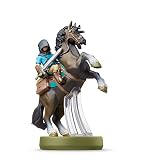
- Made for Play! Discover New Characters, Explore New Game Modes, and So Much More!
- You can use amiibo on your Wii U by tapping them to the NFC touchpoint on the Wii U GamePad.You can also use amiibo on your New Nintendo 3DS and New Nintendo 3DS XL by tapping them to the NFC area on the bottom screen. Alternatively, using the NFC Reader/Writer Accessory you can use amiibo on your Nintendo 2DS, Nintendo 3DS and Nintendo 3DS XL. amiibo are also compatible with the Nintendo Switch
- See individual games for full amiibo functionality
Upcoming licensed Zelda figures from Hasbro
Hasbro announced on July 16, 2026, a multi-year collaboration with Nintendo to produce products based on The Legend of Zelda franchise. The announcement says the collaboration is set to begin in 2027, with first reveals of three six-inch-scale figures planned for San Diego Comic-Con on July 23–26, 2026. Read the Hasbro announcement for the dated statement.
This is an announced future line, not evidence that the figures are currently available for sale. Wait for a later release notice to confirm final designs, pricing, retailers, regional availability and the exact functionality or materials. Do not treat convention reveals as a guarantee of immediate inventory.
A practical buying checklist
- Define the purpose. Decide whether you want a display statue, a game-enabled amiibo, a commission or a character sculpture for a specific shelf.
- Capture the identity. Save the product name, character, game, manufacturer, item number and edition wording.
- Verify licensing evidence. Request clear package photographs and look for the correct Nintendo seal, including older North American versions for pre-2012 items.
- Audit provenance. Ask where the item came from, whether it is new or used, and whether it was modified, repainted or repaired.
- Inspect the actual object. Demand close-ups of paint, seams, face, base, markings and fragile parts; confirm that images are not only renders.
- Confirm specifications. Check finished dimensions, base footprint, material, assembly, weight and care instructions.
- Check functionality separately. For amiibo, match the exact model to the game and compatible system.
- Review the transaction. Add shipping and taxes, read returns and damage procedures, and use payment protection.
- Keep records. Retain the listing, seller messages, receipts, packaging and photographs in case authenticity or damage becomes a question.
Common warning signs and what to do
The listing says “official” but shows no package
Ask for photographs of the seal, manufacturer panel and underside markings. If the seller cannot provide them, treat the item as unverified and price it accordingly—or choose a listing with clearer provenance.
The product appears in a fan artist’s catalog and uses Nintendo branding
Ask what permission the creator has and whether the item is a modification of an official product or a reproduction. Marketplace policy may prohibit unauthorized replicas, and Nintendo’s rights cover characters, artwork and trademarks. Do not assume that a disclaimer such as “not affiliated” resolves the issue.
The photos look perfect, but the seller will not show the actual piece
Request dated photographs from several angles and a scale reference. A computer render or prototype can hide production seams, paint variation and assembly work. If the seller refuses, do not rely on the image to judge quality.
The same character appears in several different official releases
Match the release name and product number, not just the character. Nintendo’s lineup contains multiple Zelda and Link figures across games and years. Verify the exact dimensions, packaging and functionality before purchasing.
A used figure has no box
Ask for provenance, base markings, dimensions and detailed photographs. A loose item can be legitimate, but the absence of packaging removes one of the easiest licensing checks and should be reflected in your confidence and price.
How to choose based on your collecting priorities
Choose an official figure when verification and game integration matter most
An official product is the clearer choice when you want documented Nintendo licensing, standardized product identity or possible amiibo functionality. Confirm the exact release and compatible game rather than generalizing from another Zelda amiibo.
What’s actually slowing this PC down?
Pick the symptom - the matching free tool is one click away.
Consider a fan-made piece when originality and artist technique are the priority
A fan-made work can offer a pose, scale, costume or interpretation absent from official lines. Buy only when the seller provides enough information about authorship, materials, construction, provenance and applicable marketplace rules. Treat “fan-made” as a description of origin, not a license.
Pass when the evidence does not support the asking price
Walk away from listings that combine a high price with stock images, contradictory manufacturer details, pressure to pay outside protected channels or unsupported claims of rarity. There will be other figures; an uncertain listing is not a deadline.
The Bottom Line
For a Zelda collectible, verify the Nintendo licensing seal and provenance first, then judge craftsmanship, materials, scale, functionality and total purchase risk. Official amiibo provide documented examples, while fan-made figures require closer scrutiny of authorization and construction. Treat the announced 2027 Hasbro collaboration as a future option until release details are confirmed.
Quick Recap
Product prices and availability are accurate as of the date/time indicated and are subject to change. Any price and availability information displayed on Amazon at the time of purchase will apply.
Do these 3 things before closing this tab:
1Repair Windows errors before they cause bigger problems2Fix the driver behind crashes, sound loss and screen glitches3Clear out junk files and repair common Windows errors
