
Quick wins for a faster PC:
Scan for outdated or missing drivers - takes under a minuteDriver Scan →Repair Windows errors before they cause bigger problemsFix Now →iTechGuides is reader-supported. When you buy through links on our site, we may earn an affiliate commission. As an Amazon Associate I earn from qualifying purchases. Learn more
Vendoring OCR models puts their delivery inside the application’s release boundary: users can receive the model files with the app instead of relying on a separate first-use fetch. The tradeoff is a larger application payload. A CDN can keep those files out of the package and still use pinned versions and integrity checks, but a user without a cached copy needs a network connection to fetch them.
The 76 MB figure is the project’s stated model payload; the cited documentation does not independently verify it. It also does not establish that vendoring makes this deployment faster or more reliable. The choice is about control over delivery, first-use network dependence, offline readiness, versioning, and operations.
What does vendoring change?
Vendoring means including model files in the application’s own release or distribution rather than fetching them from a separate host when OCR is needed. That moves model delivery into the app’s build and release process. It can avoid a separate first-use request for those assets, but it also means the stated 76 MB payload travels with the application release.
Runtime delivery reverses that packaging tradeoff: the application can publish a small manifest and fetch the model weights when needed. EdgeParse documents this approach: its web package includes a pinned models.json manifest, while model artifacts are fetched at runtime. That is an example of how CDN delivery can work, not evidence that this project uses the same architecture. EdgeParse’s OCR model documentation
#1 Best Overall

- OUR MOST ADVANCED SCANSNAP. Large touchscreen, fast 45ppm double-sided scanning, 100-sheet document feeder, Wi-Fi and USB connectivity, automatic optimizations, and support for cloud services. Upgraded replacement for the discontinued iX1600
- CUSTOMIZABLE. SHARABLE. Select personalized profiles from the touchscreen. Send to PC, Mac, mobile devices, and clouds. QUICK MENU lets you quickly scan-drag-drop to your favorite computer apps
- STABLE WIRELESS OR USB CONNECTION. Built-in Wi-Fi 6 for the fastest and most secure scanning. Connect to smart devices or cloud services without a computer. USB-C connection also available
- PHOTO AND DOCUMENT ORGANIZATION MADE EFFORTLESS. Easily manage, edit, and use scanned data from documents, receipts, photos, and business cards. Automatically optimize, name, and sort files
- AVOIDS PAPER JAMS AND DAMAGE. Features a brake roller system to feed paper smoothly, a multi-feed sensor that detects pages stuck together, and skew detection to prevent paper damage and data loss
Why not load the models from a CDN?
A CDN can keep multi-megabyte weights out of the shipped application package. It can also serve versioned artifacts without requiring every model change to be bundled into an application release. The tradeoff is that a user who needs a model that is not already stored locally must reach the model host before that model can be used.
Vendoring avoids that separate first-use dependency for the model assets included in the release. It does not by itself prove lower total download time, better availability, or lower cost: those outcomes depend on the app’s own delivery design and measurements, which are not established for this project.
What happens to first use, caching, and offline OCR?
Neither delivery choice automatically makes browser OCR available offline. Vendored files can be available locally once the application release containing them has been received. With runtime fetching, the necessary model files must first download successfully and remain in browser storage.
Rank #2
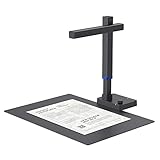
- Design and Speed: Work with Windows XP/7/8/10/11 AND macOS 10.13 or later. Not compatible with Android and iOS. Designed for A3&A4(11.69*16.53 & 8.27*11.75 inch) document, any objects smaller than A3 size can be scanned with Ultra-fast scanning speed, about 1 second per page. Perfect device to scan FLAT papers
- USB Document Camera & Scanner: Work as both a document camera for remote teaching&learning compatible with ZOOM; Goole Meet and a document scanner to scan papers and convert/OCR files. OCR supports 180+ languages for text recognition. Please note that Thai, Hebrew, and Arabic are currently not supported. If you need the complete OCR language support list, please feel free to contact us for more details
- Patented Flattening Curved Book Page Technology: Shine Ultra applies CZUR’s patented technology to flatten the curved surface after pixel transformation to flattening of the book page (Only suitable for thinner books, ET series is recommended for thicker books)
- High Resolution & AI Tech: CMOS 13MP (4160*3120, A4≈340 AND A3≈245 DPI) camera. Smart Paging and Auto Cropping; Combine Sides; Stamp Mode; and Multiple Color Modes
- Height Adjustable & Portable: 2-level height adjustable neck. 90 degree foldable and lightweight 4 lbs with foot pedal for convenient operation
EdgeParse says it stores downloaded artifacts in OPFS where preferred, or in the Cache API. If a needed model is uncached and the browser is offline, its documentation says parsing can be degraded and an OFFLINE error can occur. BrowserOCR likewise says offline use depends on required assets having been cached; clearing or browser eviction of storage can remove them. BrowserOCR’s explanation of offline use and local processing
That means a practical offline guarantee requires more than choosing a CDN or vendoring. The app must ensure the needed assets are present, and any browser-cached copies must survive storage clearing and eviction.
Does local OCR mean no network activity?
No. Local processing describes where image recognition runs, not how the application and its dependencies arrive. BrowserOCR says the browser downloads the page, JavaScript, dictionary, ONNX models, and WebAssembly runtime. Its page also describes anonymous task-event requests. It says images and recognized text are not sent to an OCR endpoint, but that is a narrower claim than saying no information ever leaves the device.
Rank #3

- FAST SPEEDS - Scans color and black and white documents a blazing speed up to 16ppm (1). Color scanning won’t slow you down as the color scan speed is the same as the black and white scan speed.
- ULTRA COMPACT – At less than 1 foot in length and only about 1. 5lbs in weight you can fit this device virtually anywhere (a bag, a purse, even a pocket).
- READY WHENEVER YOU ARE – The DS-640 mobile scanner is powered via an included micro USB 3. 0 cable allowing you to use it even where there is no outlet available. Plug it into you PC or laptop and you are ready to scan.
- WORKS YOUR WAY – Use the Brother free iPrint&Scan desktop app for scanning to multiple “Scan-to” destinations like PC, Network, cloud services, Email and OCR. (2) Supports Windows, Mac and Linux and TWAIN/WIA for PC/ICA for Mac/SANE drivers. (3)
- OPTIMIZE IMAGES AND TEXT – Automatic color detection/adjustment, image rotation (PC only), bleed through prevention/background removal, text enhancement, color drop to enhance scans. Software suite includes document management and OCR software. (4)
For a privacy assessment, separate the image and recognized text processing path from asset downloads, telemetry, and other application requests. Check the actual application’s network behavior rather than inferring it from the phrase “runs locally.”
Can a CDN still provide release control and integrity?
Yes. Hosting and version control are separate decisions. A team can serve model files from a CDN while pinning the expected model version in a manifest. EdgeParse describes a custom manifest that can direct URLs to a chosen CDN while retaining expected SHA-256 hashes and byte lengths. Those checks let a client verify that downloaded bytes match the manifest; a CDN URL alone does not establish that they do.
For either delivery method, versioned or immutable model identifiers make it easier to know which weights an application release uses and to roll back deliberately. A pinned checksum adds an integrity check, while a pinned version helps keep behavior reproducible. Neither measure eliminates the need to manage updates and compatibility.
Rank #4

- FITS SMALL SPACES AND STAYS OUT OF THE WAY. Innovative space-saving design to free up desk space, even when it's being used
- SCAN DOCUMENTS, PHOTOS, CARDS, AND MORE. Handles most document types, including thick items and plastic cards. Exclusive QUICK MENU lets you quickly scan-drag-drop to your favorite computer apps
- GREAT IMAGES EVERY TIME, NO EXPERIENCE REQUIRED. A single touch starts fast, up to 30ppm duplex scanning with automatic de-skew, color optimization, and blank page removal for outstanding results without driver setup
- SCAN WHERE YOU WANT, WHEN YOU WANT. Connect with USB or Wi-Fi. Send to Mac, PC, mobile devices, and cloud services. Scan to Chromebook using the mobile app. Can be used without a computer
- PHOTO AND DOCUMENT ORGANIZATION MADE EFFORTLESS. ScanSnap Home all-in-one software brings together all your favorite functions. Easily manage, edit, and use scanned data from documents, receipts, business cards, photos, and more
Why does model version pinning matter for OCR?
Changing OCR models can change recognition behavior, so a model update is not necessarily a neutral asset refresh. Google Cloud’s Enterprise Document OCR documentation advises using a frozen version when strict consistency is required and says that frozen versions can pin behavior to a legacy OCR model for up to 18 months. That is Google Cloud’s product-specific policy, not a universal pinning period or a claim about this project. Google Cloud Enterprise Document OCR documentation
Pinning matters whether the weights are bundled or remotely hosted. Vendoring can tie a model update to an application release; a CDN can serve a pinned model independently of the app package. In both cases, the release process should make the selected model version explicit.
How do vendoring and CDN delivery compare?
| Concern | Vendored models | Runtime CDN delivery |
|---|---|---|
| Application package | Includes the model payload; the project states it is 76 MB, a figure not independently verified by the cited sources. | Can publish a manifest without bundling the weight files, as in EdgeParse’s documented approach. |
| First use | Model assets arrive with the application release. | An uncached model requires a successful fetch from its host before use. |
| Offline use | Can work with the included assets once they are locally available. | Requires completed downloads and retained browser storage; clearing or eviction can remove cached files. |
| Version control | Can pin the model in the application release. | Can pin a manifest to a versioned model URL; hosting remotely does not require using an unpinned “latest” asset. |
| Integrity | Can be controlled as part of the application build and release. | Can be checked using expected byte lengths and hashes, as EdgeParse documents. |
| Operational responsibility | The application’s build and release process distributes the model files. | The team must also manage or depend on the model host and its caching and availability. |
The table describes the mechanisms and tradeoffs documented for these delivery approaches; it is not a performance or uptime comparison for the project behind the 76 MB figure.
Best Value
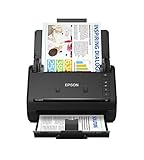
- FAST DOCUMENT SCANNING — Document scanner with feeder allows you to speed through stacks with a 50-sheet Auto Document Feeder (ADF); Efficient office scanner to help you scan more productively
- INTUITIVE, HIGH-SPEED SOFTWARE — Quickly scan with this desktop document scanner; Epson ScanSmart Software lets you easily preview scans, email files, upload to the cloud, and more; Plus, automatic file naming saves even more time
- SEAMLESS INTEGRATION — Easily incorporate your data into most document management software with the included TWAIN driver; Office document scanner integrates seamlessly with business workflows
- EASY SHARING — Duplex scanner allows you to scan straight to email or popular cloud storage2 services like Dropbox, Evernote, Google Drive, and OneDrive for simple storage and sharing
- SIMPLE FILE MANAGEMENT — Scanner allows the creation of searchable PDFs with Optical Character Recognition (OCR) and convert scans to editable Word or Excel files effortlessly; Designed for home and office document scanning
What does browser deployment show?
PaddleOCR’s browser deployment documentation shows that model assets can be supplied by URL. Its example also points ONNX Runtime Web’s WebAssembly assets at jsDelivr. This demonstrates configurable remote hosting, but it does not establish that URL delivery is faster or better than bundling. PaddleOCR browser deployment documentation
What evidence would show whether 76 MB is worth shipping?
The cited sources explain the tradeoffs, but they do not verify the project’s model total or show what the choice does to its users. To judge the project-specific outcome, the relevant evidence would be its build output or manifest for the payload, plus measurements of initial transfer, first OCR use, cache behavior, offline success, and the effect of model updates. Without those measurements, claims that vendoring improves cold-start, uptime, or total transfer would go beyond what is established.
Quick Recap
Product prices and availability are accurate as of the date/time indicated and are subject to change. Any price and availability information displayed on Amazon at the time of purchase will apply.
What’s actually slowing this PC down?
Pick the symptom - the matching free tool is one click away.

