
Quick wins for a faster PC:
Repair Windows errors before they cause bigger problemsFix Now →Scan for outdated or missing drivers - takes under a minuteDriver Scan →iTechGuides is reader-supported. When you buy through links on our site, we may earn an affiliate commission. As an Amazon Associate I earn from qualifying purchases. Learn more
Buy Nothing Ear (a) if you want the lower price and the longest advertised battery life. Buy Nothing Ear if you will use wireless charging, LHDC 5.0, hearing-based sound personalization, advanced EQ and profile sharing, or the more protective charging-case rating. Nothing Ear is the better-equipped model, but testing indicates that its noise cancellation and overall sound are broadly similar to Ear (a), so the €40 premium is mainly paying for features rather than a dramatic audio upgrade.
Nothing’s current EU product pages list starting prices of €89 for Nothing Ear (a) and €129 for Nothing Ear. Those are regional, changeable prices checked on October 18, 2026, not universal street prices. The right choice depends on whether the premium features fit your daily use.
Nothing Ear vs Nothing Ear (a) at a glance
| Decision point | Nothing Ear | Nothing Ear (a) |
|---|---|---|
| Official starting price on Nothing’s EU page | €129 | €89 |
| Advertised playback with ANC off (buds plus case) | Up to 40.5 hours | Up to 42.5 hours |
| Advertised playback with ANC off (earbuds only) | Up to 8.5 hours | Up to 9.5 hours |
| Wireless charging | Yes, up to 2.5 W | No |
| Bluetooth codecs | AAC, SBC, LDAC and LHDC 5.0 | AAC, SBC and LDAC |
| Maximum advertised ANC | Up to 45 dB | Up to 45 dB |
| Water resistance | IP54 earbuds, IP55 case | IP54 earbuds, IPX2 case |
| Personal sound profile | Yes | Not listed in Nothing’s official comparison table |
| Advanced EQ and profile sharing | Yes | Not listed in Nothing’s official comparison table |
On core listening, both models offer Hi-Res certification, LDAC, adaptive noise cancellation and transparency mode. Ear (a) actually has the higher advertised battery figures with ANC disabled. Ear earns its higher price through wireless charging, an additional codec, personalization controls and a tougher case rating.
Crashes, No Sound, or Screen Glitches?
Random freezes, missing sound and display glitches usually trace back to one bad driver. Find and replace yours safely.Free scan · under a minutePC Slower Than It Used to Be?
A free scan shows the junk files, broken settings and background clutter dragging Windows down - then fixes them in one click.Free scan · Windows 10 & 11Price and value: is Nothing Ear worth the extra money?
At the prices listed on Nothing’s EU page on October 18, 2026, Ear costs €40 more than Ear (a), a substantial premium of roughly 45 percent over the €89 model. Because prices vary by country, tax, retailer and promotion, check the price in your market before ordering; the EU figures should not be treated as a worldwide MSRP.
#1 Best Overall
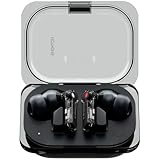
- Powerful 11 mm driver: We've made our driver even more compact. With double the power than Ear (2), Ear (a) delivers an even deeper bass performance. The extra space gives sound waves more room to vibrate. With two new vents, airflow is improved inside the bud. For less distortion and richer overall clarity
- Smart Active Noise Cancellation: Up to 45 dB,Nothing Ear (a) automatically checks for noise leakage between the earbud and your ear canal, then applies more noise cancellation to make up for it. So you receive the best possible noise cancellation. Happens every time you put them in. So you can go from quiet rooms to busy streets without hearing a thing (other than what's playing)
- Clear Voice Technology: Clear as day. Ear (a) isolates your voice from everyday distractions so calls on-the-go feel like face-to-face conversations. With a new talk mic and extra airway on the stem for wind to pass through, we’ve reduced interference by 60% compared to Ear (2)
- Long Playtime, Fast Charging: For speedy power-ups, Ear (a) can Fast Charge for 10 minutes and deliver 10 hours of music playback (with ANC turned off). Compared to Ear (2), Ear (a) can deliver 40.5% more non-stop play time on a single charge. Or pop your earbuds back in the case and stretch listening time to over 42.5 hours (with ANC turned off)
- More Performance: Low Lag mode,Reduced audio lag for better gaming. Stay connected to two devices at the same time. Play music on your laptop then seamlessly switch to answer a call on your phone. Effortless. Adaptive ANC,Next-level escapism. Switch between 3 levels of noise cancellation. Or let Ear (a) take control. By selecting 'Adaptive' in the Nothing X app, Ear (a) automatically applies the right level of noise cancellation according to your surroundings in real time.
When the €40 premium is worthwhile
- You regularly place the case on a Qi-compatible charging pad and do not want to plug in a cable.
- Your phone and music services can use LHDC 5.0 and you specifically want that codec in addition to LDAC.
- You want hearing-based personal sound calibration, advanced equalizer controls or profile sharing.
- The case may see more daily abrasion or exposure to splashes, making IP55 preferable to IPX2.
- You value the somewhat better microphone performance reported in comparative testing.
When Ear (a) is the smarter purchase
- You are trying to keep the purchase near €90.
- LDAC is sufficient for your high-resolution Bluetooth listening.
- You charge by USB-C and will not miss wireless charging.
- You want the longest advertised runtime: 9.5 hours per charge and 42.5 hours including the case with ANC off.
- You do not need Ear’s personal sound profile, advanced EQ or sharing features.
In other words, Ear is a feature upgrade, not a separate class of noise-cancelling performance. If its exclusive functions would sit unused, Ear (a) delivers the more economical package.
Battery life and charging
Nothing’s published figures give Ear (a) a small endurance advantage. With ANC disabled, Ear (a) is rated for up to 9.5 hours from the earbuds and 42.5 hours including the case. Ear is rated for up to 8.5 hours in the earbuds and 40.5 hours with its case. Both promise up to 10 hours of playback after a 10-minute charge.
| Battery condition | Nothing Ear | Nothing Ear (a) |
|---|---|---|
| Earbuds, ANC off | Up to 8.5 hours | Up to 9.5 hours |
| Earbuds plus case, ANC off | Up to 40.5 hours | Up to 42.5 hours |
| Earbuds, ANC on | Not stated in the cited support figures | Up to 5.5 hours |
| Earbuds plus case, ANC on | Not stated in the cited support figures | Up to 24.5 hours |
| Quick-charge claim | Up to 10 hours from 10 minutes, according to Nothing’s comparison table | Up to 10 hours from 10 minutes, according to Nothing’s comparison table |
How Nothing measured the Ear (a) figures
Nothing Support says the 9.5-hour earbuds figure, 42.5-hour case figure, 5.5-hour ANC-on figure and 24.5-hour ANC-on case figure were measured in Nothing laboratories at 25°C. The test used AAC playback at 50 percent volume, fully charged earbuds and case, and default settings for other features. Your result will change with codec, volume, ANC, transparency, call time, temperature and connection conditions. The numbers are therefore maximum laboratory claims, not a guarantee of continuous playback on every phone.
The Tool Desk
Outbyte PC Repair FREEClear out junk files and repair common Windows errorsFree Scan →Outbyte Driver Updater FREEFix the driver behind crashes, sound loss and screen glitchesFind Drivers →Wireless charging is the practical battery difference
Nothing Ear’s case accepts wireless charging at up to 2.5 W. Ear (a) does not support wireless charging, so it must be replenished through its wired charging port. Both models have the same advertised 10-minute quick-charge result, meaning Ear (a)’s lack of a charging pad does not prevent rapid top-ups; it only removes the cable-free option.
Rank #2

- Smart Noise Cancelling: Nothing but the music. Nothing ear wireless earbuds with up to 45 dB Active Noise Cancellation, Ear features our most effective and intelligent noise cancelling powers yet. Now 1.8x stronger than others. Ear automatically checks for noise leakage between the earbud and your ear canal, then applies more noise cancellation to make up for it. So you receive the best possible noise cancellation
- Clear Voice Technology: HiRes Wireless Audlio, Nothing Ear buds supports high resolution streaming over Bluetooth. The result is powerfully pure audio with no quality damage. Just how the artistintended. Up to 1 Mbps 24 bit/192 kHz with LHDC 5.0 and up to 990 kbps with frequencies up to 24 bit/96 kHz with LDAC, Requires devices that support LHDC or LDAC, Nothing wireless Ear isolates your voice from everyday distractions so calls on-the-go feel like face-to-face conversations.
- Long Playtime, Fast Charging: Ear supports up to 2.5W wireless charging. Power-up on-the-go with reverse charge on compatible devices, like Phone (2). Powered to go further, Ear lasts 25% longer than Ear (2) on a single charge. Or top-up in the case and use consistently for over 40.5 hours (ANC turned off). For speedy power-ups, Ear can Fast Charge for 10 minutes and deliver 10 hours of playback (with ANC turned off)
- Custom Ceramic Driver: Nothing Ear ultra compact but beyond powerful. Our 11 mm driver delivers an unbeatable audio experience.Coupled with a new ceramic diaphragm, we’ve increased airflow by 10% within each bud. For less distortion and richer clarity. Plus, advanced voice pickup tech cuts through background noise so your calls sound natural, like you’re talking face to face.
- More Performance: Stay connected to two devices at the same time. Play music on your laptop then seamlessly switch to answer a call on your phone. Effortless. Reduce audio lag for seamless gaming. Triggered automatically in Game Mode on a Nothing phone. With end-to-end latency at less than 120 ms. Microsoft Swift Pair, LED charging status, Pinch controls, Find My Earbuds, Water resistance IP54 buds / IP55 case, Google Fast Pair, Ear Tip Fit Test supported.
Sound quality, codecs and personalization
What both earbuds support
Both models are Hi-Res certified and support LDAC, alongside the more broadly compatible AAC and SBC codecs. Both also use adaptive ANC and transparency mode. Comparative testing from RTINGS describes their overall sound as similar, so changing from Ear (a) to Ear should not be expected to produce a night-and-day tonal transformation.
What Nothing Ear adds
Nothing Ear supports LHDC 5.0 in addition to LDAC. LHDC availability depends on the transmitting phone, operating-system support and listening app; a phone that cannot negotiate LHDC will use another available codec. Ear also includes a personal sound profile, advanced equalizer controls and profile sharing in Nothing’s listed feature set. These tools let you tune the response to your hearing and preferences rather than relying only on a fixed factory sound.
What Nothing Ear (a) offers instead
Ear (a) uses an 11 mm dynamic driver, Bass Enhance and a custom EQ. That gives you bass adjustment and equalization without Ear’s listed hearing-based profile and sharing functions. If you want straightforward control over bass and tone, the less expensive model still provides useful tuning options.
Recommended Free Tools
Codec choice in practice
- LDAC: available on both models and useful when your Android phone and source app support it.
- LHDC 5.0: exclusive to Ear; valuable only when your phone and playback chain support LHDC.
- AAC and SBC: available on both and provide the compatibility fallback for phones and computers that do not use the higher-bandwidth codecs.
Higher-resolution codec support can improve transmission quality under suitable conditions, but it does not override the limits of the recording, the fit of the earbuds or your listening environment. Do not pay the premium solely for LHDC if your phone cannot use it.
Rank #3
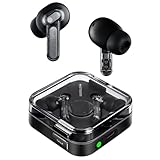
- Your Voice, Amplified. The Noise, Eliminated: Integrated into the Nothing Ear (3) charging case is a advanced dual-microphone system powered by specialized ambient filtering mics. This technology, called Super Mic, precisely targets your voice while cutting through extreme background noise (up to 95 dB), ensuring your calls and voice messages are transmitted with absolute clarity
- Intelligent Silence, Immersive Sound: Featuring Smart Hybrid ANC, Nothing Ear (3) delivers up to 45 dB of Active Noise Cancellation. This Bluetooth wireless earbuds recalibrate every millisecond to block a wide range of noise with a 5000Hz undesired noise to enjoy crystal-clear audio. Switch to Transparency Mode to seamlessly connect with your surroundings
- Super Mic, Tap to Engage: To activate the Nothing ear buds Super Mic, simply press and hold the 'TALK' button with the case within 5cm of your mouth for optimal clarity in loud settings. Hold for quick commands, or double-tap to lock it for extended conversations
- Hi-Res Audio & Ultra-Clear Voice: The Nothing Ear 3 brings you premium Hi-Res Wireless Audio and superior call quality, thanks to 6 HD microphones. With advanced Bluetooth 5.4, these anc earbuds offer smooth, lossless streaming that stays true to the original sound. Inside, a 12mm driver and innovative ceramic diaphragm improve airflow by 10%, reducing distortion and enhancing clarity
- Your Way with Nothing X App : Fine-tune your sound using adjustable EQ, Ultra Bass, and Adaptive Active Noise Cancellation settings.Dive into gaming with dedicated Low Lag Mode, and interact effortlessly using ChatGPT on your Nothing phone. All your Nothing devices work together in perfect, seamless harmony
Noise cancellation and transparency
Nothing lists up to 45 dB of noise cancellation for both models. Both use adaptive ANC and include transparency mode, which passes outside sound through when you need awareness. RTINGS reports similar ANC performance between the two, reinforcing that Ear’s extra cost is not buying a clearly stronger isolation system.
What the 45 dB number means
The 45 dB figure is a maximum manufacturer claim, not a promise that every sound will be reduced by 45 dB. Real attenuation depends on seal, ear-tip size, frequency and fit. Low, steady sounds such as transport rumble are generally the kind of noise ANC is designed to address; voices and irregular high-frequency sounds can remain audible.
Choosing between their ANC implementations
Choose either model if adaptive ANC and transparency are your main requirements. Choose Ear only when you also want its codec, personalization, charging or durability advantages. The evidence does not support paying the premium for ANC alone.
What’s actually slowing this PC down?
Pick the symptom - the matching free tool is one click away.
Fit, weight and durability
| Physical detail | Nothing Ear | Nothing Ear (a) |
|---|---|---|
| Weight per earbud | 4.62 g | 4.8 g |
| Charging-case weight | 51.9 g | 39.6 g |
| Earbud rating | IP54 | IP54 |
| Case rating | IP55 | IPX2 |
Ear (a)’s case is considerably lighter, while Ear’s individual earbuds are marginally lighter. Those differences are unlikely to determine comfort by themselves; ear-tip seal and shell shape matter more. Neither model should be treated as waterproof, and the case ratings do not make either case suitable for immersion.
Rank #4

- Powerful 11 mm driver: We've made our driver even more compact. With double the power than Ear (2), Ear (a) delivers an even deeper bass performance. The extra space gives sound waves more room to vibrate. With two new vents, airflow is improved inside the bud. For less distortion and richer overall clarity
- Smart Active Noise Cancellation: Up to 45 dB,Nothing Ear (a) automatically checks for noise leakage between the earbud and your ear canal, then applies more noise cancellation to make up for it. So you receive the best possible noise cancellation. Happens every time you put them in. So you can go from quiet rooms to busy streets without hearing a thing (other than what's playing)
- Clear Voice Technology: Clear as day. Ear (a) isolates your voice from everyday distractions so calls on-the-go feel like face-to-face conversations. With a new talk mic and extra airway on the stem for wind to pass through, we’ve reduced interference by 60% compared to Ear (2)
- Long Playtime, Fast Charging: For speedy power-ups, Ear (a) can Fast Charge for 10 minutes and deliver 10 hours of music playback (with ANC turned off). Compared to Ear (2), Ear (a) can deliver 40.5% more non-stop play time on a single charge. Or pop your earbuds back in the case and stretch listening time to over 42.5 hours (with ANC turned off)
- More Performance: Low Lag mode,Reduced audio lag for better gaming. Stay connected to two devices at the same time. Play music on your laptop then seamlessly switch to answer a call on your phone. Effortless. Adaptive ANC,Next-level escapism. Switch between 3 levels of noise cancellation. Or let Ear (a) take control. By selecting 'Adaptive' in the Nothing X app, Ear (a) automatically applies the right level of noise cancellation according to your surroundings in real time.
Why the case rating matters
The earbuds share an IP54 rating, indicating protection against limited dust ingress and water splashes under the rating’s test conditions. Ear’s case is rated IP55, while Ear (a)’s case is IPX2. The IPX2 case has a lower stated water-protection level and no stated dust rating in the comparison. Keep either case dry when possible, and never put wet earbuds into the case until they are dry.
Independent reader supportYour contribution helps us test, update, and keep practical guides available for everyone.Connectivity, controls and gaming mode
Both models support dual connection, Google Fast Pair, Microsoft Swift Pair, Nothing X controls and a low-lag mode. When paired with Nothing phones, Nothing specifies a 120 ms low-lag mode. This can reduce perceived delay in games and video, but it is not the same as eliminating latency and its stated figure is tied to that pairing scenario.
Dual connection
Dual connection lets the earbuds maintain links with two devices, such as a phone and laptop, so you can switch more conveniently between them. The feature is present on both models; it is not a reason to upgrade to Ear.
Fast pairing and app control
Google Fast Pair is intended for compatible Android devices, while Microsoft Swift Pair serves supported Windows systems. Nothing X provides the controls and settings layer for both earbuds. Exact menus and available options can vary with phone operating system and firmware, so install the current Nothing X version and keep the earbuds updated before troubleshooting connection behavior.
Best Value

- Powerful 11 mm Driver: We've engineered an even more compact driver that delivers twice the power of Ear (2). In Nothing Ear (a) wireless earbuds, this means deeper, more impactful bass. The refined design provides sound waves with greater space to resonate, while two additional vents optimize internal airflow. The result is reduced distortion and richer, clearer audio overall.
- 45 dB Smart Active Noise Cancellation: Nothing Ear (a) earbuds continuously monitors the seal between the earbud and your ear canal. If noise leakage is detected, it instantly adjusts the cancellation intensity to compensate—ensuring you always get the fullest possible noise reduction. Every time you put them in, they adapt. Move from a quiet room to a busy street without hearing a thing besides your audio.
- Clear Voice Technology: Crystal-clear calls, anytime, anywhere. Nothing Ear (a) ear buds isolates your voice from background noise, making on-the-go conversations feel like you’re talking in person. We’ve added a dedicated talk microphone and an airflow channel along the stem to drastically reduce wind interference—resulting in 60% less noise compared to Ear (2).
- Long-Lasting Battery & Fast Charging: Get back to your music in minutes. With Fast Charge, just 10 minutes of charging delivers up to 10 hours of playback (ANC off). On a full charge, Nothing Ear (a) bluetooth earbuds provides 40.5% more continuous playtime than Ear (2). And with its compact case, you can extend total listening time to over 42.5 hours (ANC off)—so your audio keeps going, day after day.
- More Performance: Engineered for seamless versatility, Nothing Ear (a) wireless earbuds keeps you connected and immersed. Low Latency Mode ensures lag-free gaming, while dual-device connectivity lets you instantly switch between laptop and phone. Adaptive ANC intelligently adjusts to your surroundings or allows manual control through three noise cancellation levels—all via the Nothing X app.
Microphones and calls
Both models support hands-free calling, but comparative testing gives Nothing Ear a slight microphone advantage. The available evidence does not establish a dramatic call-quality gap or a specific noise-reduction score. If you take occasional calls, either model can fit the role; if voice pickup is a priority and the price difference is acceptable, Ear is the safer choice.
How to decide: a practical checklist
- Set your price ceiling. If €89 is your target on Nothing’s EU pricing, start with Ear (a). If €129 is acceptable, continue through the feature checks rather than assuming Ear is automatically better.
- Check your phone’s codec support. Verify whether it supports LDAC or LHDC 5.0. Both earbuds have LDAC; only Ear has LHDC 5.0.
- Decide how you charge. Choose Ear if you already use a wireless charging pad and want to place the case on it. Choose Ear (a) if USB charging is sufficient.
- Decide whether personalization matters. Hearing-based personal sound, advanced EQ and profile sharing point to Ear. Bass Enhance and custom EQ may be enough on Ear (a).
- Consider where the case will be used. Ear’s IP55 case rating gives it the stronger stated protection. Ear (a)’s lighter 39.6 g case is easier to carry but has an IPX2 rating.
- Prioritize battery or features. Ear (a) has the longer advertised ANC-off runtime. Ear trades a little of that claimed endurance for its additional functions.
- Ignore the ANC headline when it is the only reason to upgrade. Both claim up to 45 dB and testing describes similar ANC performance.
Which Nothing earbuds should you buy?
Choose Nothing Ear (a) wireless earbuds when value comes first
Ear (a) is the sensible default for most budget-conscious buyers. At Nothing’s listed EU starting price of €89, it costs €40 less, supports LDAC, offers the same up-to-45 dB ANC claim and has slightly longer advertised battery life. Its 11 mm driver, Bass Enhance and custom EQ cover the core sound-tuning needs. The compromises are the absence of wireless charging and LHDC 5.0, the lack of the advanced personalization features listed for Ear, and the lower-rated case.
Choose Nothing Ear wireless earbuds for the complete feature set
Ear is the better fit for buyers who will actually use its extras. Wireless charging is convenient if you keep a charging pad at a desk or bedside. LHDC 5.0 expands codec choices for compatible phones. Personal sound, advanced EQ and profile sharing provide deeper customization, and the IP55 case rating is stronger than Ear (a)’s IPX2 rating. Its advertised ANC-off battery is slightly shorter and its case is heavier, but those are reasonable trade-offs for the added functions.
What Nothing’s ChatGPT statement means
Nothing says, “Use your voice to access ChatGPT on your Nothing audio device, wherever you are.” This is a vendor statement about voice access on Nothing audio devices. It should not be read as evidence that one of these two earbuds has better ANC, sound quality or battery life than the other.
Bottom line
Nothing Ear (a) is the better buy when you want dependable core features, LDAC, similar tested ANC and the lowest price, especially because its advertised battery life is slightly longer. Nothing Ear is worth the extra money only when you value wireless charging, LHDC 5.0, personal sound and advanced EQ/profile sharing, a stronger charging-case rating or its modest microphone advantage. For ANC and everyday sound alone, save the €40 and choose Ear (a).
Quick Recap
Product prices and availability are accurate as of the date/time indicated and are subject to change. Any price and availability information displayed on Amazon at the time of purchase will apply.

