
iTechGuides is reader-supported. When you buy through links on our site, we may earn an affiliate commission. As an Amazon Associate I earn from qualifying purchases. Learn more
You do not need a Bluetooth adapter to use wireless headphones with a Nintendo Switch, Switch Lite, or Switch OLED. Nintendo’s current support guidance includes built-in Bluetooth audio pairing. An adapter becomes worthwhile only when you need something the console’s native Bluetooth does not provide, such as a USB-C connection for a particular handheld setup, dock compatibility, charging pass-through, a transmitter microphone, or an advertised low-latency codec.
The most sensible approach is to pair your headphones directly first. Buy a transmitter only for a specific capability, and judge latency by the complete transmitter-and-headphone combination rather than by an adapter’s codec label alone.
What a Nintendo Switch Bluetooth adapter actually does
A Switch Bluetooth adapter is normally a transmitter: it takes the console’s game audio and sends it wirelessly to Bluetooth headphones or earbuds. It is not the same as a Bluetooth receiver, which accepts audio from a phone or computer and feeds it into speakers or wired headphones.
Third-party transmitters connect through USB-C on a handheld console or through a dock adapter when the Switch is docked. They can add features such as support for selected codecs, a pass-through charging port, a microphone, or a physical layout that works better with a protective case. Those features are optional because Nintendo has already enabled Bluetooth audio in the console software.
#1 Best Overall
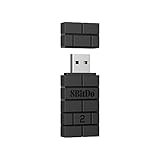
- Controller compatibility: Xbox Series X Controller, Xbox Series S Controller, Xbox One Bluetooth Controller, PS5/PS4/PS3 Controller, Switch Pro, Wii Mote, Wii U Pro.
- 8BitDo Controller compatibility: all 8BitDo Bluetooth Controllers and arcade stick.
- System compatibility: Switch, Windows, macOS, Steam Deck & Raspberry Pis and more. USB Wireless Adapter 2 is compatible with Steam Deck now.
- Support 6-axis motion on Switch and Vibration on X-input mode.
- Supports ultimate software - customize button mapping, adjust stick & trigger sensitivity, vibration control and create macros with any button combination.
Do you need an adapter for Switch headphones?
For ordinary wireless listening, no. Nintendo documents Bluetooth audio pairing for Nintendo Switch, Nintendo Switch Lite, and Nintendo Switch – OLED Model. Update the console before pairing, then use the Bluetooth Audio menu in System Settings.
Native Bluetooth is the better first choice when you want the fewest parts, no accessory hanging from the USB-C port, and compatibility with the console’s own settings. An external transmitter is justified when one of these conditions applies:
- You want a transmitter that advertises a codec such as aptX Low Latency and your headphones support that same codec.
- You need to keep the console charging while a USB-C transmitter is attached and the transmitter provides power pass-through.
- You mainly play docked and prefer a transmitter with a dedicated dock adapter instead of moving a USB-C accessory between devices.
- You want a bundled microphone for voice chat or another use case supported by that specific transmitter.
- Your case blocks the console’s USB-C area or makes a particular adapter sit at an awkward angle, and another physical design solves the problem.
An adapter cannot override the limits of the Switch’s Bluetooth implementation, and a codec printed on the transmitter does not guarantee lower delay with every headset.
Do these 3 things before closing this tab:
1Fix the driver behind crashes, sound loss and screen glitches2Repair Windows errors before they cause bigger problems3Scan for outdated or missing drivers - takes under a minuteNintendo’s built-in Bluetooth limits
Nintendo’s support information is the authority for the console’s operating limits. Its Japanese support page identifies A2DP and SBC as supported and says other Bluetooth profiles and codecs are unsupported. Nintendo also notes that it has not verified operation with every individual Bluetooth device model.
Rank #2
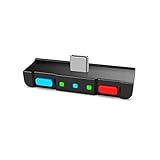
- [Perfect Match] A Bluetooth transmitter tailor-made exclusively for the Nintendo Switch Family of portable game consoles. Compatible with both regular Switch and Switch Lite, with two Buttons in color Neon Red & Neon Blue respectively. Note: This product cannot be used when protective casing is installed on the Switch or Switch Lite.
- [Easy to use] Plug and Play, Connect and Enjoy. Simple dual headphones connection setup. LED indicators showing the active audio codec and which headphone is in use.
- [Built-in Digital Mic] World's only Bluetooth adapter for the Nintendo Switch Family with built-in mic. Hassle free in-game voice chat for games like Fortnite, Smite, Paladins, Friday the 13th and more. The built-in mic can also be used in standalone mode without pairing with a Bluetooth headphones.
- [Digital audio and ultra-low latency] Directly transmit digital audio from the USB-C port. The Qualcomm chipset provides ultra low latency transmission with aptX or aptX Low Latency codecs. When used with non-aptX headphones/speakers, the standard SBC will be used.
- [Dual Streaming] The ONLY Bluetooth transmitter for the Nintendo Switch Family that can stream to 2 headphones simultaneously in aptX Low Latency.
| Capability or limit | What Nintendo states | What it means in practice |
|---|---|---|
| Supported consoles | Switch, Switch Lite, and Switch – OLED Model | All three families can pair Bluetooth audio through the system software when running current software. |
| Audio profile and codec | A2DP and SBC are listed; other profiles and codecs are unsupported on the cited Japanese support page. | Headphones must work with the console’s supported Bluetooth audio path. A third-party transmitter may advertise additional codecs, but the headphones must support the same codec. |
| Bluetooth audio devices connected at once | One | You cannot use two separate Bluetooth headsets through the native Bluetooth menu at the same time. |
| Saved Bluetooth audio devices | Up to 10 saved devices | Pairing a new headset may require removing an old entry after the saved-device limit is reached. |
| Wireless controllers while Bluetooth audio is active | No more than two wireless controllers | Large local multiplayer setups can be restricted while native Bluetooth audio is connected. |
| Bluetooth microphone | Not available through the console’s Bluetooth audio feature | Bluetooth headphones with a built-in microphone do not provide a Bluetooth microphone input to the Switch. |
| Local wireless communication | Audio disconnects during local communication | Expect the Bluetooth audio connection to drop during supported local communication activity. |
| Latency | May vary by Bluetooth device | Delay depends on the headset, its processing, radio conditions, and the complete audio path. |
These are operating specifications, not a promise that every headset will behave identically. Nintendo specifically cautions that individual device operation has not been verified across the entire Bluetooth market.
How to pair Bluetooth headphones directly with a Switch
Use this procedure before buying an adapter. Menu names can vary slightly by system version, but the current path is:
- Open System Settings from the HOME Menu.
- Scroll to System, choose System Update, and install any available update. Restart if the console requests it.
- Return to System Settings and select Bluetooth Audio.
- Put the headphones or earbuds into pairing mode according to their manufacturer’s instructions.
- Select Add Device on the Switch, wait for the headset name to appear, and choose it.
- Start a game or system sound and adjust volume on both the console and the headphones. If the headset offers a gaming or low-latency mode, enable it and check whether the result improves.
If the headset does not appear, turn Bluetooth off and on at the headset, move it close to the console, and make sure it is not still connected to a phone, tablet, or computer. The Switch can save up to ten Bluetooth audio devices, so remove an unused entry if the list is full.
When an external transmitter is the better choice
Handheld play with charging
A USB-C transmitter occupies the console’s only USB-C port. For long handheld sessions, a model with power pass-through can let you connect a charger while continuing to transmit audio. Confirm the port arrangement and cable clearance before buying; a case can prevent a straight USB-C plug from seating fully.
Rank #3

- [Perfect Match] A Bluetooth transmitter tailor-made exclusively for the Nintendo Switch Family of portable game consoles. Compatible with both regular Switch and Switch Lite, with two Buttons in color Grey & Grey. Note: This product cannot be used when protective casing is installed on the Switch or Switch Lite.
- [Easy to use] Plug and Play, Connect and Enjoy. Simple dual headphones connection setup. LED indicators showing the active audio codec and which headphone is in use.
- [Built-in Digital Mic] World's only Bluetooth adapter for the Nintendo Switch Family with built-in mic. Hassle free in-game voice chat for games like Fortnite, Smite, Paladins, Friday the 13th and more. The built-in mic can also be used in standalone mode without pairing with a Bluetooth headphones.
- [Digital audio and ultra-low latency] Directly transmit digital audio from the USB-C port. The Qualcomm chipset provides ultra low latency transmission with aptX or aptX Low Latency codecs. When used with non-aptX headphones/speakers, the standard SBC will be used.
- [Dual Streaming] The ONLY Bluetooth transmitter for the Nintendo Switch Family that can stream to 2 headphones simultaneously in aptX Low Latency.
Docked play
Docked use requires a way to connect the transmitter to the dock rather than directly to the console. A transmitter sold with a USB adapter for the dock is more convenient than improvising cables. Verify whether the exact package includes that adapter, because bundle contents can differ between listings and product revisions.
Codec-specific latency goals
Nintendo’s native path is documented around SBC. Some dedicated transmitters advertise aptX Low Latency or other codec options. Those options matter only if the headphones also support the same codec and negotiate it successfully. If either side falls back to another codec, the advertised behavior does not apply.
No independent, end-to-end measurements for a particular Switch transmitter-and-headphone combination are established. Therefore, it is not possible to name a measured lowest-latency adapter or claim that any model eliminates delay.
What’s actually slowing this PC down?
Pick the symptom - the matching free tool is one click away.
Voice input
Some transmitter bundles include a microphone. This is a different arrangement from Nintendo’s native Bluetooth audio mode, which does not accept a Bluetooth microphone. Check exactly how the microphone connects, where it is positioned, and which chat application or game supports voice input before assuming the bundle provides universal Switch voice chat.
Rank #4
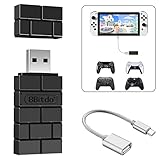
- Bluetooth Controller Adapter: Accessories for Switch 2, Switch/Switch OLED - Compatible with PS5 Controller, PS4 Controller, PS3 Controller, Xbox Series X/S, Xbox One, Wii Mote, Wii U Pro wirelessly on Switch / Switch OLED. Please upgrade the firmware to the latest version. Note: Supports Xbox One Controller / Xbox Elite Wireless Controller Series 2 with Bluetooth only.
- Wide System Support: Compatible with 8Bitdo Controllers, Switch Pro, Switch controller for Joycons, PS5, PS4, PS3, Wii Mote, Wii U Pro, Xbox Series X/S, Xbox One Bluetooth controller on Switch, Switch 2, Windows, Steam Deck, Raspberry Pi, Android TV Box and Retrofreak, for versatile gaming across multiple platforms.
- Less Lag Performance: Wireless Bluetooth connection provides reduced lag for responsive gameplay. It's one controller per 8Bitdo USB adapter. Vibration is supported on Switch and X-input mode. An OTG cable enables you to use the adapter to connect your Switch and enjoy the handheld mode directly.
- Plug and Play Functionality: Simply connect the controller adapter with your Wireless Controller to enable the same wireless experience you are used to on all the best platforms.
- Complete Package: Package includes an OTG cable, so you can use the converter to connect your Switch Console via an OTG cable and then enjoy the Undocked Mode directly.
Adapters and product families cited by manufacturers
The following descriptions report manufacturer-stated features, not independent performance tests. Current stock, retailer pricing, and package consistency are not established.
| Product or family | Manufacturer-described fit | Best reason to consider it | Important qualification |
|---|---|---|---|
| GuliKit Route+ | USB-C transmitter for Switch and Switch Lite; aptX Low Latency; power pass-through; dock adapter listed | Handheld players who need charging while transmitting, or owners who also play docked | Codec and pass-through claims are manufacturer specifications. They do not establish measured latency or universal headphone compatibility. |
| GuliKit Route+ Pro | Product page describes a bundle with a microphone, U-shaped adapter, and USB-C dock adapter | Readers specifically seeking a transmitter-and-microphone package with both handheld and dock accessories | Confirm the contents of the exact listing; bundle contents can vary. |
| GuliKit Route Air | Listed in the manufacturer’s product catalog | Potentially suitable for buyers comparing the maker’s compact transmitter family | Current stock, exact specifications, and retailer bundle consistency are not established by the manufacturer’s product catalog. |
| GuliKit Route Air Pro | Listed in the manufacturer’s product catalog | Another family member to investigate when physical size or a Pro feature set matters | Current stock, exact specifications, and independent comparative results are not established by the manufacturer’s product catalog. |
Route+ documentation also warns that transmitting to two headphones can create connection or latency problems and that aptX Low Latency is not supported while transmitting to two headphones simultaneously. That warning is significant if you are considering a transmitter as a way to share game audio.
How to choose by playing situation
| Your setup | Start with | Choose an adapter only if |
|---|---|---|
| One headset, mostly handheld | Native Bluetooth pairing | You need pass-through charging, a different physical fit, or a codec feature supported by your headset. |
| One headset, mostly docked | Native Bluetooth pairing if the console and headset are convenient to use together | You want a transmitter that includes the required dock adapter or offers a specific codec or microphone arrangement. |
| Handheld play with a bulky case | Check whether the case leaves the USB-C port clear | The transmitter’s connector, U-shaped adapter, or cable layout is confirmed to fit your case. |
| Two listeners | Check the native one-device limit | A third-party transmitter explicitly supports two headphones and both headsets accept its negotiated codec; accept that the maker warns of possible connection or latency problems. |
| Competitive timing-sensitive games | Test your existing headset directly and use its low-latency mode if available | You can verify codec support on both ends and find independent testing for the exact combination. Do not rely on an aptX label alone. |
| Voice communication | Check the game’s supported chat method | The transmitter package’s microphone connection and compatibility are clearly documented for your intended use. |
How to set up a USB-C transmitter
Exact controls differ by model, but the installation sequence is generally straightforward:
Quick wins for a faster PC:
Fix the driver behind crashes, sound loss and screen glitchesFind Drivers →Clear out junk files and repair common Windows errorsFree Scan →Scan for outdated or missing drivers - takes under a minuteDriver Scan →- Charge the console and the headphones before first pairing. If the transmitter has a battery, charge it as well.
- For handheld use, insert the transmitter into the Switch’s USB-C port. If you use a case, verify that the plug is fully seated and does not put sideways force on the port.
- For docked use, connect the transmitter through the included dock adapter or the connection method specified for that model. Do not assume that every USB port or cable provides the same audio function.
- Put the headphones into pairing mode, then hold the transmitter’s pairing control until its indicator shows that it is searching.
- Wait for the transmitter and headphones to connect. If the model supports several codecs, use the mode documented for your headset rather than selecting a codec the headset cannot decode.
- Play a game, test menu sounds, and check lip-sync or button-to-sound timing. Then connect the charger and confirm that pass-through charging remains stable if that feature is important to you.
- Record the working arrangement: transmitter position, headphone mode, and any adapter or cable used. This makes it easier to reproduce the setup after removing the console from the dock.
How to reduce Bluetooth audio lag
Bluetooth delay is a system property, not just an adapter property. Work through these checks in order:
Best Value

- 👻Multiple Bluetooth protocols. Antank Bluetooth Adapter B35 can send the audio of devices via different Bluetooth protocols to corresponding Bluetooth headset. Bluetooth audio transmitting via aptX HD, aptX LL, aptX, AAC, SBC will be available. For example, if you have an aptX-HD Bluetooth headset but your device does not support aptX-HD transmitting, then this Bluetooth adapter can deal with it.
- 👻Supports in-game voice chat. As we know, when Switch new system is connected to a Bluetooth headset, it doesn't support in-game voice chat through built-in microphone. Therefore, it will be better to use a Bluetooth transmitter and a separated microphone when playing games.
- 👻Does Not occupy Switch Bluetooth bandwidth. Due to Bluetooth bandwidth limitations, Switch console can only connect to 2 wireless controllers after connecting to a Bluetooth headset. Switch system only supports connecting a Bluetooth headset under SBC (delay is above 220ms), and locally Switch connection is not available. If we are in multi-players mode or want to enjoy advanced Bluetooth protocols, an external Bluetooth transmitter B35 will be a good choice.
- 👻Plug and play, no driver needed. There is no need to download software or carry out complicated settings, just need a simple Bluetooth pairing connection. The Bluetooth adapter B35 will automatically select the advancest protocol supported by your Bluetooth headset. If your headset supports multiple Bluetooth protocols, you can switch the mode by double-clicking the pairing button.
- 👻Hi-Fi stereo. Lossless CD audio quality allowing you to better immerse yourself in the game. We recommend using aptX Bluetooth headsets to acquire lower delay and better sound quality. B35 is suitable for a variety of devices, including but not limited to: Switch, Switch Lite, Switch OLED, PS4, PS5, PC.
- Update the Switch. Nintendo recommends current system software for Bluetooth audio pairing.
- Use the headset’s low-latency or gaming mode. Some headphones add processing in normal mode.
- Match codecs. An aptX Low Latency transmitter helps only when the headphones support aptX Low Latency and the connection actually negotiates it.
- Keep the radio path clear. Place the transmitter and headset within normal operating range and avoid covering a small USB-C unit with metal or another radio device.
- Test one headset at a time. The cited transmitter documentation warns that two-headphone transmission can introduce connection or latency problems and disables aptX Low Latency in that mode.
- Compare against wired audio. If a wired headset feels immediate but Bluetooth does not, the delay is in the wireless path; no setting can guarantee zero latency.
Nintendo’s own wording is precise: you may experience audio latency depending on your Bluetooth device. Treat that as a device-combination issue, not proof that one adapter is universally fastest.
Troubleshooting common failures
The Switch cannot find the headphones
- Confirm the headphones are in pairing mode rather than merely powered on.
- Disconnect them from nearby phones and computers.
- Move them close to the console and retry.
- Delete an unused saved device if the Switch has reached its ten-device limit.
- Restart both the console and the headset, then repeat the pairing process.
There is sound, but it is delayed
- Enable the headset’s gaming or low-latency mode.
- Check whether both transmitter and headphones support the same advertised codec.
- Disable a second-headphone connection and test with one headset.
- Compare with a wired headset to identify whether the delay is specific to Bluetooth.
The adapter will not charge the console
Check that the transmitter explicitly lists power pass-through and that you are using the specified charger and cable arrangement. A USB-C connector that physically fits is not proof that charging pass-through is supported.
Docked audio does not work
Recheck the dock adapter and the transmitter’s required USB port. Some products are designed for a particular adapter or connection path. Confirm that the exact package you purchased includes the dock accessory described by the listing.
Voice chat does not receive your voice
Native Bluetooth audio on Switch does not provide a Bluetooth microphone input. If you bought a transmitter bundle with a microphone, follow that product’s microphone connection instructions and verify that your game or chat setup supports the resulting input path.
Two headphones keep disconnecting
This is a known risk identified in the cited Route+ documentation. Test each headset alone, and remember that aptX Low Latency is not available in that product’s two-headphone transmission mode.
A practical buying checklist
- Have you tried the Switch’s built-in Bluetooth Audio menu first?
- Is the adapter a transmitter designed for Switch audio, rather than a receiver?
- Will it fit the USB-C port with your protective case installed?
- Does handheld use require charging pass-through?
- Does docked use require an included dock adapter?
- Does your headset support the same codec as the transmitter?
- Are codec claims manufacturer specifications or independently measured results?
- Do you need a microphone, and is its connection method clearly documented?
- Are you accepting the one-headphone native limit or the possible problems of two-headphone transmission?
- Have you confirmed the contents of the exact product listing rather than relying on a similarly named bundle?
Bottom line for Switch owners
Start with native Bluetooth: it is built into the Switch family and is sufficient for one compatible headset when its limits suit your play. Consider a USB-C transmitter only for a concrete need such as charging pass-through, dock connectivity, a case-friendly design, a microphone bundle, or a codec supported by both the transmitter and your headphones. The available product information supports comparing those features, but it does not establish an independently tested lowest-latency winner.
Quick Recap
Product prices and availability are accurate as of the date/time indicated and are subject to change. Any price and availability information displayed on Amazon at the time of purchase will apply.
The Tool Desk
Outbyte Driver Updater FREEScan for outdated or missing drivers - takes under a minuteDriver Scan →Outbyte PC Repair FREERepair Windows errors before they cause bigger problemsFix Now →
