
iTechGuides is reader-supported. When you buy through links on our site, we may earn an affiliate commission. As an Amazon Associate I earn from qualifying purchases. Learn more
A network digital twin gives operations teams a model in which to examine where traffic can flow and whether that behavior matches business and security intent—before a proposed change reaches production. For AI-assisted operations, its value is as a pre-change verification layer, not as a guarantee that an automated action is safe. The result depends on the model’s coverage, accuracy, freshness, and connection to the organization’s existing approval and deployment controls.
What a network digital twin does
A network digital twin is a digital representation of a network that can be used to analyze, emulate, or reason about network behavior. It is more than a dashboard: it combines information about real physical, virtual, and software components with models of network structure or behavior, plus interfaces and logic that make analysis possible.

The operational question is practical: given configurations across vendors, cloud environments, and network layers, where can traffic actually go—and does that match the intended policy? A twin can help answer that question by evaluating a proposed configuration or policy change against a model before deployment.
There is not yet one settled definition that should be treated as universal. A 2025 peer-reviewed survey discusses data collection, analysis, emulation, virtualization, software-defined networking, and AI/ML. Ciena’s account of IETF work in progress describes five elements—data, models, mapping, interfaces, and logic—but that is a description of evolving work, not a finalized industry-wide taxonomy.
#1 Best Overall
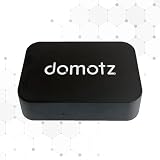
- FAST 15-MINUTE DEPLOYMENT – Provision and configure in just 15 minutes (down from 40+ minutes with previous models). Perfect for field technicians who need to get sites up and running quickly without deep networking expertise.
- UPGRADED PERFORMANCE – Powered by the Allwinner H618 processor with 1GB LPDDR4 RAM (double the previous generation). Enables accurate speed tests on gigabit connections and supports SNMP v3 encryption for enhanced security monitoring.
- PLUG-AND-PLAY SIMPLICITY – No complex configuration required. Simply connect to your network via the Gigabit Ethernet port, power up with the included USB-C cable, and start monitoring. Multi-VLAN support with just a few clicks in the interface.
- RISK MITIGATION FOR MSPs – Domotz maintains the operating system and security updates, transferring liability concerns away from your organization. Eliminates the security risks of deploying monitoring software on customer-managed servers or domain controllers.
- UNIVERSAL CONNECTIVITY – USB-C power port (more durable and universal than previous micro USB), Gigabit Ethernet port, and USB 2.0 port for future expansion. Premium casing designed for rack mounting or standalone deployment in professional environments.
How it fits into a change workflow
A useful way to think about a twin is as a verification stage between proposing a change and deploying it. The following sequence is an explanatory operating pattern, not a required standard or a workflow every platform implements.
- Collect: Gather configuration and relevant state from the network elements, software, and environments in scope.
- Reconcile: Build or update a model that represents the topology, policies, and behaviors the team intends to analyze.
- Analyze: Evaluate a proposed change or scenario—for example, a routing update, access-control rule, or new service path—against that model.
- Review: Present the result to the organization’s normal change, security, and service-approval processes. Teams need to understand what the analysis covers and where its assumptions or gaps lie.
- Deploy and observe: Use existing automation and controls to apply an approved change, then observe actual outcomes and compare them with expectations.
The twin can inform a decision; it does not replace approval authority, deployment safeguards, or post-change monitoring.
Where a twin can help
Change assurance and reachability
Teams can use a model to inspect whether a proposed routing, OSPF, BGP, ACL, or firewall change creates an unintended path, removes a required one, or conflicts with segmentation intent. This is especially relevant when the path crosses vendors, network layers, cloud environments, or on-premises infrastructure.
Outdated Drivers Are Slowing You Down
One free scan finds every outdated or missing driver and matches the right update for your exact hardware.Free scan · exact hardware matchWindows Errors? Fix Them Before They Spread
Repair common Windows errors and clear accumulated junk for a smoother, more stable PC - no reinstall needed.Free scan · no reinstallRank #2

- Hardware Controller with Professional Network Management-Centralized management for up to 100 Omada devices including Omada access points, Omada Security Gateways and Jetstream switches.
- Premium Hardware Design-Industry-leading flexible Rackmount/Desktop design with a powerful chipset, durable metal casing, 2 fast ethernet ports and 1 USB 2.0 port for auto backup.
- Dual power selection-Support PoE (802.3af/802.3at) and micro USB for flexible installations.
- Easy Network Monitor & Maintenance-The easy-to-use dashboard makes it simple to see your real-time network status and improve network maintenance for peace of mind.
- Cloud Access with No License Fee-Enjoy cloud service with no license fee with the use of OC200. Remote Cloud access and Omada app brings centralized cloud management of the whole network from different sites—all controlled from a single interface anywhere, anytime.
Cloud and service planning
Before a workload or service goes live, path analysis can help assess how it may communicate across public-cloud and on-premises components. That gives architecture and operations teams a chance to examine connectivity and policy assumptions before they become production behavior.
Security and compliance
Network modeling can support security-related analysis, including firewall exposure and whether observed or possible paths align with access policy. ITU-T X.2014, summarized in March 2026, addresses requirements and use cases for network digital twins in security applications. That scope makes security a recognized area of interest; it does not establish that every twin provides the same security analysis or satisfies a particular compliance obligation.
Optimization, monitoring, and planning
Potential applications extend beyond checking individual changes. Ciena reported Omdia survey findings on service-provider use cases, while an August 2026 IETF Internet-Draft discusses capacity planning, scenario planning, impact analysis, and change management in an AI-driven operations architecture. The IETF document is a draft, not a finalized standard.
Rank #3
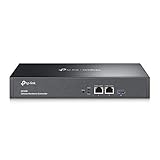
- 【Hardware Controller with Greater Network Management】Latest Omada SDN hardware controller provides centralized management for up to 500 Omada devices including Omada access points, Omada switches and Omada routers.
- 【Premium Hardware Design】Industry-leading flexible Rackmount/Desktop design with a powerful chipset, durable metal casing, 2 * gigabit ports and 1 * USB 3.0 port for auto backup.
- 【Easy Network Monitor & Maintenance】The easy-to-use dashboard makes it simple to see your real-time network status and improve network maintenance for peace of mind.
- 【Cloud Access with No License Fee】Enjoy cloud service with no license fee with the use of OC300. Remote Cloud access and Omada app brings centralized cloud management of the whole network from different sites—all controlled from a single interface anywhere, anytime.
- 【SDN Compatibility】For SDN usage, make sure your devices/controllers are either equipped with or can be upgraded to SDN version. OC300 work only with SDN APs, Switches and Gateways. For devices that are compatible with SDN firmware, please visit TP-Link website.
Google Cloud has also described a proof of concept with MasOrange using graph machine learning on a network twin to analyze and predict possible problems. That is a vendor account of a particular proof of concept, not evidence that comparable results are established across production networks.
What’s actually slowing this PC down?
Pick the symptom - the matching free tool is one click away.
Why AI makes the verification layer more important
AI agents can propose or carry out changes at a pace that may outstrip conventional manual review. A twin can provide a place to inspect an AI-proposed action against a representation of network topology and policy before the action is allowed to proceed. In this design, the twin is a check on proposed behavior—not a substitute for the controls governing the agent.
Survey figures illustrate both interest in the approach and concern about decision quality. Ciena reported the following 2026 Omdia survey results; these are survey responses, not measurements of outcomes across all operators.
| Reported result | What respondents selected | Qualification |
|---|---|---|
| 45% | Accuracy and reliability of AI-driven decisions as a top concern for agentic AI deployment | Omdia survey result reported by Ciena in 2026; the cited finding concerns respondents’ stated concerns. |
| 46% | Network optimization and traffic engineering as a suitable network digital twin use case | Omdia survey result reported by Ciena in 2026; respondents were surveyed service providers. |
| 43% | Network performance monitoring as a suitable network digital twin use case | Omdia survey result reported by Ciena in 2026; respondents were surveyed service providers. |
These figures help explain the appeal of verification and analysis, but they do not show that a twin makes AI decisions accurate, that a particular platform prevents outages, or that surveyed interest translates into realized business results.
Independent reader supportYour contribution helps us test, update, and keep practical guides available for everyone.What a twin cannot guarantee
A twin’s conclusions are only as trustworthy as the data, scope, assumptions, and validation behind its model. If a device family, operating-system version, cloud segment, policy, or relevant network state is missing or represented inaccurately, an analysis may not reflect production conditions. State can also change after collection, so even a sound model can become stale.
Free tools Windows power users keep installed
One-click scans. No signup required.
Do not treat a passing simulation as proof of universal safety or exact production behavior. The sources identify accuracy and synchronization as practical concerns, but do not establish that every commercial implementation offers deterministic verification or complete coverage. Teams should treat a result as evidence within a defined scope and retain their normal approvals, safeguards, and monitoring.
Best Value
How to evaluate a network digital twin
Evaluate the model and its place in operations, not just the interface or feature list. Ask vendors to show how the platform handles your network’s actual scope and how it exposes uncertainty or missing information.
- Coverage: Which vendors, device families, operating-system versions, cloud environments, and network layers are represented? What is explicitly out of scope?
- Fidelity and evidence: How is model accuracy validated? Can the vendor provide reproducible or independent evidence relevant to your environment? No vendor-neutral comparative benchmark is established by the sources cited here.
- Freshness and drift: How frequently is state synchronized? Can the model be refreshed on demand? How are stale, missing, or conflicting data and configuration drift surfaced?
- Analysis scope: Can it assess the cases you need, such as reachability, routing, firewall and ACL policy, segmentation, service paths, optimization, or capacity planning?
- Workflow integration: Can results fit into IT service management, change boards, automation, CI/CD, and security processes while preserving required human approval gates?
- Explainability and audit: Does the system show why an analysis passed or failed, which model state and assumptions it used, and what evidence can be retained for an audit?
- Incomplete-model behavior: What does the platform do when data is unavailable or a feature is unsupported? A visible warning or explicit limitation is more useful than an unqualified result.
For a focused pilot, select a change type with meaningful operational risk and a clear expected outcome. Compare the twin’s model and analysis with known configurations and carefully controlled checks, record where it disagrees or lacks coverage, and decide what evidence is required before integrating results into an automated gate. The pilot should test the organization’s own network and workflow; survey percentages or vendor demonstrations cannot establish that fit.
Standards and evidence to keep in perspective
The sources offer different kinds of evidence. The 2025 peer-reviewed survey provides a broad account of concepts and research directions. ITU-T X.2014’s March 2026 recommendation summary addresses security-related requirements and use cases. The August 2026 IETF architecture document is an Internet-Draft, so it should not be described as a finalized standard. Ciena’s survey reporting and Google Cloud’s proof-of-concept account are vendor perspectives; trade-press analysis, including Network World’s September 28, 2026 discussion, helps frame the operational case but does not constitute a comparative platform test.
Together, these sources support evaluating network twins as a model-based way to inspect changes and scenarios. They do not establish that one product covers every environment, that all models are equally reliable, or that adopting a twin alone produces safer or more efficient operations.
Quick Recap
Product prices and availability are accurate as of the date/time indicated and are subject to change. Any price and availability information displayed on Amazon at the time of purchase will apply.

