
iTechGuides is reader-supported. When you buy through links on our site, we may earn an affiliate commission. As an Amazon Associate I earn from qualifying purchases. Learn more
Need advice on which DOCSIS 3.1 cable modem? Choose the modem that your ISP approves for your exact address and speed tier, then match its upload support, Ethernet port, and voice capability to your service. For most plans up to 1 Gbps, the ARRIS S33 is a sensible starting point; faster-upload or multi-gigabit plans need a provider-approved 2.5GbE mid/high-split model.
There is no universal “best” DOCSIS 3.1 modem. A modem can be technically capable yet fail activation, lack support for your provider’s faster-upload profile, or bottleneck a multi-gigabit plan through a 1GbE port.
Key takeaways
- ISP approval for the exact model, hardware revision, address, and speed tier matters more than the DOCSIS 3.1 label alone.
- A 1GbE modem port is generally adequate for plans up to 1 Gbps, while plans above 1 Gbps normally require a provider-approved modem with a 2.5GbE or faster port.
- Mid-split and high-split upload service requires compatible modem hardware, approved firmware, an upgraded local cable network, and ISP provisioning.
- The ARRIS S33, Hitron CODA, NETGEAR CM1000/CM1000v2, and Motorola MB8611 are reasonable ordinary-plan candidates only when the provider lists the exact device.
- The ARRIS S34, Hitron CODA56, NETGEAR CM2500, and NETGEAR CM3000 are better candidates for approved multi-gigabit or faster-upload plans.
- Standalone modems do not provide Wi-Fi, and data-only modems generally do not support ISP telephone service.
Which DOCSIS 3.1 cable modem should you buy?
The right DOCSIS 3.1 cable modem depends on five facts: your ISP, service address, download and upload tier, telephone requirements, and router connection. Use the following profiles rather than choosing solely by advertised maximum speed.
| Customer situation | Best direction | Models to investigate | Important limitation |
|---|---|---|---|
| 300–500 Mbps with a separate router | Approved DOCSIS 3.1 modem with 1GbE | ARRIS S33, Hitron CODA, NETGEAR CM1000-class model | A 2.5GbE modem may add little value unless an upgrade is planned. |
| Up to 1 Gbps without faster-upload plans | Approved DOCSIS 3.1 modem | ARRIS S33, NETGEAR CM1000/CM1000v2, Hitron CODA, Motorola MB8611 | Check the exact hardware revision and current provider list. |
| 1 Gbps with a likely future upgrade | Approved DOCSIS 3.1 modem with 2.5GbE | ARRIS S33 or S34, Hitron CODA56, NETGEAR CM2500 | The faster port helps only if the router and ISP also support the upgrade. |
| More than 1 Gbps | Provider-approved 2.5GbE-or-faster modem | ARRIS S34, Hitron CODA56, NETGEAR CM2500 or CM3000 | A 1GbE modem or router can cap the connection near gigabit speed. |
| Faster-upload, mid-split, or high-split plan | Provider-approved modem for the specific upload profile | NETGEAR CM3000, Hitron CODA56, ARRIS S34, or ISP-designated equivalent | Ordinary DOCSIS 3.1 approval does not prove faster-upload compatibility. |
| ISP telephone service | Provider-approved voice modem or gateway | NETGEAR CM2050V or ARRIS T25 where supported | Most data-only modems, including the S33 and CM1000, do not provide cable voice service. |
| Fiber internet | Use the ISP’s ONT or fiber router | None of these cable modems | DOCSIS modems operate over cable coaxial networks, not fiber-only connections. |
What does DOCSIS 3.1 mean?
DOCSIS 3.1 is a cable-modem standard used to deliver internet over coaxial cable. DOCSIS 3.1 generally provides better capacity and efficiency than DOCSIS 3.0 and forms the technical basis for many gigabit-class cable plans and newer upstream upgrades.
#1 Best Overall

- ⚠️ CABLE INTERNET ONLY - NOT COMPATIBLE WITH: Fiber (Verizon FiOS, AT&T), DSL, Satellite, or Fixed Wireless. ONLY works with cable providers like Xfinity, Spectrum, Cox. Verify your internet type BEFORE purchase.
- 🚫 NO WiFi INCLUDED - ROUTER REQUIRED: This is a modem ONLY. You MUST buy a separate WiFi router to get wireless internet. Without a router, only ONE device can connect via Ethernet cable. This does NOT replace your current WiFi router.
- 🔌 CABLE INTERNET REQUIRED: Works EXCLUSIVELY with cable internet service (DOCSIS) from providers like Xfinity, Spectrum, or Cox. Will NOT work with fiber (Verizon FiOS, AT&T), DSL, satellite, or fixed wireless internet. Contact your ISP to confirm compatibility BEFORE purchasing.
- 🚀 MULTI-GIG PERFORMANCE: Supports internet plans up to 2.5 Gbps with 2.5 Gbps Ethernet port. Designed for plans 1 Gbps and faster from certified providers: Xfinity (up to 2.33 Gbps), Spectrum (1 Gbps), Cox (2 Gbps). Verify your plan speed and provider compatibility.
- 💡 SETUP REQUIREMENTS: You need: (1) Cable internet service, (2) Separate WiFi router with 2.5 Gbps port for full speeds, (3) ISP activation. This modem cannot create WiFi networks or connect multiple devices without additional equipment.
DOCSIS 3.1 is a technology category, not a guaranteed speed. Real performance depends on the ISP’s approved firmware and configuration, service tier, upstream channel design, local node capacity, coaxial signal quality, modem Ethernet port, router, switches, cabling, and client devices. NETGEAR specifically warns that provider compatibility is model-specific and that DOCSIS 3.1 capability does not guarantee compatibility with future standards in its CM1000 compatibility information.
A modem advertised as supporting 2.5 Gbps may be approved for a lower tier on a particular network. Manufacturer speed claims describe potential device capability; the ISP’s current compatibility database determines what the customer can activate at a particular address.
How fast should a DOCSIS 3.1 modem be?
Choose the modem’s Ethernet connection and provider approval based on the service you actually intend to use, not only the manufacturer’s “up to” number.
The Tool Desk
Outbyte PC Repair FREEClear out junk files and repair common Windows errorsFree Scan →Outbyte Driver Updater FREEScan for outdated or missing drivers - takes under a minuteDriver Scan →| Internet service | Sensible modem requirement | Network details to verify |
|---|---|---|
| Up to 500 Mbps | DOCSIS 3.1 with at least a 1GbE port | ISP approval and the router’s WAN port. |
| 600 Mbps–1 Gbps | DOCSIS 3.1; 1GbE can be sufficient | A 2.5GbE port adds headroom for a future upgrade. |
| Above 1 Gbps | DOCSIS 3.1 with 2.5GbE or faster | The exact ISP tier, router WAN port, switch, cable, and client device. |
| Faster-upload or mid/high-split service | Provider-approved mid/high-split modem | Local availability, approved firmware, and the address-specific upload profile. |
| Cable telephone service | Provider-approved voice-capable modem | Voice certification and whether the ISP requires its gateway. |
A 1GbE modem port can bottleneck a plan advertised above 1 Gbps even when the modem can carry more data over DOCSIS. The same limitation applies if a 2.5GbE modem connects to a router with only a 1GbE WAN port. A multi-gigabit customer needs compatible Ethernet throughout the path from modem to test device.
Why do faster uploads change the modem choice?
Faster-upload service changes the modem choice because mid-split and high-split cable networks allocate more spectrum to upstream channels. A DOCSIS 3.1 modem may remain online on an upgraded network yet fail to qualify for the provider’s faster upload tier.
Faster uploads require the correct modem hardware, ISP approval for the specific profile, approved firmware, an upgraded local node, and provisioning at the customer’s address. A faster modem cannot create faster upload service when the ISP has not modernized the local network or enabled the profile.
NETGEAR describes the CM3000 as a mid/high-split DOCSIS 3.1 modem and claims up to 2.5 Gbps download and up to 1 Gbps upload capability. Those are manufacturer capability claims, not a guarantee that every ISP or address will provide those speeds. NETGEAR tells buyers to confirm mid/high-split compatibility with the ISP.
Do these 3 things before closing this tab:
1Fix the driver behind crashes, sound loss and screen glitches2Clear out junk files and repair common Windows errors3Scan for outdated or missing drivers - takes under a minuteProvider-specific lists illustrate why checking matters. Astound’s bring-your-own-modem information identifies device-specific download and upload limits, and some fiber-upgrade areas require a particular modem model.
Is a 2.5GbE modem port necessary?
A 2.5GbE modem port is necessary for a plan above 1 Gbps when the ISP provides the service through that port, and it is useful for customers planning a compatible future upgrade. A 2.5GbE port is not automatically useful on a 1 Gbps-or-slower plan with a 1GbE router and no multi-gigabit equipment.
| A 2.5GbE port is worthwhile when… | A 2.5GbE port adds little today when… |
|---|---|
| The plan exceeds 1 Gbps. | The plan is 1 Gbps or less. |
| The ISP advertises multi-gigabit cable service at the address. | The ISP does not offer multi-gigabit service at the address. |
| The customer wants a supported faster-upload tier. | The local network has not received a mid/high-split upgrade. |
| The router has a 2.5GbE-or-faster WAN port. | The router WAN port is limited to 1GbE. |
| The home has compatible switches and wired clients. | All switches and clients are limited to 1GbE or use Wi-Fi. |
Multiple Ethernet ports do not automatically mean that residential connections can be bonded for double speed. Verify the manufacturer’s port behavior and the ISP’s supported configuration before treating two ports as a performance upgrade.
Rank #2

- Multi‑Gig speed for today & tomorrow: DOCSIS 3.1 performance supports cable internet plans up to 2 Gbps, delivering ultra‑fast streaming, gaming, and downloads.
- Save on rental fees: Own your modem and avoid monthly equipment charges—check with your cable provider for plan compatibility.
- Compact, modern design: Space‑saving footprint with discrete LED indicators for power, upstream/downstream, and online status.
- Easy setup: Connect cable, power on, and activate with your cable provider. Then connect a Wi‑Fi router to the Ethernet port for home Wi-Fi coverage.
- Modem only: This cable modem requires a separate Wi-Fi router or mesh system for home Wi-Fi network.
Which DOCSIS 3.1 modems are worth considering?
The following are buying candidates, not universal winners. Confirm the exact model, revision, service tier, and address with the ISP immediately before purchase.
ARRIS SURFboard S33: best mainstream standalone choice
The ARRIS S33 is a compact, data-only DOCSIS 3.1 modem with 2.5GbE-class connectivity. The S33 is a sensible default for many customers with a separate router who want ordinary gigabit-class service or some multi-gigabit headroom.
The S33 is not a voice modem, and S33, S33v2, and S33v3 should be treated as separate compatibility entries. Xfinity’s March 25, 2025 compatible-device list included those S33 revisions and marked the S33 as recommended. The March 2025 list is historical evidence, not a replacement for checking Xfinity’s current address-specific database. See the official S33 product page for product information.
ARRIS SURFboard S34: a stronger headroom choice
The ARRIS S34 is a data-only DOCSIS 3.1 modem with 2.5GbE-class connectivity and a better fit than older 1GbE models for customers considering multi-gigabit or faster-upload service.
The S34 cannot provide faster upstream service without a compatible local network and ISP profile. The modem may be unnecessary for a 300- or 500-Mbps plan unless the price difference is acceptable and an upgrade is planned. Xfinity’s published list includes the S34 with multi-gigabit wired capability; verify current approval through the provider before buying. Product details are available on the official S34 product page.
Windows Errors? Fix Them Before They Spread
Repair common Windows errors and clear accumulated junk for a smoother, more stable PC - no reinstall needed.Free scan · no reinstallCrashes, No Sound, or Screen Glitches?
Random freezes, missing sound and display glitches usually trace back to one bad driver. Find and replace yours safely.Free scan · under a minuteHitron CODA: value-oriented gigabit candidate
The original Hitron CODA is a basic standalone DOCSIS 3.1 modem for provider-supported plans up to roughly gigabit class. Hitron lists the CODA for providers including Xfinity, Spectrum, Cox, and Astound while telling buyers to check compatibility.
The original CODA is not the same product as the CODA56 or CODA57. Capabilities, firmware, and approval differ by provider, so the CODA is a poor choice for a faster-upload or multi-gigabit plan unless the ISP specifically lists it. Consult Hitron’s CODA product information.
Hitron CODA56: provider-specific multi-gigabit option
The Hitron CODA56 is a DOCSIS 3.1 modem with a 2.5GbE port and is a candidate for certain Astound, Breezeline, GCI, and Xfinity customers whose provider specifically approves it for the relevant tier.
The CODA56 should not be confused with the similarly named CODA57, which targets a different provider set. Hitron’s CODA56 product information and the provider’s own database should both be checked before purchase. Xfinity’s March 2025 list included CODA56 with multi-gigabit wired capability, but provider lists can change.
NETGEAR CM1000 and CM1000v2: established sub-gigabit option
The NETGEAR CM1000 and CM1000v2 are DOCSIS 3.1 candidates for plans up to about 1 Gbps when the ISP approves the exact revision. The ordinary CM1000 has 1GbE-class positioning, does not support bundled cable voice, and is not suitable for fiber service.
Rank #3

- Mid/high-split DOCSIS 3.1 cable modem delivers up to 2Gbps of download speeds and 1Gbps of upload speeds
- Unlock faster cable internet speeds, such as Xfinity’s 900Mbps download speeds and 100Mbps upload speeds. Works with all major US internet providers. Not compatible with Xfinity Voice plans
- Faster download speeds powers your digital lifestyle with enhanced speed, capacity, efficiency, and response times
- 10x faster upload speeds for seamless multi-family gaming, video conferencing and uploading even the largest files—simultaneously. Plus provides easy remote access to your home security cameras and files on your NAS
- For the ultimate in performance, link a NETGEAR WiFi 6E or WiFi 7 router or Orbi system to the CM2500 cable modem
NETGEAR listed a price signal of $199.99 for the CM1000 when observed during the research pass; price and stock change. The manufacturer’s CM1000 page should not replace the ISP’s compatibility check. A CM1000 can be a poor long-term purchase if the customer expects multi-gigabit or faster-upload service.
NETGEAR CM2500: approved 2-Gbps-class candidate
The NETGEAR CM2500 is a DOCSIS 3.1 modem positioned for approved 2-Gbps-class service and is more flexible than a 1GbE model. The CM2500 needs a router with a 2.5GbE-or-faster WAN port and does not solve voice-service requirements.
NETGEAR’s lineup showed a $249.99 price signal for the CM2500 when observed; prices and stock are volatile. Review the CM2500 product page and then confirm that the ISP approves the exact model for the exact tier.
Quick wins for a faster PC:
Clear out junk files and repair common Windows errorsFree Scan →Fix the driver behind crashes, sound loss and screen glitchesFind Drivers →Repair Windows errors before they cause bigger problemsFix Now →NETGEAR CM3000: faster-upload and multi-gigabit candidate
The NETGEAR CM3000 is the strongest fit in this group for an ISP-approved multi-gigabit or faster-upload plan because NETGEAR positions it as a mid/high-split DOCSIS 3.1 modem. NETGEAR listed the CM3000 at $299.99 when observed during the research pass; current prices and stock may differ.
The CM3000 cannot produce faster uploads where the provider has not enabled the necessary upgrade. The customer also needs a multi-gigabit router WAN port and suitable Ethernet equipment. The CM3000 is not for fiber and is not an ordinary bundled cable-voice modem. Confirm service eligibility on the official CM3000 page and with the ISP.
Motorola MB8611: approved 2.5GbE alternative
The Motorola MB8611 is a standalone DOCSIS 3.1 modem with a 2.5GbE port. It remains a credible option where the provider approves it and the plan does not require newer mid-split or high-split capabilities.
Astound’s current BYOM information lists the MB8611 as a modem-only device with a 2.5G port and up to 2-Gbps download capability on that network. The MB8611 is not a voice modem, and current provider support must be verified carefully before buying a new or used unit.
What’s actually slowing this PC down?
Pick the symptom - the matching free tool is one click away.
Should you buy a modem or a modem-router gateway?
Buy a standalone modem when you already own a capable router or mesh system, want independent upgrade paths, or need better placement for Wi-Fi equipment. Buy a gateway when one device and simpler support are more important than flexibility.
| Equipment type | Advantages | Disadvantages | Best fit |
|---|---|---|---|
| Standalone modem | Flexible router choice; easy to upgrade modem and router separately; avoids paying for duplicate Wi-Fi hardware. | Requires a separate router for Wi-Fi, local networking, and often parental-control features. | Existing router or mesh-system owners. |
| Modem-router gateway | One device, fewer cables, simpler initial setup, and potentially easier ISP support. | Modem and router upgrades are tied together; Wi-Fi placement and features may be less flexible. | Customers who want simplicity or ISP-integrated voice and support. |
Xfinity’s customer-owned modem guidance notes that most standalone modems need a router for Wi-Fi and certain services. A standalone modem does not determine Wi-Fi coverage; router or mesh hardware, placement, interference, building materials, client devices, and wired backhaul matter more.
How do you check compatibility before buying?
Use the provider’s own database first. Manufacturer compatibility pages and retailer badges are useful leads, but they cannot substitute for the ISP’s current approval for your address and service tier.
Rank #4

- ⚠️ CABLE INTERNET ONLY - This modem works ONLY with cable internet providers (Xfinity, Spectrum, Cox). NOT compatible with fiber internet services including AT&T Fiber, Verizon Fios, Frontier Fiber, Google Fiber, or CenturyLink Fiber. Check with your ISP to confirm you have cable (coaxial) service before purchasing.
- 📞 DATA ONLY - NO PHONE SERVICE - This modem does NOT support telephone or voice service of any kind. If your internet plan includes phone service or you need VoIP calling, you must purchase a separate voice-capable modem or VoIP adapter. This device handles internet data only.”
- 🚀 MULTI-GIG PERFORMANCE: Supports internet plans up to 2.5 Gbps with 2.5 Gbps Ethernet port. Designed for plans 1 Gbps and faster from certified CABLE providers: Xfinity (up to 2 Gbps), Spectrum (1 Gbps), Cox (2 Gbps). NOT compatible with fiber internet services. Verify your plan speed and provider compatibility.
- 🔌 MODEM ONLY - NO WIFI INCLUDED - This device is a cable modem with ONE Ethernet port only. It does NOT provide WiFi or wireless connectivity. You MUST connect your own separate WiFi router to this modem to create a wireless network. This is not an all-in-one gateway or combo unit.
- ⚡ DOCSIS 3.1 TECHNOLOGY: Latest cable standard with 32x8 channel bonding for reliable multi-gig speeds. Backward compatible with DOCSIS 3.0 networks. Eliminates monthly modem rental fees (typically $14-20/month). For CABLE internet only - verify compatibility with your cable provider.
- Record the service details. Write down the ISP and regional brand, service address, download speed, upload speed, cable-versus-fiber technology, telephone service, and any promised mid-split or high-split upgrade.
- Open the ISP’s current compatibility tool. Xfinity directs customers to check devices for their address and service through its customer-owned modem information and modem-compatibility workflow.
- Match the exact model and revision. Do not treat an S33, S33v2, and S33v3—or a CODA, CODA56, and CODA57—as interchangeable.
- Confirm the speed tier. A model may be listed for one download or upload tier but not another.
- Confirm upload architecture. Ask whether the address has mid-split or high-split service and whether the selected modem is approved for that profile.
- Confirm voice support. Data-only modems generally cannot replace a voice-capable modem or ISP gateway.
- Confirm the router path. For service above 1 Gbps, verify that the router WAN port, switch, Ethernet cable, and test device support the intended link speed.
- Buy new from a reputable or authorized source when possible. A new device is more likely to have current manufacturer support and a clean activation history.
NETGEAR provides a provider-by-provider cable-modem compatibility table, but NETGEAR also directs customers to distinguish certification from compatibility and to verify service with the ISP. A cable modem will not work on a fiber-only connection.
Free tools Windows power users keep installed
One-click scans. No signup required.
Why are used cable modems risky?
A used modem may work, but used equipment carries activation and support risks that are difficult to detect before purchase. The previous owner may not have removed the modem from the account, the device may be reported stolen or unreturned, the hardware revision may differ from the listing, or the ISP may no longer support the revision.
Used equipment can also have outdated firmware, expired certificates, damaged coaxial connectors, overheating problems, or an unreliable power supply. Xfinity recommends new equipment from reputable sources because newer devices are more likely to have manufacturer support for performance and security issues, as reflected in its published compatible-device guidance.
How do you activate and set up a cable modem?
The exact activation labels vary by ISP and region, but the normal setup sequence is consistent.
- Confirm the modem’s exact model and hardware revision.
- Connect the coaxial cable from the wall outlet or approved splitter to the modem.
- Connect the modem’s Ethernet port to the router’s WAN or Internet port.
- Power on the modem and wait for downstream, upstream, and online indicators to stabilize.
- Open the ISP’s activation page or mobile-app activation flow.
- Enter the modem’s CM MAC address, serial number, or other requested identifier exactly as printed on the label.
- Wait for the ISP to provision the modem.
- Reboot the modem and router if activation completes but the router remains offline.
- Test from a wired client rather than Wi-Fi.
- Check the router’s WAN link status and confirm that the negotiated Ethernet speed is 1Gbps, 2.5Gbps, or faster as expected.
Do not rely on a single universal activation URL because providers and regional brands use different portals and change their interfaces. For Xfinity, use the account’s current device-management or activation flow and its current support instructions.
Recommended Free Tools
What should you do if the modem will not activate?
A DOCSIS 3.1 modem that will not activate is usually facing an approval, account, identification, or provisioning problem rather than a DOCSIS-version problem.
- Recheck the exact model number printed on the device.
- Compare the CM MAC address and serial number with the modem label, not only the retail box.
- Ask the ISP to confirm eligibility for the exact service address and speed tier.
- If the modem is used, ask the seller or previous owner to remove it from the old account.
- Connect the modem directly to the ISP’s coaxial line and temporarily bypass unnecessary splitters.
- Request a replacement or return if the ISP cannot confirm approval.
Other possible causes include an unapproved hardware revision, a voice or regional variant with different certification, an account that requires an ISP gateway, or retired support for the model.
Why is upload speed low even with a DOCSIS 3.1 modem?
Low upload speed usually means the plan, address, modem profile, firmware, router, or coaxial signal is limiting upstream performance. DOCSIS 3.1 branding alone does not activate faster uploads.
Check whether the plan includes faster upload service, whether the address has received the mid/high-split upgrade, whether the exact modem is approved for that profile, and whether the ISP has provisioned the faster plan. Also test a wired connection and ask the ISP to check upstream signal levels and noise.
Why does a multi-gigabit modem test at about 940 Mbps?
A multi-gigabit modem that tests near 940 Mbps is commonly operating through a 1GbE link somewhere in the path. The modem-to-router connection, router WAN port, switch, client network adapter, or Ethernet cable may have negotiated at 1Gbps, or the internet plan may be capped at 1 Gbps.
Best Value
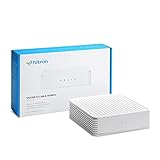
- ⚠️ COAXIAL CABLE INTERNET ONLY - NOT FIBER: This modem works ONLY with Internet delivered through coaxial cable (the round cable with screw-on connector). Even if you have Xfinity, Spectrum, or Cox service, verify you have their CABLE internet service, NOT their fiber optic service. Check your wall connection before purchasing. Will NOT work with fiber internet (Verizon FiOS, AT&T Fiber, Google Fiber), DSL, satellite, or 5G home internet. Verify your internet type BEFORE purchasing.
- ⚠️ NO WiFi, NO Voice, NO Router Features: This device ONLY connects to your cable line and provides ONE Ethernet port. It does NOT create WiFi networks, has NO phone/voice capabilities, and cannot connect multiple devices without a separate WiFi router.
- 🔧 REQUIRED FOR SETUP: (1) Cable internet service (not fiber), (2) Separate WiFi router with 2.5 Gbps port for full speeds, (3) ISP activation call. Without a router, you can connect only ONE device via the single Ethernet cable included.
- 💰POTENTIAL RENTAL FEE SAVINGS - While some providers have reduced or eliminated modem rental fees, this modem can still provide cost savings and performance benefits. Check with your provider about current rental fees before purchasing.
- DOCSIS 3.1 TECHNOLOGY - Supports cable internet speeds UP TO 1 Gbps with advanced DOCSIS 3.1 performance. Perfect for streaming, gaming, and multiple devices when paired with your WiFi router.
Use a wired client with a 2.5GbE adapter, connect the modem to a 2.5GbE-capable router WAN port, remove any 1GbE switch from the test path, use Cat5e or better cabling, confirm the router’s link-status page, and verify that the modem is connected through the correct Ethernet port. Wi-Fi speed tests are not suitable for proving a multi-gigabit wired service ceiling.
What causes modem reboots or lost upstream lock?
Frequent reboots or lost upstream lock usually indicate coaxial signal, noise, power, heat, firmware, or provisioning trouble rather than a need for a more expensive modem.
- Tighten or replace damaged coaxial connectors.
- Temporarily remove unnecessary splitters.
- Test from the first coaxial outlet or the ISP’s preferred outlet.
- Keep the modem ventilated and check its power supply.
- Review the modem’s signal and event log if the interface exposes one.
- Ask the ISP to test signal levels and upstream noise.
A line fault can affect every compatible modem, so replacing the modem before checking the coaxial plant may waste money.
Do these 3 things before closing this tab:
1Repair Windows errors before they cause bigger problems2Scan for outdated or missing drivers - takes under a minute3Clear out junk files and repair common Windows errorsFinal recommendations by customer type
- Under 1 Gbps, no voice, existing router: Start with an ISP-approved ARRIS S33, Hitron CODA, NETGEAR CM1000/CM1000v2, or Motorola MB8611.
- Up to 1 Gbps with a likely upgrade: Prefer an approved 2.5GbE model such as the ARRIS S33 or S34, Hitron CODA56, or NETGEAR CM2500.
- Above 1 Gbps: Choose an ISP-approved 2.5GbE-or-faster modem and verify that the router WAN port and wired network support multi-gigabit speeds.
- Faster-upload plan: Choose only a modem that the provider specifically approves for the address’s mid-split or high-split profile, such as a supported NETGEAR CM3000, Hitron CODA56, ARRIS S34, or designated equivalent.
- ISP telephone service: Buy an approved voice modem such as NETGEAR CM2050V or ARRIS T25 where supported, or keep the ISP gateway.
- Existing mesh Wi-Fi: Buy a modem only and confirm that the mesh system has a suitable WAN port.
- No router: Buy a compatible gateway or budget separately for a router.
- Fiber service: Do not buy a DOCSIS cable modem; use the ISP’s ONT or fiber gateway.
Provider compatibility is the final decision point. Check the ISP database immediately before ordering, because approved models, hardware revisions, speed tiers, upload profiles, and certification status can change.
Frequently Asked Questions
Does every DOCSIS 3.1 modem support faster upload speeds?
No. Faster uploads require a provider-approved modem, compatible firmware, a mid-split or high-split network upgrade, and activation of the faster profile at the service address. DOCSIS 3.1 alone does not guarantee faster upstream service.
Do I need a router with a DOCSIS 3.1 modem?
Yes, if you buy a standalone modem and want Wi-Fi or a normal home network. A standalone modem generally provides the cable connection but not Wi-Fi, parental controls, mesh management, or multiple local-network ports.
Can a 2.5GbE modem make a 1Gbps internet plan faster?
No. A 2.5GbE port provides headroom for a faster plan, but a 1Gbps service tier remains limited by the ISP’s provisioning. The router, switches, cabling, and client devices must also support higher speeds.
Quick wins for a faster PC:
Scan for outdated or missing drivers - takes under a minuteDriver Scan →Repair Windows errors before they cause bigger problemsFix Now →Fix the driver behind crashes, sound loss and screen glitchesFind Drivers →Can I use a DOCSIS cable modem with fiber internet?
No. DOCSIS modems are designed for cable coaxial networks. Fiber customers need the ISP’s optical network terminal, fiber gateway, or approved fiber equipment.
The Bottom Line
Bottom line: Buy the least expensive modem that your ISP approves for your exact address, tier, upload profile, and voice requirements. Choose a 1GbE DOCSIS 3.1 modem for ordinary plans up to 1 Gbps; choose an approved 2.5GbE mid/high-split model for multi-gigabit or faster-upload service; and choose a voice-capable modem or ISP gateway when telephone service is included.
Quick Recap
Product prices and availability are accurate as of the date/time indicated and are subject to change. Any price and availability information displayed on Amazon at the time of purchase will apply.

