
Recommended Free Tools
iTechGuides is reader-supported. When you buy through links on our site, we may earn an affiliate commission. As an Amazon Associate I earn from qualifying purchases. Learn more
For dependable protection, use a finished, broad-spectrum, water-resistant sunscreen labeled SPF 30 or higher. Mineral filters—zinc oxide and titanium dioxide—have the clearest current U.S. safety-data support, while chemical (organic) filters can protect just as effectively when the finished product passes broad-spectrum and SPF testing. “Natural” oils and homemade mixtures are not reliable substitutes because their SPF, UVA coverage, water resistance and shelf life are not guaranteed.
The important comparison is not whether an ingredient sounds natural or synthetic. It is whether the complete formula provides tested UVA and UVB protection, remains stable during use, feels comfortable enough to apply generously, and matches your skin’s tolerability and exposure.
What protects skin best?
Choose a sunscreen whose label says broad spectrum, SPF 30 or higher, and, when you will sweat or swim, water resistant. Apply the amount and reapplication schedule on the label. The American Academy of Dermatology (AAD) recommends broad-spectrum, water-resistant SPF 30 or higher for routine outdoor use.
Mineral and chemical categories describe how the active ingredients interact with ultraviolet radiation. Mineral filters scatter, reflect and absorb UV in a protective film on the skin. Chemical, more precisely organic, filters absorb UV energy. Either type can be effective in a properly tested product. “Natural” botanical extracts are a different case: laboratory studies may show antioxidant activity or partial UV absorption, but that signal does not establish a usable SPF for a finished sunscreen.
#1 Best Overall

- POWERFUL MINERAL SUN PROTECTION - Protect sensitive skin from the sun's harmful rays with Blue Lizard Sensitive Mineral SPF 50 Sunscreen for sensitive skin. It contains no harsh chemical active ingredients that might irritate sensitive skin
- SPF 50 BROAD SPECTRUM PROTECTION - The water-resistant sunscreen formula provides broad spectrum protection and helps protect skin from up to 98% of UVB rays
- FORMULATED FOR SENSITIVE SKIN - Developed specifically for sensitive skin, this SPF 50 body sunscreen has a hypoallergenic formula that is also paraben-free and fragrance-free
- INFUSED WITH ORGANIC ALOE VERA - This SPF 50 mineral sunscreen with zinc oxide and titanium dioxide gently soothes and moisturizes
- TRUSTED BY DERMATOLOGISTS - Perfect for the whole family, Blue Lizard has been trusted by dermatologists for over 20 years.
For people who sting easily, a zinc-oxide- and/or titanium-dioxide-only product is a reasonable first option. For people who dislike a white cast, a well-formulated organic sunscreen or a tinted mineral product may be easier to use consistently. Consistent, generous application matters more than choosing a category based on marketing language.
What broad-spectrum SPF 30 actually means
Broad spectrum covers two different UV problems
Ultraviolet radiation is commonly divided into UVA and UVB. UVB is the main driver of sunburn, and the SPF number primarily communicates protection against UVB. UVA penetrates more deeply and contributes to photoaging and pigment changes. A product may have a high SPF yet provide inadequate UVA protection if it has not passed the separate broad-spectrum test.
“Broad spectrum” on a U.S. sunscreen label means the finished product passed testing for both UVA and UVB protection. It is a product-level claim, not a guarantee that every active ingredient in isolation covers the entire range. Formulators often combine filters so the finished lotion or stick reaches the required balance.
SPF is not a permission slip for longer exposure
SPF 30 does not mean you can stay outside 30 times longer without risk, nor does it block all UV. It describes a standardized comparison of sunburn protection under test conditions. Sweat, swimming, rubbing, missed areas and applying too little reduce real-world protection. Reapply according to the label—typically every two hours and after toweling, sweating or water exposure—and use shade, clothing and a hat as additional barriers.
How mineral sunscreen filters work
Zinc oxide
Zinc oxide is an FDA-listed mineral active ingredient. It generally offers broad coverage across UVA and UVB, making it useful as a sole active or as part of a blend. Its particles form a film that scatters, reflects and absorbs incoming UV. Zinc products can leave a visible white cast, particularly at the higher loadings needed for strong protection or on darker skin tones, although particle engineering and tint can reduce that effect.
Rank #2

- 12-HOUR MOISTURIZATION — SPF 50 mineral sunblock* provides 12 hours of moisture to help keep skin soft and comfortable. *FDA active ingredients are mineral.
- FORMULATED WITH VITAMIN E — With a breathable, clean feel, this sunscreen lotion nourishes your skin without the use of parabens or fragrances
- SWEAT & WATER READY — Designed to keep up with every activity, this mineral zinc sunscreen lotion* is sweat and water resistant (80 minutes). *FDA active ingredients are mineral.
- DERMATOLOGIST TESTED — From beach days to backyard fun, Banana Boat zinc oxide sunscreen lotion delivers reliable sun care protection you can trust, NO GREASE
- NO NONSENSE — Lightweight mineral sunscreen* blends in across skin tones and leaves skin feeling soft with a matte finish. *FDA active ingredients are mineral.
Titanium dioxide
Titanium dioxide is also an FDA-listed mineral active. It is strongest in UVB and shorter UVA wavelengths rather than the full UVA range. Commercial products therefore often combine titanium dioxide with zinc oxide or another UVA-capable filter to obtain broad-spectrum performance. Like zinc oxide, titanium dioxide can leave a white cast when the formula is not tinted or sufficiently dispersed.
What the FDA safety finding covers
The FDA’s 2026 review states that the available safety data support proposals for zinc oxide and titanium dioxide to be generally recognized as safe and effective (GRASE) at concentrations up to 25%. That statement concerns the evidence available for those active ingredients and the proposed monograph conditions; it does not mean every sunscreen containing them is identical or that application quality no longer matters.
What’s actually slowing this PC down?
Pick the symptom - the matching free tool is one click away.
How chemical (organic) sunscreen filters work
Organic filters absorb UV energy and convert it to a small amount of heat that is released from the molecule. U.S. formulas commonly combine ingredients such as avobenzone, octocrylene, octinoxate, octisalate and oxybenzone. Bemotrizinol was added to the FDA’s over-the-counter sunscreen monograph in June 2026. The exact combination determines UVA breadth, UVB performance, photostability and the texture of the finished product.
FDA regulatory evidence differs among organic filters. The agency’s current materials identify zinc oxide and titanium dioxide as having sufficient data for GRASE proposals, while several other listed actives require additional data. “Requires additional data” is a regulatory evidence status, not a finding that every marketed product using that ingredient is ineffective. A finished product that is legally marketed and labeled broad spectrum has still been evaluated under the applicable testing and labeling framework.
Photostability depends on the formula
Some organic molecules change when exposed to UV. Formulators may pair them with stabilizers or other filters to maintain performance. You cannot infer photostability from a single ingredient name; look for a finished sunscreen that has passed the required tests and follow its storage instructions. Leaving any sunscreen in excessive heat can damage the vehicle and shorten its useful life.
Rank #3
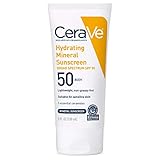
- [ BROAD SPECTRUM SUNSCREEN FOR BODY SPF 50 ] 100% Mineral-based sunscreen, also known as a physical sunscreen, reflects UVA/UVB rays to help protect the skin. Formulated with titanium dioxide and zinc oxide sunscreen. Developed with dermatologists.
- [ MINERAL SUNSCREEN APPLICATION ] Physical sunscreens often leave a white cast when applied in thick layers. For best results, apply sunscreen evenly to the entire body in thin layers and thoroughly massage into skin. Suitable sunscreen for kids & adults.
- [ HAWAII COMPLIANT SUNSCREEN ] Oxybenzone free, avobenzone free, and benzene free, this sunscreen contains physical filters Zinc Oxide and Titanium Dioxide. Hawaii prohibits the sale, offer of sale and distribution of sunscreens that contain oxybenzone.
- [ 3 ESSENTIAL CERAMIDES ] Ceramides are found naturally in the skin and can become damaged with sun exposure. All CeraVe products are formulated with three essential ceramides (1, 3, 6-II) to help restore and maintain the skin’s natural barrier.
- [ GENTLE FORMULA ] Formula is oil free; fragrance free; noncomedogenic; and suitable for sensitive skin. Recommended by both the Skin Cancer Foundation and National Eczema Association as an effective; broad spectrum sunscreen. FSA Eligible & HSA Eligible
What “natural UV filters” can and cannot do
Plant compounds show laboratory promise
Polyphenols, flavonoids and related plant compounds can absorb portions of the 200–400 nanometre radiation range. They may also contribute antioxidant or anti-inflammatory effects in a formulation. A 2022 systematic review in the Journal of Cosmetic Dermatology, covering 35 articles, reported correlations between plant phenolic or flavonoid content, antioxidant activity and measured SPF. The review also noted that results depended on the extraction solvent.
Those findings describe laboratory or formulation signals, not a blanket SPF for a plant or oil. Performance changes with species, growing conditions, extraction method, concentration, particle size, vehicle, film formation and photostability. A botanical extract that absorbs UV in a test tube may be too dilute, unstable or unevenly distributed to protect skin in use.
No natural commercial filter is officially approved as a sunscreen active
A 2023 review states that no natural commercial sun-filters are officially approved. Botanical ingredients can be useful adjuncts in a tested formula, but they should not replace an approved, tested sunscreen active unless the product itself carries a broad-spectrum SPF label supported by testing.
Raspberry seed oil, carrot oil and aloe vera
- Raspberry seed oil: It contains fatty acids and antioxidant compounds, and laboratory measurements may show some UV absorption. There is no dependable, standardized SPF that can be assigned to every bottle or batch. Do not use it as your only sun protection.
- Carrot oil: “Carrot oil” can refer to different preparations, including an infused oil or an extract diluted in a carrier. Composition and concentration vary, so an internet SPF estimate cannot substitute for testing of the actual finished product.
- Aloe vera: Aloe can feel soothing and may help a product’s skin-conditioning properties, but it is not an established broad-spectrum sunscreen active. It should not be treated as UV protection by itself.
These ingredients may appear alongside zinc oxide, titanium dioxide or organic filters. In that situation, the protection comes from the tested sunscreen formula, not from the botanical ingredient’s reputation.
Mineral versus chemical sunscreen: practical comparison
| Question | Mineral filters | Chemical (organic) filters | Botanical extracts or oils |
|---|---|---|---|
| How they handle UV | Form a film that scatters, reflects and absorbs UV. | Absorb UV energy within the filter molecules. | May absorb portions of UV and provide antioxidant activity in laboratory or formulation studies. |
| UVA coverage | Zinc oxide generally covers UVA and UVB; titanium dioxide is weaker in longer UVA, so products may combine filters. | Depends on the combination; formulators blend filters for broad-spectrum coverage. | Not established consistently for consumer use. |
| UVB/SPF | Can deliver high SPF in a tested formula; titanium dioxide is especially strong in UVB. | Can deliver high SPF in a tested formula. | A laboratory SPF signal does not establish the SPF of an oil or homemade mixture. |
| Sensitive or reactive skin | Zinc oxide/titanium dioxide-only products are a practical option for people who experience stinging with other formulas. | Some people tolerate them well; others may notice stinging, especially around the eyes. Tolerance is individual. | Fragrance components and plant allergens can irritate or sensitize some users. |
| Cosmetic finish | May leave a white cast; tint and modern dispersion can improve appearance. | Often spreads transparently and can be easier to layer under makeup. | Oils may feel greasy and can stain clothing; appearance does not indicate UV performance. |
| Photostability | Mineral particles are generally stable, but the complete vehicle still matters. | Depends on the filter blend, stabilizers and finished formula. | Varies with plant species, extraction, concentration and vehicle; often insufficiently characterized. |
| Water resistance | Only the finished product can make a water-resistant claim after testing. | Only the finished product can make a water-resistant claim after testing. | Oils and homemade recipes have no guaranteed water-resistance rating. |
| Regulatory evidence | FDA’s 2026 review says data support GRASE proposals up to 25% for zinc oxide and titanium dioxide. | Evidence status varies by active; several listed filters require additional FDA data. | No natural commercial sun-filter is officially approved according to a 2023 review. |
| What the evidence actually describes | Ingredient data plus testing of the finished sunscreen. | Ingredient data plus testing of the finished sunscreen. | Mostly laboratory, extraction or small formulation studies rather than a standardized consumer SPF. |
How to choose a sunscreen for your situation
For everyday outdoor exposure
- Check the front and active-ingredient panel for broad spectrum and SPF 30 or higher.
- Choose water resistance if you will swim, exercise heavily or sweat. Read the label for the tested duration and reapply after water, toweling or heavy sweating.
- Pick a texture you will apply generously to exposed skin. A theoretically excellent sunscreen that you avoid because it pills, stings or leaves an unacceptable cast will underperform in practice.
- Reapply on the label’s schedule, typically every two hours while outdoors, and sooner after activities that remove the film.
For sensitive or stinging skin
Try a formula whose only sunscreen actives are zinc oxide and/or titanium dioxide. Avoid applying any sunscreen to broken skin, and patch-test a new product on a small area if you have a history of reactions. “Mineral” does not mean irritation-free: preservatives, fragrances, botanical extracts and the vehicle can still cause problems.
Outdated Drivers Are Slowing You Down
One free scan finds every outdated or missing driver and matches the right update for your exact hardware.Free scan · exact hardware matchPC Slower Than It Used to Be?
A free scan shows the junk files, broken settings and background clutter dragging Windows down - then fixes them in one click.Free scan · Windows 10 & 11Rank #4

- POWERFUL MINERAL SUN PROTECTION - Protect sensitive skin from the sun's harmful rays with Blue Lizard Sensitive Mineral SPF 50 Sunscreen for sensitive skin. It contains no harsh chemical active ingredients that might irritate sensitive skin
- SPF 50 BROAD SPECTRUM PROTECTION - The water-resistant sunscreen formula provides broad spectrum protection and helps protect skin from up to 98% of UVB rays
- FORMULATED FOR SENSITIVE SKIN - Developed specifically for sensitive skin, this SPF 50 body sunscreen has a hypoallergenic formula that is also paraben-free and fragrance-free
- INFUSED WITH ORGANIC ALOE VERA - This SPF 50 mineral sunscreen with zinc oxide and titanium dioxide gently soothes and moisturizes
- TRUSTED BY DERMATOLOGISTS - Perfect for the whole family, Blue Lizard has been trusted by dermatologists for over 20 years.
For visible white cast or pigmentation concerns
A tinted mineral sunscreen can improve cosmetic acceptability and may help with concerns about visible light contributing to pigmentation, especially when the tint contains iron oxides. That is a separate consideration from the product’s ultraviolet SPF and broad-spectrum claim. Confirm that the tinted product still lists broad spectrum and SPF 30 or higher; tint alone is not a substitute for UV testing.
For swimming, sport and heavy sweating
Use a product specifically labeled water resistant, apply it before exposure as directed, and reapply after the label’s water-resistance interval or whenever you towel off. No sunscreen remains fully intact through unlimited water, friction or perspiration.
Independent reader supportYour contribution helps us test, update, and keep practical guides available for everyone.Why homemade sunscreen recipes fail as protection
Homemade recipes usually lack controlled concentrations, uniform dispersion, validated application thickness, photostability testing, preservative testing and a defined expiration date. A formula can look opaque while allowing large areas of UV through, separate in the container or wash off quickly. Essential oils and plant extracts can also trigger irritation or allergic reactions.
In a July 2, 2024 statement, AAD secretary-treasurer Daniel D. Bennett, MD, FAAD, said: “While sunscreen is a vital tool in the fight against skin cancer, homemade sunscreens do not go through the rigorous testing required of commercial sunscreens by the U.S. Food and Drug Administration (FDA), which means that their Sun Protection Factor (SPF), water resistance, and shelf-life cannot be guaranteed.”
Use a homemade moisturizer or oil for its cosmetic purpose if you enjoy it, but apply a tested sunscreen over exposed skin when UV protection is needed. Do not attempt to “boost” a commercial sunscreen by mixing in oils or powders; changing the vehicle can alter film formation and invalidate the tested performance.
Best Value
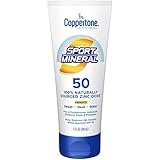
- MOST TRUSTED SUNSCREEN BRAND: #1 Most Trusted Sunscreen Brand
- 100% NATURALLY SOURCED ZINC OXIDE PROTECTION: NEW Coppertone Sport Mineral SPF 50 Lotion Sunscreen offers 100% mineral sun protection to keep up with your active lifestyle while keeping you protected from the sun.
- HIGH PERFORMANCE PROTECTION: Protect your skin from up to 98% of the sun’s most damaging UV rays with a durable and water resistant formula that stays on strong through sweat, heat, and water for up to 80 minutes.
- MILD ON SKIN: Naturally sourced zinc oxide lotion sunscreen is free of oxybenzone, octinoxate, PABA, parabens, phthalates, dyes, and fragrances.
- EASY APPLICATION: Lotion sunscreen that rubs in easily
How to read a sunscreen label without being misled
- Broad spectrum: The finished product passed testing for UVA and UVB protection.
- SPF number: Primarily communicates UVB/sunburn protection; it does not fully describe UVA performance.
- Active ingredients: Zinc oxide and titanium dioxide are mineral filters. Avobenzone, octocrylene, octinoxate, octisalate, oxybenzone and bemotrizinol are examples of organic filters used in relevant formulations.
- Water resistant: A tested, time-limited claim for the finished formula. Follow the label and reapply after water, sweating or toweling.
- Natural, botanical or clean: Marketing descriptions, not proof of SPF, UVA coverage or safety for every skin type.
- Expiration and storage: Use the product within its stated shelf life and protect it from excessive heat. A plant oil’s freshness does not establish sunscreen shelf life.
Common trade-offs and how to solve them
“Mineral sunscreen looks white on me.”
Try a tinted mineral formula, a better-dispersed lotion or a lower-residue product that still carries the required broad-spectrum SPF label. Do not dilute it with moisturizer to reduce the cast; dilution can reduce the applied film and protection.
“Chemical sunscreen stings my eyes.”
Switch to a zinc oxide/titanium dioxide-only product around the eyes, avoid applying directly to the eyelid margin, and use sunglasses and a hat. Stinging can also come from fragrance, preservatives or sweat moving product into the eyes, so compare complete formulas rather than assuming every organic filter will behave the same way.
“My sunscreen pills under makeup.”
Use a compatible moisturizer, allow each layer to set, and apply sunscreen in two thin passes without rubbing aggressively. If pilling persists, change the vehicle. Do not skip the amount needed for protection just to improve makeup wear.
Do these 3 things before closing this tab:
1Repair Windows errors before they cause bigger problems2Scan for outdated or missing drivers - takes under a minute3Clear out junk files and repair common Windows errors“I want the most natural option.”
Choose a tested mineral sunscreen if the ingredient origin is your priority, but judge it by broad-spectrum SPF testing, water resistance and tolerability—not by the word “natural.” Botanical extracts can be optional supporting ingredients, never the sole basis for a protection claim.
A simple decision framework
- Start with exposure: For routine outdoor use, begin at broad-spectrum SPF 30 or higher; choose water resistance for water or heavy sweat.
- Choose tolerability: If products sting, test zinc oxide and/or titanium dioxide-only formulas. If mineral cast prevents regular use, consider an organic or tinted mineral product.
- Check the evidence: Prefer a finished product with a clear SPF, broad-spectrum and, when needed, water-resistance label over an ingredient-only claim.
- Plan reapplication: Keep enough product available to reapply according to the label and after activities that remove it.
- Add physical protection: Shade, tightly woven clothing, a wide-brimmed hat and sunglasses reduce the amount of sunscreen the skin must provide on its own.
The bottom line on natural, mineral and chemical filters
Zinc oxide and titanium dioxide offer the strongest current U.S. safety-data support and can provide broad UVA/UVB protection in a tested formula. Organic filters are not automatically inferior; a properly formulated and tested chemical sunscreen can meet the same broad-spectrum SPF goal and may be easier to apply without a cast. Botanical extracts and oils may have useful antioxidant or experimental UV-absorption properties, but they do not provide a dependable replacement for tested sunscreen actives. Buy the product whose broad-spectrum SPF 30-plus label, water-resistance claim and texture make you willing to apply enough and reapply on schedule.
Quick Recap
Product prices and availability are accurate as of the date/time indicated and are subject to change. Any price and availability information displayed on Amazon at the time of purchase will apply.

