
iTechGuides is reader-supported. When you buy through links on our site, we may earn an affiliate commission. As an Amazon Associate I earn from qualifying purchases. Learn more
When a motion controller stops responding, first verify that the game supports motion input and that its motion option is enabled. Then update the console and controller, run the platform’s own calibration procedure, and check camera visibility if you use a camera-tracked controller. Joy-Con and PlayStation Move use different sensors and troubleshooting steps; PS Move is not compatible with PS VR2, which uses Sense controllers tracked by the headset.
Start with this six-step diagnosis
- Identify the exact setup. Note the console generation, controller model, and game. A Joy-Con, a camera-tracked PlayStation Move, and a PS VR2 Sense controller do not use the same tracking system.
- Confirm motion support. Check the game’s control information and settings. Some titles do not accept motion input, while others require a motion-control toggle to be turned on. Test another title known to support the controller.
- Install available updates. Update the console. On Nintendo Switch systems, also update the controller firmware when the system offers that option.
- Calibrate in the correct menu. Use the console’s on-screen calibration procedure rather than repeatedly changing game settings. Calibration steps and menu names can vary by console generation and software version.
- Reset and pair again. Use the reset button or SYNC procedure for the specific controller, then reconnect it using the platform’s normal pairing method.
- Escalate based on the result. If the fault appears in multiple supported games or calibration will not complete, stop changing unrelated settings and arrange manufacturer service. Record whether the left or right controller is affected.
These checks separate a game-setting problem from a sensor, pairing, camera, or hardware fault without buying accessories prematurely.
| # | Preview | Product | Price | |
|---|---|---|---|---|
| 1 |

|
Nintendo Joy-Con (L/R) - Neon Red/Neon Blue | $88.99 | Buy on Amazon |
| 2 |

|
Nintendo Joy-Con (L/R) - Neon Red/Neon Blue (Renewed) | $60.00 | Buy on Amazon |
| 3 |
|
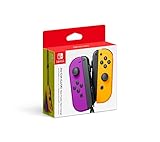
Nintendo Neon Purple/Neon Orange Joy-Con (L-R) - Switch | $87.95 | Buy on Amazon |
Check whether the game is actually using motion input
A controller can work normally while a particular game ignores movement. Read the title’s control instructions and open its settings before assuming the hardware is defective. Look for terms such as motion controls, gyro, tilt, gesture, pointer, or camera controls. If the game has separate profiles for handheld, detached-controller, or accessibility input, select the profile that includes motion.
Recommended Free Tools
Use a second supported game as a control test. A failure in one title points toward that game’s settings or compatibility; a failure in every supported title points toward calibration, pairing, the camera environment, or the controller itself. Some features also depend on a particular controller side or accessory, so test the required controller rather than substituting a different one.
#1 Best Overall
- Introducing Joy-Con, controllers that make new kinds of gaming possible, for use with Nintendo Switch.
- The versatile Joy-Con offer multiple surprising new ways for players to have fun.
- Two Joy-Con can be used independently in each hand, or together as one game controller when attached to the Joy-Con grip.
- They can also attach to the main console for use in handheld mode, or be shared with friends to enjoy two-player action in supported games.
- Each Joy-Con has a full set of buttons and can act as a standalone controller, and each includes an accelerometer and gyro-sensor, making independent left and right motion control possible.
Nintendo Switch Joy-Con troubleshooting
Update the system and controller
Install the latest system software first. On Switch, open the controller settings and run the controller-update command if it is available. Nintendo’s troubleshooting guidance covers Switch 2, Switch, and Switch OLED Joy-Con problems, but the exact menus can differ between generations.
Calibrate motion controls correctly
For Switch, Switch Lite, and Switch OLED, Nintendo’s calibration instructions use this path:
- Remove straps, grips, steering wheels, or other accessories from the Joy-Con.
- Open System Settings > Controllers and Sensors > Calibrate Motion Controls.
- Hold the controller’s + or − button when the console asks you to begin.
- Place the controller on a flat, stable surface with the analog stick facing upward.
- Leave it still until the on-screen calibration finishes, then test the game again.
Do not hold the controller in your hand during the resting stage. Vibration, a soft couch, or an uneven surface can introduce movement while the neutral position is being learned. If you have a Switch 2, do not assume this exact menu wording or procedure is unchanged; use the current instructions displayed by that console.
Quick wins for a faster PC:
Repair Windows errors before they cause bigger problemsFix Now →Fix the driver behind crashes, sound loss and screen glitchesFind Drivers →Reset and reconnect a Joy-Con
Detach the affected Joy-Con and press its SYNC button to reset the wireless connection, then reconnect it through the console’s controller screen. Test the left and right Joy-Con separately so you can identify which unit is failing. A loose rail connection, a depleted battery, or a pairing problem can look like a motion fault when the controller is not communicating reliably at all.
Check the right Joy-Con’s IR Motion Camera only when the game requires it
The right Joy-Con has an IR Motion Camera. Nintendo specifically calls out keeping it uncovered for software that uses that camera, such as the Eating Contest activity in 1-2-Switch. This is not a general explanation for every tilt, shake, or gyro problem: most Joy-Con motion sensing does not depend on the IR camera. Remove a case or obstruction only when the game’s instructions identify the IR camera as part of the feature.
Know when Nintendo’s service threshold has been reached
If motion controls fail in any supported software after updating, resetting, and calibrating—or if calibration itself fails—Nintendo’s guidance is to have the affected Joy-Con serviced. Note whether the left or right unit is involved and describe the games and calibration result. A replacement is reasonable only after checking compatibility with your Switch generation and comparing it with the available service option.
PlayStation Move: restore camera-based tracking
PlayStation Move is an older, camera-based system. The PlayStation Eye detects the glowing sphere on the controller to follow movement. Because the camera must see that sphere, room conditions matter much more than they do for a gyro-only controller.
Free tools Windows power users keep installed
One-click scans. No signup required.
Clear the camera’s view
- Remove people, furniture, cables, and other objects blocking the line of sight between the camera and the glowing sphere.
- Reduce very bright lights and direct sunlight aimed toward the camera or controller. Reflections and a washed-out sphere can make tracking jump or disappear.
- Keep the controller about 1 to 3 meters (3 to 10 feet) from the camera, the range specified in the PlayStation Move manual.
- Set the camera to its wide-angle view when that option is available. A narrow view can lose the controller as you extend your arm.
Stand where the whole sphere remains visible during the game’s largest movements. If tracking works close to the camera but fails at the edge of the room, distance or field of view is more likely than a dead sensor.
Reset abnormal movement and remove magnetic interference
If the controller moves on screen when your hand is still, or its position suddenly jumps, press the rear reset button with a suitable pin or similar tool. Keep the controller away from strong magnetic sources while testing. On PS3, run Settings > Accessory Settings > Calibrate Motion Controller after resetting it.
Pair the controller and verify its battery
A Move controller that does nothing may not be paired or may have a depleted battery. For PS3, connect the controller to the console with a USB cable and press the PS button to pair it. On PS4 and PS5, turn off the console, hold the rear reset button with a pin or similar tool, reconnect the controller by USB, and press PS. Follow the current on-screen pairing flow if the console presents a different prompt.
After pairing, confirm that the sphere lights and that the controller appears in the console’s accessory list. Charge it fully before treating intermittent operation as a tracking failure.
Do these 3 things before closing this tab:
1Clear out junk files and repair common Windows errors2Scan for outdated or missing drivers - takes under a minute3Repair Windows errors before they cause bigger problemsFollow the game’s own calibration prompts
Some Move titles ask you to point the controller at a reference position or hold it in a particular pose. Complete that prompt exactly; a correct camera setup can still produce incorrect in-game orientation if the game’s calibration step is skipped.
Do not confuse PlayStation Move with PS VR2 Sense
PS Move and PS VR2 Sense are separate controller systems. PS Move works with PS3, PS4, and PS5 when used with PlayStation VR and the appropriate PlayStation Camera. On PS5, the older PlayStation Camera requires the PlayStation Camera adapter. PS Move does not work with PS VR2 or the PS5 HD Camera.
PS VR2 Sense controllers are tracked by the PS VR2 headset through their tracking rings. If a Sense controller is not detected, use the PS5 and PS VR2-specific instructions for that controller and game. Buying a PlayStation Camera or a PS Move controller cannot correct a Sense-tracking problem, and buying Move hardware will not add PS VR2 compatibility.
Match the symptom to the likely cause
| What you see | Most likely area | Next useful check |
|---|---|---|
| Movement works in one game but not another | Game support or an in-game option | Enable motion controls and test a second supported title. |
| Joy-Con movement is wrong in every supported game | Calibration, firmware, or hardware | Update, run the correct calibration procedure, then arrange service if calibration fails or the fault persists. |
| Only the right Joy-Con feature in one title fails | Covered IR Motion Camera or title-specific requirement | Remove the obstruction and verify that the game actually uses the IR camera. |
| Move tracking is slow, lost, or erratic | Camera visibility, lighting, distance, or view angle | Clear the view, reduce direct sunlight, use wide-angle mode, and stand 1–3 meters away. |
| Move controller does not light or respond | Battery, pairing, or reset state | Charge it, reset it, reconnect by USB, and press PS. |
| PS VR2 cannot see a controller | Sense/headset setup rather than Move | Use PS5/PS VR2 instructions; Move accessories are incompatible. |
Repair or replace? Use the evidence, not guesswork
Choose between service and replacement by answering three questions:
- Is the problem reproducible? A fault that survives a second supported game and a completed calibration is stronger evidence of hardware trouble than a single game behaving incorrectly.
- Is the replacement compatible? Check the console generation, controller model, camera type, and VR generation before purchasing. A PS Move camera setup and a PS VR2 Sense setup cannot be substituted for one another.
- Is official service available? For a Joy-Con that fails across supported software or cannot complete calibration, Nintendo identifies service as the next step. Keep the affected side and test results ready for the service request.
| Situation | Prefer | Why |
|---|---|---|
| One Joy-Con fails across supported games and calibration fails | Manufacturer service first | This matches Nintendo’s stated escalation condition and avoids buying the wrong generation. |
| A Joy-Con works after calibration and only one title fails | Game-setting investigation | The evidence points to software support or an option, not a confirmed hardware defect. |
| Move tracking fails only at room edges or in bright sunlight | Reposition the existing camera and controller | Visibility, lighting, distance, and field of view are adjustable causes. |
| There is no camera in a legacy Move setup | Check exact console and VR compatibility before buying one | A camera must match the console and the VR generation; it is not suitable for PS VR2 Sense. |
Service terms, availability, and replacement costs vary by region and change over time, so confirm them with the manufacturer before committing to either option.
Prevent tracking problems from returning
- Keep console and controller software current.
- Calibrate on a hard, stable surface whenever the platform requests it.
- Remove straps and accessories during Joy-Con calibration.
- For Move, keep the camera lens clean and maintain an unobstructed view.
- Avoid direct sunlight and strong magnetic sources near camera-based tracking.
- Charge wireless controllers before diagnosing intermittent behavior.
- Store the controller model, console generation, affected side, games tested, and calibration result in your service notes.
When continued troubleshooting is unlikely to help
Stop repeating resets when the same controller fails in every title that supports it, when calibration cannot complete, or when the controller remains unpaired after a correct USB or SYNC procedure. Those results justify manufacturer support. Describe the exact model and console, the software versions if shown, the steps already completed, and whether another controller works in the same game. For Move, also report the camera model, approximate distance, lighting conditions, and whether the sphere was visible. For PS VR2, identify the issue as a Sense-controller problem rather than a Move problem so support starts with the correct hardware path.
Independent reader supportYour contribution helps us test, update, and keep practical guides available for everyone.Extra checks before you buy anything
Separate symptoms that indicate missing input from symptoms that indicate inaccurate input. If buttons also fail, the controller may not be paired or may have a depleted battery; motion calibration cannot repair a disconnected controller. If buttons work but the pointer drifts, prioritize calibration, camera visibility, lighting, and magnetic interference. If only one game fails, preserve your current hardware setup and inspect that title’s control mode first.
Do not assume a newer camera, adapter, or controller will solve the problem. A PlayStation Camera must match the console and the intended PlayStation VR generation. The older camera-based Move workflow is not a fallback for PS VR2, and the PS5 HD Camera does not make Move compatible with PS VR2. Likewise, a replacement Joy-Con should be matched to the Switch generation and checked against Nintendo’s service route before purchase.
Crashes, No Sound, or Screen Glitches?
Random freezes, missing sound and display glitches usually trace back to one bad driver. Find and replace yours safely.Free scan · under a minuteWindows Errors? Fix Them Before They Spread
Repair common Windows errors and clear accumulated junk for a smoother, more stable PC - no reinstall needed.Free scan · no reinstallWhen testing, change one variable at a time: first the game setting, then firmware, calibration, pairing, and finally the physical environment. Write down what changed and whether the symptom improved. This prevents a temporary improvement from being mistaken for a confirmed repair and gives support a useful sequence to reproduce.
Rank #3
- Two Joy Con can be used independently in each hand, or together as 1 game controller when attached to the Joy Con grip
- They can also attach to the main console for use in handheld mode, or be shared with friends to enjoy two player action in supported games
- Each Joy Con has a full set of buttons and can act as a standalone controller, and each includes an accelerometer and gyro sensor, making independent left and right motion control possible
Quick decision checklist
- Does the game support motion, and is the option enabled?
- Does another supported game show the same behavior?
- Are the console and controller updated?
- Did you use the calibration menu for this exact console generation?
- For Joy-Con, were accessories removed and the controller placed still on a stable surface?
- For Move, is the sphere visible from 1–3 meters, without direct sunlight or obstructions, in wide-angle view?
- Was the controller reset and paired using the correct model-specific method?
- If the failure persists everywhere, have you recorded the affected controller and contacted the manufacturer?
Frequently Asked Questions
Why does my motion controller work in one game but not another?
The game may not support motion input or may have a motion-control option disabled. Check its control settings and test another title known to support the controller before blaming the hardware.
How should I calibrate a Nintendo Switch Joy-Con?
On Switch, Switch Lite, and Switch OLED, remove straps and accessories, open System Settings > Controllers and Sensors > Calibrate Motion Controls, hold + or − as prompted, then place the controller on a flat stable surface with the stick facing upward until calibration finishes. Use the current on-screen procedure for Switch 2 rather than assuming identical menu wording.
Does a covered right Joy-Con IR camera cause every motion problem?
No. The IR Motion Camera matters only to software that uses it, such as the Eating Contest activity in 1-2-Switch. It is not the general cause of gyro tilt or shake failures.
The Tool Desk
Outbyte PC Repair FREEClear out junk files and repair common Windows errorsFree Scan →Outbyte Driver Updater FREEFix the driver behind crashes, sound loss and screen glitchesFind Drivers →How far should I stand from a PlayStation Move camera?
The PlayStation Move manual specifies about 1 to 3 meters, or 3 to 10 feet. Keep the glowing sphere visible, remove obstructions, reduce direct sunlight, and use wide-angle view when available.
What should I do if a PlayStation Move controller drifts or jumps?
Press the rear reset button with a suitable pin or similar tool, move it away from magnetic sources, and on PS3 run Settings > Accessory Settings > Calibrate Motion Controller. Then repeat the camera-visibility checks.
How do I pair a PlayStation Move controller again?
On PS3, connect it by USB and press PS. On PS4 or PS5, turn off the console, hold the rear reset button, reconnect by USB, and press PS. Charge the controller first if it does not light or respond.
Can I use PS Move with PS VR2?
No. PS Move works with PS3, PS4, and PS5 using PlayStation VR and the appropriate PlayStation Camera, but it is not compatible with PS VR2 or the PS5 HD Camera. PS VR2 uses Sense controllers tracked by the headset.
When should I stop troubleshooting a Joy-Con?
If motion fails in every supported game or calibration cannot complete after updating, resetting, and using the correct procedure, Nintendo’s guidance is to arrange service. Record whether the left or right Joy-Con is affected.
The Bottom Line
Verify game support first, then update, calibrate, reset, and test in a second supported title. Joy-Con failures that persist across software or prevent calibration warrant Nintendo service. For PlayStation Move, restore clear camera visibility, correct distance, lighting, and pairing. Keep PS Move separate from PS VR2 Sense: they are incompatible systems.
Quick Recap
Product prices and availability are accurate as of the date/time indicated and are subject to change. Any price and availability information displayed on Amazon at the time of purchase will apply.

